 listicle
Alternatives to Rep Basketball for Beginners
Table of Contents
- Why Parents Explore Alternatives to Rep Basketball
- House League vs Rep Basketball: Understanding the Difference
- Recreational Basketball Programs for Skill Development
- Basketball Skill Training Camps and Clinics
- One-on-One Coaching and Personalized Training
- How to Prepare for Rep Basketball Tryouts
- Making the Right Choice for Your Young Athlete
- Frequently Asked Questions
Last Updated: September 18, 2026
Why Parents Explore Alternatives to Rep Basketball
Many families in the region assume rep basketball is the natural next step after recreational play. It's competitive, organized, and sounds like where serious young athletes belong. But rep basketball isn't the right fit for every child, and parents increasingly recognize that.
The reality is this: rep basketball demands significant time, financial commitment, and emotional resilience. Tryouts are competitive. Bench time is common. Travel schedules can dominate family life. For some children, especially those just developing a love for the game, the pressure overshadows the joy.
That's why exploring alternatives to rep basketball for beginners has become standard due diligence for thoughtful parents. Not every child is ready for competitive play at 10 or 11. Some need more foundational skill work first. Others thrive in recreational settings where development matters more than wins. At Tier 1 Sports, we understand families navigate this exact decision, and the best path forward depends entirely on your child's readiness, temperament, and basketball goals.
This guide breaks down the realistic alternatives to rep basketball for beginners, helping you understand what each option offers and when it makes sense to choose it.
House League vs Rep Basketball: Understanding the Difference
The distinction between house league and rep basketball shapes every other decision you'll make about your child's basketball journey. Understanding this difference is essential before exploring alternatives to rep basketball.
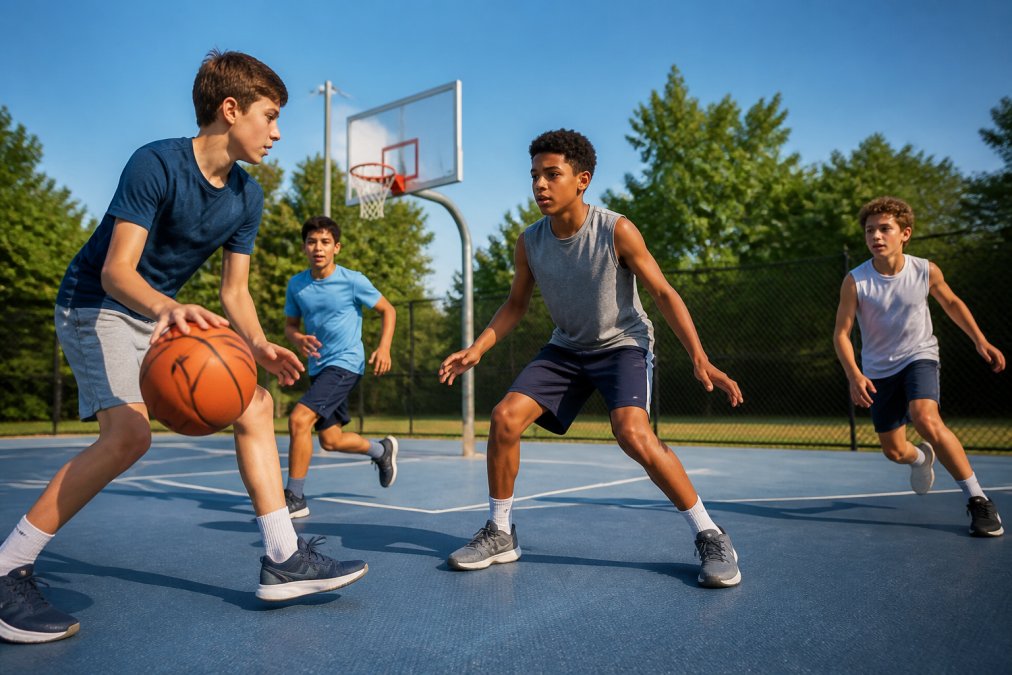
House league basketball emphasizes participation, skill development, and enjoyment. Every child plays meaningful minutes. Coaching focuses on teaching fundamentals and building confidence rather than winning games. The competitive level is lower, which means less pressure and more room for mistakes, which is exactly where learning happens. House league typically costs less and requires less travel. Your child plays with neighborhood peers in a community-based environment.
Rep basketball is selective and highly competitive. Teams are built through tryouts. Playing time is earned, not guaranteed. The coaching philosophy prioritizes winning and advanced skill development. Rep players attend more practices, travel further, and compete at higher intensity. The financial and time commitments are substantially greater.
Here's the practical difference: in house league, a child who struggles with ball handling still gets meaningful court time to improve. In rep basketball, that same child might spend games on the bench. Both approaches have merit, but they serve different purposes and different children.
The choice between house league and rep basketball often isn't actually a choice at all. Many families start with house league, use it to build foundational skills, and then decide whether competitive rep play aligns with their child's interests and abilities. Others discover that house league is exactly where their child thrives and skip rep basketball entirely.
| Aspect | House League | Rep Basketball |
|---|---|---|
| Entry | Open to all who register | Competitive tryouts |
| Playing Time | Guaranteed meaningful minutes | Earned based on performance |
| Skill Focus | Fundamentals and enjoyment | Advanced skills and winning |
| Time Commitment | 1-2 practices + 1 game weekly | 3-4 practices + 2+ games weekly |
| Travel | Minimal, local | Frequent, regional |
| Cost | Lower | Higher |
| Best For | Beginners, recreational players | Competitive, committed athletes |
Recreational Basketball Programs for Skill Development
Recreational basketball programs sit between casual play and competitive rep basketball. They're structured, skill-focused environments where children develop fundamental movements without the pressure of tryouts or bench time.
This is where most beginners should start, especially children aged 6-9 who are still building motor skills and court awareness (Sport readiness in children and youth). A quality recreational program teaches dribbling mechanics, shooting form, footwork, and game IQ in a supportive setting. Children play games, but the emphasis stays on learning rather than winning.
Tier 1 Sports offers recreational programs specifically designed for this developmental stage. The coaching philosophy prioritizes long-term athlete development over short-term results.
What separates effective recreational programs from mediocre ones is the balance between structured drills and actual game play. A common complaint from parents is that their child spends 45 minutes on repetitive drills with minimal game time. Quality recreational programs integrate skill work into small-sided games where children apply what they're learning immediately.
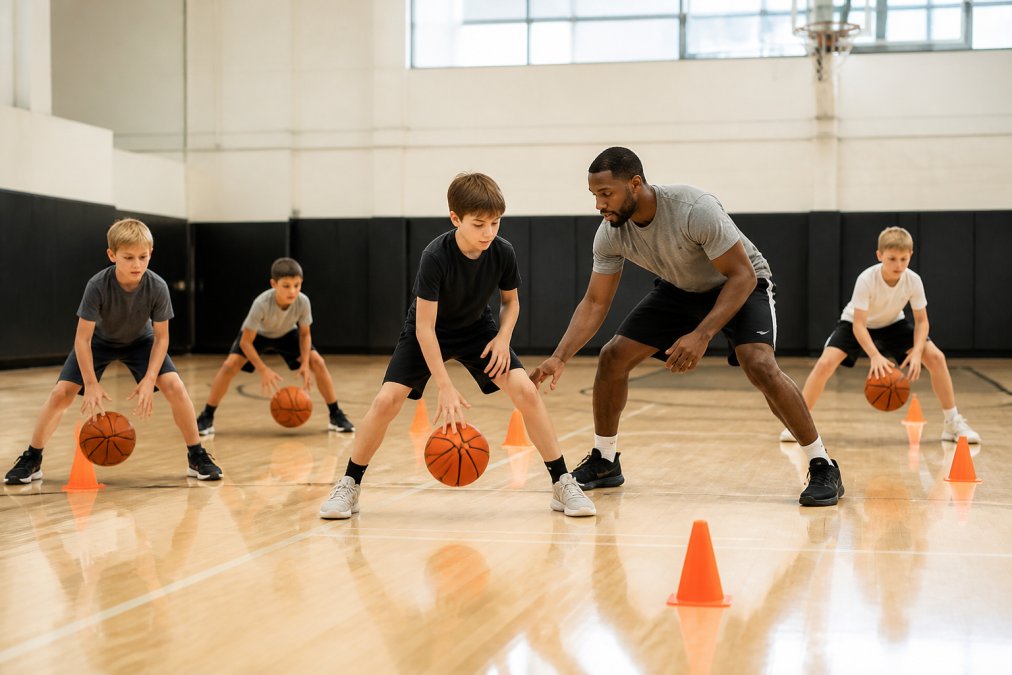
Recreational programs also provide something rep basketball often doesn't: low-pressure exposure to the game. Children who might feel intimidated by competitive tryouts can build confidence, develop friendships, and discover whether they actually enjoy basketball before making a commitment to rep play.
The investment in a solid recreational program typically pays dividends. Children who spend a year developing fundamental skills in a recreational setting are far more likely to succeed if they later choose rep basketball. They arrive at tryouts with better court sense, fewer bad habits, and genuine confidence in their abilities.
Basketball Skill Training Camps and Clinics
Skill training camps and clinics offer intensive, focused instruction outside the traditional league structure. These are typically short-term commitments, a week-long summer camp or a series of weekend clinics, designed to accelerate specific skill development.
Camps excel at addressing particular weaknesses. A child struggling with shooting form benefits from concentrated work with a skilled instructor. A player who needs to improve lateral movement and defensive positioning can attend a defensive-focused clinic. The instruction is often more specialized than what a recreational league coach can provide.
Many camps also serve as informal talent identification spaces. Coaches observe which children demonstrate coachability, athleticism, and basketball IQ. This can be valuable information for families considering rep basketball, you get a realistic sense of where your child stands compared to peers.
The downside is that camps are episodic. A week of intensive training creates momentum, but that momentum dissipates without ongoing practice and reinforcement. Camps work best as a supplement to regular league play, not as a replacement for it.
Summer camps are particularly valuable for children aged 7-10 who are still developing fundamental movements. A week focused on dribbling mechanics, shooting form, and footwork creates habits that carry forward. For older children considering rep basketball, position-specific camps can prepare them for the demands of competitive play.
One-on-One Coaching and Personalized Training
One-on-one coaching offers something team-based programs cannot: completely individualized instruction tailored to your child's specific strengths, weaknesses, and learning style.
This approach works exceptionally well for children who learn better in one-on-one settings or who need concentrated work on particular skills. A coach can diagnose exactly why a child's shooting form isn't consistent, address the specific mechanical issue, and reinforce the correction repeatedly until it becomes automatic.
Platforms like TeachMe.To connect families with vetted local coaches for personalized basketball lessons offer flexibility. Sessions can be scheduled around your family's calendar. The coach can focus entirely on your child's development without managing a group.
The financial commitment is higher than recreational leagues, but the intensity of instruction is also significantly higher. Many families use personalized coaching strategically, perhaps 2-4 sessions monthly to address specific technical issues while their child participates in a recreational league for game experience and team dynamics.
One-on-one coaching also works well for children preparing for rep basketball tryouts. A coach can assess your child's readiness, identify gaps in skill or game awareness, and provide targeted preparation that increases confidence and actual performance at tryouts.
How to Prepare for Rep Basketball Tryouts
If your child has developed foundational skills through recreational play, skill camps, or personalized coaching, you may decide that rep basketball is the right next step. Preparing for rep basketball tryouts requires intentional work in the months beforehand.
First, understand what coaches are actually evaluating. They're looking for basketball IQ, court awareness, decision-making, and understanding of positioning, as much as raw skill. They want to see coachability: how a player responds to instruction and correction. They observe athleticism: speed, agility, and lateral movement. And yes, they evaluate technical skills: shooting, ball handling, and footwork.
A realistic preparation timeline is 8-12 weeks. During this period, your child should be playing regularly, either in a recreational league or through personalized coaching, to maintain game experience and decision-making skills. Supplement with focused skill work on areas where your child is weakest. If shooting consistency is an issue, add extra shooting sessions.
Making the Right Choice for Your Young Athlete
The decision between rep basketball and alternatives to rep basketball ultimately rests on three factors: your child's readiness, your family's circumstances, and your child's actual basketball goals.
Frequently Asked Questions
What's the difference between house league and rep basketball?
House league focuses on skill development and equal playing time in a recreational, non-competitive environment. Rep basketball emphasizes competitive play, tryout-based team selection, and higher training intensity. House league suits beginners seeking a supportive atmosphere, while rep basketball appeals to players ready for serious competitive development. Both build fundamentals, but at different paces and with different team dynamics.
Are there alternatives to rep basketball that still develop serious skills?
Yes. Skill training camps, one-on-one coaching, and specialized training clinics offer focused skill development without the commitment or pressure of rep tryouts. These alternatives allow players to build shooting form, footwork, and court awareness at their own pace. Many beginners use these programs to prepare for eventual rep tryouts or simply to enjoy basketball in a less competitive setting while still advancing their abilities.
How should I prepare my child for rep basketball tryouts?
Start with consistent practice on core fundamentals: dribbling mechanics, shooting form, lateral movement, and footwork. Attend skill training camps to address specific weaknesses. Work on physical conditioning and agility drills. Build game IQ by playing in recreational leagues or pickup games. Consider personalized coaching to refine technique. Most importantly, ensure your child understands the competitive environment and is ready mentally for the higher training intensity rep basketball demands.
Is my 5-year-old too young to start basketball training?
No. Ages 4-6 are ideal for introductory basketball programs that focus on fundamental motor skills, coordination, and basic ball handling. At this age, the emphasis should be on play-based learning and developing physical literacy rather than competitive skill. Beginner-friendly programs introduce dribbling, basic footwork, and a love for the game without pressure. This foundational period is crucial for long-term athlete development.