 Listicle
What Are the Best Shooting Drills for Competitive Youth?
Last Updated: November 16, 2026
Quick Summary
The best shooting drills for competitive youth are built in progressions, starting with close-range form shooting and footwork, then moving to catch-and-shoot and off-the-dribble pull-ups, and finally to game-like reps with closeouts, a clock, or a read. Keep shooting early in practice before legs are tired, and track makes, attempts, shot quality, and range each session.
- Start one step from the rim, make five, then add the guide hand before moving back.
- Run ten minutes each of form work, catch-and-shoot, and game-like reps in practice blocks.
- In closeout reads, shoot if the defender is late, drive if high, side-step if short.
- Keep shooting blocks to 10 to 15 minutes for ages 9 to 11, with rest between blocks.
- Log attempts, makes, shot quality, and the furthest consistent spot every shooting session.
Table of Contents
- Why Competitive Youth Shooters Need Structured Shooting Drills
- Form Shooting and Footwork: The Foundation Every Drill Buildss
- Basketball Catch and Shoot Drills for Quick, Balanced Releases
- Off-the-Dribble and Pull-Up Shooting Drills for Competitive Players
- Game-Like Basketball Shooting Drills That Build Decision-Making
- Building Youth Basketball Practice Plans Around Your Shooting Drills
- A Complete Basketball Shooting Workout for Players at Home
- How to Track Makes, Attempts, and Shot Quality as Players Progress
- Frequently Asked Questions
Why Competitive Youth Shooters Need Structured Shooting Drills
Competitive youth basketball rewards players who can shoot on balance, under pressure, and without thinking about mechanics. That is why the best basketball shooting drills for competitive youth are built in progressions, not random repetition. Shooting work is best built around repeatable habits first, then speed, fatigue, and decisions. Shooting drills are structured, repeatable practice activities that isolate one shooting skill at a time and build toward game transfer. Below, we break down common drills used with competitive youth groups, organized from foundation to game-like pressure.
Form Shooting and Footwork: The Foundation Every Drill Buildss
Every shooting drill assumes one thing: the player can shoot the same way twice. Form shooting is the close-range work that locks in elbow alignment, a high release, and a consistent follow-through before range is added.
Close-Range Form Shooting Progression
Start one step from the rim, shooting with one hand. Make five, then add the guide hand. Move back a step only after five clean makes.
Footwork Patterns for Shot Readiness and Balance
Balance starts in the feet. Players benefit from landing on the same footwork every catch: inside foot first, hips loaded, shoulders square. For a deeper walkthrough on teaching this to kids, see our guide on how to improve basketball shooting form for kids. Players who want to build footwork specifically can read basketball footwork for young players.
Basketball Catch and Shoot Drills for Quick, Balanced Releases
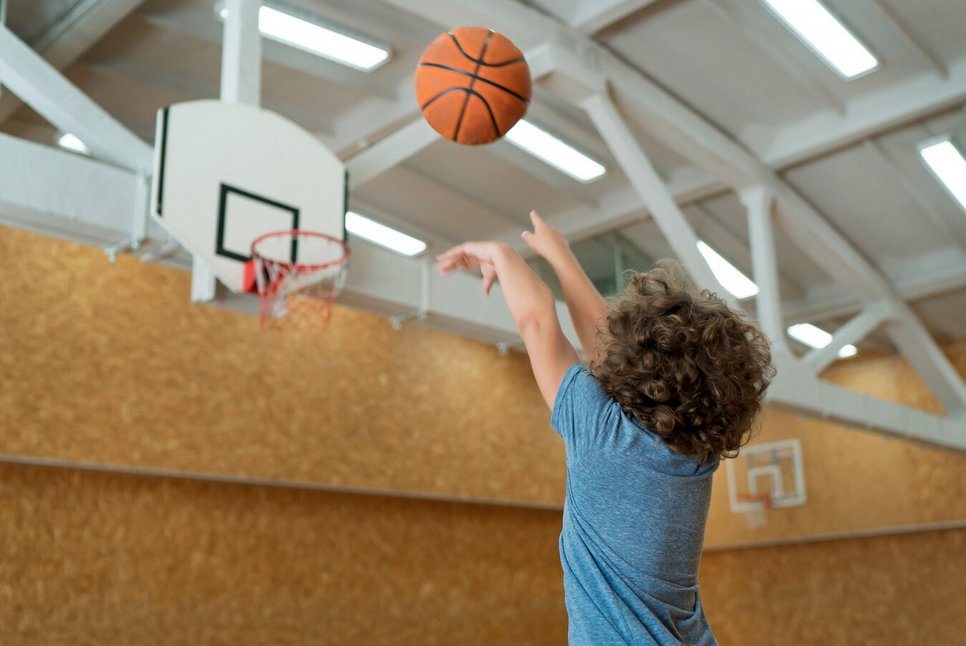
The catch-and-shoot is one of the most common shots a youth player takes, and many players rush it. A good catch-and-shoot drill trains the player to catch with hands ready, feet set, and shot up in one motion.
- Elbow catch and shoot: Partner passes from the wing; shooter catches at the elbow and shoots. Ten reps each side.
- Spot shooting: Five court spots, two makes at each before moving on.
- Away screen catch and shoot: Player curls off a screen, catches, and shoots without a dribble.
Coach's tip: Watch the feet, not the ball. A rushed shot almost always starts with happy feet.
Off-the-Dribble and Pull-Up Shooting Drills for Competitive Players
Off-the-dribble shooting is often what separates competitive players from recreational ones. The pull-up jumper is the shot that shows up when a defender closes out hard.
- One-dribble pull-up: Player dribbles once into a jump stop, then shoots. Five reps each direction.
- Two-dribble pull-up: Adds a change of pace before the shot.
- Mikan drill: Close-range finishing and touch work that builds the same soft hands needed for floaters.
Watch out: Players who practice pull-ups before they can shoot on balance will build a lean into every shot. Fix the form first.
Game-Like Basketball Shooting Drills That Build Decision-Making
Game-like basketball shooting drills add a defender, a clock, or a read. That is where shooting practice starts to look like the game, and where competitive youth players separate themselves from recreational shooters. The key is to progress the pressure in a deliberate order so players learn to make the same shooting decisions they will face in a real game.
Progressing Pressure by Age and Skill Level
A common approach among youth coaches is to introduce one new pressure at a time. For players ages 9 to 11 who are new to competitive play, a guided closeout where the defender closes out at half speed lets the shooter simply catch and shoot or take one dribble. For ages 12 to 14 with a season of competitive experience, live closeouts at game speed and a shot fake read add challenge. Players ready for competitive reps can join the GBL Youth League for officiated games and skills challenges.
Closeout Reads: Shoot, Drive, or Side-Step
Set up a passer at the wing and a defender at the top of the key. The defender closes out at game speed. The shooter must read the closeout and choose one of three actions: shoot if the defender is late and off balance, drive if the defender is high and crowding, or take a side-step if the defender is closing out short. Run five reps from each wing and five from the top.
Timed Spot Shooting with a Decision
Place five spots around the arc. The player starts at the first spot, catches a pass, and must shoot within two seconds. After each shot, the player sprints to the next spot. Run for 60 seconds and record makes and attempts. The clock forces the player to set feet and shoot on balance rather than drifting into the next spot.
5-4-3-2-1 Conditioning Drill with Shot Quality
The 5-4-3-2-1 drill is a shooting conditioning progression: five makes from close range, four from the elbow, three from the wing, two from the top of the key, and one free throw. Run it at the end of a shooting block so players shoot while fatigued. The measurable target is not just total makes but shot quality in the final two spots. A coach can rate each shot 1 to 5 for balance and release, and stop and reset if ratings drop in the last two spots.
Small-Group and Limited-Equipment Adaptations
Many youth teams do not have a full gym or a large coaching staff. With one hoop and three players, run the closeout read drill in a rotation: one shooter, one defender, one passer, and rotate after five reps. With one hoop and two players, use a chair or cone as a simulated closeout and have the shooter read the chair's position. With limited practice time, run the timed spot shooting as a two-minute station and the closeout reads as a three-minute station, which fits a 10-minute shooting block.
Connecting Drill Performance to In-Game Shot Selection
A made shot in a drill is not the same as a good shot in a game. After each game-like drill, ask the player to name the game situation where that shot would be appropriate.
Building Youth Basketball Practice Plans Around Your Shooting Drills
A shooting drill only works if it fits the practice. We build youth basketball practice plans in blocks: ten minutes of form work, ten minutes of catch-and-shoot, ten minutes of game-like reps. Keep shooting early in practice, before legs are tired.
For coaches ready to put these drills into a structured program, Prep for Rep is built around advanced drills and competitive play.
A Complete Basketball Shooting Workout for Players at Home
A basketball shooting workout for players can run without a full gym. Here is a simple home version:
- Form shooting at close range: 25 makes
- Spot shooting from five spots: 10 makes each
- One-dribble pull-ups: 20 total
- Free-throw routine: 20 makes
Players who want shooting to fit a full development plan should read our guide to competitive youth basketball training.
How to Track Makes, Attempts, and Shot Quality as Players Progress
Tracking makes and attempts turns shooting practice into feedback. A tally sheet alone does not show whether a player is improving; establishing a baseline, setting repeatable targets, and connecting drill numbers to in-game shot selection give clearer direction.
Baseline Tests to Run Before the First Drill Block
Before starting a shooting progression, run three baseline tests and record the numbers. First, a form shooting test: 10 shots from one step inside the free-throw line, shooting with one hand, and record makes. Second, a spot shooting test: five spots around the arc, five attempts each, and record makes and shot quality. Third, a free-throw test: 20 attempts and record makes. Repeat the same tests every four to six weeks.
Age- and Skill-Specific Benchmarks
Benchmarks should be realistic for competitive youth, not adult standards.
What to Track Each Session
Log four numbers every shooting session: attempts, makes, shot quality, and the furthest consistent spot. Shot quality means the shot was on balance, taken within the player's range, and released with the same mechanics as form shooting. A coach can rate each shot 1 to 5, where 3 is game-ready balance and 5 is perfect form. Record the furthest spot where the player made at least three of five attempts with a shot quality of 3 or higher; that is the player's current range. Also record makes in the final drill of the session to see whether accuracy holds under fatigue.
| What to Track | How to Measure | Why It Matters |
|---|---|---|
| Makes and attempts | Tally per drill | Shows real accuracy, not memory |
| Shot quality | Coach rating 1-5 | Catches bad mechanics early |
| Range | Furthest spot with 3 of 5 makes at quality 3+ | Guides when to extend range |
| Fatigue accuracy | Makes in final drill | Tests shot readiness under fatigue |
| Read percentage | Correct decisions in closeout drills | Connects practice to game shot selection |
Connecting Drill Numbers to In-Game Shot Quality
A high make percentage in a spot shooting drill does not automatically transfer to games. Coaches should chart shot quality in games using the same 1-to-5 scale and compare it to practice numbers. If a player makes 70 percent in spot shooting but takes off-balance shots in games, the drill is not transferring. Players who do this improve their shot selection faster because they learn to recognize good shots in real time.
Workload, Recovery, and Age-Appropriate Volume
Competitive youth players should not shoot the same volume as college or professional players. A practical guideline is to keep shooting blocks to 10 to 15 minutes for ages 9 to 11, 15 to 20 minutes for ages 12 to 14, and 20 to 25 minutes for ages 15 and up, with rest between blocks.
Players who want shooting to fit a full development plan should read our guide to competitive youth basketball training.
Competitive youth shooting improves when practice is structured, measured, and built on fundamentals.
Frequently Asked Questions
What are the best basketball shooting drills for competitive youth?
Start with close-range form shooting to lock in mechanics, then add catch and shoot drills from the elbow and wing. Progress to off-the-dribble pull-ups, then finish with game-like drills such as timed spot shooting and shooting off screens. Competitive youth benefit most from drills that combine repetition with pressure, because they practise the shots they will actually take in games rather than isolated mechanics.
How many shots should a youth basketball player take in practice?
Quality matters more than a raw number. Track makes and attempts so you can see accuracy trends rather than guessing. Keep sessions short enough that fatigue does not break down shooting form, and build volume gradually as the season progresses.
What is a good catch-and-shoot drill for youth basketball?
The elbow catch and shoot drill is a reliable starting point. A partner passes from the wing, the shooter steps into the pass with correct footwork, and releases from the elbow. Run 10 makes from each elbow, then rotate to the wings and corners. Add a closeout defender once accuracy is consistent so the drill mirrors game speed and shot readiness under pressure.
How can coaches make basketball shooting drills more game-like?
Add a decision, a defender, or a clock. Instead of a static spot shot, have players cut, receive a pass, and shoot within two seconds. Use timed formats like one-minute three-point shooting or the 5-4-3-2-1 drill that scores shot quality while fatigued. Game-like basketball shooting drills should force reads, such as shooting off an away screen or pulling up after a dribble handoff.
How often should youth basketball players practice shooting?
Pair team practices with a simple at-home basketball shooting workout for players so repetition continues between club sessions without adding travel time.
Recommended shooting block duration by age group