 how-to
Basketball Coaching for Confidence Building
Table of Contents
- Why Confidence Matters in Basketball Coaching
- The Role of Failure and Adversity in Building Resilience
- Youth Basketball Mental Toughness Drills That Work
- Motivational Coaching Scripts for Basketball Success
- How to Talk to Athletes About Performance Anxiety
- Building the Parent-Coach-Athlete Triangle for Success
- From Practice to Game Time: Sustaining Confidence Under Pressure
- Conclusion
Last Updated: August 14, 2026
Why Confidence Matters in Basketball Coaching
Confidence is the foundation that separates players who perform under pressure from those who freeze when it counts. At Tier 1 Sports, we've observed that basketball coaching for confidence building transforms how young athletes approach the game, not just their skill execution, but their willingness to take calculated risks, recover from mistakes, and lead their teammates.
When a player believes in their ability, they shoot with better mechanics. They make faster decisions. They communicate on defense instead of playing tentatively. This isn't psychology, it's biomechanics. A confident player's muscles don't tense up before release. A hesitant player's shot is already off before the brain catches up.
The real challenge isn't teaching confidence. It's protecting it. Young athletes arrive at basketball with varying levels of self-efficacy based on their experiences at home, in school, and in previous sports. Your job as a coach isn't to manufacture confidence from nothing. It's to remove the obstacles that kill it.
The Role of Failure and Adversity in Building Resilience
Failure is the accelerant of growth, but only if it's framed correctly. Many young players interpret a bad game or a missed shot as evidence that they don't belong. They didn't miss because they were tired or because the defense was tight. They missed because they're not good enough. This internal dialogue becomes self-fulfilling.
The most resilient players we've worked with share one trait: they've experienced meaningful failure early and survived it. Not coddled failure, real, public, consequential failure. And they've seen their coaches and parents respond not with disappointment but with curiosity. "What happened there? What would you do differently?"
Adversity teaches pattern recognition. A player who's only ever faced easy opponents doesn't know how to adjust. A player who's been down 15 points and clawed back understands that games aren't decided in the first quarter. They've built what sports psychologists call mental toughness, the ability to maintain focus and effort when conditions are uncomfortable.
The next-play mentality is the operational version of this principle. After a turnover, a missed defensive assignment, or a poor shooting night, the player's only job is to execute the next possession better. Not to dwell on the last one. Not to lose confidence because of one mistake. Move forward.
Youth Basketball Mental Toughness Drills That Work
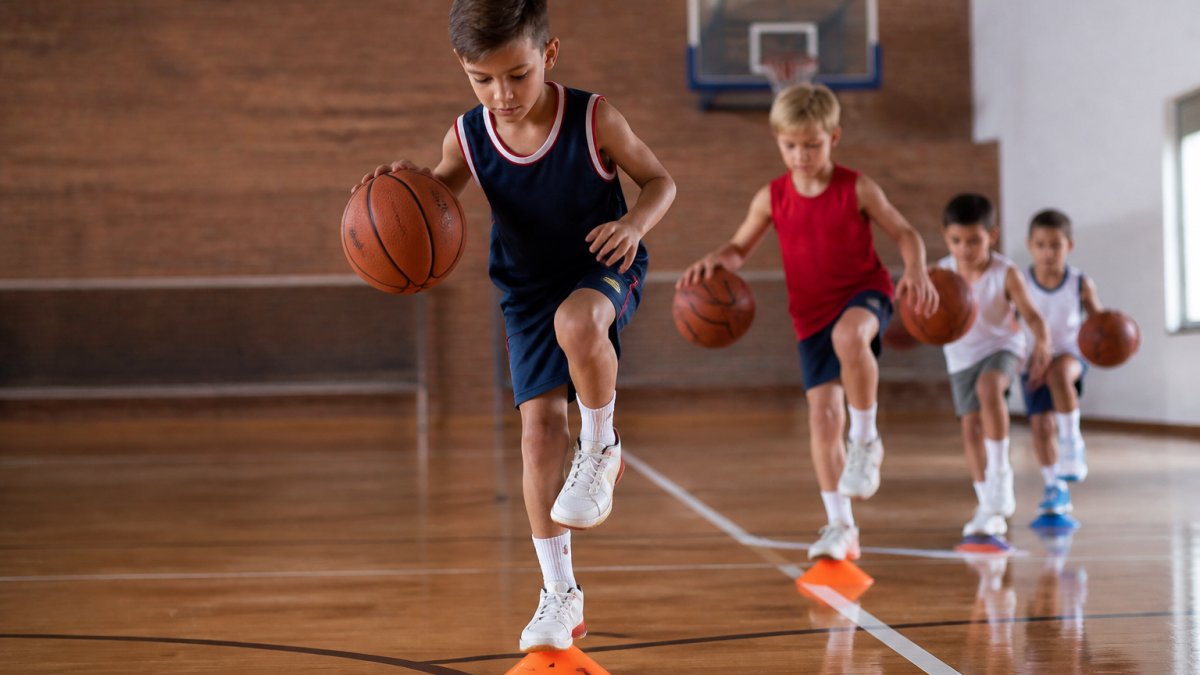
Mental toughness in basketball isn't built through motivational speeches. It's built through deliberate practice under conditions that matter. The drills that work are the ones where the outcome carries real consequence, not punishment, but significance.
Pressure-Situation Drills (5v5 with time constraints): Set up game scenarios with 2 minutes remaining and specific point deficits. Rotate which team is down, which team is defending a lead. The psychological demand is real because the situation is real. Players experience what it feels like to execute when the clock is running and the stakes are visible. Repeat this 10 times over a season, and players stop seeing pressure as foreign.
Individual Skill Tests with Scoring: Have players shoot free throws in sets of 10, with their makes recorded. Repeat weekly. The act of being measured, of knowing their numbers will be tracked, changes how they approach the drill. They can't hide behind group performance. Over time, players who consistently make 7 of 10 develop a different relationship with pressure than players who make 5 of 10. The data becomes part of their identity.
Competitive Small-Sided Games: Three-on-three or four-on-four games where one team stays on the court and one sits. The winning team stays, the losing team rotates out. This creates intrinsic motivation. No coach is forcing effort. The players are competing for court time. Small-sided games also demand higher skill execution because there's nowhere to hide, every possession matters more.
Failure-Focused Drills: Deliberately design drills where missing is the expected outcome early. For example, have players attempt shots from progressively farther distances until they miss. The drill ends when they miss. This normalizes failure as part of the process, not as a sign of inadequacy. Players learn that missing is data, not judgment.
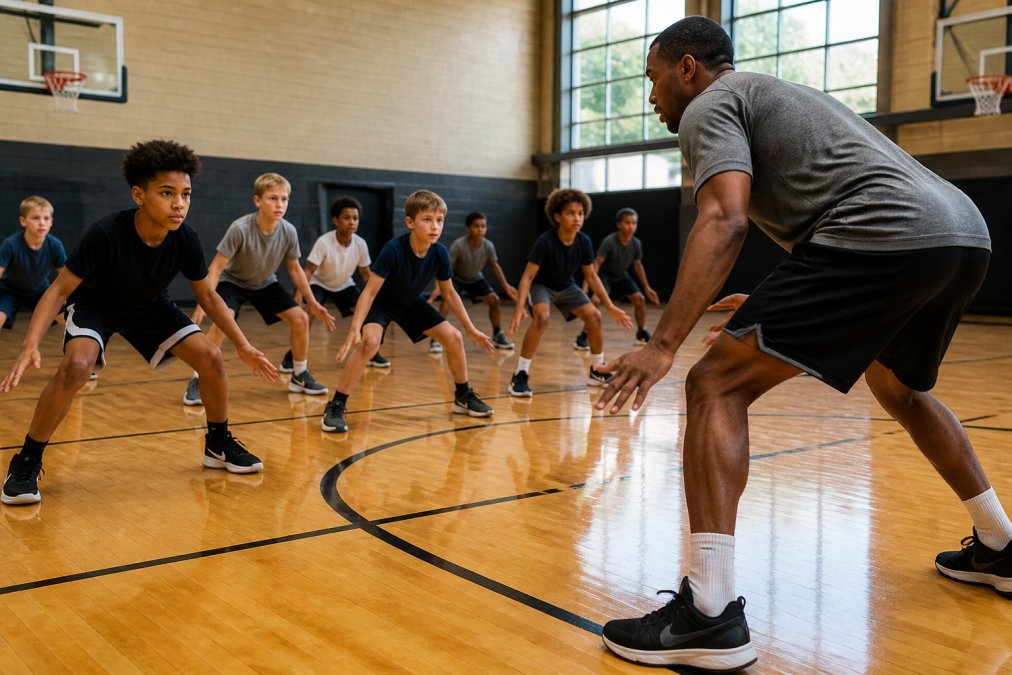
The common mistake is running drills that feel hard but don't matter. A grueling conditioning drill where players run until they're exhausted teaches pain tolerance, not confidence. A competitive drill where the outcome determines who plays teaches resilience.
Motivational Coaching Scripts for Basketball Success
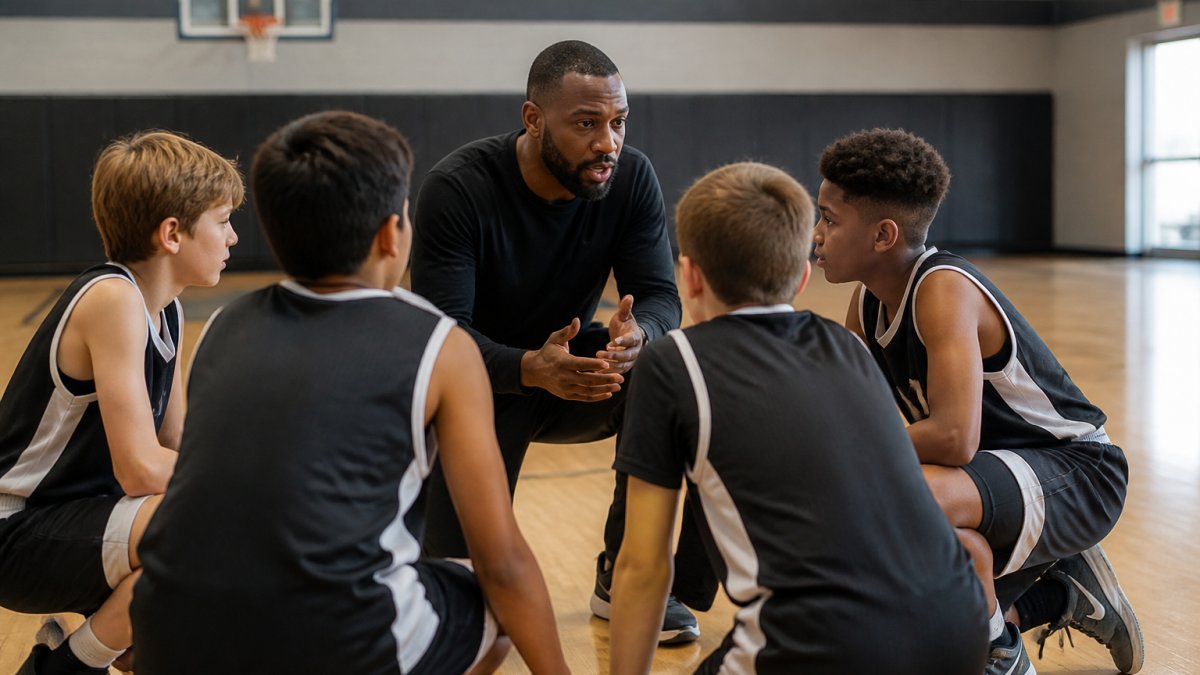
What you say in the locker room, on the sideline, and in one-on-one conversations shapes how players interpret their own performance. The language matters because it becomes their internal dialogue.
After a Loss or Poor Performance: "That game showed us exactly what we need to work on. The good news is we know what it looks like now. Let's spend the next week getting better at X, and we'll see a completely different result."
This frames the loss as diagnostic information, not as evidence of inadequacy. It also gives the player a clear path forward. They're not bad, they're incomplete. And incompleteness is fixable.
When a Player Makes a Mistake in the Game: "Good. Now let's see how you respond on the next possession."
Don't over-explain. Don't lecture about what they did wrong. The player already knows. What they need to know is that one mistake doesn't define them. The next play is the one that matters.
When a Player Lacks Confidence: "I've seen you make that shot a hundred times in practice. Your body knows how to do this. Trust the work you've put in."
This redirects their focus from doubt to evidence. They have made this shot. They have done the work. The skill exists. Confidence is often just permission to trust what's already there.
When a Player Succeeds: "That's what happens when you commit to the process. You prepared for that moment."
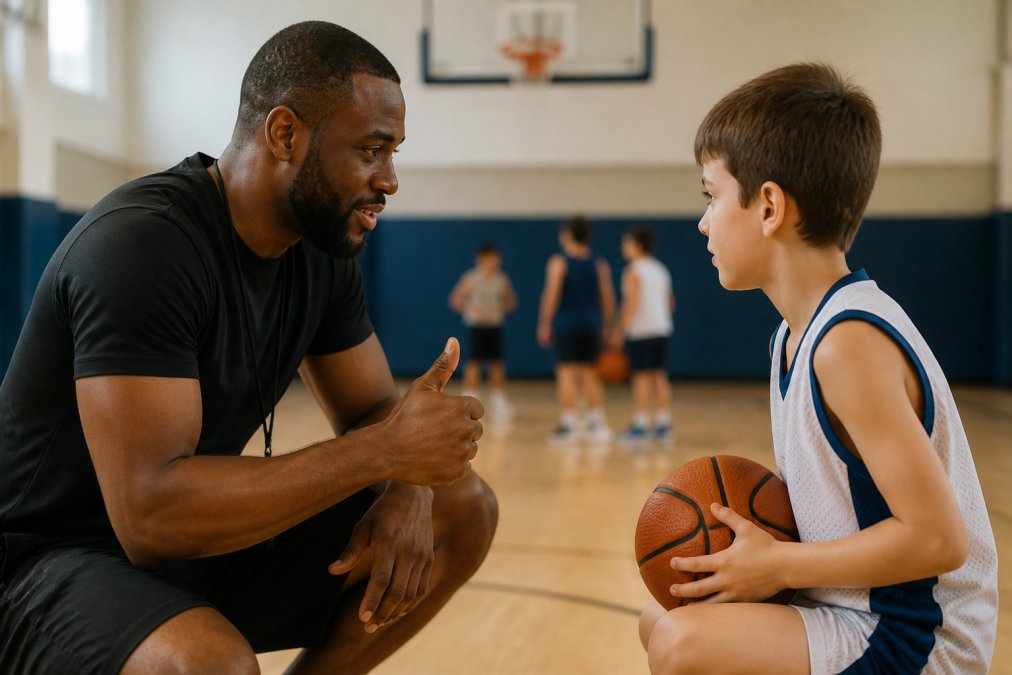
Effort-based praise builds intrinsic motivation. It tells the player that the outcome came from their choices, not from luck or natural talent. They can replicate this by making the same choices again.
How to Talk to Athletes About Performance Anxiety
Performance anxiety isn't weakness. It's a sign that the player cares about the outcome. The problem isn't the anxiety, it's that players don't know how to interpret it or use it.
Start by naming what's happening. "You're nervous because this matters to you. That's not a problem. That's why you're here." This reframes anxiety as information, not as a malfunction.
Then teach them the difference between productive nervousness and destructive worry. Productive nervousness is physical, elevated heart rate, sharp focus, readiness. Destructive worry is mental, catastrophizing about what could go wrong, doubting ability, imagining failure.
The practical tool is simple: control what you can control. A player can't control whether they make the shot. They can control their preparation, their focus on the next possession, and their effort on defense. When anxiety starts to spiral, redirect to the controllable variables.
"You can't control whether that three goes in. You can control whether you're set on defense the next possession. Focus there."
Emotional regulation is a skill that improves with practice. Players who've been taught to notice their anxiety without being controlled by it, who've been given specific breathing techniques or mental reset routines, handle pressure differently than players who've been told to "just relax."
Building the Parent-Coach-Athlete Triangle for Success
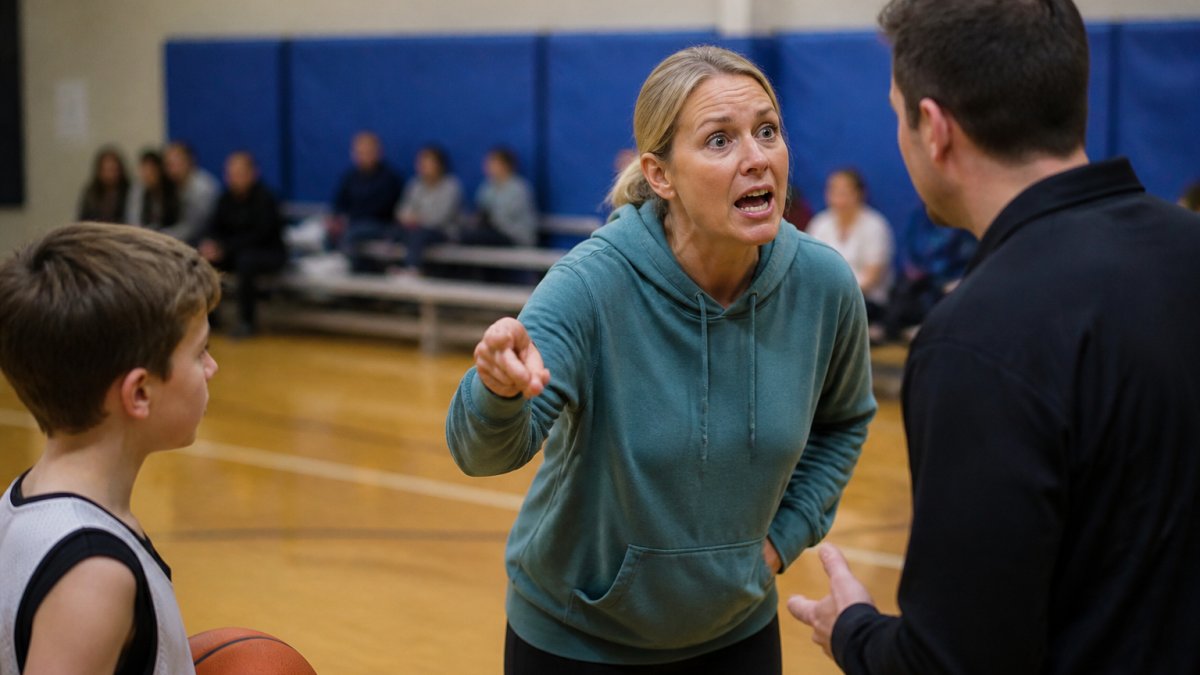
The most confident young athletes have parents and coaches aligned on philosophy. When a coach emphasizes learning and a parent emphasizes winning, the player is caught between two value systems. When both emphasize growth, the player's confidence is reinforced at home and at the gym.
The parent-coach-athlete triangle works when:
Parents understand the coaching philosophy. Before the season starts, coaches should explain what they prioritize, skill development, competitive excellence, character, all three. Parents should know whether their child will get equal playing time or whether playing time is earned. They should know how mistakes are handled, how feedback is delivered, and what role parents play in reinforcing the coach's message.
Coaches communicate progress to parents regularly. Not just scores and standings. Specific feedback about what the player is improving at, where they still need work, and what the parent can reinforce at home. This creates a unified message. The parent isn't guessing whether their child is progressing. They have data.
Parents reinforce effort and learning, not outcomes. The conversation after a game should be about what the player learned, not about the final score. "What did you notice about their defense?" "What would you do differently next time?" This mirrors what the coach is doing. The player hears the same priority at home that they hear at the gym.
Coaches involve parents appropriately without overstepping. Parents should never coach during games or override the coach's decisions. But they should feel welcome to ask questions, understand their child's role, and support the program's culture.
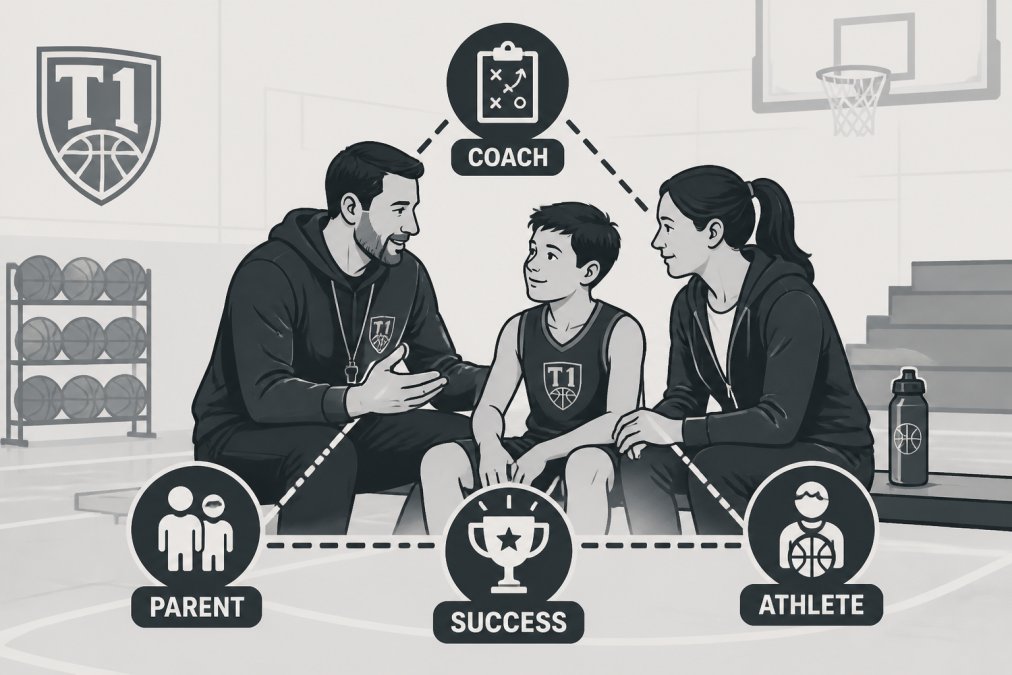
The breakdown happens when coaches exclude parents from the philosophy, when parents try to coach their own child, or when mixed messages confuse the player about what success looks like. The strongest programs have parents who understand their role and coaches who actively communicate.
From Practice to Game Time: Sustaining Confidence Under Pressure
The gap between practice confidence and game-time confidence reveals a fundamental problem: the player hasn't practiced under game conditions. They've practiced the skill in isolation, but not under the psychological load of competition.
This is why scrimmages and competitive drills matter more than repetition alone. A player who's made 100 three-pointers in practice but never shot one in a competitive situation will likely miss their first game attempt. Not because they can't shoot. Because they've never practiced shooting while their heart is racing and the score matters.
The solution is graduated pressure. Early in the season, run scrimmages where the outcome has no consequence. Players can experiment, make mistakes, and learn what it feels like to shoot or defend in a game situation without the weight of standings or tournament implications. As the season progresses, increase the stakes. By playoff time, the player has already experienced hundreds of possessions under pressure.
In-game confidence also depends on role clarity. A player who's unsure whether they're supposed to shoot or pass, whether they're defending the best player or the weakest, or whether they're expected to initiate offense or play off the ball will hesitate. They'll second-guess their decisions. Clear roles eliminate this friction.
"You're our primary ball handler on this lineup. Your job is to get us into our sets and make the right read. Shoot if it's there, but don't force it." This player now has permission to act. They know their role. They can execute with confidence instead of paralysis.
The final piece is preparation. A player who's seen film of the opponent, who knows what to expect defensively, who's practiced the specific sets they'll run against this team, that player arrives with different confidence than one who's walking in blind. Preparation isn't just about strategy. It's about removing uncertainty.
Conclusion
Building confidence in young basketball players isn't about pep talks or participation trophies. It's about creating an environment where failure is normalized, where effort is recognized, where roles are clear, and where the coach-parent-athlete triangle is aligned on what success actually means.
At Tier 1 Sports, we've built our programs around this principle. Our coaching emphasizes skill development in a supportive environment where players experience both competitive challenge and genuine care for their growth. We focus on building resilience through deliberate practice, clear communication between coaches and parents, and a culture where every player, whether they're in our introductory programs for 4-6 year-olds or competing in our rep basketball tryouts for ages 11-16, understands that confidence comes from consistent effort and honest feedback.
If you're looking for a basketball program that prioritizes both skill development and mental toughness, join Tier 1 Sports and experience the difference a confidence-focused approach makes. Our expertly tailored programs ensure every athlete finds their pathway to success. Discover what's possible when passion and skill development go hand-in-hand. Check out our rep tryouts today.
Frequently Asked Questions
How do you build confidence in young basketball players?
Build confidence through consistent positive reinforcement, small achievable goals, and deliberate practice. Start with drills where success is possible, celebrate effort over outcomes, and use constructive feedback that focuses on what the player did well and what to improve next time. Repetition and mastery of fundamental skills create the foundation for self-efficacy in game situations.
What should you say to an athlete struggling with lack of confidence?
Focus on effort-based praise and the next play mentality. Say things like 'That didn't work, let's try this adjustment' or 'I saw great effort on that possession; here's what we'll do differently.' Avoid generic reassurance. Instead, acknowledge the challenge, remind them of past successes they've overcome, and give them a specific, actionable next step. This builds psychological safety and shows you believe in their ability to improve.
Can you explain how youth basketball mental toughness drills reduce performance anxiety?
Mental toughness drills build emotional regulation and game awareness by exposing players to pressure in controlled settings. Drills like free-throw contests, game-situation scenarios, and pressure-based small-sided games train the nervous system to stay calm when stakes feel high. Repetition in these conditions creates familiarity, which reduces anxiety. Players develop confidence because they've practiced the exact mental and physical responses needed in real games.
What's the difference between building confidence in practice versus maintaining it in games?
Practice confidence builds through skill acquisition and mastery; game confidence requires exposure to pressure, mistakes, and real consequences. To sustain confidence under game-time pressure, coaches must deliberately create challenging practice scenarios that mimic game stress. Use the next play mentality, after mistakes, focus immediately on the next possession rather than dwelling on the error. This habit transfers directly to games and prevents performance anxiety from derailing confidence.
This article was written using GrandRanker