 listicle
Best Basketball Coaching for Kids: A Parent's Guide
Table of Contents
- What Makes Basketball Coaching for Kids Effective
- Age-Appropriate Basketball Programs and Skill Development
- Youth Basketball Skills Training: From Dribbling to Court Awareness
- How to Improve Basketball IQ in Young Players
- Benefits of Rep Basketball for Competitive Youth Athletes
- Red Flags in Youth Basketball Coaching
- How to Choose the Right Basketball Program for Your Child
- Home-Based Practice Routines to Support Skill Development
Last Updated: August 26, 2026
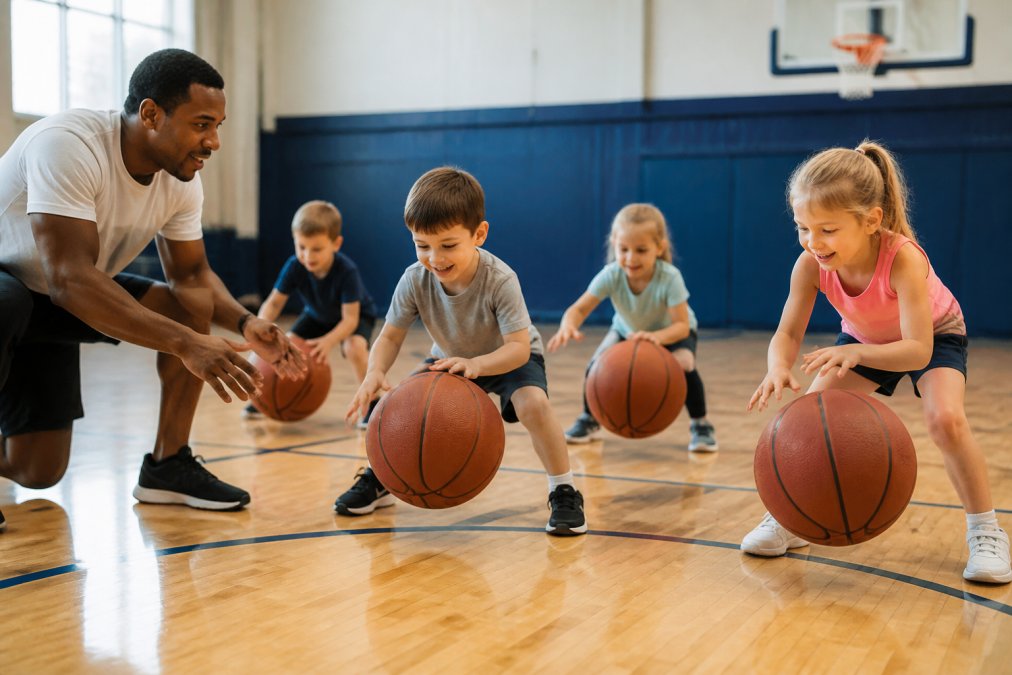
What Makes Basketball Coaching for Kids Effective
Effective basketball coaching for kids isn't about drilling perfection into young athletes, it's about building confidence, teaching fundamentals in an age-appropriate way, and creating an environment where players want to return. This approach aligns with Canada Basketball's Long-Term Development model, which emphasizes athlete-centered coaching that prioritizes fun and participation at younger ages before introducing competition.
The best coaches focus on developing players, not just winning games. This distinction matters enormously in the 4-10 age range, where motor skill development and love of the game matter far more than scoreboard results. A coach who understands this uses practice time differently: less standing in line, more hands-on skill repetition; less criticism, more encouragement. The confidence kids build in these early years directly shapes whether they'll pursue basketball seriously later or drop out.
At Tier 1 Sports, the coaching philosophy centers on this principle: meet each player where they are developmentally, build their skills progressively, and fuel their passion for the game. Coaches who understand effective youth basketball adapt their teaching to how kids actually learn, using short, clear instructions, demonstrating more than lecturing, celebrating effort, and modifying rules and equipment to match developmental stages. A 5-year-old doesn't need regulation-height hoops; they need a ball they can control, a hoop they can reach, and constant opportunities to shoot and succeed.
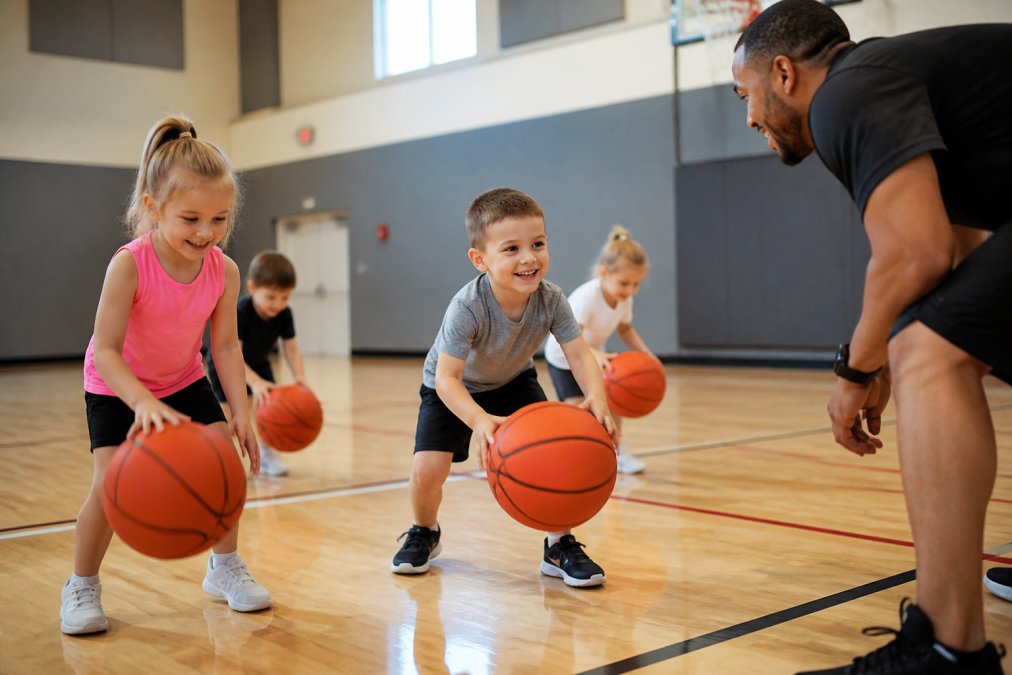
Age-Appropriate Basketball Programs and Skill Development
Basketball coaching for kids requires a completely different approach at each developmental stage. Understanding what kids can physically and mentally handle at each age is the foundation of effective coaching.
Ages 4-6: Introduction and Fundamentals
At this stage, basketball coaching focuses entirely on physical literacy and fun. Children are developing fundamental movement skills: balance, coordination, and basic motor control. Basketball is the vehicle, not the destination.
Programs use oversized, lighter basketballs and lowered hoops (often 1.8 meters or lower). A 45-minute session might include 10 minutes of warm-up movement games, 20 minutes of skill stations (dribbling, passing, shooting), and 15 minutes of modified games where everyone touches the ball and shoots. There's minimal standing in lines and maximum participation.
Common mistakes at this age: expecting defensive positioning, running complex plays, or using regulation equipment. Kids this age need to see the ball go in the basket, feel success, and have fun.
Ages 7-10: Building Core Techniques
This is the sweet spot for skill development. Kids have better coordination, longer attention spans, and the ability to understand basic strategy ([EXTERNAL_LINK: peer-reviewed research on cognitive development in children | ncbi.nlm.nih.gov]). Coaching introduces proper shooting mechanics, footwork, ball handling, and defensive positioning within a play-based, enjoyable framework.
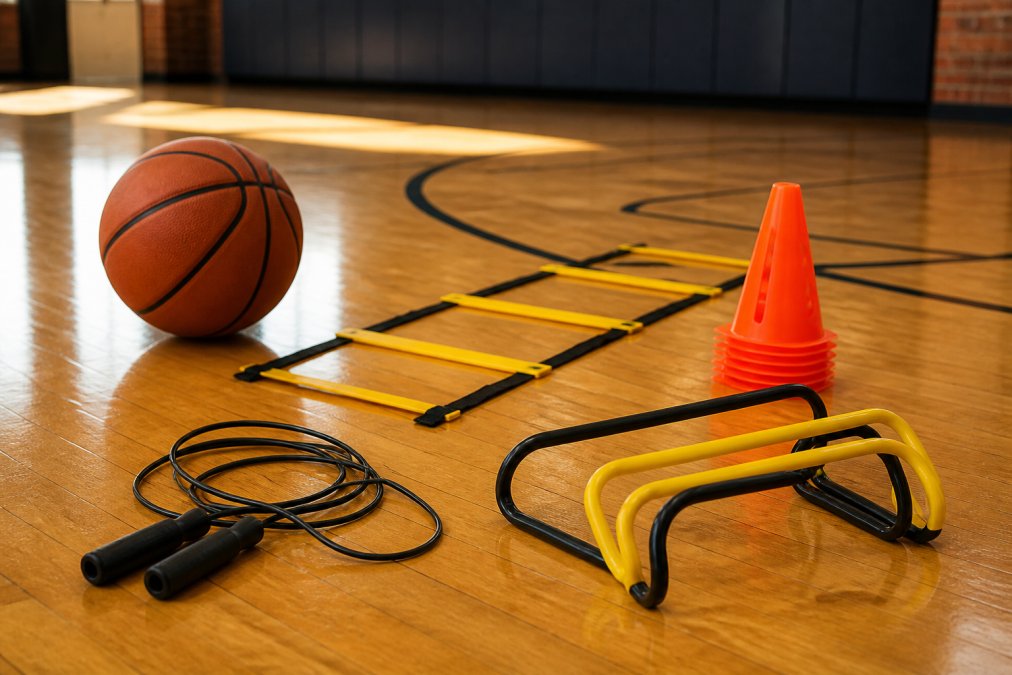
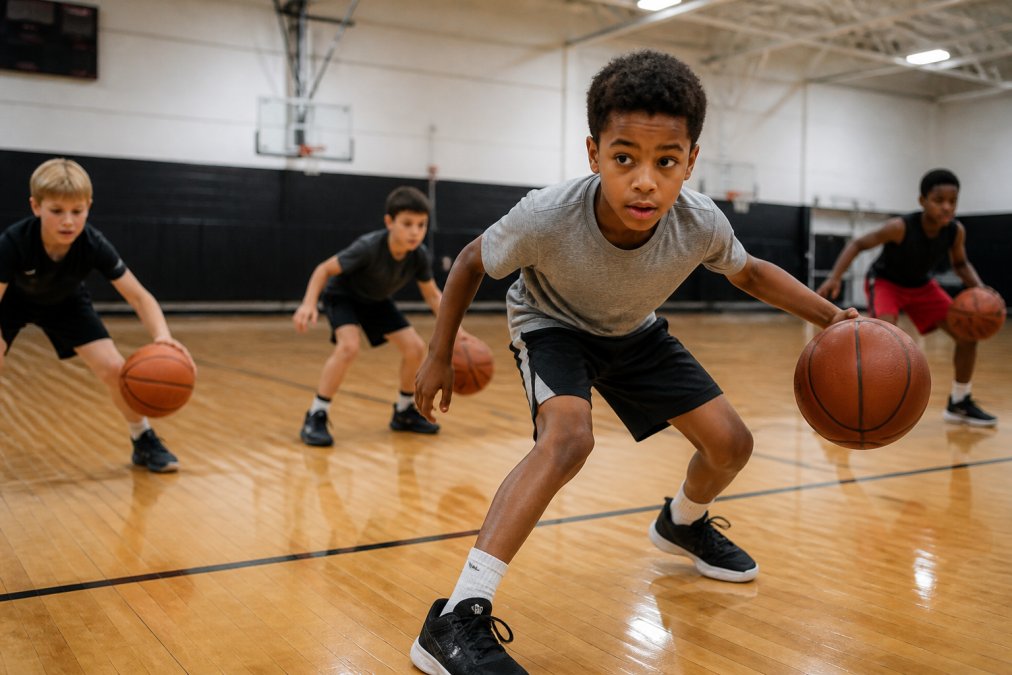
Youth basketball skills training at this age includes structured drills designed to be engaging. A dribbling drill becomes a game. A shooting drill becomes a competition. A defensive positioning exercise becomes tag with a purpose. The coaching philosophy remains: skill development through activity.
This is when rep basketball programs often begin recruiting competitive players. Some kids show interest in taking the game seriously, while recreational programs remain valuable for children who want to play without pressure.
Ages 11-16: Competitive Development and Rep Basketball
By ages 11-16, basketball coaching splits into two pathways: recreational and competitive. Recreational programs continue focusing on fundamentals, fitness, and enjoyment. Competitive rep basketball introduces advanced strategy, higher-intensity conditioning, and game-like pressure.
Rep basketball programs accelerate skill development. Coaches work on shooting consistency, advanced ball handling, court awareness, and basketball IQ. Players learn multiple positions, understand offensive and defensive schemes, and develop mental toughness. The coaching philosophy emphasizes player development over winning, though winning naturally follows when players are well-developed.
Youth Basketball Skills Training: From Dribbling to Court Awareness
Youth basketball skills training covers the technical foundation every player needs. Ball handling and dribbling form the foundation, progressing from stationary dribbling to dribbling while running with changes of pace and direction.
Shooting mechanics matter early. Proper coaching emphasizes footwork (balanced stance, knees bent), hand position, release point, and follow-through. Young players should shoot from distances they can realistically make.
Passing accuracy and court awareness develop together. Players learn to see teammates, understand spacing, and make accurate passes under game conditions. Defensive positioning and footwork prevent bad habits, teaching proper stance, lateral movement, and how to stay between an opponent and the basket.
How to Improve Basketball IQ in Young Players
Basketball IQ is the ability to understand what's happening in a game and make good decisions. It's developed through coaching, experience, and deliberate practice.
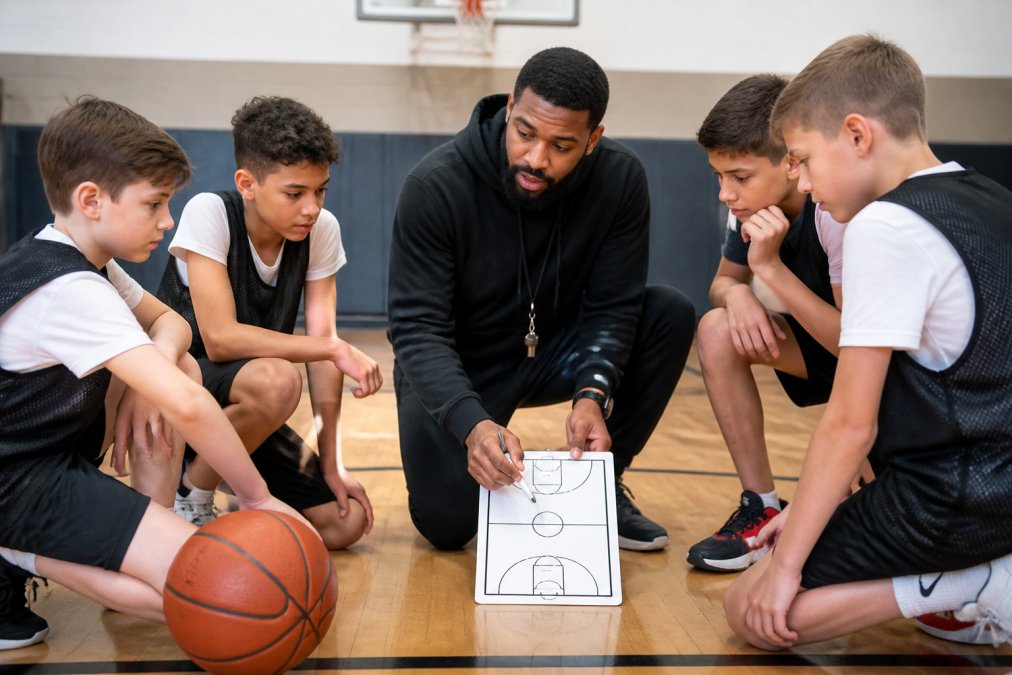
The best way to improve basketball IQ is through game play, not drills. Kids learn by playing in situations where they have to make decisions. A coach who pauses games to explain why a play worked builds understanding faster than one who only runs drills.
Coaching techniques include asking questions instead of giving answers. Instead of saying "You should have passed there," ask "What did you see when you had the ball?" Small-sided games (3-on-3 or 4-on-4) force more decision-making because players touch the ball more often. Watching film of their own games helps young players see what they did and why it worked or didn't. Tier 1 Sports incorporates this kind of feedback into coaching sessions, helping players develop game sense beyond what drills alone can teach.
Benefits of Rep Basketball for Competitive Youth Athletes
Rep basketball offers structured competitive play for young athletes serious about the sport. Competitive rep basketball programs provide consistent, high-level coaching from experienced professionals who understand player development at advanced levels.
Rep teams offer year-round structure. Rather than playing a single seasonal league, rep players train in off-season, play competitive games during the season, and often attend camps or clinics. This consistency accelerates skill development.
Team chemistry develops differently in rep basketball. Players train together regularly, travel together, and build relationships that often last years. Playing against stronger teams forces improvement and builds resilience. For some, this is the pathway to university scholarships or beyond.
Red Flags in Youth Basketball Coaching
Not all basketball coaching for kids is effective. Some coaches prioritize winning over development, others lack proper training, and some create environments where young players feel pressured rather than supported.
A major red flag is a coach who benches players for mistakes. Young players learn by trying and failing. Effective coaches give players opportunities to recover from mistakes in games. Another warning sign is excessive focus on winning at young ages. Coaches who yell at 8-year-olds for losing are prioritizing the wrong thing.
Lack of structure or clear progression indicates a coach who hasn't thought carefully about player development. Be cautious of coaches who lack certification or formal training in youth development. Canada Basketball's National Coaching Certification Program provides standardized training that ensures coaches understand safe, developmentally appropriate instruction. Poor communication with parents is also telling, a program should clearly explain its philosophy, what skills are being taught, and how players are progressing.
How to Choose the Right Basketball Program for Your Child
Selecting the right basketball coaching depends on your child's age, skill level, interests, and your family's priorities.
Start by clarifying your family's goals. Is your child looking to have fun and stay active? Develop serious skills? Compete at a high level? These questions determine whether recreational, developmental, or rep basketball is the right fit.
Observe a practice before enrolling. Watch how the coach interacts with players. Do they encourage and correct, or yell and criticize? Are all players getting meaningful reps? Is the practice organized with clear objectives? A 15-minute observation tells you more than any marketing material.
Ask about the coaching philosophy directly. What does the program prioritize, winning or development? How do they handle mistakes? What's their approach to playing time? Check coach qualifications and talk to current parents about their experience. Consider location and schedule, a program that fits your logistics is worth more than a slightly better program that becomes a burden.
For competitive rep basketball, understand the tryout process and what happens if your child doesn't make the team. Tier 1 Sports offers clear pathways from recreational to competitive, so players can progress at their own pace.
| Consideration | What to Look For | Red Flag |
|---|---|---|
| Coaching Philosophy | Emphasis on development and skill-building | Focus solely on winning |
| Practice Observation | Organized structure, all players get reps, positive feedback | Disorganized, some players sit idle, excessive criticism |
| Coach Qualifications | Certified through Canada Basketball or equivalent | No formal training or credentials |
| Parent References | Positive feedback, child has improved, good communication | Vague responses, complaints about playing time |
| Age-Appropriate Approach | Skills match developmental stage, fun is prioritized | Advanced skills forced too early, pressure instead of enjoyment |
| Program Clarity | Clear philosophy, curriculum, progression | Vague about what's taught or how players progress |
Home-Based Practice Routines to Support Skill Development
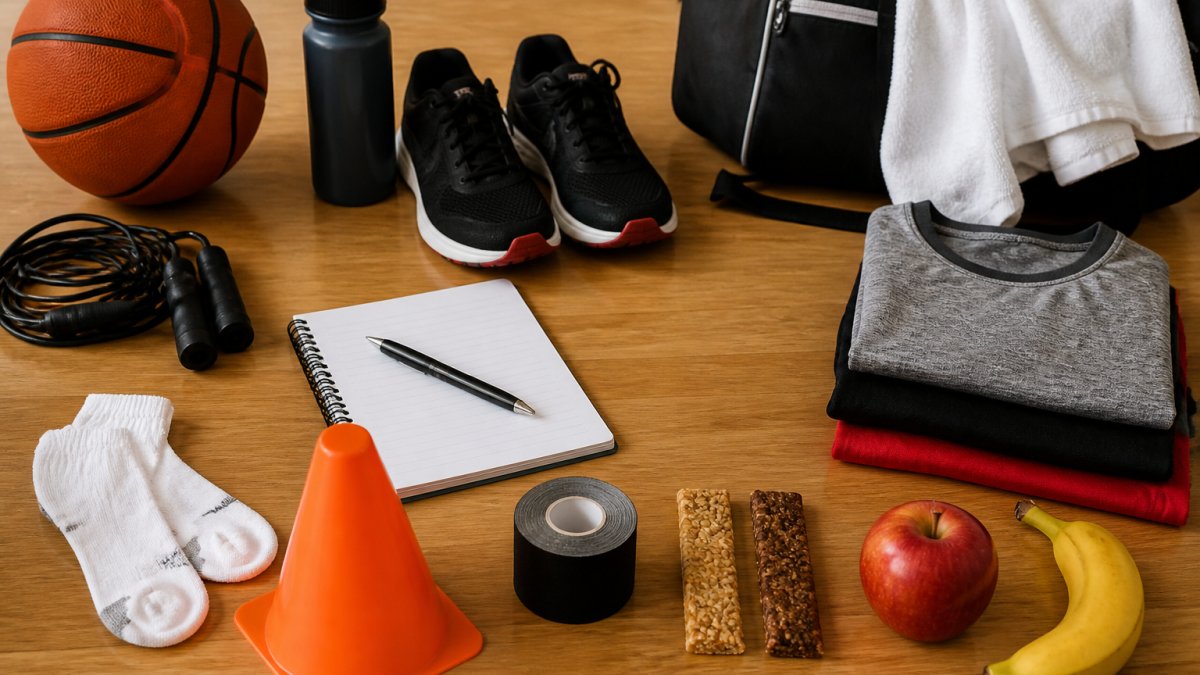
Not all basketball development happens at organized programs. Home practice routines reinforce what coaches teach and accelerate improvement between sessions.
For younger players (ages 6-10), home practice should be fun and low-pressure. A 15-minute session is enough. Set up a hoop in the driveway or find a local court. Let your child shoot, dribble, and play games like HORSE or knockout. Keep it playful.
For older players (ages 11-16), more structured practice becomes valuable. A 30-45 minute session 3-4 times per week makes a real difference. Focus on one or two specific skills per session: shooting mechanics, ball handling, or footwork. Have your child do 10-15 repetitions of a drill, then move to the next.
Shooting practice is something any parent can facilitate. Set a target number of makes from different spots on the court. This develops consistency and builds the habit of following through on every shot. Dribbling drills can be done in a driveway: figure-8 dribbling, dribbling while walking, dribbling with changes of pace.
The key to effective home practice is consistency. Three focused 30-minute sessions per week beats one long, unfocused session. Your child should feel like practice is normal, not something special or forced.
Choosing the right basketball coaching for kids is one of the most important decisions you'll make for your child's athletic development. The right program builds skills, confidence, and a genuine love for the game. Tier 1 Sports offers age-appropriate programs from introductory play for 4-year-olds through competitive rep basketball for serious athletes, all built on the principle that player development and passion for the sport go hand-in-hand. Explore their tailored pathways, observe a practice, and see which program matches your child's stage and goals. Get started with Tier 1 Sports and help your young athlete realize their full potential on the court.
Frequently Asked Questions
What is the best age to start basketball coaching for kids?
Most children benefit from structured basketball coaching starting around age 4-5, when they develop the coordination and focus needed for basic fundamentals. Very young children (2-4) benefit from unstructured play and physical literacy programs. By age 7, children are ready for more organized instruction in dribbling, shooting mechanics, and defensive positioning. The key is matching the program's intensity and complexity to your child's developmental stage rather than starting as early as possible.
How can I tell if a coach has a good coaching philosophy for youth basketball?
Quality youth basketball coaches balance skill development with fun and confidence building. Look for coaches who emphasize fundamentals (ball handling, footwork, shooting form) over winning at young ages, incorporate game time alongside drills, and create an inclusive environment where all players get meaningful playing time. Ask about their approach to mistakes, coaches who view errors as learning opportunities rather than reasons for benching build better basketball IQ and player resilience. Request to observe a practice or speak with other parents before committing.
What is the difference between recreational and rep basketball programs?
Recreational programs focus on skill development, fun, and participation for all players, with less emphasis on competition and winning. Rep basketball is competitive and selective, players try out, and teams are formed based on ability level. Rep programs offer more intensive training, higher-level competition, and greater time commitment. The benefits of rep basketball include accelerated skill development, exposure to competitive game sense, and opportunities to play alongside equally skilled peers. Recreational programs are ideal for building foundational skills and confidence, while rep basketball suits children ready for serious competitive development.
How do I know if my child is ready for rep basketball tryouts?
Your child may be ready for rep basketball around age 11-12 if they have solid fundamentals (can dribble and shoot with reasonable form), show genuine interest in competitive play, understand basic game rules, and can handle constructive feedback. They should be able to focus during longer practice sessions and be motivated by improvement rather than just winning. Rep tryouts assess both skill level and attitude. If your child is somewhere between recreational and competitive, ask about intermediate programs that bridge the gap before committing to full rep basketball.
This article was written using GrandRanker