 listicle
Elite Youth Basketball Programs: A 2026 Review
Table of Contents
- What Makes an Elite Youth Basketball Program Stand Out
- Youth Basketball Training Costs: Recreational vs. Competitive
- How to Choose a Youth Basketball Coach and Program
- Player Development Philosophy and Long-Term Athlete Development
- Finding Verified Programs Through the Ontario Basketball Association Club Directory
- Elite Programs vs. House League: What Parents Should Know
- Safety, Injury Prevention, and Program Standards
- Frequently Asked Questions
Last Updated: September 21, 2026
What Makes an Elite Youth Basketball Program Stand Out
An elite youth basketball program combines structured skill development with a coaching philosophy that prioritizes long-term athlete growth over short-term wins. The difference between elite programs and recreational leagues lies in their commitment to fundamental mastery, age-appropriate progression, and measurable skill assessment.
Elite programs balance competitive intensity with player confidence, recognizing that young athletes develop at different rates and thrive in different environments.
Elite youth basketball programs must offer tailored pathways for different ages and skill levels, with fundamentally different structures for 4-6 year-olds versus 13-16 year-olds.
Key indicators of program quality include clear coaching methodology, transparent assessment criteria, and evidence of player development, not marketing language alone.
Youth Basketball Training Costs: Recreational vs. Competitive
Cost differences reflect resources invested in coaching expertise, facility access, and program structure. Understanding fee breakdowns helps parents evaluate whether pricing is justified.
Typical cost ranges:
Pricing for programs depends on various factors such as program type, age group, and intensity level. For specific pricing, please visit our website or contact us directly.
What's included in competitive program fees:
- Practice time and facility rental: Dedicated court access (2-3 sessions per week) with professional-grade facilities.
- Coaching staff: Certified coaches with formal youth development credentials and often university or professional playing experience.
- Tournament entry fees:
- Travel costs: Some programs bundle travel into fees; others charge separately.
- Player assessment and development tracking: Video analysis, skill assessments, and progress reports.
- Uniforms and equipment: Official uniforms, warm-up gear, and specialized training apparel.
Hidden costs to ask about:
When evaluating a program's quoted fee, ask specifically whether the following are included or charged separately:
- Tournament entry fees and travel costs
- Uniform and apparel requirements
- Strength and conditioning sessions (if offered)
- Off-season training or summer camps
- Team social events or fundraising obligations
- Coaching fees for private skill development
- Facility membership or court rental fees
Some programs quote a base fee but expect families to cover tournament travel independently, while others bundle travel into higher upfront costs.
Cost-benefit considerations:
Competitive training justifies its cost when your child demonstrates genuine interest in skill advancement and competitive play. Casual players are well-served by recreational options; serious athletes benefit from structured progression and specialized coaching.
Cost alone doesn't indicate quality. Match program cost to value delivered: coaching credentials, facility quality, competitive tier, and demonstrated player outcomes.
How to Choose a Youth Basketball Coach and Program
The right coach teaches technique, builds confidence, and models sportsmanship. Use objective evaluation criteria rather than marketing claims or reputation alone.
Verify coaching credentials:
Confirm coaches hold formal qualifications in youth development:
- Coaching certifications: NCCP Level 1 is baseline; Level 2 (Intermediate) and Level 3 (Advanced) indicate deeper expertise.
- First aid and CPR certification: All coaches working with youth should maintain current Standard First Aid and CPR Level C certifications.
- Sport-specific training: Basketball certifications from the Ontario Basketball Association or equivalent provincial bodies.
- Background checks: Legitimate programs conduct vulnerable sector checks on all staff.
The Ontario Basketball Association maintains directories of certified programs and coaches; this is your first verification step. Programs listed in the Ontario Basketball Association club directory have met minimum standards for coaching credentials and facility safety.
Ask prospective programs these specific questions:
- What NCCP level certifications do your coaching staff hold?
- How long have your coaches worked with youth athletes in this age group?
- How do you assess individual player progress, and how often do you communicate progress to parents?
- What's your approach to playing time? How do you balance competitive selection with player development?
- Can you provide references from current parents or athletes who have been in your program for at least one season?
- How do you handle player development versus winning? What happens when a player struggles?
- Do you use video analysis or skill assessments to track improvement?
Observe a practice session, use these concrete indicators:
Attend a practice session and observe these coaching behaviors:
Positive indicators of effective coaching:
- Immediate, specific feedback on technique ("Elbow at 90 degrees" not "Good shot").
- All players receive meaningful ball touches; no one stands idle.
- Coaches demonstrate drills before execution.
- Mistakes are learning opportunities, corrected without embarrassment.
- Clear practice structure: warm-up, skill development, game-situation practice, cool-down.
- Drill difficulty adjusted in real time based on performance.
- Encouraging, constructive communication.
Red flags to watch for:
- Coaches talk more than players practice.
- Playing time determined by perceived "talent" rather than effort or improvement.
- Negative language or yelling to motivate.
- Drills lack progression; same difficulty regardless of performance.
- Coaches don't explain what or why they're teaching.
- Unequal practice time among players.
- Focus on winning drills over skill development.
Evaluate program philosophy alignment:
Ask programs to explain their player development philosophy. A well-designed program articulates how curriculum changes across age groups, balances competitive intensity with confidence-building, supports multi-sport participation and off-season rest, and develops players who show improvement and commitment. Programs using identical drills across all ages or claiming "elite training" for 5-year-olds misunderstand child development.
Check for Long-Term Athlete Development (LTAD) alignment:
Ask whether the program follows LTAD principles: Ages 4-8 emphasize fundamental movement and enjoyment; ages 9-12 focus on skill refinement and competitive introduction; ages 13-16 develop sport-specific excellence. Programs aligned with LTAD show different objectives, progressions, and coaching approaches for each age bracket.
Seek parent references with specific questions:
Ask current parents: How much did skills improve? Did the coach communicate progress? How does the coach handle struggling players? Would you recommend it? Did your child enjoy it? Seek specific feedback about skill development and coaching quality, not just "my child loves it."
Player Development Philosophy and Long-Term Athlete Development
A sound player development philosophy recognizes that youth athletes progress through predictable stages guided by Long-Term Athlete Development (LTAD) models.
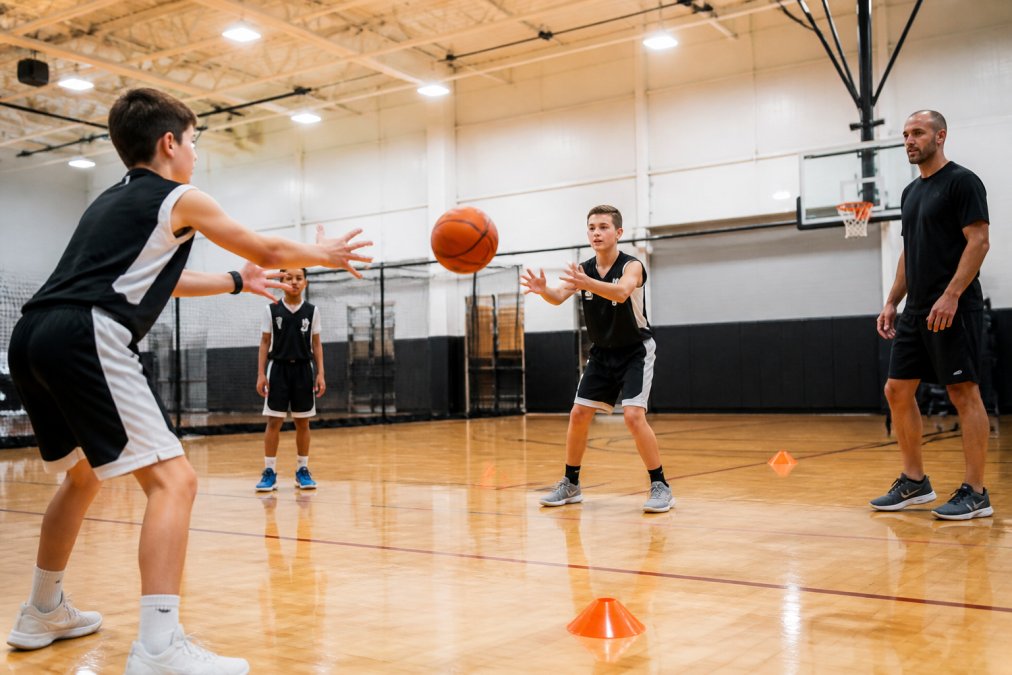
LTAD frameworks structure curriculum to match developmental stages: ages 4-8 focus on fundamentals and enjoyment; ages 9-12 on skill refinement and competitive introduction; ages 13-16 on sport-specific excellence. Programs claiming "elite training" for 5-year-olds misunderstand child development. Ask how curriculum changes across age groups; programs using identical drills across all ages aren't following evidence-based practice.
Finding Verified Programs Through the Ontario Basketball Association Club Directory
The safest way to identify legitimate elite youth basketball programs is through the Ontario Basketball Association club directory. This official resource lists sanctioned clubs across all regions, including the Peel-Halton area.
The directory includes clubs verified by the provincial governing body.
Elite Programs vs. House League: What Parents Should Know
The choice between elite competitive programs and recreational house leagues hinges on your child's readiness and your family's priorities.
Safety, Injury Prevention, and Program Standards
Ask programs about their approach to player safety:
- Do you have certified first aid and CPR staff on site?
- How do you progress training intensity and volume?
- What's your protocol if a player gets injured during practice?
- Do you screen for overtraining or burnout?
- How do you manage return-to-play after injury?
Look for programs that understand the difference between training intensity and training volume. High intensity (challenging drills) is appropriate for developing skills. High volume (too many sessions) without recovery is harmful.
Frequently Asked Questions
What criteria should parents use to evaluate elite youth basketball programs?
Look for coaching credentials, facility quality, and a clear player development philosophy aligned with long-term athlete development (LTAD) principles. Check whether the program emphasizes skill acquisition over winning at young ages, offers age-appropriate curriculum, and maintains safety standards. Verify the program is registered with the Ontario Basketball Association. Ask about coach certifications, training intensity, and whether the program includes mentorship beyond basketball.
How much does elite youth basketball training typically cost compared to recreational programs?
Costs vary significantly based on program type, age group, and intensity level. Recreational programs generally cost less than competitive rep basketball. Elite training academies and rep teams typically require higher investment due to facility quality, coaching expertise, and training frequency. For specific pricing for programs in your area, contact individual providers directly or visit the Ontario Basketball Association club directory to compare options.
How do I find reputable basketball clubs registered with the Ontario Basketball Association?
Visit the Ontario Basketball Association's official club finder at basketball.on.ca/find-a-club/. This resource provides a comprehensive directory of sanctioned clubs across all regions, including Peel-Halton. Registered clubs meet provincial standards and safety requirements, giving parents confidence in program legitimacy. The directory allows you to filter by region and view verified club information.
What is the difference between a prep school basketball program and a club-based elite academy?
Prep school programs are typically residential or boarding-focused institutions that integrate basketball training with academic curriculum. Club-based elite academies operate independently and focus primarily on basketball skill development and competitive play. Club programs offer more flexibility for families who want elite training without relocating, while prep schools provide intensive, immersive environments for serious athletes committed to high-level development.
What certifications or standards should a youth basketball coach have?
Reputable coaches hold certifications from recognized bodies such as Basketball Canada or provincial coaching associations. Look for credentials in youth athlete development, first aid/CPR certification, and evidence of ongoing professional development. Coaches should understand long-term athlete development principles and age-appropriate training methods. Ask programs directly about their coaching staff qualifications and whether coaches have experience working with your child's age group.