 comparison
Best Sportball Alternatives for Basketball
Table of Contents
- Why Sportball Alternatives Matter for Athletic Development
- Soccer: Building Footwork and Spatial Awareness
- Volleyball: Developing Hand-Eye Coordination and Quick Reflexes
- Gymnastics and Tumbling: Foundational Motor Skills for Young Athletes
- Track and Field: Speed, Agility, and Aerobic Capacity
- Youth Basketball Training Programs vs. Multi-Sport Development
- Introductory Basketball Sessions for Beginners and Cross-Training Athletes
- Choosing the Right Alternative: A Decision Framework
Last Updated: August 20, 2026
Why Sportball Alternatives Matter for Athletic Development
Athletic development in young athletes benefits from exposure to multiple sports. Research shows that children who explore soccer, volleyball, gymnastics, and track and field alongside basketball develop broader physical literacy, stronger motor skills, and more resilient athletes. Each sport activates different muscle groups and neural pathways, creating skills that transfer directly to the court.
At Tier 1 Sports, we've observed that players who engage in multi-sport development during ages 6-12 progress faster through skill acquisition phases than single-sport specialists. They understand game mechanics at a deeper level because they've experienced invasion games, net-and-wall dynamics, and individual performance metrics across different contexts.
The golden window for motor skill development peaks between ages 6-12. During this period, the nervous system is most responsive to new movement patterns. Sportball alternatives capitalize on this biological reality by introducing varied movement patterns when the brain is most primed to learn them.
Soccer: Building Footwork and Spatial Awareness
Soccer demands footwork precision and spatial awareness that directly translates to basketball's court movement and positioning. Young athletes who play soccer develop the ability to move fluidly without looking down at their feet, a skill that separates competent basketball players from exceptional ones.
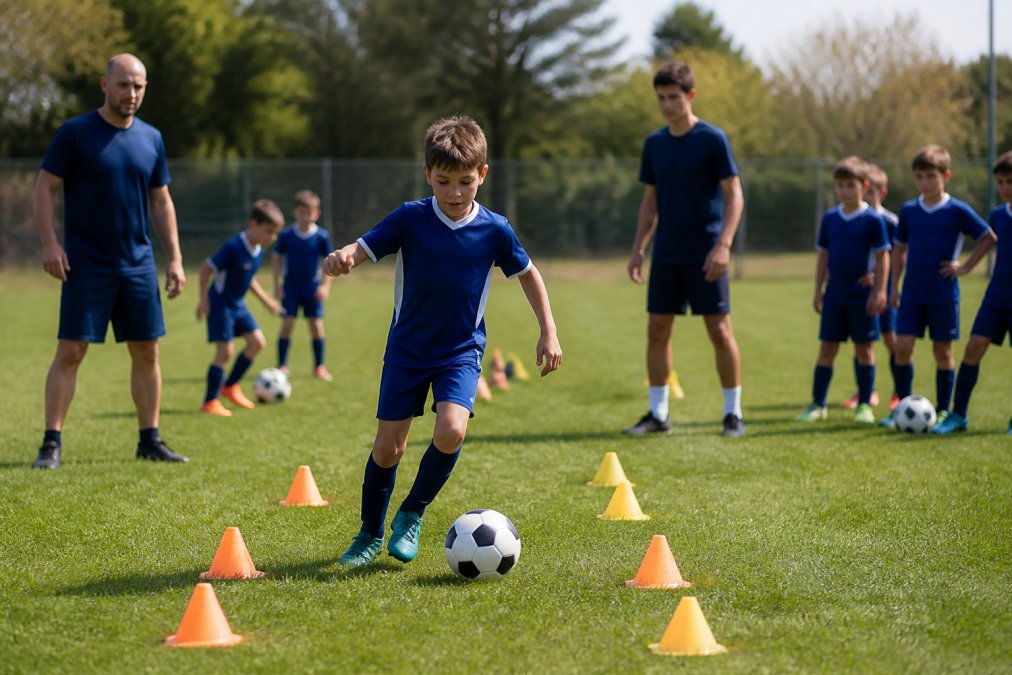
Soccer requires rapid directional changes, explosive first steps, and ankle stability that translate directly to basketball's lateral defense, quick cuts, and change-of-direction drills. Spatial awareness, understanding where teammates, opponents, and open space exist without constant visual confirmation, is soccer's greatest gift to basketball development. This translates to better off-ball movement in basketball, smarter defensive positioning, and faster decision-making during game play.
The Georgetown Soccer Club offers house league programs aligned with Canada's Long Term Player Development Strategy for ages U3 to U18. Their emphasis on skill development in a non-competitive environment means young athletes focus on footwork and spatial awareness without pressure that can inhibit learning. Programs include both outdoor and indoor futsal options, allowing year-round participation.
Volleyball: Developing Hand-Eye Coordination and Quick Reflexes
Volleyball is the gold standard for developing hand-eye coordination and explosive reaction time. The sport's core mechanic, tracking a fast-moving object and responding with precise hand placement, trains the exact neural pathways that basketball's catching, passing, and shooting require. Unlike basketball's continuous ball contact, volleyball's discrete touches force athletes to develop acute timing and spatial judgment.
Quick reflexes in volleyball are non-negotiable. Players must react to a ball traveling at speeds up to 80 km/h with minimal warning. This trains anaerobic reaction speed, the ability to initiate movement in under 200 milliseconds. Basketball players with this capability show measurably faster defensive rotations, quicker reaction to steals, and sharper transition defense.
Halton Hills Volleyball offers "Spikes" learn-to-play programs for grades 5-8, focusing on fundamental volleyball skills including bumping, blocking, serving, and spiking. Their play-based methodology emphasizes enjoyment and skill acquisition simultaneously, creating an environment where young athletes naturally develop the quick reflexes that transfer to basketball.
Gymnastics and Tumbling: Foundational Motor Skills for Young Athletes
Gymnastics and tumbling build the foundational motor skills that underpin all athletic movement. Balance, flexibility, body awareness, and core strength developed through gymnastics create a physical foundation that accelerates basketball skill acquisition. Young athletes with gymnastics experience demonstrate superior body control, faster learning of complex movement sequences, and greater injury resilience.
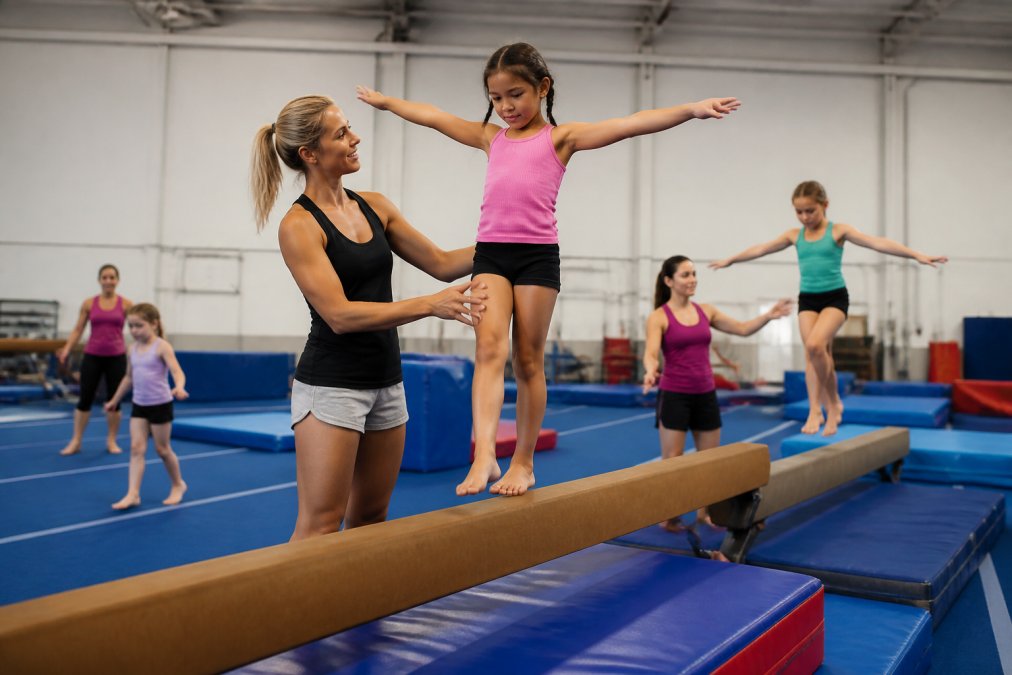
Gymnasts learn to control their body through space, adjust movement mid-sequence, and execute complex multi-step skills. These abilities transfer directly to basketball's footwork patterns, jump shot mechanics, and defensive positioning. Core strength developed through gymnastics is foundational for basketball's explosive jumping, rapid directional changes, and stability during contact. Young basketball players with gymnastics backgrounds show fewer lower-back and knee injuries due to improved core control and body awareness.
The Halton Hills Gymnastics Centre offers recreational programs for ages 18 months to 18 years, including gymnastics, trampoline, tumbling, and parkour-inspired "Ninja" classes. Their progressive skill systems allow young athletes to build foundational motor competency at their own pace, focusing on balance, flexibility, strength, and coordination.
Track and Field: Speed, Agility, and Aerobic Capacity
Track and field develops three critical athletic qualities that basketball demands: speed, agility, and aerobic capacity. Young athletes develop personal accountability and performance ownership through track and field that carries directly into basketball's competitive environment.
Speed development in track and field is systematic. Sprinting mechanics, explosive first step, stride length optimization, and acceleration patterns transfer directly to basketball's quick-burst movements. Aerobic capacity developed through track and field creates the cardiovascular foundation necessary for basketball's high-intensity intervals. Basketball demands repeated bursts of anaerobic effort separated by brief recovery periods. Athletes with strong aerobic capacity maintain performance quality throughout games and practices.
Flying Angels Halton Hills Track & Field Club offers programs for elementary (ages 5-14) and high school (ages 15-18) athletes, with expert coaching for various track and field events. Their focus on skill refinement and event exploration allows young athletes to discover their strengths while building foundational speed and agility.
Agility training in track and field emphasizes rapid directional changes and movement efficiency, essential for basketball's defensive footwork, lateral movement, and change-of-direction drills.
Youth Basketball Training Programs vs. Multi-Sport Development
Research and coaching experience consistently show that multi-sport participation during ages 6-12 produces superior long-term athletes compared to single-sport specialization during the same period. Specialized basketball training focuses skill acquisition in one domain, but for younger athletes, this approach often misses the broader motor development window.
Multi-sport development during ages 6-12 builds physical literacy, the ability to move competently across varied contexts. This foundation allows young athletes to learn basketball skills faster and more deeply when they eventually specialize. The optimal approach combines both: multi-sport participation during ages 6-12, followed by increased basketball specialization during ages 13-16.
Tier 1 Sports recognizes this progression. Our programs for ages 4-10 emphasize foundational skills and enjoyment, while our rep basketball programs for ages 11-16 provide specialized training for athletes ready to commit to competitive development. Young athletes who play multiple sports show greater resilience, broader social networks, and more sustainable passion for athletic participation.
| Development Phase | Age Range | Primary Focus | Sport Structure | Basketball Role |
|---|---|---|---|---|
| Foundational | 4-8 | Motor skills, enjoyment | Multi-sport, recreational | Introduction and play |
| Building | 9-12 | Physical literacy, skill transfer | Multi-sport with basketball focus | Skill development with alternatives |
| Specialization | 13-16 | Basketball-specific skills | Basketball primary with complementary training | Competitive development |
Introductory Basketball Sessions for Beginners and Cross-Training Athletes
Introductory basketball sessions serve two distinct populations: young beginners aged 4-6 experiencing basketball for the first time, and cross-training athletes aged 7-10 developing basketball skills alongside other sports. Both emphasize enjoyment and foundational skill acquisition.
For young beginners aged 4-6, introductory sessions focus on ball familiarity, basic dribbling, and game enjoyment. The primary objective is creating positive associations with basketball. Young athletes who enjoy their first basketball experience are far more likely to continue participation and develop genuine passion for the sport.
Cross-training athletes aged 7-10 bring different needs. They've already developed motor skills through other sports and are ready for more structured skill development. These athletes can learn fundamental basketball mechanics, proper shooting form, defensive positioning, and basic offensive concepts while maintaining participation in complementary sports.
Tier 1 Sports offers introductory sessions specifically designed for these age groups. Our programs for ages 4-6 emphasize play-based learning with ball familiarity and basic movement patterns. For ages 7-10, we provide structured skill development that respects the multi-sport involvement many young athletes maintain.
Choosing the Right Alternative: A Decision Framework
Selecting the right sportball alternative depends on your child's age, current physical development, interests, and athletic goals.
Age-Based Recommendations:
For ages 4-6, prioritize foundational motor skills and enjoyment. Gymnastics and introductory basketball sessions are ideal. For ages 7-10, expand into multi-sport participation. Soccer develops footwork and spatial awareness, volleyball builds hand-eye coordination, and continued gymnastics strengthens core stability. For ages 11-16, basketball can become the primary focus while complementary sports provide continued cross-training benefits.
Interest-Based Selection:
Your child's genuine interests matter more than theoretical benefits. A child who loves soccer will develop stronger footwork through passionate engagement than a child forced into track and field.
Physical Development Considerations:
Children develop at different rates. Observe your child's comfort with ball skills, jumping ability, and directional control. These indicators matter more than age alone.
Accessibility and Cost Considerations:
Georgetown Soccer Club's house league programs start at $175 for a 14-week futsal session. Halton Hills Gymnastics Centre offers 13-week sessions starting at $195. Contact Flying Angels Track & Field and Halton Hills Volleyball directly for current pricing. Consistent, enjoyable participation over multiple seasons matters more than which specific alternative you choose.
Your child's athletic journey doesn't begin and end with basketball. The sportball alternatives available in your community, soccer, volleyball, gymnastics, and track and field, provide complementary development that accelerates basketball skill acquisition while building resilient, confident young athletes. At Tier 1 Sports, we understand that the best basketball players often come from multi-sport backgrounds. Our introductory sessions and skill-development programs are designed for young athletes exploring their athletic potential across multiple contexts. Explore our age-specific programs and discover how Tier 1 Sports can help your young athlete develop skills, fuel passion, and realize their full potential.
Frequently Asked Questions
What sportball alternatives to basketball build the most transferable skills?
Soccer, volleyball, gymnastics, and track and field each develop distinct athletic foundations. Soccer builds footwork, spatial awareness, and agility. Volleyball strengthens hand-eye coordination and quick decision-making. Gymnastics develops balance, flexibility, and body control. Track and field improves speed, cardiovascular endurance, and explosive power. All four enhance motor skills and physical literacy that transfer directly to basketball performance.
What are the benefits of multi-sport vs specialized basketball training for youth?
Multi-sport participation develops broader athletic abilities, prevents overuse injuries, and maintains engagement through variety. Young athletes in multiple sports build diverse motor skills and physical literacy. Specialized basketball training accelerates sport-specific skill acquisition and tactical understanding. The optimal approach depends on age: younger children (ages 4-10) benefit most from multi-sport exposure, while older athletes (ages 11-16) can transition to more focused training while maintaining cross-training benefits.
At what age should children start introductory basketball sessions after playing other sports?
Children as young as 4-5 can begin introductory basketball sessions, especially if they have prior multi-sport experience. By ages 7-10, athletes with gymnastics, soccer, or track backgrounds possess the foundational motor skills and spatial awareness to accelerate basketball learning. Introductory basketball sessions for beginners are designed to welcome athletes at any skill level, making the transition smooth regardless of prior sport experience.
Which sportball alternative is best for developing hand-eye coordination and ball handling?
Volleyball is exceptional for hand-eye coordination, requiring precise ball contact and rapid visual processing. Soccer develops foot-eye coordination and spatial awareness. Both sports complement basketball skill development. For younger athletes (ages 5-8), gymnastics and track and field build foundational balance and proprioception that enhance later ball-handling abilities across all sports.
This article was written using GrandRanker