 comparison
Best Basketball Shoes for Youth Ankle Support
Table of Contents
- How We Chose the Best Basketball Shoes for Youth Ankle Support
- Quick Comparison: Top Picks for Youth Ankle Support
- 1. Nike Kids' Preschool Ja 2: Best for Young Beginners
- 2. Nike LeBron XXIII: Maximum Structural Support
- 3. Nike Sabrina 4 'Light Work': Best for Speed and Agility
- 4. PUMA Dagger: Best Budget-Friendly Option
- High-Top Basketball Shoes for Kids: Do They Really Help?
- Basketball Shoes for Kids with Wide Feet: Finding the Right Fit
- Frequently Asked Questions
Last Updated: October 17, 2026
How We Chose the Best Basketball Shoes for Youth Ankle Support
Youth ankle support is the single most requested feature from parents shopping for basketball shoes, and for good reason. Growing feet, loose ligaments, and a court full of bigger kids make stability the first thing we look at. At Tier 1 Sports, we coach players from age four through sixteen.
Our selection process focused on four things: rearfoot lockdown, lateral containment, cushioning that protects without dulling court feel, and fit for growing feet. We weighed high-top and mid-cut construction, heel counter rigidity, and outsole traction. We also factored in availability in youth sizing and price in Canadian dollars, because a shoe that only comes in adult sizes is useless to a nine-year-old.
Below, we break down four picks across different needs and budgets, then answer the high-top question and the wide-foot fit problem that comes up in conversations with parents.
Quick Comparison: Top Picks for Youth Ankle Support
Here is the short version: the Nike Kids' Preschool Ja 2 suits beginners, the LeBron XXIII gives the most structure, the Sabrina 4 favors speed, and the PUMA Dagger is the value pick. All four deliver meaningful ankle coverage, but they solve different problems.
| Shoe | Starting Price (CAD) | Cut | Best For | Standout Ankle Feature |
|---|---|---|---|---|
| Nike Kids' Preschool Ja 2 | $95.00 | Low | Young beginners | Secure lacing for midfoot lockdown |
| Nike LeBron XXIII | $94.98 | High | Maximum structure | Reinforced heel counter |
| Nike Sabrina 4 'Light Work' | $114.74 | Low | Speed and agility | Internal midfoot band |
| PUMA Dagger | $79.99 | Mid | Budget buyers | Mid-cut ankle coverage |
1. Nike Kids' Preschool Ja 2: Best for Young Beginners
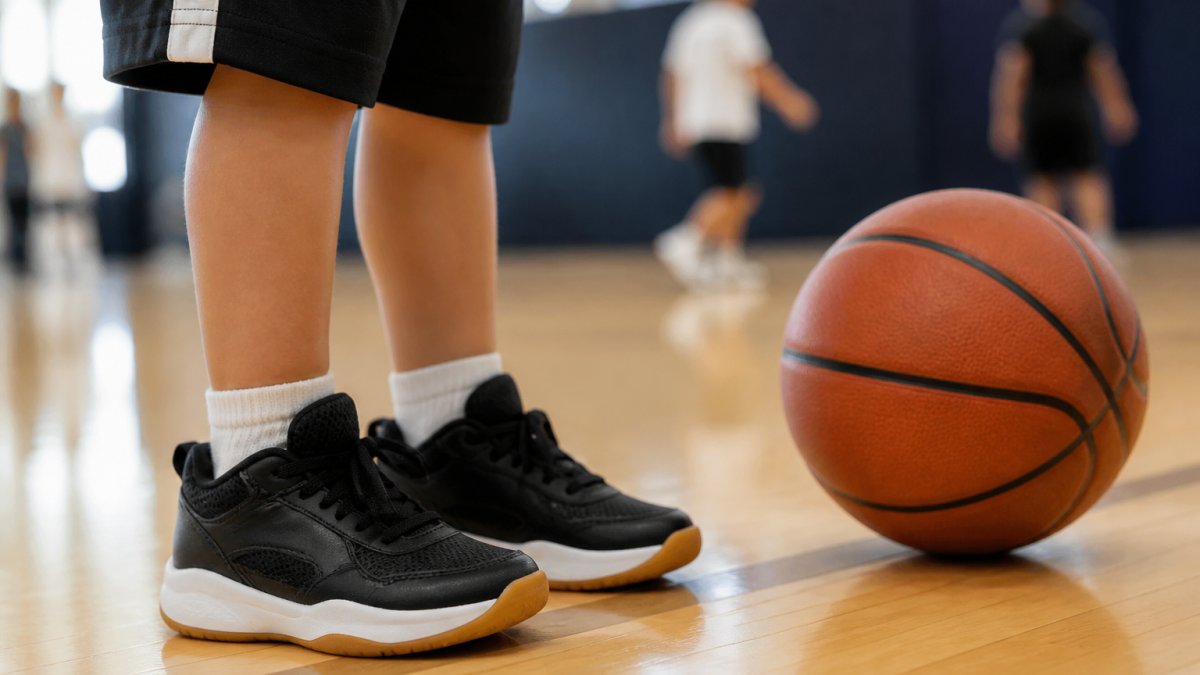
The Ja 2 is our pick for a child's first real basketball shoe. Nike built it around younger foot shapes rather than shrinking an adult model, and that shows in how it fits. The secure lacing system pulls the midfoot down tight, which matters more than most parents realize: a shoe that shifts side to side is how kids roll an ankle on a simple cut.
Ankle Support Features
- Padded collar that cushions the ankle without restricting movement
- Secure lacing system for enhanced midfoot lockdown
- Durable rubber outsole for reliable court traction
Pros and Cons
Pros: Engineered specifically for younger feet, and the high-traction outsole prevents slipping on dusty gym floors. Cons: Limited availability in larger youth sizes, so bigger kids may need to size up into another model. Consistent sizing discrepancies often stem from natural growth spurts, making it essential to accurately measure kids feet size before finalizing a purchase to ensure the ankle support functions as intended.
2. Nike LeBron XXIII: Maximum Structural Support
If your child has already rolled an ankle or plays against stronger, faster competition, the LeBron XXIII is the most protective shoe on this list. The high-top construction and reinforced heel counter work together to limit rearfoot movement, which is where most inversion injuries start.
Ankle Support Features
- Reinforced heel counter for rearfoot stability
- High-top construction for ankle security
- Responsive cushioning for impact protection
Pros and Cons
Pros: Excellent lockdown stops excessive foot movement inside the shoe, and the build quality survives a full competitive season. Cons: Heavier than low-top alternatives, which some quicker players notice.
3. Nike Sabrina 4 'Light Work': Best for Speed and Agility
Speed and ankle stability usually pull in opposite directions. The Sabrina 4 is the rare shoe that gives you both. An internal midfoot band secures the foot over the sole, and the engineered mesh upper holds the midfoot without the bulk of a traditional high-top.
Ankle Support Features
- Internal midfoot band system for a secure fit
- Low-profile design for court feel
- Engineered mesh upper for breathability and support
Pros and Cons
Pros: Lightweight construction reduces fatigue over long practices, and lateral containment is excellent for guards who cut hard. Cons: May require a break-in period before the upper softens to full comfort.
4. PUMA Dagger: Best Budget-Friendly Option
Not every family needs to spend over a hundred dollars on a shoe a ten-year-old will outgrow in a season. The Dagger delivers genuine ankle coverage at the lowest price here, with a mid-cut design that sits higher on the ankle than a typical low-top.
Ankle Support Features
- Mid-cut design for increased ankle coverage
- High-friction rubber outsole for multidirectional movement
- Padded tongue and collar for a secure fit
Pros and Cons
Pros: Cost-effective and laterally stable, which covers the essentials for practice and games. Cons: Less advanced cushioning than the premium models, so it suits recreational play better than heavy competitive minutes.
High-Top Basketball Shoes for Kids: Do They Really Help?
High-top basketball shoes for kids help by limiting rearfoot motion and adding padding around the ankle, but they are not a substitute for strength and technique. Research on ankle injury prevention consistently points to neuromuscular training and bracing as the stronger interventions, with footwear playing a supporting role. The Canadian Paediatric Society guidance on youth sport safety reinforces that proper equipment and conditioning together reduce risk far more than any single piece of gear.
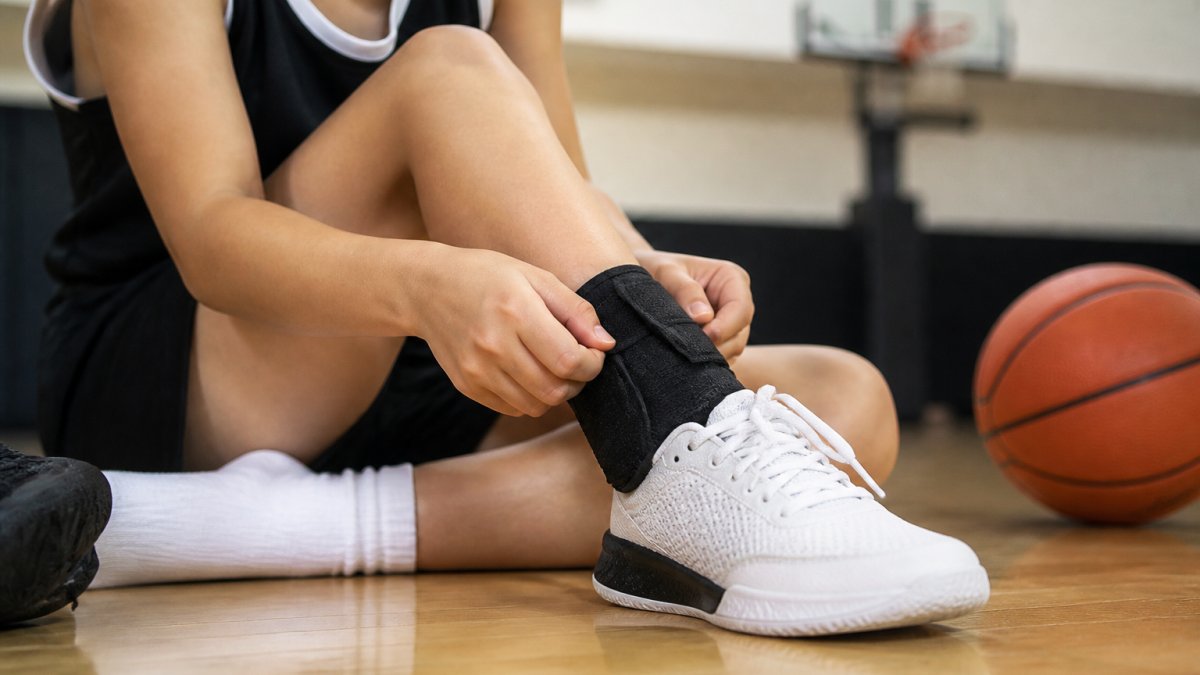
Our practical take: choose a shoe with a rigid heel counter and good lockdown first, then decide on cut. A well-fitted low-top beats a sloppy high-top every time. If your child has a history of ankle sprains, pair the shoe with a properly fitted ankle brace for youth basketball rather than relying on the collar alone.
Basketball Shoes for Kids with Wide Feet: Finding the Right Fit
Basketball shoes for kids with wide feet need a roomy toe box and a midfoot that still locks down, which is a harder combination than it sounds. Most youth models run narrow, so parents often size up and end up with a shoe that is too long, causing heel slip and blisters.
Here is how we would approach it:
- Measure feet late in the day, when they are at their largest
- Look for engineered mesh uppers, which stretch more than stiff leather
- Prioritize the lacing system: more eyelets means more adjustability
- Try the shoe with the game socks your child actually wears
- Skip sizing up as a fix for width; find a wider model instead
At Tier 1 Sports, the right shoe supports the work we do on footwork and landing mechanics, and our coaching staff is always happy to talk through fit with parents before the season starts.
Frequently Asked Questions
Do high-top basketball shoes provide better ankle support for kids?
High-top basketball shoes for kids offer more coverage around the ankle, which can help limit excessive side-to-side movement during play. However, the fit matters more than the height alone. A high-top with a padded collar and secure lacing system, like the Nike LeBron XXIII, gives better lockdown than a loose low-top. For young players, pairing proper shoes with strength and balance training is the most effective way to reduce injury risk.
Should kids wear ankle braces with basketball shoes?
Ankle braces for youth basketball can add stability, especially for players returning from a sprain or those with a history of ankle issues. A lace-up brace worn inside a high-top shoe often works well. That said, braces should not replace well-fitted shoes and conditioning.
How should basketball shoes fit a child's foot?
There should be about a thumb's width between the longest toe and the front of the shoe. The heel should stay locked in place when walking or running, and the widest part of the foot should feel snug but not pinched. Kids' feet grow quickly, so check fit every few months. For basketball shoes for kids with wide feet, look for roomier toe boxes or adjustable lacing to avoid pressure points that can cause discomfort and instability.
Are lightweight or supportive basketball shoes better for young players?
It depends on the player's age and playing style. Younger beginners benefit from supportive shoes with padded collars and stable outsoles, like the Nike Kids' Preschool Ja 2. Older, faster players may prefer lighter models such as the Nike Sabrina 4, which still offers lateral containment. The best choice balances weight with enough structure to protect growing ankles during cuts and jumps.
Finding shoes that protect growing ankles is only half the equation. The other half is building the strength, balance, and landing habits that keep players healthy through a full season. Tier 1 Sports pairs expert coaching with age-specific programs from introductory sessions through competitive rep basketball, so your child develops skills in a supportive environment. Join us for rep tryouts and see how proper coaching and the right gear work together.