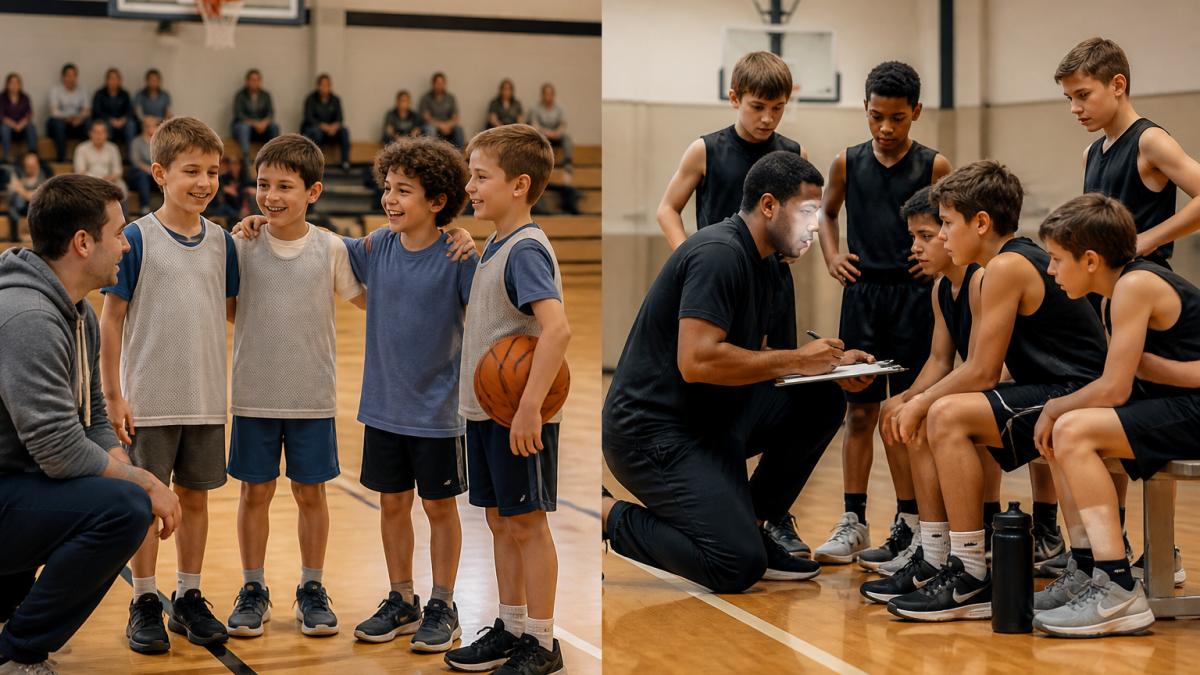
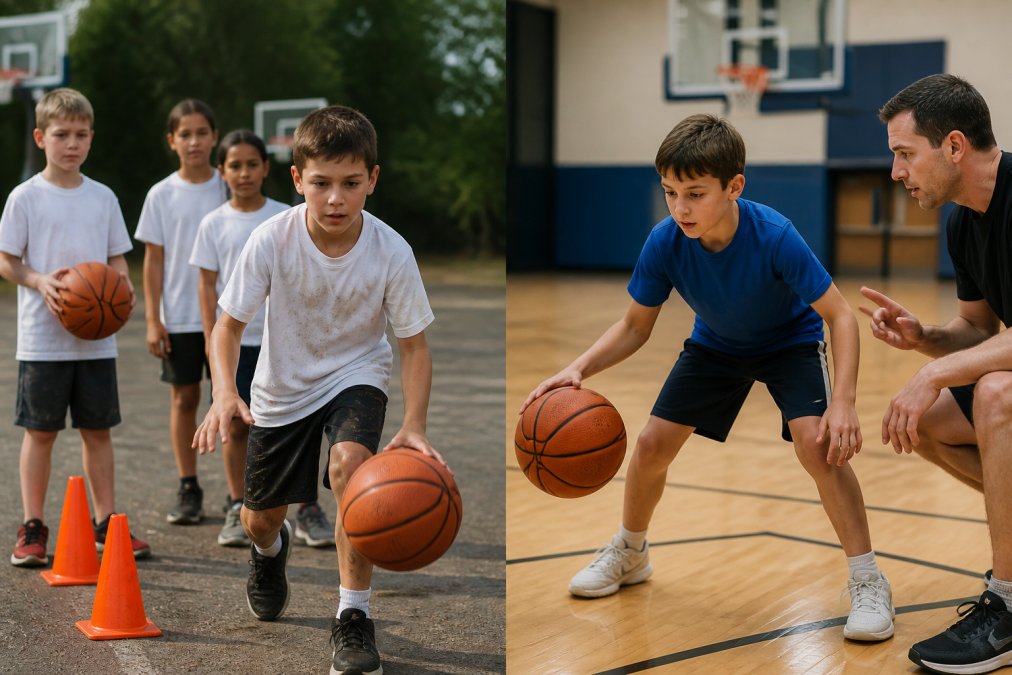
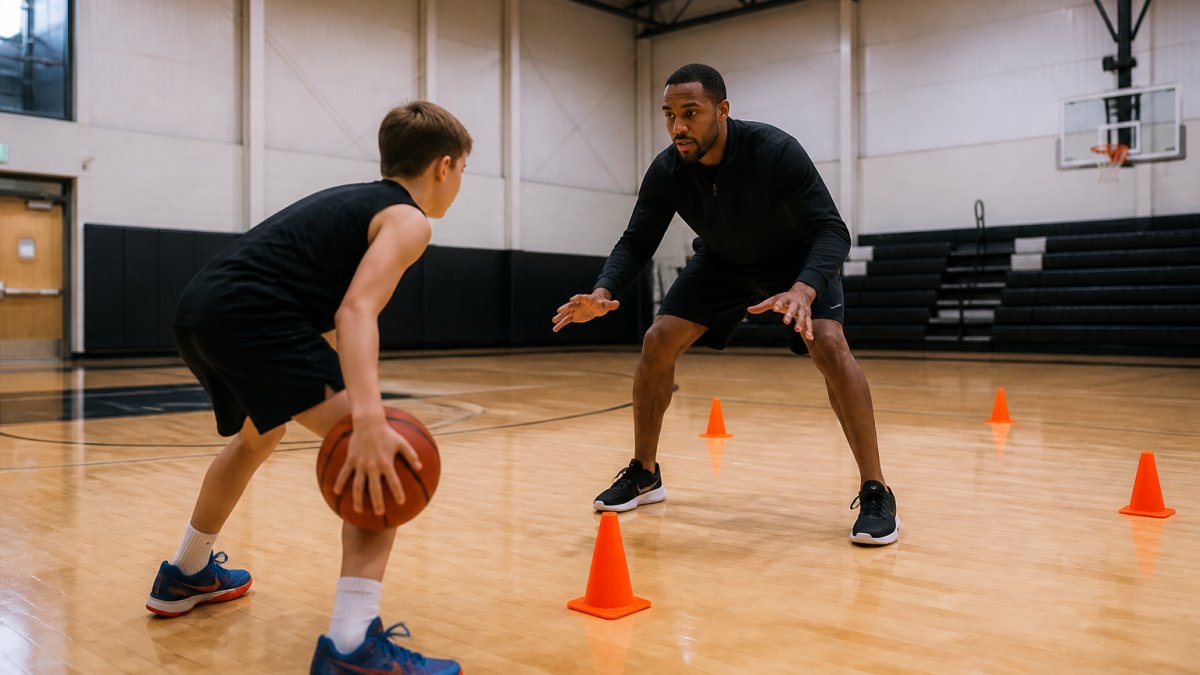
 comparison
Indoor Basketball Training Facilities in Halton Hills
Table of Contents
- Indoor Basketball Training Options
- Youth Basketball Programs for Every Age
- Basketball Skills Training for Beginners
- Recreational Basketball Programs for Kids
- Rep Basketball Programs for Youth
- What to Look for in a Training Facility
- Choosing the Right Program for Your Child
- Frequently Asked Questions
Last Updated: October 6, 2026
Indoor Basketball Training Options
Young athletes have access to several indoor basketball training pathways for different skill levels and competitive goals. At Tier 1 Sports, we've built programs around how young athletes develop at different ages, ensuring every player finds their entry point and pathway forward.
A program that builds confidence rather than frustrating beginners needs age-appropriate instruction, realistic progression, and an environment where mistakes are expected. Most facilities offer court access; the best build a framework that develops skills.
Youth Basketball Programs for Every Age
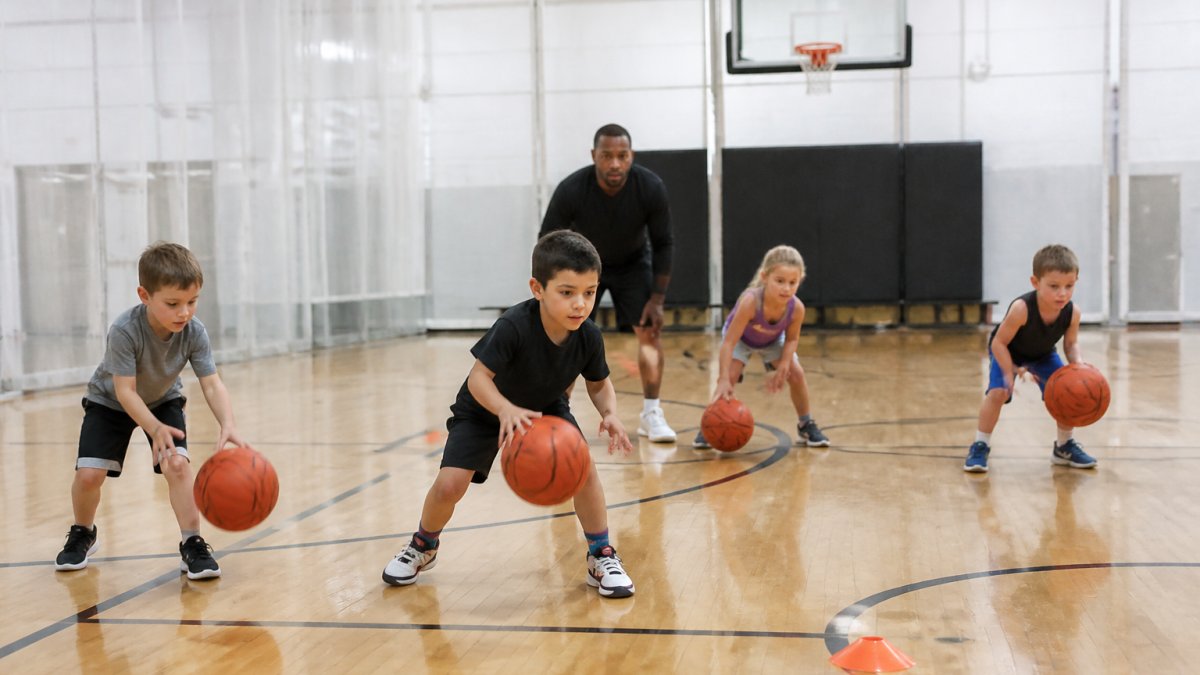
Youth basketball programs span from introductory play for four-year-olds through competitive rep basketball for teenagers. Each age bracket requires different coaching approaches, court setups, and skill progressions, treating age groups as fundamentally different learners.
Tier 1 Sports structures youth basketball around three developmental windows: introductory (ages 4-6), skill-building (ages 7-10), and competitive pathways (ages 11-16). A five-year-old needs movement patterns and coordination work; a nine-year-old is ready for strategic thinking and game concepts; a fourteen-year-old is preparing for rep-level intensity.
Introductory Programs for Ages 4-6
Introductory basketball for young children focuses on movement, coordination, and positive associations with the game. Court time that looks like "running around with a ball" is actually critical neural development.
The best introductory programs use smaller balls, lower baskets, and shorter sessions, since attention spans max out around 30-40 minutes. Drills should feel like play: a child who spends 25 minutes moving and 5 minutes sitting learns more than one who sits through a 15-minute drill explanation.
Common mistakes at this level include using regulation equipment (too heavy, too high), expecting sustained focus, and mixing age groups too broadly. A four-year-old and a six-year-old have different developmental needs.
Skill Development for Ages 7-10
By age seven, children are ready for structured skill work. Attention spans extend to 45-50 minutes. Hand-eye coordination is developing rapidly. This is the window where fundamental shooting, dribbling, and passing patterns are most efficiently learned.
Skill development at this stage means repetition with clear feedback: players should understand why they're doing a drill, see weekly improvement, and apply skills in small-game situations. Pure drills lose engagement; pure games plateau quickly.
The "golden window" for motor skill development peaks around ages 7-9. This is when neural pathways for coordinated movement are most plastic. Skills learned efficiently during this period stick. Skills learned later require significantly more repetition.
Competitive Pathways for Ages 11-16
By age 11, players are ready for structured competition and team play, where rep basketball and recreational programs diverge. Rep requires tryouts, commitment, and competitive intensity; recreational pathways offer team play without selection pressure.
Competitive basketball at this level introduces game strategy, positional roles, and performance pressure. Players must understand not just how to shoot, but when and why, so coaching shifts toward basketball intelligence.
The jump from recreational to rep basketball is significant. Rep programs expect higher skill entry points, more frequent practice, and willingness to compete for playing time. This is appropriate for some players and creates anxiety for others.
Basketball Skills Training for Beginners
Basketball skills training for beginners starts with dribbling control, basic shooting mechanics, and footwork. A beginner at seven learns these differently than one at fourteen, but the core skills are the same.
Effective beginner training isolates one skill at a time, dribbling without a defender, shooting from a stationary position, passing to a stationary target, before layering in complexity like dribbling while moving or shooting off the catch.
Many programs mix skill levels in one group, but a true beginner needs patient, repetitive instruction while an intermediate player is bored by that pace.
Beginner programs should show measurable improvement every 4-6 weeks. If a player isn't noticing they're getting better, engagement drops.
Recreational Basketball Programs for Kids
Recreational basketball programs for kids prioritize fun, participation, and skill development without competitive selection. Every player gets meaningful game time, building love for the game rather than identifying elite talent.
Recreational programs suit children who enjoy basketball but aren't driven by competition, or who are still deciding how seriously to commit.
The best recreational programs still maintain structure and progression. "Just playing pickup games" doesn't develop skills systematically; combining skill instruction with game play and rotating players builds both confidence and ability.
Recreational programs typically run seasonal (fall, winter, spring) with flexible registration. Players can join mid-season. Cost is usually lower than rep programs because coaching intensity and facility demands are lower.
Rep Basketball Programs for Youth
Rep basketball programs for youth are competitive, selective, and structured for serious players. Rep teams practice multiple times per week, compete in organized leagues, and require tryouts, with playing time earned rather than guaranteed.
Rep basketball develops higher skill levels faster through intense, frequent practice, with players pushed to improve because they're competing for positions.
Rep programs aren't right for every player: a child anxious about mistakes or playing primarily for fun often struggles, while a player who thrives on competition finds rep basketball motivating.
Rep tryouts typically happen in late summer or early fall, then teams practice and compete through the season.
What to Look for in a Training Facility
When you compare indoor basketball training facilities, the criteria that separate a good venue from a frustrating one are concrete and checkable. Use this walk-through checklist before committing a season to any gym.
Court specifications that actually matter
A regulation court is approximately 27 meters by 15 meters. Many community gyms run a single cross-court setup, roughly 15 meters by 14 meters of usable surface, fine for small-sided drills and youth games but limiting for full-court transition work, so ask whether a rental includes full-court or half-court access.
Other specs worth confirming:
- Flooring: suspended hardwood or poured urethane over a proper subfloor absorbs impact better than concrete with a sport topcoat. Slippery or dead spots create bad habits and injury risk.
- Hoops: adjustable rims (2.4 meters to 3 meters) matter for ages 4-10; fixed 3-meter rims are standard for teens and adults.
- Ceiling height: at least 6 meters of clearance for shooting and lob work; low ceilings force flat, low-arc shots.
- Lighting: LED or high-bay fixtures rated for sports use; dim or flickering lighting causes eye strain over a two-hour session.
- Temperature: a gym held around 18-21°C keeps players warm without overheating; unheated spaces in winter make players stiff.
Coaching versus court access
This is the biggest distinction in the local market. Some venues rent a court and nothing else; others run coached programs with a set curriculum, age groupings, and progressions; a third category offers both drop-in court time and registered skill sessions.
Ask which category a facility falls into before you compare prices, because a $10 drop-in and a $25 coached session are not the same product.
Amenities and access details
- Parking: free on-site lots are common at municipal recreation centres; some private gyms share lots with retail and get busy on weekday evenings.
- Transit: GO Transit and local bus routes serve the larger recreation hubs, but most private training gyms assume you drive.
- Changing areas and washrooms: confirm they exist and are accessible during your rental window, not just during staffed hours.
- Parent viewing: a mezzanine or sideline seating area matters if you are dropping a child for a 90-minute session.
- Water and vending: bring your own bottle; not every gym has a working fountain.
Booking, pricing, and rules to verify
Prices vary widely and change seasonally, so treat any number as a starting point and confirm by phone or the facility's booking page.
Questions to ask before you register
- Is the rental full-court or half-court?
- Is coaching included, or is this court access only?
- What are the age groupings, and how are skill levels separated?
- What is the refund and cancellation policy if my child is injured or the schedule changes?
- Can I observe a session before committing?
A facility that answers these clearly and lets you watch a practice before paying is usually the one worth your season.
Choosing the Right Program for Your Child
Treat this section as a decision framework. Match three variables: your child's developmental stage, the level of competition they want, and the logistics of getting them to a gym on a recurring schedule.
Match the program to the stage, not the age on the birth certificate
- Ages 4-6: introductory movement and coordination. Look for smaller balls, adjustable rims, and 30-45 minute sessions. If a program runs 90 minutes for this age, it is mis-scoped.
- Ages 7-10: structured skill work. You want a program that separates by skill level, not just age, and shows measurable progress every 4-6 weeks.
- Ages 11-13: the fork between recreational team play and rep tryouts. Recreational keeps everyone playing; rep introduces tryouts and earned minutes.
- Ages 14-16: competitive pathways, positional roles, and higher practice frequency. This is where travel and cost commitments climb.
Recreational versus rep: an honest trade-off table
| Factor | Recreational | Rep / Competitive |
|---|---|---|
| Selection | Open registration | Tryouts |
| Playing time | Rotated, everyone plays | Earned |
| Practice frequency | 1x per week typical | 2-3x per week |
| Season length | 8-12 weeks | Longer, often fall through spring |
| Travel | Local | Regional, sometimes further |
| Cost | Lower | Higher (league, uniform, travel) |
| Best for | Love of the game, broad development | Players who thrive on competition |
The logistics test
Before you commit, run the schedule math. A rep commitment of three practices plus a weekend game is roughly 6-8 hours per week including travel. If that doesn't fit your family's week, the program won't last regardless of coaching quality.
Map the drive. A facility 20 minutes away in good weather becomes 35 in a winter storm. Multiply that by the number of sessions per week and decide whether the value justifies the time.
A shortlist method that works
- List every indoor gym within a reasonable drive that offers basketball.
- Mark each as court-access-only, coached program, or both.
- Note the age range and skill separation for each.
- Call or check the booking page for current pricing and session dates.
- Observe one session at your top two choices.
- Register for the shorter commitment first; upgrade next season if it is a fit.
If you are weighing a local recreation-centre program against a dedicated training facility, the deciding factors are usually coaching consistency and how deliberately the program groups players by skill. Court access alone will not develop a player; a structured progression will.
Frequently Asked Questions
Where can kids train indoors for basketball?
Several facilities offer indoor basketball training in the area. Tier 1 Sports Club provides programs for ages 4-16 with both recreational and competitive pathways. Municipal recreation facilities offer community-based training and drop-in opportunities.
What age can children start basketball training?
Children can begin basketball training as early as age 4 through introductory programs designed for that age group. These early programs focus on fundamental movement skills, hand-eye coordination, and basic ball handling rather than competitive play. Programs for ages 4-6 emphasize fun, confidence-building, and developing a passion for the game before advancing to skill-specific training at ages 7 and older.
What is the difference between recreational and rep basketball?
Recreational basketball programs emphasize skill development, fun, and participation for all players regardless of ability level. Rep (representative) basketball is competitive, with team selection based on tryouts and skill assessment. Rep programs involve more intensive training, scheduled games against other clubs, and higher commitment levels. Recreational programs suit players focused on enjoying the game and building fundamentals, while rep programs target athletes seeking competitive play and advanced development.
What should parents look for in a youth basketball training facility?
Evaluate coaching qualifications, facility court size and condition, age-appropriate program design, and the balance between skill instruction and game play. Check whether the facility offers full-court or half-court spaces, how many courts are available, and what amenities exist (changing rooms, viewing areas). Ask about coaching philosophy, whether the program emphasizes learning over winning, and if you can observe a practice or speak with other parents. Verify operating hours, availability, and how the facility handles player development pathways from beginner to competitive levels.
Frequently Asked Questions
Where can kids train indoors for basketball in Halton Hills?
Several facilities offer indoor basketball training in the area. Tier 1 Sports Club provides programs for ages 4-16 with both recreational and competitive pathways. Municipal recreation facilities through Halton Hills offer community-based training and drop-in opportunities.
What age can children start basketball training?
Children can begin basketball training as early as age 4 through introductory programs designed for that age group. These early programs focus on fundamental movement skills, hand-eye coordination, and basic ball handling rather than competitive play. Programs for ages 4-6 emphasize fun, confidence-building, and developing a passion for the game before advancing to skill-specific training at ages 7 and older.
What is the difference between recreational and rep basketball?
Recreational basketball programs emphasize skill development, fun, and participation for all players regardless of ability level. Rep (representative) basketball is competitive, with team selection based on tryouts and skill assessment. Rep programs involve more intensive training, scheduled games against other clubs, and higher commitment levels. Recreational programs suit players focused on enjoying the game and building fundamentals, while rep programs target athletes seeking competitive play and advanced development.
What should parents look for in a youth basketball training facility?
Evaluate coaching qualifications, facility court size and condition, age-appropriate program design, and the balance between skill instruction and game play. Check whether the facility offers full-court or half-court spaces, how many courts are available, and what amenities exist (changing rooms, viewing areas). Ask about coaching philosophy, whether the program emphasizes learning over winning, and if you can observe a practice or speak with other parents. Verify operating hours, availability, and how the facility handles player development pathways from beginner to competitive levels.