 how-to
Choosing the Right Basketball Club for Your Child
Table of Contents
- Assess Your Child's Current Skill Level and Goals
- House League vs Rep Basketball: Understanding the Pathway
- Evaluate Coaching Quality and Credentials
- Youth Basketball Development Philosophy: What to Look For
- Basketball Club Time Commitment: Practice, Travel, and Season Length
- Understand Program Costs and Hidden Fees
- Burnout Prevention and Mental Health in Competitive Youth Basketball
- Vet the Program: Word of Mouth, Facility Quality, and Team Culture
- Frequently Asked Questions
Last Updated: September 29, 2026
Assess Your Child's Current Skill Level and Goals
Before choosing a basketball club for your child, assess their current skill level honestly. A good basketball club for your child matches their current ability, not where you hope they'll be in six months.
Start by asking yourself these questions:
- Can your child dribble without looking down constantly?
- Do they understand basic basketball rules?
- Can they shoot from a few feet away with decent form?
- Are they comfortable playing with other kids?
Tier 1 Sports recognizes that every child develops at their own pace. That's why we offer programs tailored for specific age groups from 4 to 16, designed to meet kids exactly where they are.
Talk to your child about their goals: casual play with friends, competitive rep basketball, or just fun and fitness. Forcing a casual player into a high-pressure environment often causes burnout.
House League vs Rep Basketball: Understanding the Pathway
House league basketball is recreational play where kids develop basic skills in a low-pressure environment. Rep (representative) basketball is competitive play where teams are selected through tryouts and compete against other rep teams. Knowing when your child is ready to transition is crucial.
When House League Is the Right Choice
House league works best for kids aged 4-8 building fundamentals, children new to basketball, and families seeking low-pressure play. Stay in house league if your child cannot consistently dribble, doesn't understand basic rules, gets frustrated easily, or plays primarily for fun. House league builds confidence and fundamentals; staying longer is developmentally appropriate.
When Rep Basketball Becomes the Right Fit
Rep basketball suits kids aged 9+ with solid fundamentals who actively seek competitive play and can handle 2-4 practices weekly plus travel. Your child may be ready if they dribble and shoot with reasonable form, understand rules, show resilience after mistakes, ask about "more serious" basketball, focus during long practices, and demonstrate coachability.
The Readiness Conversation
The transition typically happens around age 9 or 10, though it varies significantly by individual.
Before you pursue rep basketball, have an honest conversation with your child:
- "Do you want to play basketball more seriously, or are you happy playing for fun?"
- "Rep basketball means more practices and games. Are you ready for that?"
- "In rep, you'll play against kids who are really good. How do you feel about that?"
- "You might not play every game if you're still learning. Is that okay with you?"
If your child hesitates or says they prefer house league, listen. Forcing a reluctant child into rep basketball is one of the fastest paths to burnout.
The Transition Timeline
Expect tryouts in late summer or early fall evaluating ball handling, shooting, and coachability. The first 4-6 weeks feel intense as your child learns new plays and faces stronger competition, but most settle in after a month. Rep players typically improve faster due to increased practice and competition.
Evaluate Coaching Quality and Credentials
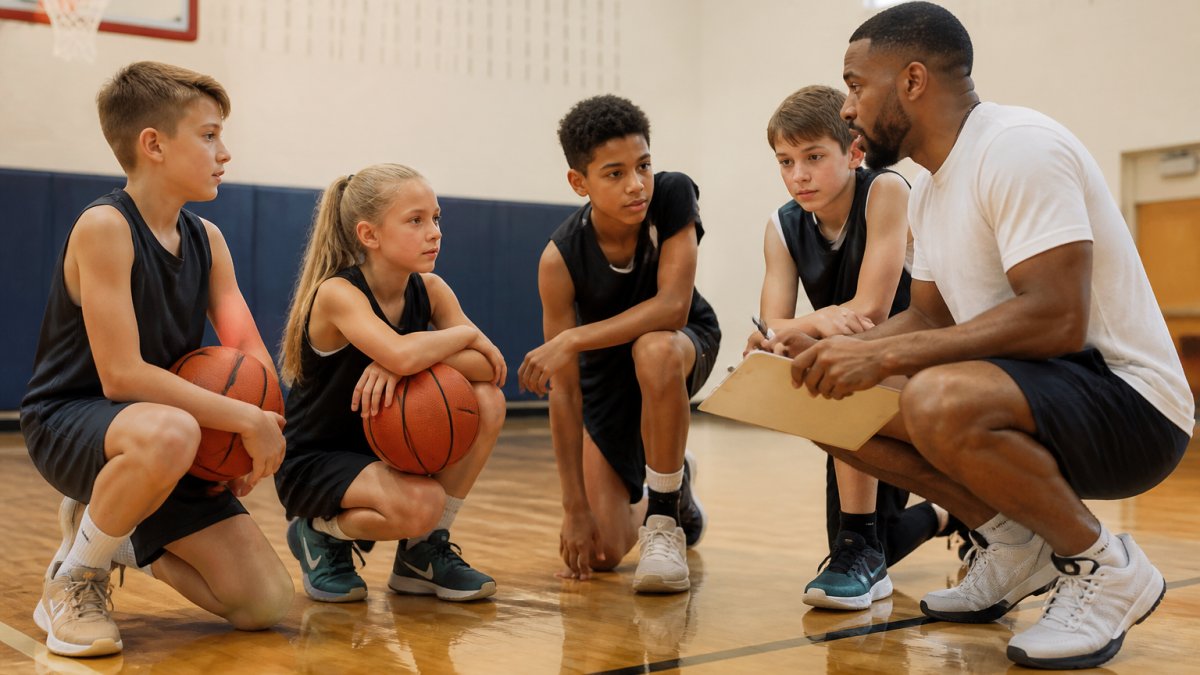
Many parents focus on team records or facility equipment and miss what matters most: the coach. A great coach develops players; a poor coach develops frustration.
Good coaches communicate clearly about program philosophy, explain what they're teaching, give constructive feedback, work with kids at different skill levels, and have completed recognized coaching education. Ask directly whether your child's potential coach has formal training.
Watch a practice if possible; you'll learn more in 15 minutes than from any description. Notice whether the coach is engaged and the environment feels positive.
Youth Basketball Development Philosophy: What to Look For
A youth basketball development philosophy shapes your child's entire experience. Some programs chase wins, playing best players most and benching others. Others prioritize skill development and equal playing time. The best programs balance both: they want to win but not at the cost of player development, rotating players and giving everyone meaningful minutes.
Basketball Club Time Commitment: Practice, Travel, and Season Length
Recreational basketball typically means one or two practices weekly and weekend games over 8-12 weeks with minimal travel. Competitive rep basketball means two to four practices weekly, 12-16 week seasons, and significant travel for tournaments.
Understand Program Costs and Hidden Fees
Basketball club fees vary widely. The real cost conversation includes contractual obligations, exit clauses, and what happens if your family's circumstances change mid-season.
Typical Cost Structure
Ask what registration covers, whether uniforms are included, payment structure, travel costs, tournament fees, and any fundraising requirements.
The Contractual Obligation Question
Many rep programs require season-long commitments with financial penalties for early withdrawal. Before signing, ask about contracts, cancellation policies, refund triggers, injury provisions, exceptions for life changes, and automatic renewal clauses.
Red Flags in Program Contracts
Be cautious if a program refuses written contracts, requires full upfront payment with no refunds, charges large non-refundable deposits, uses vague withdrawal language, requires multi-season commitments for discounts, or charges cancellation fees of 50%+ of season fees. Legitimate programs are transparent about costs and cancellation policies.
Comparing True Total Cost
Don't just compare registration fees. Build a full-year cost picture:
- Registration/membership fee
- Uniform and equipment costs
- Travel costs (gas, hotels for tournaments if applicable)
- Tournament entry fees
- Any required fundraising or volunteer hour costs
- Snacks, water bottles, or other incidentals
What You're Actually Paying For
Understand what your fee covers:
- Coaching expertise: Is the coach certified? Do they have experience with your child's age group?
- Facility quality: Are courts well-maintained? Is there adequate space and lighting?
- Program structure: How many practices? How many games? What's the curriculum?
- Player development: Does the program focus on skill development or just winning?
- Insurance and liability: Is player injury insurance included?
- Administrative support: Who handles scheduling, communication, and logistics?
The most expensive program isn't always the best, and the cheapest isn't always a bargain. Compare what you're actually getting for the money.
Burnout Prevention and Mental Health in Competitive Youth Basketball
Here's what most guides don't talk about: burnout is real in youth basketball, and it happens to good kids in good programs.
The warning signs appear early:
- Your child suddenly doesn't want to go to practice
- They're anxious before games
- They cry after losses
- They're comparing themselves constantly to other players
- They talk about quitting
Vet the Program: Word of Mouth, Facility Quality, and Team Culture
The best way to know if a program is right for your child is to talk to families already in it.

When you talk to them, ask:
-
Do your kids enjoy coming to practice?
-
How has your child improved?
-
How does the coach handle playing time?
-
Would you recommend this program to a friend?
-
What surprised you about the program?
-
Well-maintained courts
-
Proper lighting
-
Clean bathrooms and changing areas
-
Safe equipment
-
Adequate space for the number of kids
Frequently Asked Questions
What's the difference between house league and rep basketball?
House league basketball emphasizes recreational play and skill-building for all ability levels, with equal playing time and a focus on enjoyment. Rep (representative) basketball is competitive, with tryouts, selective rosters, and more intense training aimed at developing elite players. Most children start in house league to learn fundamentals before transitioning to rep if they show interest and aptitude.
How do I know if a basketball club's coaching quality is legitimate?
Ask about their experience with your child's age group, their coaching philosophy, and whether they emphasize player development over winning. Request references from current parents and watch a practice session if possible to see how they interact with players and structure training.
How much time commitment should I expect from a youth basketball club?
Recreational programs typically involve one or two practices per week plus games during season. Competitive rep basketball requires significantly more: weekend tournaments, and travel commitments that can span several hours. Before enrolling, clarify the exact practice schedule, game frequency, travel expectations, and season duration so your family can commit realistically.
What should I look for in a program's development philosophy?
A strong development philosophy prioritizes age-appropriate skill progression, injury prevention, and long-term athlete development over short-term winning. Look for programs that emphasize fundamentals, offer varied playing time, use positive reinforcement, and explain how they adapt training for different age groups. Programs should also address mental health, burnout prevention, and help players understand their competitive pathway.
Choosing the right basketball club for your child isn't about finding the fanciest program or the one with the best record. It's about finding the right fit for your child's skill level, goals, and personality. A program that develops skills, builds confidence, and keeps basketball fun will serve your child far better than one that chases wins at all costs. Start with Tier 1 Sports and experience inspiring coaching designed to help your child realize their full potential in basketball.