 How-to
Can Student Athletes Balance Sports and School?
Last Updated: November 18, 2026
Quick Summary
Balancing sports academics comes down to planning ahead and setting clear limits before the schedule fills up. Start by deciding your commitment level, then build a weekly time budget that protects homework and sleep. Adjust the plan when school gets busy.
- Decide how much commitment you want before building any schedule.
- List fixed commitments first, then add sports time, homework blocks and sleep.
- Count commute time as sports time, since a 30-minute drive each way adds up.
- Track sleep, assignment completion and enjoyment weekly to catch burnout early.
- If two warning signs persist for three weeks, drop one activity before adding anything new.
Table of Contents
- Why Balancing Recreational Sports and Academic Life Matters
- Recreational Sports Versus Competitive Athletics: Knowing Your Commitment Level
- Time Management for Student Athletes: Building Your Weekly Time Budget
- Student Athlete Weekly Schedule: A Sample Plan to Adapt
- Study Tips for Student Athletes: Making Homework Fit Around Practice
- How Parents Can Support Student Athletes Without Adding Pressure
- Deciding When to Cut Back, and Booking Your Next Step With Tier 1 Sports
- Frequently Asked Questions
Why Balancing Recreational Sports and Academic Life Matters
Balancing recreational sports and academic life is one of the biggest challenges young athletes face, and it gets harder every year.
Here is the good news. A busy schedule does not have to mean a stressed-out kid.
The trouble usually starts when no one sets those limits.
Balancing sports academics is a skill, and like any skill, it improves with practice. The goal is not to do everything.
- Protect time for homework and rest
- Choose activities that fit the child's goals
- Check in often, not just at report card time
Recreational Sports Versus Competitive Athletics: Knowing Your Commitment Level
Before building any schedule, know what level of commitment you are planning for.
Recreational programs focus on fun, friends and basic skills. Practices are shorter, and the schedule is usually lighter.
Competitive, or rep, basketball asks for much more. Teams practice more often, travel for games, and may play on weekends for months at a time.
Neither choice is better for every child. Ask a few honest questions:
- How many hours per week can the family realistically give?
- Does the child want to play for fun, or to compete at a higher level?
- How well does the child handle schoolwork during busy stretches?
Answering these questions first makes the rest of the plan much easier to build.
Time Management for Student Athletes: Building Your Weekly Time Budget
Think of your week like a budget. You have a fixed number of hours, and every activity spends some of them.
- List fixed commitments first. Include school hours, travel, and any family obligations.
- Add sports time. Count practices, games and travel, including the drive to the gym.
- Schedule homework blocks. Plan 30 to 60 minutes on school nights, and more before tests.
- Protect sleep and rest. Young athletes need consistent, full nights of sleep to recover.
- Leave some open time. Unplanned hours absorb the inevitable surprises.
Once the budget is set, check it against the week. If sports time is taking hours that homework needs, cut something before schoolwork starts to suffer.
A common mistake is planning for a perfect week. Real weeks have illness, weather, and late buses.
Student Athlete Weekly Schedule: A Sample Plan to Adapt
A sample schedule makes the idea concrete, but one plan cannot fit every family. The three templates below cover common situations: a light recreational week, a heavier competitive week, and an exam week. Adjust the blocks to match your child's school hours, commute, and training load.
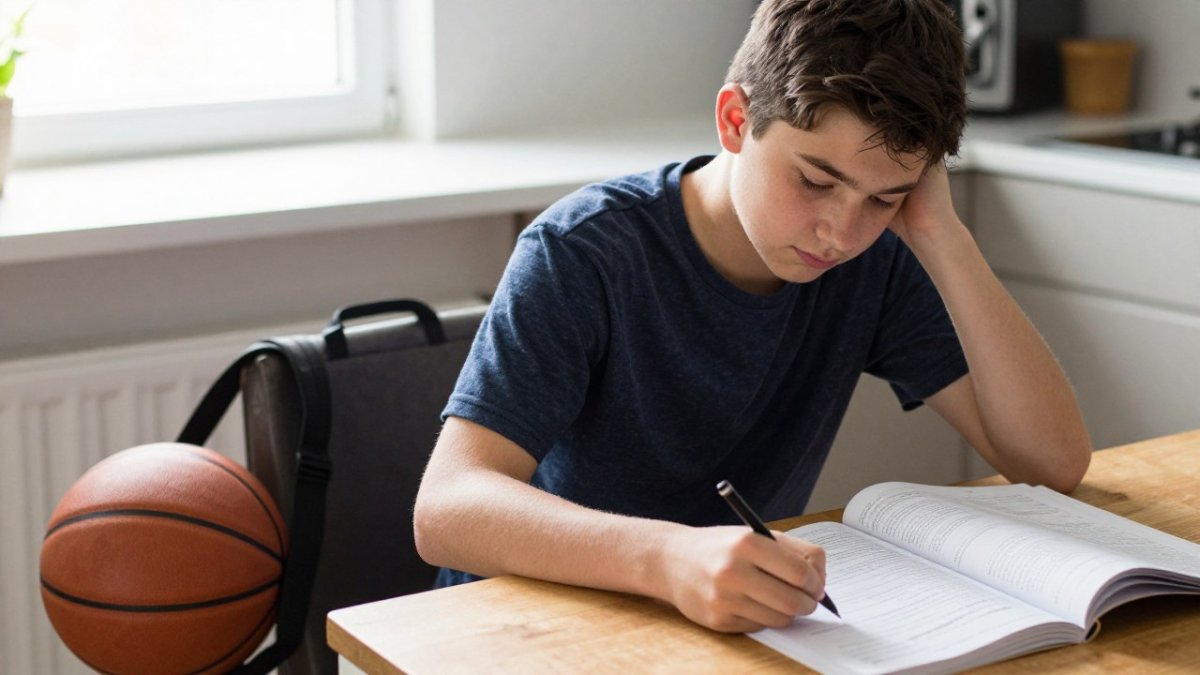
Template 1: Light Recreational Week (Two Practices, One Game)
This plan suits a recreational player who practices twice a week for about an hour and plays one weekend game. It assumes a short commute and no part-time job.
| Day | Morning | After School | Evening |
|---|---|---|---|
| Monday | Get ready for school | Snack, then homework (45 min) | Light review, early bedtime |
| Tuesday | Get ready for school | Practice (60 min) | Homework (30 min), stretch |
| Wednesday | Get ready for school | Homework block (45 min) | Free time, early bedtime |
| Thursday | Get ready for school | Practice (60 min) | Homework (30 min), study for tests |
| Friday | Get ready for school | Free time | Family time, rest |
| Saturday | Light activity | Game or tournament | Rest, recovery meal |
| Sunday | Free morning | Homework for the week ahead (60 min) | Plan next week together |
Template 2: Competitive Week with Longer Commute (Three Practices, Two Games)
A rep player may practice three times a week and play two weekend games, with a 30- to 45-minute drive each way. That travel time adds up, so the schedule protects study blocks on non-practice days and uses car time for light review.
| Day | Morning | After School | Evening |
|---|---|---|---|
| Monday | Get ready for school | Homework block (60 min) | Early bedtime |
| Tuesday | Get ready for school | Practice (90 min) + commute | Light homework (20 min), stretch |
| Wednesday | Get ready for school | Homework block (60 min) | Study for tests, early bedtime |
| Thursday | Get ready for school | Practice (90 min) + commute | Light homework (20 min) |
| Friday | Get ready for school | Practice (60 min) + commute | Rest, family time |
| Saturday | Light activity | Game or tournament | Rest, recovery meal |
| Sunday | Free morning | Game or tournament | Homework for the week ahead (45 min), plan next week |
Watch out: stacking two late practices back-to-back with no homework buffer often leads to rushed assignments and short sleep. If the week looks like this, move one study block to the morning or use the commute for flashcards.
Template 3: Exam Week (Reduced Sports Load)
During exam weeks, many families cut practice to one session and skip optional games. The schedule below assumes two exams and one light practice.
| Day | Morning | After School | Evening |
|---|---|---|---|
| Monday | Get ready for school | Study block (90 min) | Light review, early bedtime |
| Tuesday | Get ready for school | Study block (90 min) | Practice (45 min) |
| Wednesday | Get ready for school | Study block (90 min) | Light review |
| Thursday | Get ready for school | Study block (90 min) | Early bedtime |
| Friday | Get ready for school | Study block (60 min) | Rest |
| Saturday | Light activity | Study block (60 min) | Rest |
| Sunday | Free morning | Study block (60 min) | Plan next week |
How to Adapt Any Template
- Count commute time as sports time. A 30-minute drive each way adds an hour to every practice.
- Match homework blocks to energy. Hardest subjects go on lighter practice days.
- Protect one full rest day. Even recreational players need a day without training or games.
Use these templates as starting points, not rules. Move homework to a day with lighter practice if needed, and add a rest day when a child feels worn down.
Study Tips for Student Athletes: Making Homework Fit Around Practice
Homework is where many student athletes lose ground, especially after a long practice. A few habits make it easier.
- Do the hardest subject first, while energy is still high.
- Use short, focused blocks of 25 to 30 minutes with brief breaks.
- Start a homework routine at the same time each day so it becomes automatic.
A common mistake is studying late at night after practice. Tired students retain less, so an earlier, shorter study session often works better.
How Parents Can Support Student Athletes Without Adding Pressure
Parents play a big role in whether the balance works. The right kind of support helps a child feel capable. The wrong kind adds stress. The difference often comes down to what parents say, how they watch for warning signs, and how they coordinate with teachers and coaches.
What Support Looks Like in Practice
Focus on effort and routine, not just results. Praise the child who finished homework before practice, not only the one who scored the most points. Keep conversations about school and sports relaxed and regular. A simple check-in question such as "What was the best part of your day?" opens the door without turning into an interrogation about grades or playing time.
A common pattern is that parents unintentionally add pressure by asking about performance right after a game. "What did you learn today?" works better than "Why did you miss that shot?" That kind of open conversation can also help student athletes notice when school, sports, and rest are out of balance, a reflection they can carry into a sustainable wellness routine with Calmpulseco.
Communication Scripts for Teachers and Coaches
Stay in touch with coaches and teachers, too. A quick message can warn a teacher about a travel weekend, or let a coach know a child is struggling with school.
- To a teacher: "My child has a tournament this weekend and will miss Friday's class. What work should they complete in advance, and when can they make up any missed assessments?"
- To a coach: "My child has exams next week and needs to reduce practice to one session. Can we agree on which day works best?"
- To both: "We're trying to keep school and sports in balance. Please let us know if you notice signs of overload."
Watch out: waiting until report cards arrive to contact teachers often means problems have already compounded. A brief email at the start of a busy season is more effective than a rescue attempt later.
Warning Signs of Burnout
Watch for signs of burnout, such as constant tiredness, irritability, or losing interest in the game. Other signals include frequent illness, declining grades over several weeks, and a child who dreads practice.
A useful rule is to track three indicators each week: sleep hours, assignment completion, and enjoyment. If two of the three decline for two weeks in a row, that is a clear signal to reduce commitments before adding anything new.
When to Step Back
Sometimes the most supportive thing a parent can do is help a child cut back. Tier 1 Sports offers a Ball For Fun program for ages 4-6 focused on fundamental skills and fun, and families ready to act can reserve a spot in the next session.
For older players weighing a league against training, our guide to recreational and rep basketball training explains how the two differ. Families juggling practices and homework can also use our guide on balancing rep basketball with school work to plan the week.
Ready to take the next step? Tier 1 Sports is here to help families in Halton Hills find the right level of basketball for their child, from first introductions to competitive rep tryouts.
Deciding When to Cut Back, and Booking Your Next Step With Tier 1 Sports
Sometimes the honest answer is to cut back. If you are weighing a youth basketball league against private training, that comparison can help you decide which commitment to drop first.
Use a simple rule: if two of the signs above show up for three weeks in a row, drop one activity before adding anything new. You can always return later.
Cutting back does not mean giving up on basketball.
For older players weighing a league against training, our guide to recreational and rep basketball training explains how the two differ. Families juggling practices and homework can also use our guide on balancing rep basketball with school work to plan the week.
Ready to take the next step?
Frequently Asked Questions
How can students balance sports and academics?
Start by listing every fixed commitment for the week, including classes, practices, games, travel and family time. Then mark the gaps and assign study blocks to the times you are most alert, usually right after school or before dinner. Protect sleep, since fatigue quietly erodes both grades and athletic performance. Review the plan every two weeks, because workloads change with report cards, exams and tournament seasons. A plan that works in September may need adjusting by February, so treat it as a working document rather than a one-time setup.
How many hours should a student spend on sports each week?
There is no single correct number, because it depends on age, sport, season and how much schoolwork the student carries. For younger children in recreational programs, a few sessions per week with one game day is usually enough. Older students in rep or competitive settings often train more. A useful test is whether the student still has time for homework, sleep, meals and unstructured rest. If schoolwork is consistently slipping or the student seems constantly tired, the sports load is likely too high and worth reducing.
How do you make time for schoolwork and recreational sports?
Use short, scheduled study blocks instead of waiting for free time that never arrives. Doing 30 to 45 minutes of focused homework before practice often works better than a long session late at night. Batch small tasks, such as reading notes or reviewing vocabulary, into travel time or waiting periods at the gym. Keep a running list of deadlines so that a project due on a game weekend is started early. Consistency across the week matters more than heroic effort on one day.
What should students do when sports and school deadlines conflict?
Tell the coach and the teacher as early as possible, ideally before the conflict becomes urgent. Ask the teacher whether an assignment can be submitted early or whether a short extension is possible, and ask the coach whether the student can miss a practice rather than a game. Prioritize graded deadlines that carry the most weight, and plan the schedule so the most demanding work is not stacked in the same week. Clear communication usually solves more problems than last-minute scrambling.