 How-to
How to Evaluate Youth Sports Training Programs
Last Updated: November 13, 2026
Quick Summary
To evaluate youth sports training, score five pillars: program design, safety and safeguarding, coaching quality, measurement of progress, and family communication. Ask for a written session plan and evidence of coach certifications, then rate each program on the same scorecard so you compare value rather than marketing promises.
- A program running identical drills for every age group is not age-appropriate, however polished the gym.
- Ask coaches what percentage of practice is drills versus games and how they handle mistakes.
- Use a baseline, mid-season check, and end-of-season review to measure progress honestly.
- Young athletes need rest, free play, and sleep, so daily training for a 9-year-old is a red flag.
- Score each program 1 to 5 per line and double the weight of your three priority lines.
Table of Contents
- Building a Youth Sports Program Evaluation Checklist
- Questions to Ask Youth Sports Coaches Before You Enroll
- How to Measure Youth Athlete Progress Beyond the Scoreboard
- Youth Sports Training Frequency by Age
- Comparing Programs Using Consistent Criteria
- Developmentally Appropriate Evaluation and the Late-Developing Athlete
- Choosing the Right Program for Your Child at Tier 1 Sports
- Frequently Asked Questions
Building a Youth Sports Program Evaluation Checklist
Learning how to evaluate youth sports training programs starts with one honest question: what does your child actually do for the hour you pay for? A solid youth sports program evaluation checklist scores five things: program design, safety and safeguarding, coaching quality, measurement of progress, and family communication.
Most parents judge a program by the scoreboard or the coach's enthusiasm. Both are unreliable. A team can win every game while half the roster never touches the ball, and a friendly coach can still run drills that ignore how young bodies actually develop.
Program Design and Age-Appropriate Training
Program design is the plan behind the practices: what gets taught, in what order, and at what intensity. Age-appropriate training means the plan matches your child's stage of development, not the coach's favorite drills.
For ages 4 to 6, look for short activity blocks, lots of ball touches, and games disguised as skill work.
Ask one direct question: "Can I see a written session plan?" Programs with a real curriculum will show you one.
Watch out: a program that runs the same drills for every age group is not age-appropriate, no matter how polished the gym looks.
Safety, Safeguarding, and Injury Prevention
Safety is the item parents skip and later regret. A strong program has three visible signs: trained coaches with current first aid, clear supervision ratios, and a written plan for injuries and emergencies.
Injury prevention matters just as much. Good programs warm up properly, teach landing and stopping mechanics, and avoid stacking too much training intensity on young joints.
For a deeper look at keeping young players healthy, our guide to common basketball injuries in youth athletes covers prevention in detail. The Canadian Paediatric Society guidance on sport participation is also worth reading before you sign anything.
Questions to Ask Youth Sports Coaches Before You Enroll
The best questions to ask youth sports coaches are the ones that force specifics. Vague answers about "fun" and "development" tell you nothing. Ask these before you pay a deposit:
- What does a typical session look like, minute by minute?
- How much game time does each child get?
- How do you give feedback to a player who is struggling?
- What happens when a child misses a session or falls behind?
- How do you handle a parent who disagrees with your approach?
- Can I speak with two current parents?
Write the answers down. Compare them across programs using the same questions, and patterns appear fast.
Coaching Philosophy and Feedback Practices
Coaching philosophy is how a coach defines success: winning, effort, skill growth, or all three. Ask directly: "What percentage of practice is drills versus games?" and "What do you do when a player makes a mistake?"
Strong coaches use coach feedback that is specific and immediate. They correct the action, not the child. They also welcome participant feedback from kids and parents instead of deflecting it.
A common mistake is confusing volume with quality. A coach who shouts constant instructions is not necessarily teaching. The best ones talk less and demonstrate more.
How to Measure Youth Athlete Progress Beyond the Scoreboard
Measuring youth athlete progress means tracking skills, effort, and confidence over time, not just points. Use a simple baseline assessment at the start of a season, repeat it mid-season, and compare. That is how you measure youth athlete progress honestly.
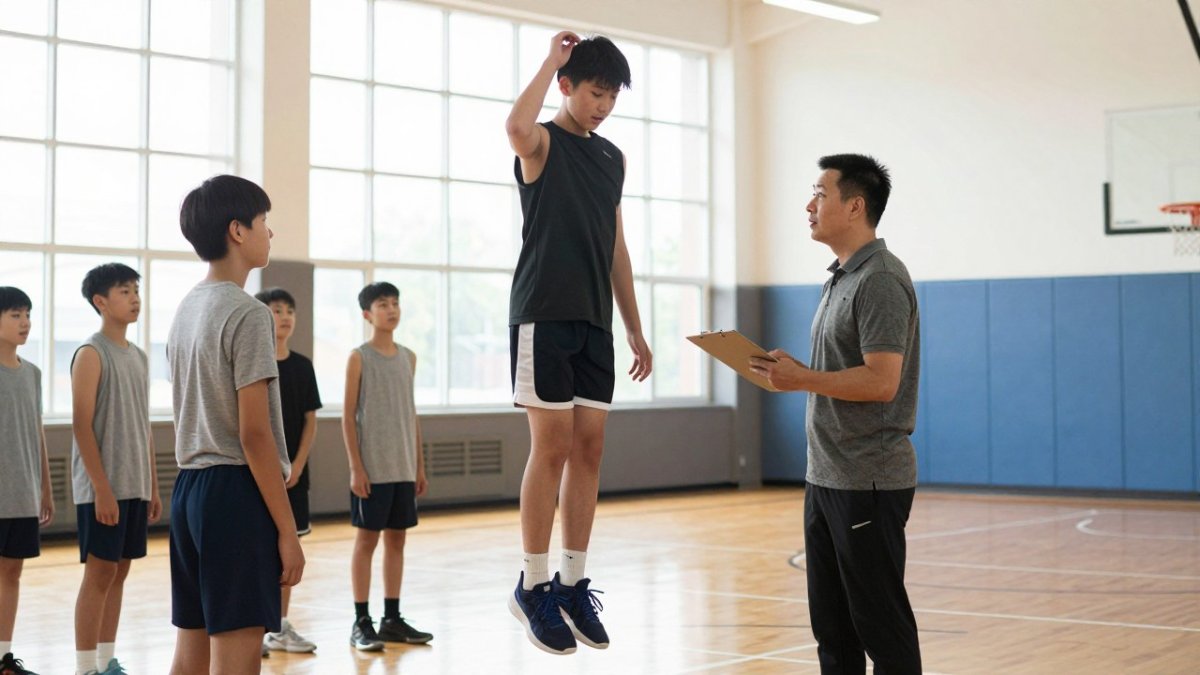
Track four things: a skill assessment of dribbling, passing, and shooting form; a movement check such as a vertical jump or broad jump; attendance and athlete commitment; and your child's own enjoyment rating. A program that measures nothing cannot tell you whether your child improved.
A Practical Measurement Cadence
Three assessment points per season (a baseline, a mid-season check, and an end-of-season review) is a reasonable rhythm for most young athletes. Testing more often than that can produce noise, because young athletes fluctuate with sleep, growth, and school demands.
Record results the same way every time: same test, same surface, same warm-up, same time of day where possible. A simple spreadsheet with columns for date, test, result, and notes works well.
Separating Real Progress from Normal Variation
A single session tells you almost nothing. A common pattern is that a child's vertical jump or sprint time moves by a small amount from week to week simply because of fatigue, hydration, or a growth spurt. Look for a consistent direction across at least two or three testing points before you call it progress.
Use decision thresholds rather than gut feel. The same habit of tracking what is taught and practiced can help when evaluating a child’s progress in another coached skill, such as acting with Ventura Actors Studio.
Developmentally Appropriate Performance Testing
Performance testing should fit the age group. For younger children, use simple movement tasks and ball control.
Age and maturation matter more than most families realize. Two 12-year-olds can differ by years in biological maturity, so comparing them on the same test can be misleading.
Watch out: a program that publishes team averages but never shows you your own child's individual trend is using measurement for marketing, not development.
The ParticipACTION report card on physical activity for children and youth is a useful benchmark for how much activity kids actually need. Our article on assessing youth basketball player readiness explains how to set a fair baseline without pressure.
Youth Sports Training Frequency by Age
Youth sports training frequency should match age and recovery needs. Here is a practical guide we use:
| Age Group | Sessions per Week | Session Length | Focus |
|---|---|---|---|
| 4-6 | 1 | 45-60 min | Play, ball familiarization, fun |
| 7-10 | 1-2 | 60 min | Skills, coordination, small games |
| 11-13 | 2-3 | 60-75 min | Skills, movement, light conditioning |
| 14-16 | 3-4 | 75-90 min | Skills, strength, tactical play |
More is not better. Young athletes need rest, free play, and sleep to adapt. A program that pushes daily training on a 9-year-old is a red flag, not a badge of seriousness.
Youth sports training frequency by age group
Comparing Programs Using Consistent Criteria
Comparing programs fairly means scoring each one on the same criteria, in the same order, with the same weight. Otherwise you compare a polished tour at one club against a rushed phone call at another.
Use this scorecard. Rate each program from 1 to 5 per line, where 1 means "no evidence" and 5 means "documented and demonstrated":
- Written curriculum by age group
- Coach certifications and first aid
- Supervision ratios and safeguarding policy
- Game time and touches per child
- Progress measurement and parent updates
- Injury prevention and warm-up routine
- Communication with families
- Total cost and schedule fit
Add the scores. A program that scores high on communication but low on measurement has a clear gap you can ask about. This is also how you compare value rather than sticker price.
Weighting the Scorecard to Your Priorities
A raw total hides trade-offs. Before you score, decide which three lines matter most for your child and double their weight. A family with a child recovering from an injury should weight safety and injury prevention heavily; a family chasing competitive placement should weight curriculum, game time, and measurement. State your weights before you visit any program so the tour doesn't sway you.
Translating Scores into a Decision
A common pattern is that two programs land within a few points of each other, and the decision comes down to logistics. Use the scorecard to eliminate programs with a hard failure, no safeguarding policy, no first aid, or no written plan, then choose among the rest on fit.
Ask for evidence, not adjectives. "We develop players" is a 1. A sample session plan, a parent update template, and a named first-aid certification are a 5. If a program cannot produce evidence for a line, score it low and note why.
Cost, Schedule, and Group Size
Value is not the same as the lowest fee. Compare the total cost of a season against the number of coached hours, the coach-to-player ratio, and how much individual feedback your child actually receives.
Schedule fit belongs on the scorecard because it affects attendance, and attendance affects progress.
Watch out: a program that will not tell you its group size or coach-to-player ratio before you pay a deposit is hiding the number that most affects your child's experience.
Our guide on how to choose a youth basketball club walks through this decision step by step.
Developmentally Appropriate Evaluation and the Late-Developing Athlete
Developmentally appropriate evaluation judges a child against their own past performance, not against the fastest kid in the gym. Growth spurts, coordination, and maturity vary widely, and a late-developing athlete is not a weaker athlete.
This is where many programs fail. They select early maturers and call it talent identification. A better approach tracks skill development and progress tracking over seasons, then adjusts training as the child grows.
The Long-Term Athlete Development framework from the Canadian sport system explains these stages clearly. Our own article on age-appropriate basketball training for motor skill growth goes deeper on what to expect at each stage.
Choosing the Right Program for Your Child at Tier 1 Sports
Choosing the right program comes down to fit: your child's age, stage, and goals. Tier 1 Sports runs basketball programs for ages 4 to 16, from introductory sessions for beginners to competitive rep basketball.
Here is how our pathways line up:
- Ages 4-6: short, playful sessions built around fun and ball confidence
- Ages 7-10: skill development with movement basics and small games
- Ages 11-16: recreational and rep pathways, including tryouts for competitive players
All programs are generously sponsored by Real Estate Broker David Robbio. To see what a healthy program environment looks like in practice, read the signs of a healthy youth sports environment.
Evaluating a program takes one afternoon and saves a season of frustration. Start with the checklist, ask the six questions, and score every option the same way.
Frequently Asked Questions
How do you evaluate a youth sports training program?
Start with a written checklist covering program design, age-appropriate training, safety and safeguarding, coaching qualifications, and how progress is tracked. Watch a session or ask for practice footage, then ask coaches how they handle feedback and playing time. Compare at least two programs using the same criteria so you are judging like for like, not just reacting to price or convenience.
How often should young athletes train?
Youth sports training frequency by age matters more than total hours. Ages 4-6 usually thrive on one session a week focused on fun and movement. Ages 7-10 often handle two sessions with skill development and free play. Ages 11-16 may train two to four times weekly depending on season and recovery. Always leave at least one full rest day and watch for signs of fatigue or burnout.
What should parents look for in a youth sports coach?
Look for coaches who explain their philosophy around winning versus learning, give specific feedback, and treat mistakes as teaching moments. Ask about certifications, safety training, and how they handle conflicts. A good coach can describe how they measure youth athlete progress beyond points scored, and will welcome questions about practice structure and playing time.
Should youth athletes choose recreational or competitive training?
It depends on the child's interest, age, and readiness. Recreational programs suit beginners and kids who want variety and low pressure. Competitive rep programs suit athletes ready for structured training and tryouts. Some children sit in between, so ask whether a program offers a bridge pathway. At Tier 1 Sports, recreational and rep basketball pathways let families move up when the athlete is ready.