 comparison
Evaluating the Value of Private Basketball Coaching
Table of Contents
- Why Families Are Weighing Private Basketball Coaching
- Private Basketball Coaching Cost: What You're Actually Paying For
- How to Evaluate a Basketball Coach Before You Pay
- Private Lessons vs. Team Practice: Where Each Delivers Value
- How Often to Practice Basketball for Real Skill Gains
- Measuring Coaching Outcomes: What Progress Actually Looks Like
- Who Benefits Most From Private Coaching, and Who May Not
- A Practical Decision Framework and Trial Period
- Frequently Asked Questions
Last Updated: October 19, 2026
Why Families Are Weighing Private Basketball Coaching
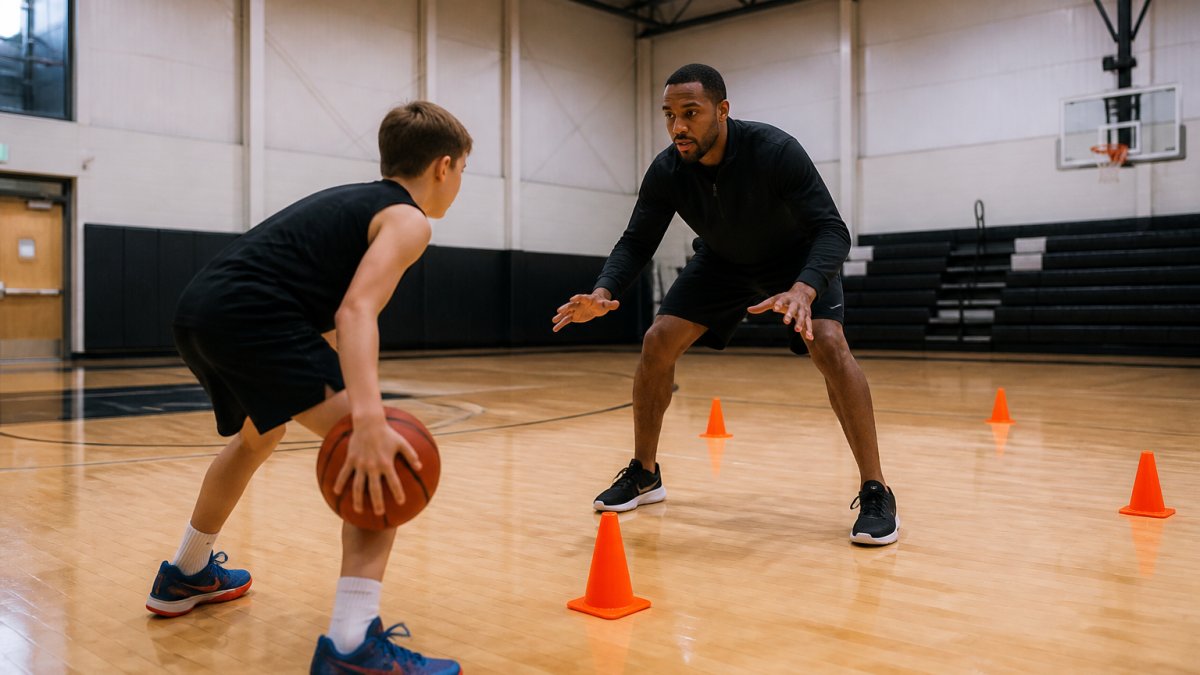
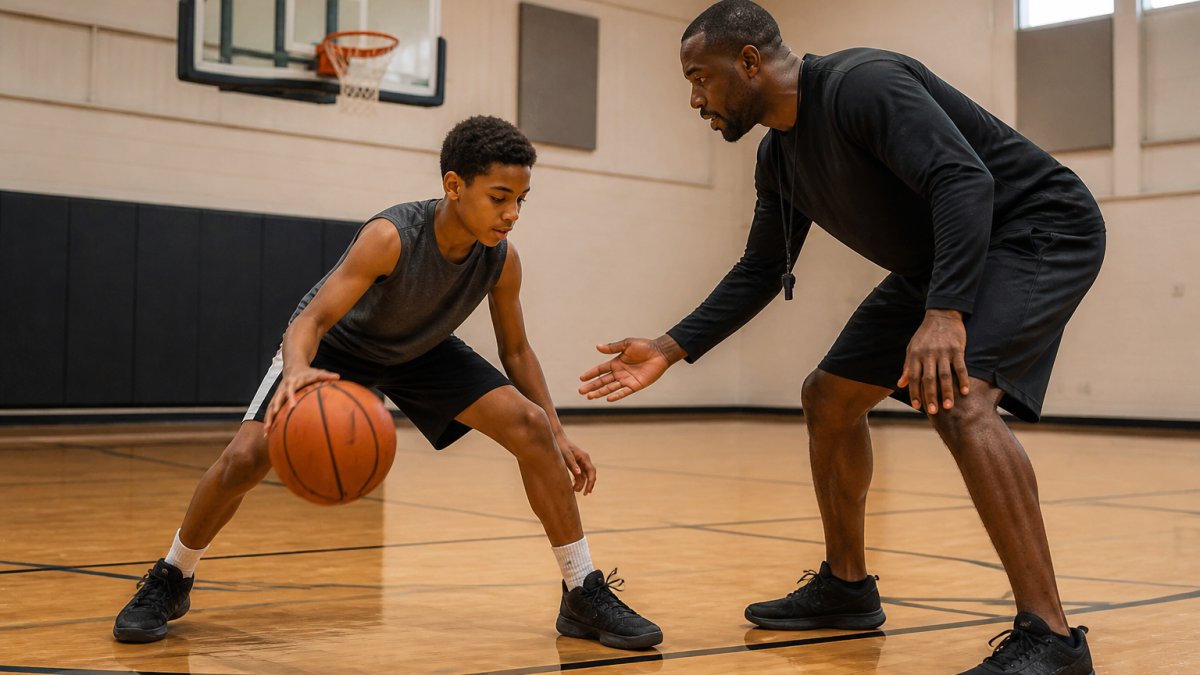
Private basketball coaching is one-on-one or small-group instruction where a trainer builds a training plan around a single player's skill assessment, goals, and gaps. We hear the same question from parents across our programs: is the extra spend on individual training actually worth it?
The market is crowded with options, and most of them talk about "skill development" without saying what that means in a gym. That's where families get stuck.
Private Basketball Coaching Cost: What You're Actually Paying For
Published benchmarks give you a starting point, not a quote. A TeachMe.To guide to private sports coaching costs reports basketball trainer rates in the range of $50-$150 per hour, with experienced coaches commonly charging $60-$90. A CoachIQ guide to pricing private training sessions cites a typical one-on-one range of $50-$120 per hour. Treat these as general-market benchmarks, not as local pricing, and convert them to Canadian dollars before you compare quotes in your area.
The Real Price Range for One-on-One Training
Most families comparing quotes will see a wide spread, and the spread usually reflects three things: coach experience, session format, and whether the session is truly one-on-one or semi-private. Athletes Untapped's cost guide notes that pricing shifts by coach experience, sport, and lesson type.
A practical way to read a quote is to convert it to a per-player, per-hour figure and compare like with like:
- One-on-one: the full hourly rate applies to one athlete, so the per-player cost is highest.
- Semi-private (2-3 players): the hourly rate is often split or discounted, cutting the per-player cost substantially while keeping individual feedback frequent.
- Small-group (3-6 players): the lowest per-player cost of the coached formats, but feedback becomes group-level and reps are shared.
Ask any provider for their current rates directly, in Canadian dollars, and confirm whether taxes are included. Pricing depends on program length, session format, and season, so a quote is the only number that matters.
Where Your Money Goes Beyond the Hourly Rate
The hourly rate covers more than gym time. A well-built program includes an individual assessment, a written training plan, video analysis or performance tracking, and feedback to parents. Those components are the difference between a trainer and a program. When you compare two quotes, ask what is bundled: a higher rate that includes an assessment, a written plan, and scheduled re-tests can be better value than a lower rate for supervised reps alone.
What Outcomes Could Justify the Expense
Value for money is not the same as the lowest price. Before you commit, decide what result would make the spend worthwhile, then check whether the program is built to deliver it:
- A named skill gap closed. For example, a shooting release that holds up under fatigue, or free-throw percentage improving across a fixed set of attempts.
- A measurable re-test. A baseline in session one and a re-test at weeks four and eight, using the same drill and the same count.
- Transfer to games. Evidence that the corrected skill shows up in game situations, not just in drills.
If a program can't tell you what will be measured and when, the price tells you very little about the value.
How to Evaluate a Basketball Coach Before You Pay
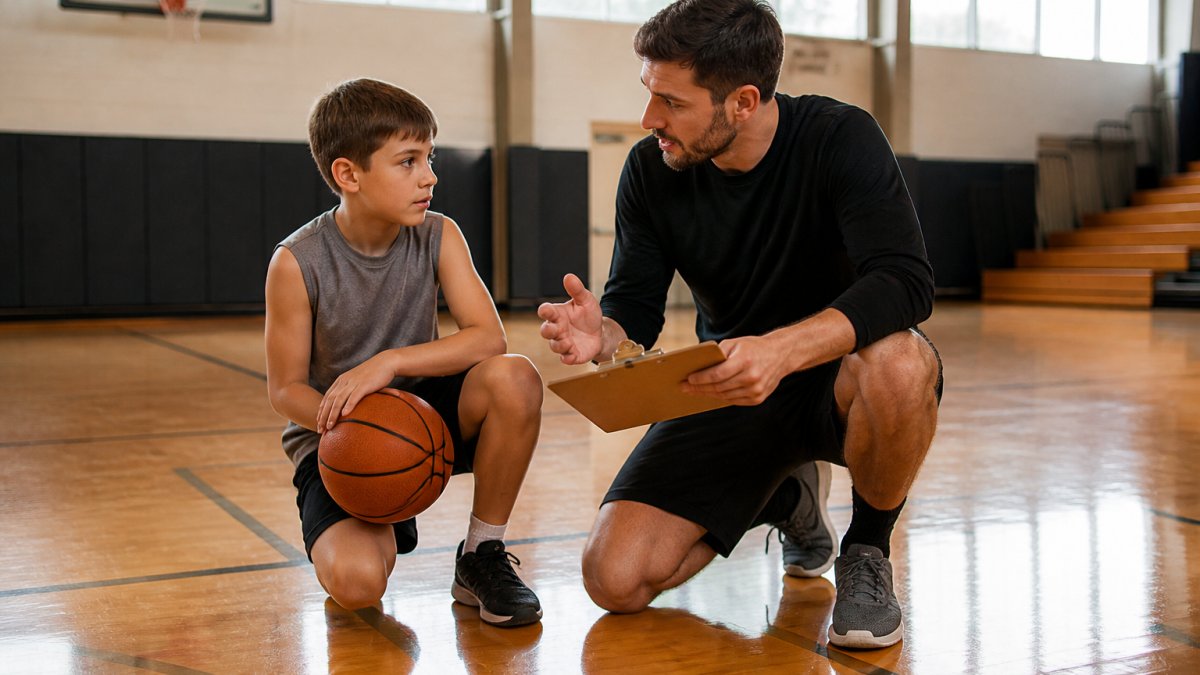
Evaluate a coach on four things: credentials, curriculum, communication, and how they handle mistakes. Pro Skills Basketball recommends assessing trainer credentials, curriculum, teaching style, and communication, and we'd add one more: whether the coach can describe a player's weaknesses without prompting.
Credentials, Curriculum, and Communication
Ask for the following before you commit:
- Certification and background check. Confirm the coach is certified and has completed a criminal record check, which is standard practice for youth sports in Canada.
- A written curriculum. A real program has sequenced skill progressions, not a different drill every week.
- Communication cadence. Find out how often you'll get feedback and in what form.
Red Flags That Signal a Poor Fit
A coach who guarantees college scholarships, refuses to explain their plan, or benches kids for mistakes in a development setting is selling something other than player development. So is a coach who can't tell you what your child will be able to do in eight weeks that they can't do now.
Private Lessons vs. Team Practice: Where Each Delivers Value
Team practice builds game awareness, team culture, and decision-making under pressure. Private lessons build individual fundamentals and fix specific mechanics. Neither replaces the other, and the families who get the most from private basketball coaching use it to solve a problem team practice can't address, like a shooting release that breaks down under fatigue.
| Factor | Private Lessons | Team Practice |
|---|---|---|
| Repetition volume | High, focused on one skill | Shared across the roster |
| Feedback | Immediate and individual | Group-level |
| Game application | Limited unless coached into it | Constant |
| Team culture | None | Core benefit |
| Best for | Fixing specific weaknesses | Building game IQ and chemistry |
If your child is already getting plenty of game reps and just needs mechanical correction, private lessons earn their cost. If the issue is confidence in games, more gym time alone won't fix it.
How Often to Practice Basketball for Real Skill Gains
Two individual sessions a week alongside team practice is a sensible ceiling for most youth players. Skill acquisition depends on quality reps and recovery, not volume. A player doing three private sessions plus two team practices plus a game is accumulating fatigue without accumulating skill.
Balancing Private Work, Team Practice, and Recovery
Think of the week as a load budget rather than a schedule to fill. A common pattern that works for motivated youth players is:
- Two team practices for game reps, team concepts, and decision-making under pressure.
- One or two private sessions focused on the specific skill gap, placed on days that don't stack on top of the hardest team session.
- One game where the corrected skill gets tested in a real environment.
- At least one full rest day, plus lighter days around games so the player arrives fresh.
Ask the coach how they structure the week. A good training plan spaces skill work, strength and mobility, and rest so the player arrives at games fresh. If a coach can't explain the weekly load, they're selling sessions, not development.
Diminishing Returns and the Overtraining Risk
More sessions do not scale linearly into more skill. The returns taper once a player is fatigued, and past a certain point extra gym time starts to cost performance in games. Watch for the warning signs:
- Mechanics breaking down late in sessions, a sign the player is practicing tired and grooving bad habits.
- Soreness or fatigue that carries into team practice or games.
- Loss of enjoyment or reluctance to attend sessions.
- No change on the re-test despite more sessions, a signal to change the plan, not add volume.
The Coach-Dependence Trap
Private coaching should make the player more capable of practicing alone, not less. A good program teaches the player how to run the drill, what correct feels like, and how to self-correct, so the work continues between sessions. If every gain disappears when the coach isn't in the gym, the program is building dependence rather than skill.
Measuring Coaching Outcomes: What Progress Actually Looks Like
Progress looks like a before-and-after on a specific measurable skill, not a general feeling that things are better. Set the baseline in the first session and re-test at week four and week eight. Use video analysis to compare mechanics, track simple numbers like free-throw percentage in a fixed set of 50 attempts, and note reaction time and body control in a repeatable drill.
Who Benefits Most From Private Coaching, and Who May Not
Players in the middle, not the extremes, gain the most. A 9-year-old who is between recreational and competitive and wants to get serious is the ideal candidate: motivated, coachable, and short on individual reps.
Families should also weigh the alternatives. Group and semi-private formats cut the per-player cost substantially. A well-run club program with strong coaching can cover fundamentals without the one-on-one price tag.
A Practical Decision Framework and Trial Period
Use this framework before you sign anything:
- Name the problem. Write down the one skill that needs work.
- Set the baseline. Have the coach test it in session one and record the number.
- Agree the target. Define what improvement looks like in eight weeks.
- Book a trial block. Three to four sessions, paid, with a review at the end.
- Review the evidence. Compare the re-test to the baseline and decide whether to continue.
If the trial block doesn't move the number, the coaching isn't working, regardless of how good the sessions felt.
Our programs for ages 4 to 16 cover both recreational and competitive rep pathways, with coaching built around skill development and a genuine passion for the game. If you want to see how a structured program fits your child's goals, our rep tryouts are the place to start.
Frequently Asked Questions
Is private basketball coaching worth it for young players?
It depends on the player's goals and where they are in their development. Private basketball coaching tends to deliver the most value when a player has a specific skill gap to close, is preparing for rep tryouts, or needs individual feedback that a team practice cannot provide. For beginners aged 4 to 6 who are still deciding whether they enjoy the game, a group introductory program usually offers better value. The key is matching the format to the player's stage, not assuming one-on-one is always better.
How much does private basketball coaching cost?
Published benchmarks for one-on-one basketball training generally fall between $50 and $150 per hour, with experienced coaches often charging $60 to $90 per hour. These figures are broad guides rather than fixed rates, and actual pricing depends on the coach's credentials, session length, and whether the format is one-on-one, semi-private, or small group. Always ask for a written quote and confirm what is included before committing to a package.
How can you tell if a private basketball coach is effective?
Look for measurable changes over a defined period. A good coach sets specific goals at the start, tracks progress through drills, video analysis, or simple stat keeping, and shares feedback with you and the player. Ask what the player should be able to do after eight sessions that they cannot do now. If the coach cannot answer that clearly, or if sessions consist of generic drills with no individual correction, the value is likely lower than the hourly rate suggests.
How do private basketball lessons compare with team practice?
Team practice builds game awareness, teamwork, and competitive reps against live defenders, which private lessons cannot replicate. Private lessons offer repetition volume, individual correction, and a pace tailored to one player. Most players get the best return from doing both: team practice for game context, and private lessons to fix specific habits or build confidence in one or two skills. If you can only afford one, team practice is usually the better base for younger players.
How often should a young basketball player take private lessons?
Once a week is the most common starting point, paired with two or three independent practice sessions at home. Skill retention improves when players touch the ball between lessons, even for 20 to 30 minutes. More than two private sessions per week rarely adds proportional value for youth players, since recovery and free play matter too. Start with a four to six week block, review progress, then adjust frequency based on what the coach observes.