 how-to
Faster Crossover for Youth Players: A Step-by-Step Guide
Table of Contents
- Why Crossover Speed Matters for Young Players
- Crossover Dribbling Fundamentals: Building Your Foundation
- Basketball Crossover Drills for Beginners
- Youth Basketball Ball-Handling Drills to Build Control
- How to Improve Dribbling Speed in Basketball
- Basketball Change of Direction Drills
- Using the Crossover in Game Situations
- Common Crossover Mistakes and How to Fix Them
- Frequently Asked Questions
Last Updated: October 12, 2026
Why Crossover Speed Matters for Young Players
A faster crossover youth advantage gives young basketball players the edge to create separation and attack the basket with confidence.
Speed matters because defenders react to movement. A slow crossover gives them time to adjust; a fast one forces them to commit to the wrong direction, creating space to attack.
Crossover Dribbling Fundamentals: Building Your Foundation
A faster crossover starts with proper stance and hand speed, without these, no amount of speed work translates to real improvement.
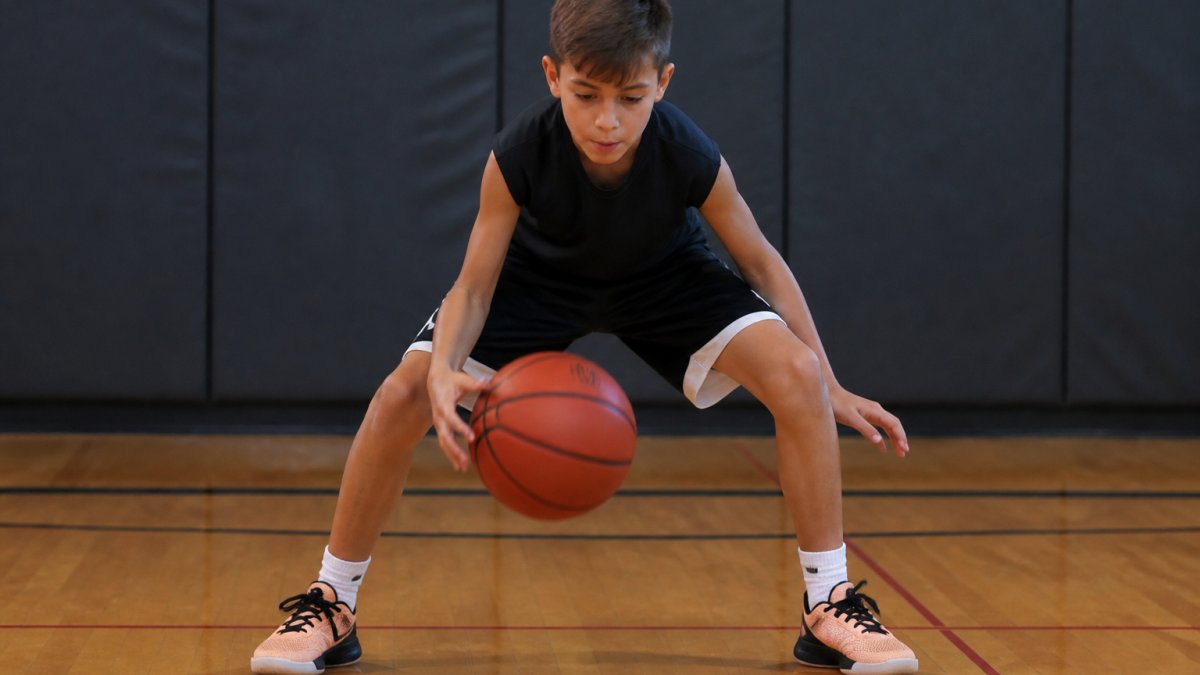
Stance and Body Position
Feet should be shoulder-width apart. Knees stay bent at about 45 degrees. Your weight sits on the balls of your feet, not your heels.
Keep your chest up and eyes forward to see the floor and defenders; looking down kills court vision and decision-making.
Hand Speed and Coordination
The crossover moves the ball from your dominant hand to your weak hand in one quick motion at knee level or below, lower transfers are harder to intercept and more secure. Hand speed develops through deliberate repetition: start stationary, then progress to moving drills as control improves.
Basketball Crossover Drills for Beginners
Beginner drills teach the mechanics of the crossover without game speed, building consistency before adding intensity.
Stationary Crossover Drill
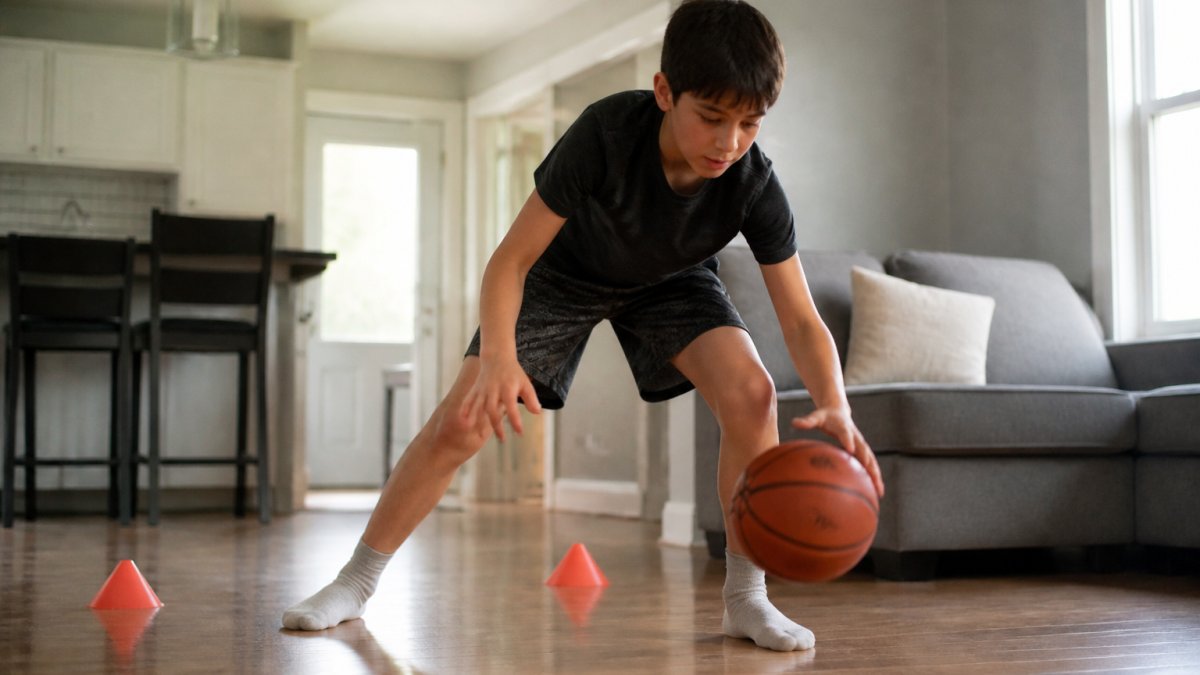
The stationary crossover drill is where every young player should start, isolating the hand transfer so you can focus on technique without worrying about footwork or balance.
Stand in an athletic stance with feet shoulder-width apart.
Do this drill 2-3 minutes daily, keeping the ball low and using a quick wrist snap rather than a big arm movement.
Progressive Crossover Progression
Once young players master the stationary crossover, add forward movement. Dribble forward slowly in a straight line, crossing over every 3-4 dribbles, keeping the ball low and the crossover quick; consistency comes before speed.
Progress to crossovers every 2 dribbles, then every dribble, then multiple in sequence. Spend 1-2 weeks at each level; rushing leads to sloppy technique and hard-to-break habits.
Youth Basketball Ball-Handling Drills to Build Control
Ball control lets young players execute crossovers consistently even under pressure.
Zigzag Cone Drill
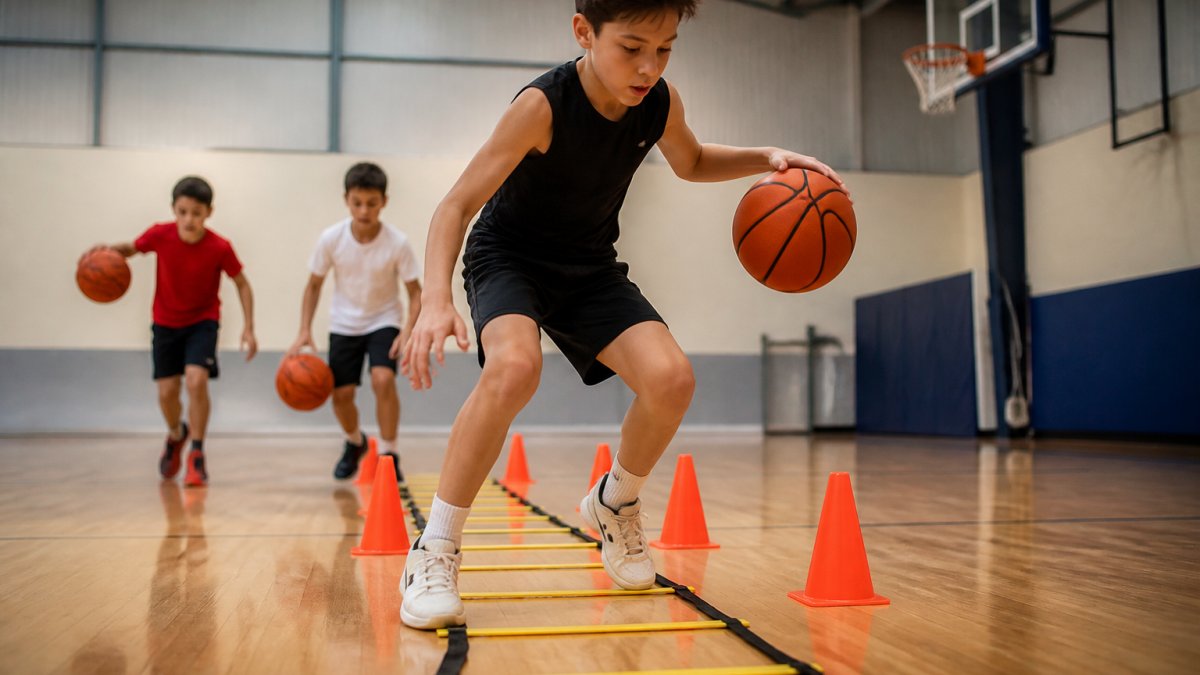
Set up 5 cones in a straight line, about 3 metres apart. Dribble toward the first cone, execute a crossover, and change direction. Continue zigzagging through all cones.
The zigzag drill teaches using the crossover to change direction while maintaining speed. Do 3-4 sets of 2 minutes with 30 seconds rest; as players improve, increase speed or decrease cone distance.
Straight-Line Speed Drill
Dribble in a straight line for 20 metres, executing crossovers every 5 metres while maintaining consistent speed. This builds the ability to execute crossovers at game speed and time them properly.
Perform 3-4 full-effort repetitions with 1 minute rest; track your time to measure improvement.
How to Improve Dribbling Speed in Basketball
Dribbling speed comes from hand speed, footwork, and decision-making working together. The difference between players who get faster and those who just practice more is measurement, timed reps, planned rest, and a simple benchmark.
Weak-Hand Development: The 30 Percent Rule
Most young players favour their dominant hand, creating a weakness defenders exploit. Developing the weak hand doubles offensive options and makes the crossover faster because both hands can start and finish the move.
The 30 percent rule: if a player practices ball handling for 30 minutes, at least 9 minutes go to the weak hand, in three blocks:
- Stationary weak-hand dribble: 3 minutes, ball at knee level, eyes up.
- Weak-hand crossover starts: 3 minutes, initiating the crossover from the weak hand rather than receiving it.
- Weak-hand live reps: 3 minutes in 1-on-1 or cone work, forcing the weak hand under light pressure.
Many young players can receive a crossover into the weak hand but cannot start one from it, so track both directions separately.
Tempo and Repetition Training With Timed Sets
Speed improves through high-volume repetition at increasing tempos, but volume without structure leads to sloppy form. Use timed sets with a fixed work-to-rest ratio:
- 50 percent speed, 30 seconds work, 30 seconds rest. Focus on perfect technique, ball below knee, eyes up, quick wrist snap.
- 70 percent speed, 30 seconds work, 30 seconds rest. Same technique, faster tempo.
- 90 percent speed, 20 seconds work, 40 seconds rest. Technique must hold; if it breaks, drop back to 70 percent.
- Maximum speed, 10 seconds work, 50 seconds rest. Short bursts only, because form collapses quickly at full speed.
Run this progression 3 to 4 times per week; noticeable speed improvement typically appears within 3 to 4 weeks. The rest periods are not optional, they let the next rep be fast rather than tired.
Simple Benchmarks to Track Progress
Without a benchmark, players cannot tell whether they are getting faster. Use two or three tests every two weeks:
- Stationary crossover count: How many clean crossovers in 30 seconds? Record both directions.
- Cone zigzag time: Time a 5-cone zigzag with a crossover at each cone. Record the time and note whether the ball stayed below the knee.
- Weak-hand crossover count: Same 30-second test, but starting from the weak hand.
Write the numbers down. Going from 18 to 24 clean crossovers in 30 seconds over three weeks is measurable proof of improvement, far more motivating than general encouragement.
Balance Speed With Control
Speed without control is a turnover waiting to happen. The rule: if the ball rises above the knee or the player's eyes drop, the rep is too fast. Slow down until technique holds, then rebuild speed. A crossover 10 percent slower but secure beats a faster one that ends in a steal.
Put It Together in a Weekly Plan
A simple week for a youth player:
- Monday: Stationary crossover and weak-hand block, 15 minutes.
- Wednesday: Tempo progression sets, 15 minutes, plus cone zigzag.
- Friday: Weak-hand live reps in 1-on-1, 15 minutes, plus benchmark test every second week.
Fifteen focused minutes, three times a week, with timed sets and recorded benchmarks, produces more speed improvement than an hour of unstructured dribbling.
Basketball Change of Direction Drills
Change of direction drills teach young players to execute the crossover explosively while maintaining balance.
First-Step Explosiveness Drill
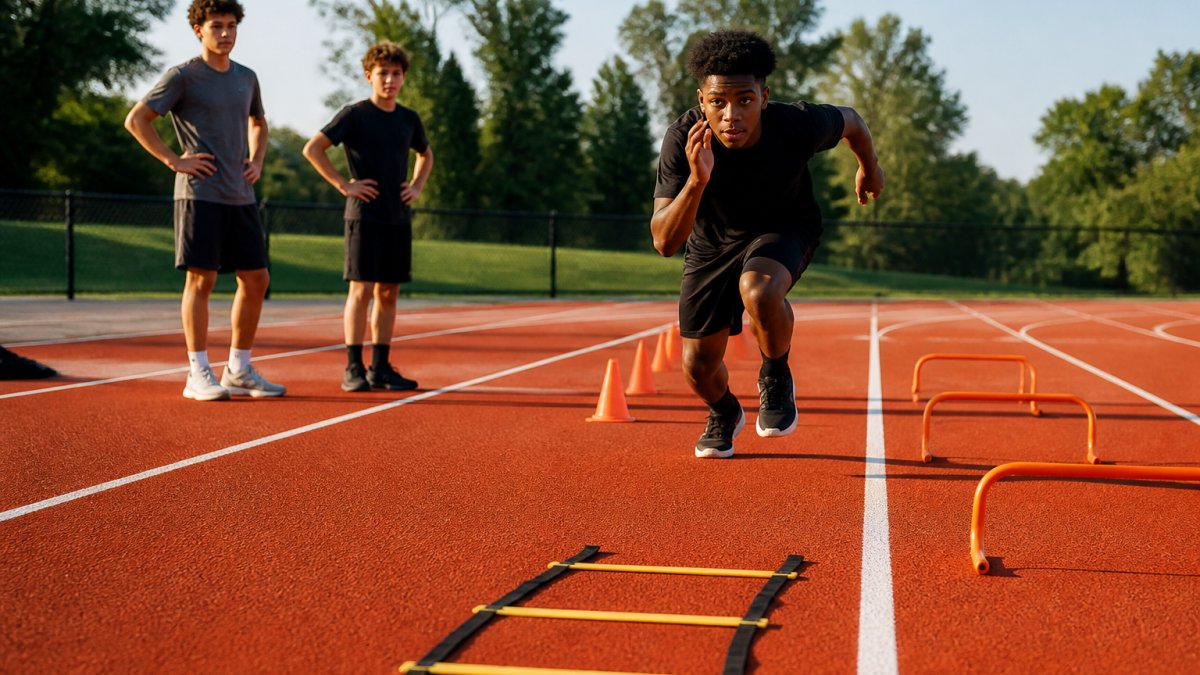
Stand in an athletic stance. Explode forward 3-4 steps at maximum speed. Plant your outside foot and execute a sharp crossover.
This drill teaches the explosive first step that separates good players from great ones, using legs to generate power, not just hands.
Perform 5 repetitions in each direction with 30 seconds rest; this is high-intensity, so don't do it when fatigued.
Hip Turn and Separation Technique
The hip turn creates separation from defenders, with a sharp hip turn on the crossover, they can't stay in front of you.
Dribble forward at half speed, execute a crossover, and turn your hips sharply in the new direction with your shoulders following.
Using the Crossover in Game Situations
The crossover is only valuable if young players can use it in games. Drill-only training leaves players executing on command rather than in response to a defender. Teaching game awareness means giving players specific cues to read, a clear decision rule, and a plan for after the ball changes hands.
Read the Defender's Hips, Not Their Eyes
A defender's eyes and shoulders can fake commitment, but their hips tell the truth. Teach young players to glance at the hip line as they approach:
- Hips square and high: The defender is back on their heels and not ready to slide. Attack the crossover immediately, no setup dribble needed.
- Hips turned to overplay one side: The defender has committed weight to your strong hand. A single hard crossover to the open side beats them without extra fakes.
- Hips low and square with active hands: The defender is balanced. Use a change of pace first (slow down, then explode) before crossing over, or use a retreat dribble to reset the angle.
The "hip check" rule: if you can see the defender's chest number, their hips are square and you can attack; if you can only see their shoulder, they've turned and the opposite side is open.
The Decision Rule: When to Cross, When to Drive
Young players freeze because they have too many options. Give them a two-question sequence:
- Is the defender's weight committed to one side? If yes, crossover to the open side and go.
- Is the defender balanced and square? If yes, do not force the crossover. Use a change of pace, a retreat dribble, or a pass, then re-attack.
This prevents the most common youth error: crossing over into a balanced defender who is waiting for it. The crossover is a reaction to defensive imbalance, not a scripted move.
Connect the Crossover to the First Step
The crossover only creates separation if the first step after the transfer is explosive. Teach the sequence as one motion:
- Ball transfer happens at knee level or below. The lower the transfer, the less time the defender has to react.
- The outside foot plants as the ball arrives in the new hand. This plant converts the crossover into forward momentum.
- The first step is long and low. A short, upright first step lets the defender recover.
A useful cue is "ball, foot, go", the ball hits the new hand, the outside foot plants, and the player pushes off in the same beat. Three separate beats means the move is too slow.
Sell the Move Without Telegraphing It
Defenders read shoulders and eyes before the ball moves, so staring at the ball or dropping a shoulder early gives the move away.
- Eyes stay up and on the defender's hips. Looking down kills court vision and the ability to read the cue.
- Shoulders stay square until the transfer. A slight dip toward the fake side is fine, but a full turn before the ball moves is a giveaway.
- Change pace before the crossover. A half-step slowdown makes the defender relax, then the crossover and first step catch them flat-footed.
Practice It in Small-Sided Games
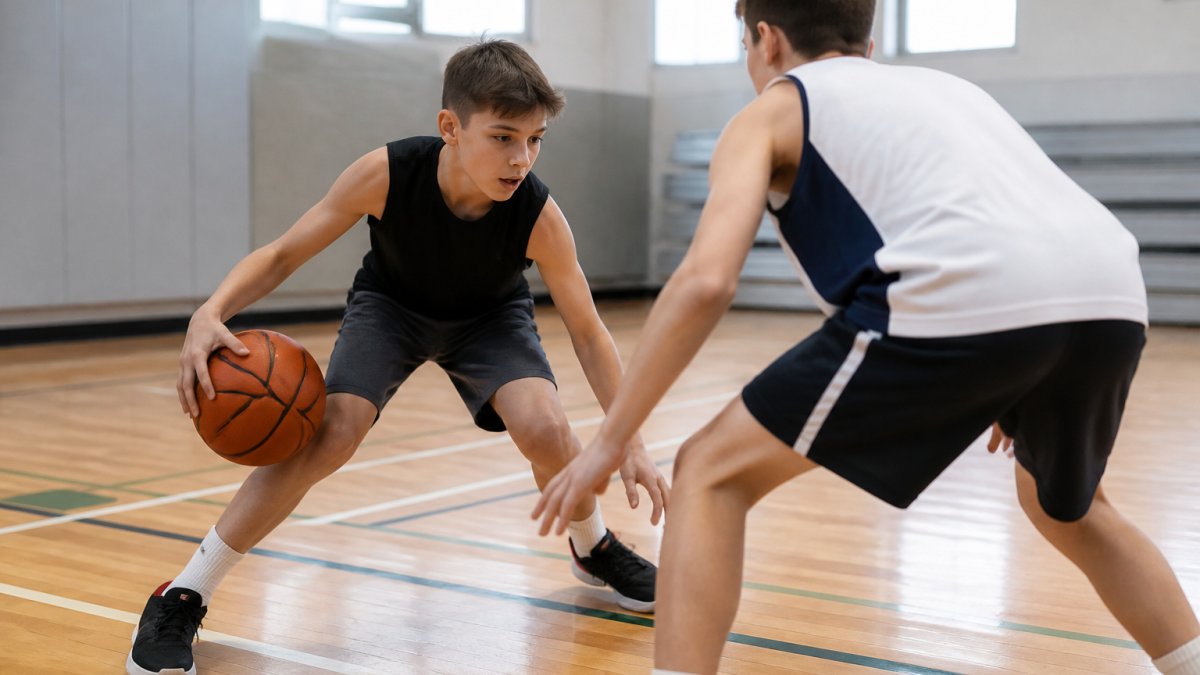
Mechanics are built in drills; decisions in live play. Use 1-on-1 and 2-on-2 half-court games requiring at least one crossover per possession. After each rep, ask: "What did the defender's hips tell you?" This builds the habit of reading before reacting.
Common Crossover Mistakes and How to Fix Them
Most young players make the same mistakes.
Slow hand transfer: The crossover should be one quick motion, not two.
Looking at the ball: Eyes should stay up to see defenders and teammates.
Predictable patterns: Young players often cross over at the same spots every time.
Developing faster crossover youth skills takes time and deliberate practice, but young players who commit to these drills see real improvement within weeks. Our youth basketball programs are built around skill development that gives every player the tools to succeed.
Frequently Asked Questions
How can a youth basketball player make their crossover faster?
Speed comes from three elements: hand speed through repetition, footwork precision, and decision-making. Start with stationary crossovers at controlled tempo, then progress to moving crossovers at game speed. Practice weak-hand development equally with your dominant hand, as imbalance slows your overall ball-handling. Increase repetitions gradually, aim for 100-150 controlled crossovers per practice session, then add tempo work once technique is solid.
What drills help improve crossover speed and ball control?
The zigzag cone drill, straight-line speed drill, and stationary crossover progression are foundational. Cone drills build change of direction and footwork under pressure. Stationary work isolates hand speed and coordination without movement variables. Progress from slow, controlled repetitions to game-speed tempo. Combine ball-handling drills with crossover-specific work, dribble in place, then add movement, then add defenders reading cues.
How often should young players practice crossover dribbling?
Include crossover work 3-4 times per week during skill-development sessions. Young players benefit from consistent, shorter practice blocks rather than infrequent long sessions. Spend 10-15 minutes per session on crossover drills and ball-handling progression. Rest days are important for motor-skill development, so avoid daily intense dribbling work. Quality repetitions with proper form matter more than volume.
Should players practice crossovers while stationary or moving?
Start stationary to build hand speed, coordination, and muscle memory without movement complexity. Once footwork and hand speed are solid, progress to moving crossovers at controlled speed, then game speed. Stationary work teaches the mechanics; moving work teaches game application. Use both: stationary drills for precision, moving drills for game readiness and reading defender positioning.