 comparison
Halton Basketball Training Programs Review
Table of Contents
- What to Look for in a Basketball Training Program
- Tier 1 Sports: Comprehensive Programs from Ages 4 to 16
- Youth Basketball Training Cost: What to Expect
- Rep Basketball vs House League: Which Path Is Right
- Basketball Training Program Duration and Schedule
- Other Training Options in the Region
- How to Assess Program Quality Before Enrolling
- Conclusion
Last Updated: August 28, 2026
What to Look for in a Basketball Training Program
Choosing the right basketball training program for your child depends on three factors: coaching philosophy, age-appropriate structure, and honest skill progression. Many parents assume all programs follow the same template, but some prioritize winning above learning while others focus so heavily on fundamentals that kids never experience real game situations. The best programs balance both, with coaches who understand that a 6-year-old learning to dribble needs a fundamentally different experience than a 12-year-old preparing for competitive play.
Before enrolling, ask: Does the program match your child's current skill level? Are coaches certified and experienced with this age group? Does the program philosophy align with your values? Does the facility support the program's goals?
At Tier 1 Sports, we've built our basketball training programs around these principles. Our approach recognizes that player development requires intentional progression through distinct age ranges, each with its own developmental priorities. This guide walks you through what to evaluate, compares major basketball training programs in the region, and helps you match your child with the right fit.
Tier 1 Sports: Comprehensive Programs from Ages 4 to 16
Tier 1 Sports offers age-specific basketball training programs designed around the developmental stages of young athletes. A 5-year-old's basketball experience should look completely different from a 12-year-old's, not because the fundamentals change, but because cognitive, physical, and emotional readiness differs significantly.
Age-Specific Programs and Skill Development
Ball For Fun (ages 4-6) introduces basketball through play-based learning. The focus is building comfort with the ball, developing basic hand-eye coordination, and creating positive associations with the sport. Kids who enjoy themselves at this stage are far more likely to continue playing.
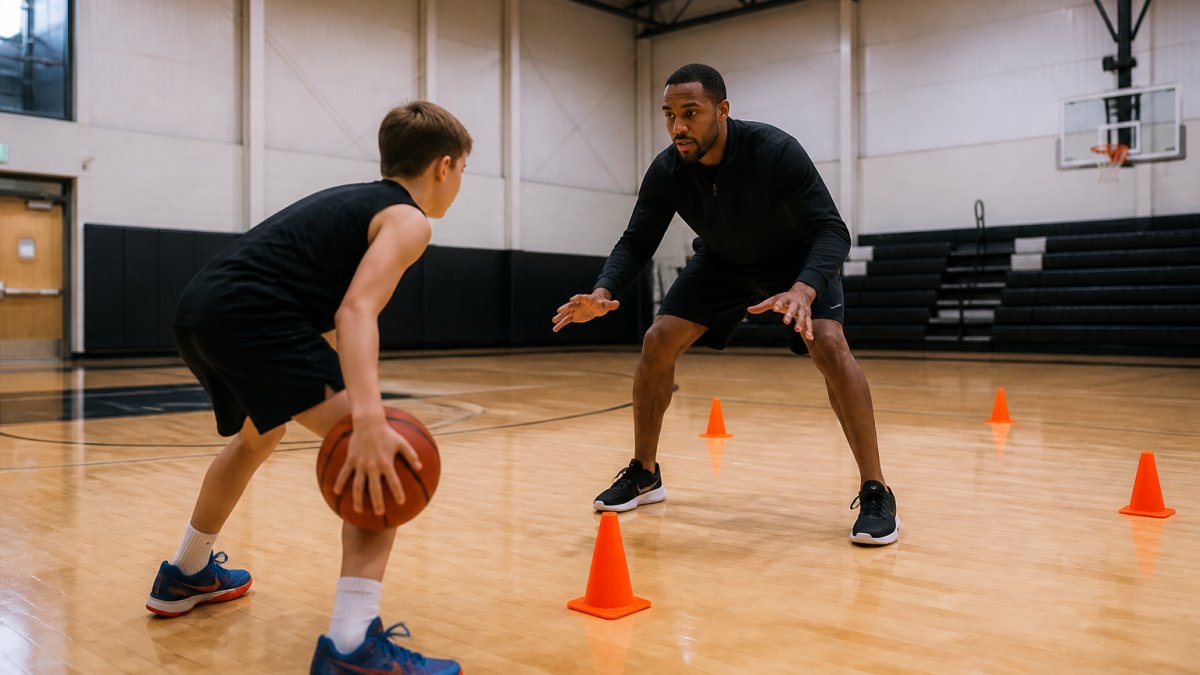
Learn To Ball (ages 7-10) shifts toward structured skill development. Coaches introduce proper dribbling mechanics, basic shooting form, and simple game concepts. Sessions include game-time experience with intentional teaching moments embedded throughout.
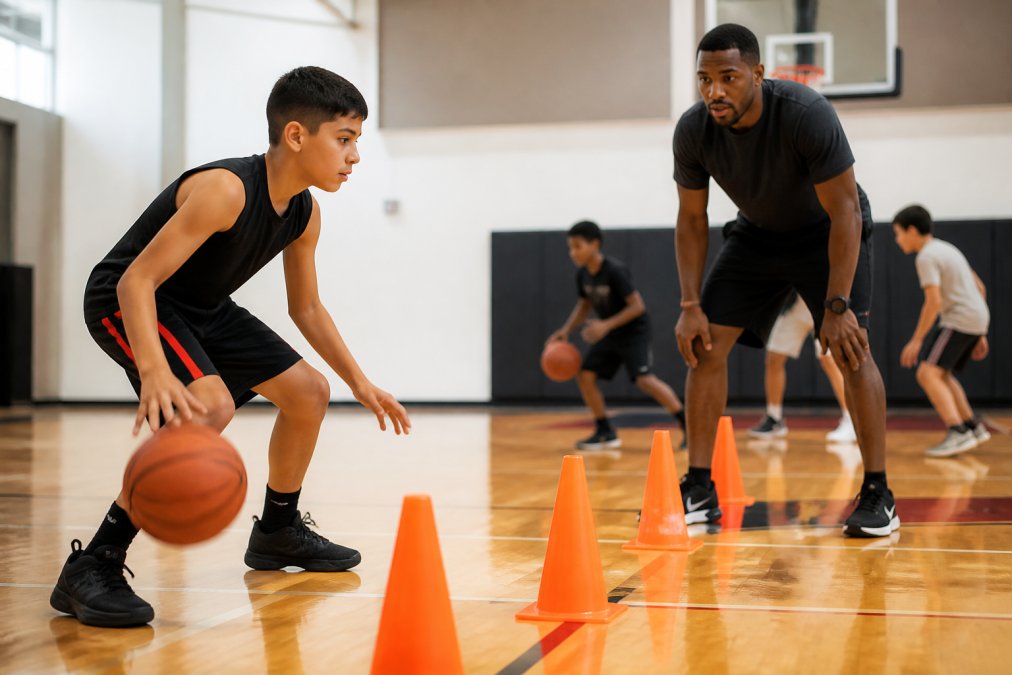
Skills & Drills (ages 7-12) serves athletes ready to accelerate development. This program assumes kids understand the basics and are ready for intensive technical work on shooting mechanics, defensive positioning, and footwork through focused drills and live-game application.
Prep For Rep (ages 11-16) bridges recreational and competitive basketball. This program develops the basketball IQ and technical skills needed for competitive play while maintaining a supportive, learning-first environment.
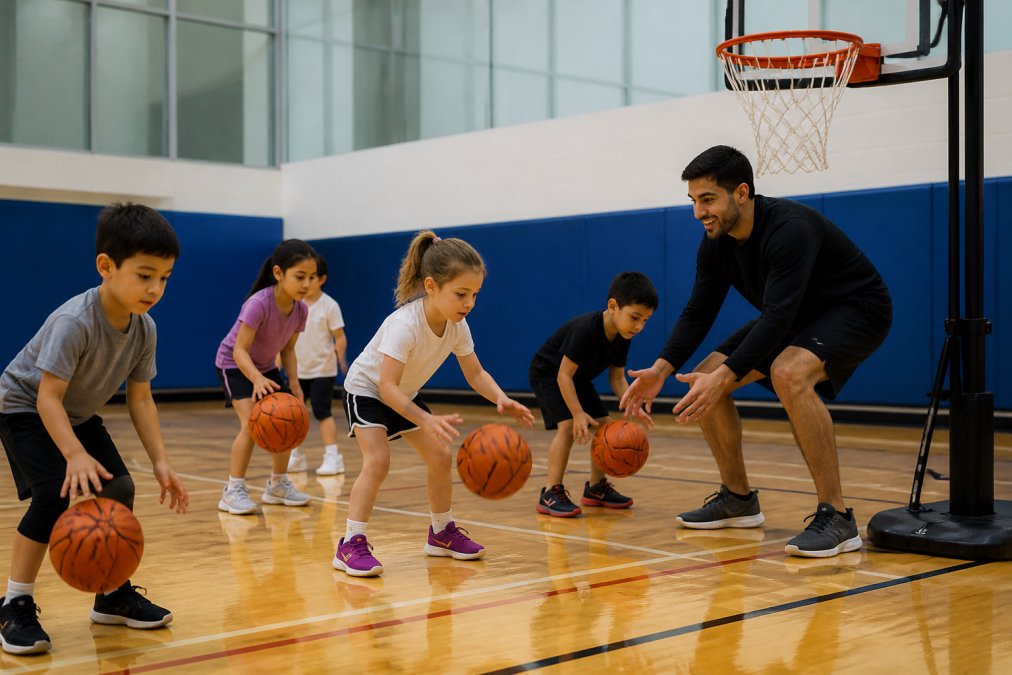
The Y.G.B.L. House League (ages 11-14) provides competitive team play in a recreational structure. House league teams are balanced for fairness, ensuring every child gets meaningful playing time and development opportunity.
Coaching Philosophy and Certified Instructors
What separates a transformative basketball training program from a mediocre one is almost always the coaching. A coach who understands how to build confidence while maintaining high standards creates an entirely different experience than one who focuses primarily on winning or drilling mechanics without context.
Tier 1 Sports coaches are selected and trained around a specific philosophy: skill development and passion for the game come first. Winning follows naturally when players understand the fundamentals and love playing. Coaches celebrate effort and improvement, not just outcomes. A child who makes a mistake but learns from it has had a better experience than one who sits on the bench to protect a win.
Coaches understand the emotional landscape of youth sports. A 7-year-old who gets benched for making mistakes often quits basketball entirely. A 7-year-old who makes mistakes, receives constructive feedback, and gets back in the game learns resilience and develops genuine skill.
Rep Tryouts and Competitive Pathways
For families interested in competitive basketball, understanding the rep pathway is essential. Rep teams represent the highest competitive level at the youth level, with skill-based tryouts and structured league competition (basketball.ca).
Tier 1 Sports offers REP Team opportunities for ages 11-16. Rep basketball requires higher commitment, with increased practice frequency, possible travel, and more intense competition. Rep teams offer something recreational programs can't: playing alongside equally skilled peers, exposure to advanced coaching, and the opportunity to develop basketball IQ at a higher level.
The decision to pursue rep basketball should be intentional. Some families pursue it because their child genuinely loves the game and wants that challenge. Rep basketball is rewarding for kids who want it; it's exhausting and demoralizing for kids who feel pressured into it.
Youth Basketball Training Cost: What to Expect
Basketball training program costs vary significantly based on program type, frequency, and facility quality. Recreational programs typically cost less than competitive rep programs because they require less specialized coaching and facility time. House league programs generally fall in the middle range, offering competitive team play without the premium cost of rep basketball.
When evaluating cost, consider what's included. Some programs bundle facility fees, coaching, and equipment. Others charge separately. The most transparent programs provide clear pricing on their websites.
Rather than assuming lower cost equals poor quality or higher cost guarantees excellence, evaluate each program's specific offering. A well-run recreational program with experienced coaches often delivers better value than an expensive rep program with inconsistent coaching.
Rep Basketball vs House League: Which Path Is Right
The choice between rep and house league basketball represents a fundamental decision about your child's athletic experience. Both have genuine value but serve different purposes.
House league basketball emphasizes balanced competition and broad participation. Teams are formed to ensure competitive balance, so every child gets meaningful playing time. The focus is development and enjoyment. Kids experience real game situations, learn teamwork, and play against different opponents without the intensity of rep competition. House league is ideal for children who love basketball but aren't ready for or interested in the higher commitment level of rep play.
Rep basketball is skill-based competitive play. Tryouts determine team placement. Practice frequency is higher, coaching is more specialized, and competition is more intense. Rep basketball is appropriate for children who have demonstrated strong basketball skills and genuinely want the challenge of playing at a higher level.
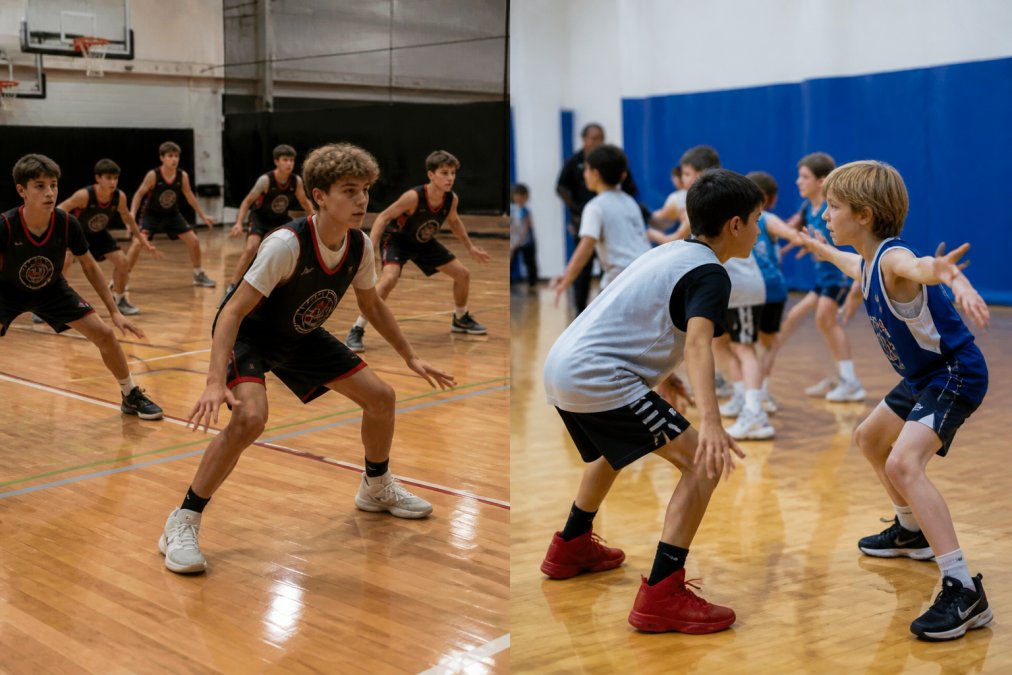
Many families assume rep basketball is "better" or more serious. It's more competitive, certainly. But house league offers something rep basketball doesn't: guaranteed playing time, reduced pressure, and the opportunity to develop at a sustainable pace. For most young athletes, house league is the better choice until they're older and have explicitly chosen to pursue competitive basketball.
Tier 1 Sports offers both pathways because different families have different needs. The house league experience builds confidence and fundamental skills. The rep pathway serves athletes ready for competitive challenge.
Basketball Training Program Duration and Schedule
Basketball training programs vary significantly in structure. Some run year-round with seasonal intensity adjustments. Others follow a school calendar.
Most recreational programs operate on a session-based model: weekly classes during fall, winter, and spring, with breaks over summer. Typical sessions run 45 minutes to an hour. This structure allows families flexibility.
House league programs typically run for a full season (fall, winter, or spring) with weekly games and practices (ontario.ca). Seasons last 8-12 weeks.
Rep basketball requires significantly higher time commitment. Practice frequency increases to 2-3 times weekly, plus games. Tournament travel may extend the season. Rep programs often run year-round with varying intensity.
Tier 1 Sports also offers March Break Camps and Summer Camps for athletes who want intensive skill development over a short period.
Other Training Options in the Region
Several basketball training programs operate in the Halton region, each with distinct approaches.
IBSA Burlington Academy
IBSA Burlington Academy operates at the Haber Recreation Centre in Burlington and serves athletes aged 8-18. The program runs three training sessions weekly, with separate age groupings for younger athletes (8-12) and older athletes (13-18). The focus is accelerated skill and athletic development through structured, high-intensity training.
IBSA's strength is training frequency and consistency. Three sessions per week allows for meaningful skill progression. The program offers monthly memberships and sibling discounts.
The primary limitation is location; Burlington requires travel for families in other parts of Halton. Additionally, specific pricing for monthly memberships isn't publicly listed.
Halton Hills Girls Basketball Club
This non-profit organization serves girls aged 6-12 across Georgetown, Acton, and Halton Hills. The program emphasizes confidence building, teamwork, and leadership in an inclusive environment. Coaching is provided by NCCP-certified volunteers and former collegiate players.
The non-profit model means funds are reinvested into players and facilities rather than extracted as profit. The program runs fall/winter sessions and summer camps.
The significant limitation is that the program serves girls only, excluding boys from this specific community.
Nucleus Sports Academy
Nucleus Sports Academy operates through PDM Basketball Club and serves all skill levels in Oakville and the Halton region. The program offers leagues, competitive teams, camps, and private training. Coaches are certified and experienced, with emphasis on basketball-specific skills, general athletic development, and life skills.
The breadth of offerings makes Nucleus appealing for families seeking variety. Private training options allow for personalized skill development.
How to Assess Program Quality Before Enrolling
Before committing to a basketball training program, gather specific information that reveals quality beyond marketing claims.
Visit a practice. Ask if you can observe a session. Watch how coaches interact with kids. Do they provide constructive feedback or criticism? Are kids engaged? Is the facility well-maintained and safe? A quality program welcomes observation.
Ask about coaching credentials. Certified coaches (NCCP or equivalent) have completed formal training in youth development, age-appropriate instruction, and safety. Ask specifically about coaches' experience with your child's age group.
Understand the philosophy. Ask directly: "What happens if my child makes a mistake during a game?" The answer reveals whether mistakes are learning opportunities or failures to be punished.
Request references. Many programs can connect you with current families. Ask those families specific questions: Does the program deliver what it promises? Have their kids improved? Do they feel the coaching is supportive?
Evaluate facility quality. A well-maintained facility with proper equipment and adequate space supports better instruction than a cramped, poorly-maintained space.
Clarify progression pathways. How does a child move from one program level to the next? Is progression automatic based on age, or skill-based? A program that thoughtfully manages progression ensures kids stay challenged without being overwhelmed.
Conclusion
Finding the right basketball training program requires matching your child's current skill level, interest, and emotional readiness with a program that delivers on its promises. Tier 1 Sports offers comprehensive age-specific basketball training programs from ages 4 to 16, with pathways for both recreational and competitive play. Our coaching philosophy centers on skill development and passion for the game, supported by certified instructors who understand youth athletic development. Whether your child is just discovering basketball or preparing for competitive rep play, Tier 1 Sports provides a supportive community where young athletes develop skills, build confidence, and realize their potential. Explore Tier 1 Sports basketball programs and registration options to find the right fit for your family.
Frequently Asked Questions
Is a basketball training program suitable for a 5-year-old with no prior experience?
Yes. Tier 1 Sports offers 'Ball For Fun' programs specifically designed for ages 4-6, introducing fundamentals through play-based learning. These introductory sessions focus on building confidence and basic coordination rather than competitive drills. The program uses age-appropriate equipment and coaching to ensure young beginners enjoy the experience and develop a passion for the game.
What is the difference between rep basketball vs house league for youth athletes?
Rep basketball is competitive and selective, requiring tryouts; players train more intensively and compete against other rep teams. House league is recreational, open to all skill levels, with less demanding schedules and emphasis on participation over winning. Rep typically involves higher commitment and cost. Choose rep if your child is serious about advancement; choose house league for recreational enjoyment and skill building without competitive pressure.
How long is a typical basketball training program duration?
Duration varies by program type. Recreational programs like 'Learn To Ball' (ages 7-10) typically run 6-12 weeks per session. Rep teams involve year-round commitment with regular practices and seasonal competition. Summer camps range from one to two weeks. Tier 1 Sports also offers March Break camps for shorter commitments. Visit their website for current session schedules and enrollment dates.
What should I look for in a quality basketball training program?
Prioritize certified coaches with basketball experience, age-appropriate skill progression, a balance between drills and game play, and a philosophy that emphasizes learning over winning. Check facility quality, class sizes, and whether the program offers trial sessions or parent observation. Ask for references from current families. Programs should focus on basketball fundamentals, athletic conditioning, and confidence building rather than just competitive outcomes.
How does Tier 1 Sports differ from other local basketball academies?
Tier 1 Sports offers tailored programs across a wide age range (4-16) with both recreational and competitive pathways, including rep tryouts. Their coaching emphasizes skill development and passion for the game in a supportive team environment. They provide specialized programs like 'Prep For Rep' to bridge recreational and competitive play. Compare their certified coaching credentials, facility amenities, and community focus against competitors like IBSA Burlington Academy or Nucleus Sports Academy.
This article was written using GrandRanker