 how-to
Handle Basketball Tryout Rejection: A Parent's Guide
Table of Contents
- Understanding Basketball Tryout Rejection and Its Impact
- Youth Sports Tryout Preparation Tips to Build Confidence
- The Immediate Response: What to Do Right After Rejection
- How to Ask a Coach for Feedback After Tryouts
- How to Stay Motivated After Being Cut From a Team
- Exploring Alternative Basketball Pathways
- Building Your Next Season Training Plan
- Frequently Asked Questions
Last Updated: October 2, 2026
Understanding Basketball Tryout Rejection and Its Impact
Basketball tryout rejection stings. Your child trained hard, showed up ready, and still didn't make the team. How parents and coaches respond in the days after rejection often matters more than the tryout itself. It's a turning point.
Rejection in youth sports teaches resilience: kids learn that effort doesn't guarantee immediate success, that setbacks are information not verdicts, and that they can handle disappointment. The key is processing it productively, understanding what happened, extracting useful feedback, and building a plan forward.
Youth Sports Tryout Preparation Tips to Build Confidence
Focus on skill development over outcomes. Kids with a growth mindset bounce back faster from rejection. Encourage your child to track specific skills, ball handling drills, shooting percentage, defensive positioning, so progress becomes visible.
Build mental toughness early. Confidence is believing you can handle failure. Expose your child to challenge in practice so they learn mistakes don't end the world.
Manage expectations realistically. Tryouts are evaluation events where coaches assess fit for their specific team. Not making one team doesn't mean your child isn't a good player, it means they weren't the right fit for that roster at that moment.
Attend practices consistently. Coaches notice commitment. Kids who attend every session build relationships and improve faster through more repetitions.
| Preparation Strategy | What It Does | When to Start |
|---|---|---|
| Skill-focused training | Builds tangible improvement your child can see | 2-3 months before tryouts |
| Mental resilience work | Prepares mind for setbacks | Ongoing, year-round |
| Realistic expectation-setting | Reduces pressure and anxiety | 4-6 weeks before tryouts |
| Consistent practice attendance | Demonstrates commitment to coaches | Immediately |
The Immediate Response: What to Do Right After Rejection
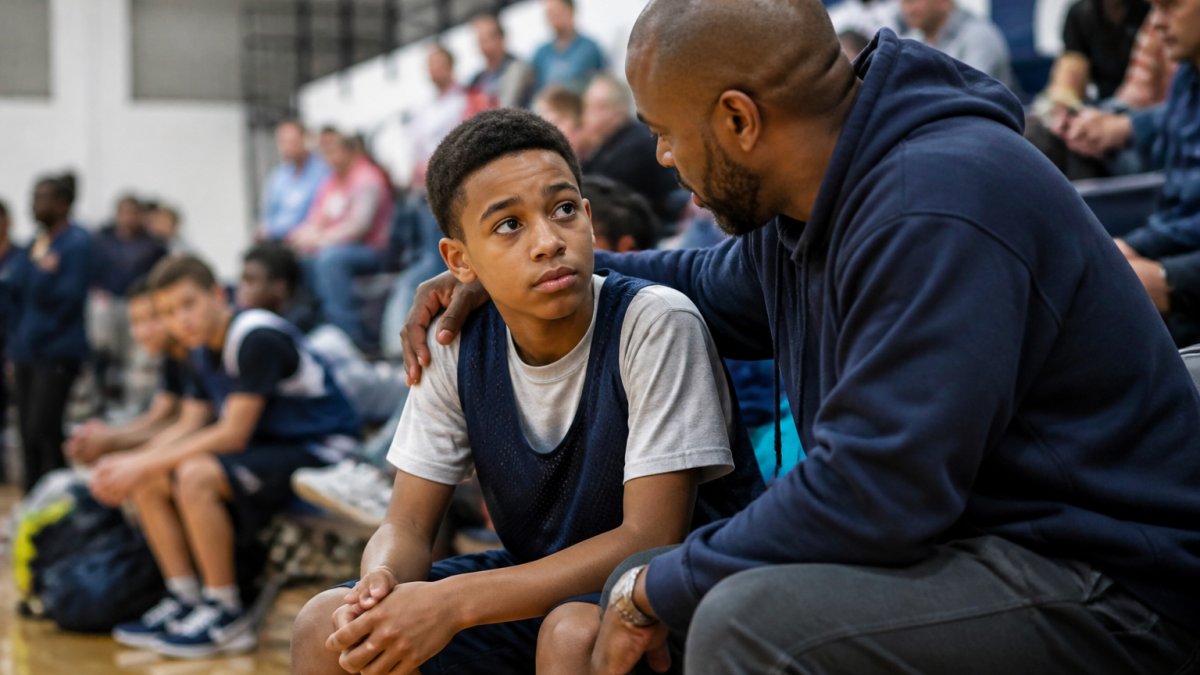
Let them feel disappointed. Don't rush to "it's okay." Acknowledge it: "This is tough. I know you wanted to make this team." Sitting with the emotion helps kids process faster.
Separate the person from the performance. This is crucial. Say: "You didn't make this team" not "You're not good enough." One is about a specific outcome. The other is a judgment about who they are. Kids internalize the language you use.
Avoid the blame game. Don't say the coach made a mistake. That teaches kids to blame external factors. Instead focus on what comes next: "Let's find out what we can work on."
How to Ask a Coach for Feedback After Tryouts
Getting constructive feedback from a coach is one of the most valuable tools available. Asking the right way matters.
Understand why coaches are hesitant to give feedback. Many fear criticism, confrontation, or liability. Others lack time.
Reach out within one week. Don't ask while emotions are still high. Wait until your child has processed the initial disappointment.
Email is safer than in-person. It gives the coach time to respond thoughtfully and creates a written record.
Keep it short and specific. Write something like:
"Hi Coach [Name], [Child's name] was disappointed not to make the team this season. We'd appreciate any feedback on specific areas they could focus on to improve for next season. We're committed to their development. Thank you for your time."
The tone matters. Use "we'd appreciate" not "we deserve" or "we need." Acknowledge the coach's time.
Ask for specific, actionable feedback. Vague feedback like "needs to improve" isn't useful.
Interpret silence or minimal responses. If a coach doesn't respond or gives one sentence, they're busy, uncomfortable, or don't see a path forward.
Decode what coaches actually mean. "Not quite ready yet" = lacks core skills.
Understanding the subtext helps you build a realistic training plan.
Listen without defending. If the coach says your child was too slow or made too many turnovers, don't argue.
Don't ask why your child didn't make the team. Ask what skills to develop instead. The answer tells you everything you need to know.
If the coach won't engage, get a second opinion. Film a practice or game and share it with a neutral outside coach.
How to Stay Motivated After Being Cut From a Team
Reframe the goal. Instead of "make the team next year," try "improve ball handling by 20% in six months" or "shoot 70% from the free throw line." Concrete, measurable goals feel achievable and aren't dependent on a coach's subjective decision.
Find a supportive training environment. Your child needs coaches who believe in them and teammates who aren't competing for roster spots. A rec league or skill-development program removes pressure and restores joy.
Celebrate small wins. When your child makes a breakthrough or hits a personal record, acknowledge it. These moments rebuild confidence and prove work is paying off.
Set a timeline for re-evaluation. Commit to 6-8 months of focused training, then decide together whether to try again or explore a different pathway.
Exploring Alternative Basketball Pathways
Recreational leagues offer real value. They focus on participation, skill development, and fun. Your child plays more, learns faster, and enjoys the game more.
Travel teams exist at different competitive levels. Ask coaches about their philosophy: do they prioritize winning or player development? How much game time do kids get?
Skill development programs bridge the gap. They offer intensive training without team selection pressure. Your child works on specific skills, gets feedback, and builds confidence.
Individual coaching can be transformative. A one-on-one coach identifies specific weaknesses and creates a targeted plan customized to your child's needs.
Consider your child's actual goals. Does your child want to play for fun, develop skills, be on a team, or play competitively? The answer determines which pathway makes sense.
Building Your Next Season Training Plan
A solid training plan transforms rejection into progress. It gives your child something concrete to work toward.
Start with the coach's feedback, or do a skills audit if you don't have it. If you got specific feedback, that's your starting point.
Weeks 5-12: Progression and game integration. Add complexity: increase training intensity, add secondary skill work, play in more competitive settings, and increase game-situation drills.
Weeks 13-24: Specialization and competitive readiness. Focus on game-speed decision-making under fatigue, consistency in competitive environments, mental toughness, and refinement of the primary skill to near-mastery.
Create a weekly training schedule that's realistic and sustainable.
| Day | Focus | Duration | Notes |
|---|---|---|---|
| Monday | Skill-specific drills (primary focus) | 30-45 min | Form work, no defenders |
| Tuesday | Game-situation drills | 30-45 min | Competitive pressure, decision-making |
| Wednesday | Secondary skill or conditioning | 30-45 min | Ball handling, footwork, or agility |
| Thursday | Skill-specific drills (primary focus) | 30-45 min | Increase difficulty from Monday |
| Friday | Rest or light shooting | 15-20 min | Optional; keep it fun |
| Saturday | Game or scrimmage | 45-60 min | Competitive environment |
| Sunday | Complete rest | , | Recovery day; no basketball |
This schedule is demanding but sustainable. It's 4-5 hours of focused work per week, which is what separates kids who improve from kids who don't.
Track progress visibly and adjust every 4-6 weeks. Keep a simple log:
- Free throw makes/attempts
- Three-point makes/attempts
- Turnovers per game
- Defensive stops or steals per game
- Subjective notes: "Footwork felt smoother," "Made better decisions in transition"
Every 4-6 weeks, review the log. Is your child hitting the benchmarks? If yes, increase difficulty or add a new skill.
Build in decision points. At 8 weeks and 16 weeks, sit down with your child and ask:
- Are we seeing measurable improvement?
- Is your child enjoying the training?
- Are we on track for the next tryout?
- Do we need to adjust the plan or the timeline?
If progress stalls or your child is burned out, it's okay to pivot. Maybe the next tryout isn't the goal.
Include accountability and external feedback. A training partner, coach, or parent checking in weekly keeps kids consistent.
Build in rest and recovery. Burnout kills motivation faster than anything.
Communicate the plan to your child. Your child needs to understand the goal, the timeline, and why each drill matters.
Frequently Asked Questions
How do I tell my child they didn't make the basketball team?
Have the conversation in a calm, private setting soon after you learn the news. Acknowledge their disappointment without minimizing it, then pivot to what comes next. Say something like: 'I know this hurts. You worked hard and you care about basketball. That matters. Let's figure out what we do from here.' Focus on effort and growth mindset rather than the outcome. Avoid blame toward the coach or the selection process, which teaches your child to externalize responsibility. Instead, frame this as information that can guide improvement.
What should I do immediately after my child is cut from a team?
Give your child space to feel disappointed without trying to fix it immediately. Listen more than you talk. Once emotions settle (usually within 24 hours), help them identify one specific skill to focus on or one question to ask the coach. This shifts energy from rejection to action. Avoid signing them up for another program right away as a distraction; let them choose what comes next. This teaches accountability and agency rather than running from discomfort.
Can I ask a coach for feedback if my child didn't make the team?
Yes. Most coaches expect and respect this request. Contact the coach via email or in person within a few days, keep it brief, and ask for one or two specific areas to develop. Example: 'We'd appreciate any feedback on ball handling or defensive positioning.' Avoid arguing the decision or asking why your child wasn't selected. Frame it as a learning opportunity. Many coaches will offer concrete, actionable feedback that becomes your training roadmap for the next season.
How can my child stay motivated after being cut from a basketball team?
Motivation returns when there is a clear, achievable goal and visible progress. Work with your child to set a specific skill target (e.g., improve free-throw percentage from 60% to 75%, or master a crossover dribble). Track progress weekly. Enroll in a recreational league or skill-focused clinic where they can play and improve without the pressure of selection. Celebrate small wins. Connect them with teammates or peers working toward similar goals. Remind them that many elite players faced rejection early; resilience and skill development matter far more than a single tryout outcome.