 How-to
How Do You Help a Child Through Sports Disappointment?
Last Updated: November 2, 2026
Quick Summary
Listen first and let your child talk about how they feel before offering advice. Then use simple, honest words that acknowledge their hurt, and focus on effort and growth rather than the score. Watch for patterns over weeks, since most sports disappointment fades with rest and support.
- Sit at your child's level, repeat back what you hear, and avoid judging their feelings.
- Avoid phrases like "It's just a game" or "Don't cry" because they make feelings feel wrong.
- After being cut from a team, ask the coach for feedback and set one or two skill goals.
- Praise effort, strategy, and persistence rather than only results to build resilience.
- Seek more support if sadness, sleep changes, or withdrawal last more than two to three weeks.
Table of Contents
- Why Sports Disappointment Hits Kids So Hard
- Listen First and Let Your Child Lead the Conversation
- What to Say to a Child After Losing a Game
- Child Didn't Make the Team: How to Help
- Teaching Resilience in Youth Sports
- Helping Kids Cope With Sports Losses Over Time
- Working With Coaches and When to Seek More Support
- Booking Your Child's Next Step at Tier 1 Sports
- Frequently Asked Questions
Why Sports Disappointment Hits Kids So Hard
Sports disappointment is one of the first big emotional setbacks many children face outside the classroom.
Children feel disappointment through their whole bodies. They may cry, go quiet, or get angry at a teammate. Younger kids often lack the words to say what they feel.
Here is why it hits so hard:
- Identity is tied to performance. Many kids see a loss as proof they are not good enough.
- Comparison is constant. Teammates, friends, and social media make every result feel public.
- Control is limited. Kids cannot choose the referee, the weather, or the other team's skill.
Knowing these reasons helps you respond with empathy instead of frustration. Your child is not being dramatic. They are learning how to handle something new.
Listen First and Let Your Child Lead the Conversation
The most useful thing you can do after a tough game is listen. Resist the urge to fix the problem right away.
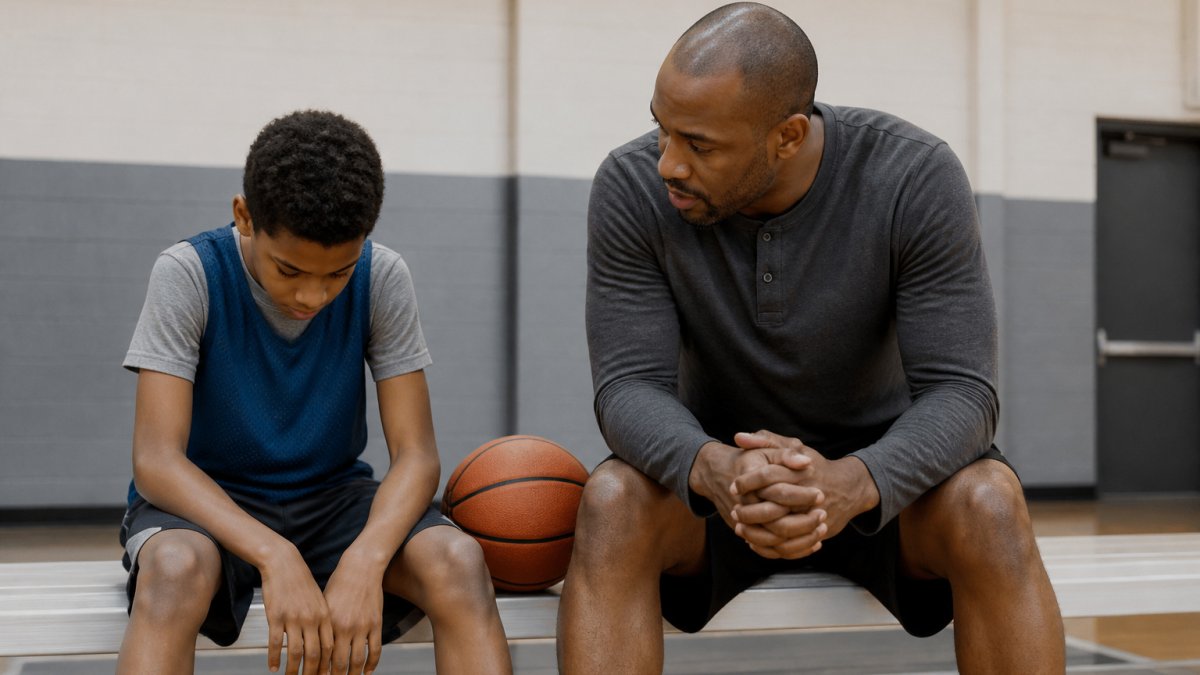
Silence can feel uncomfortable, but it gives your child room to think. Many kids need a few minutes before they say anything useful.
Try these listening habits:
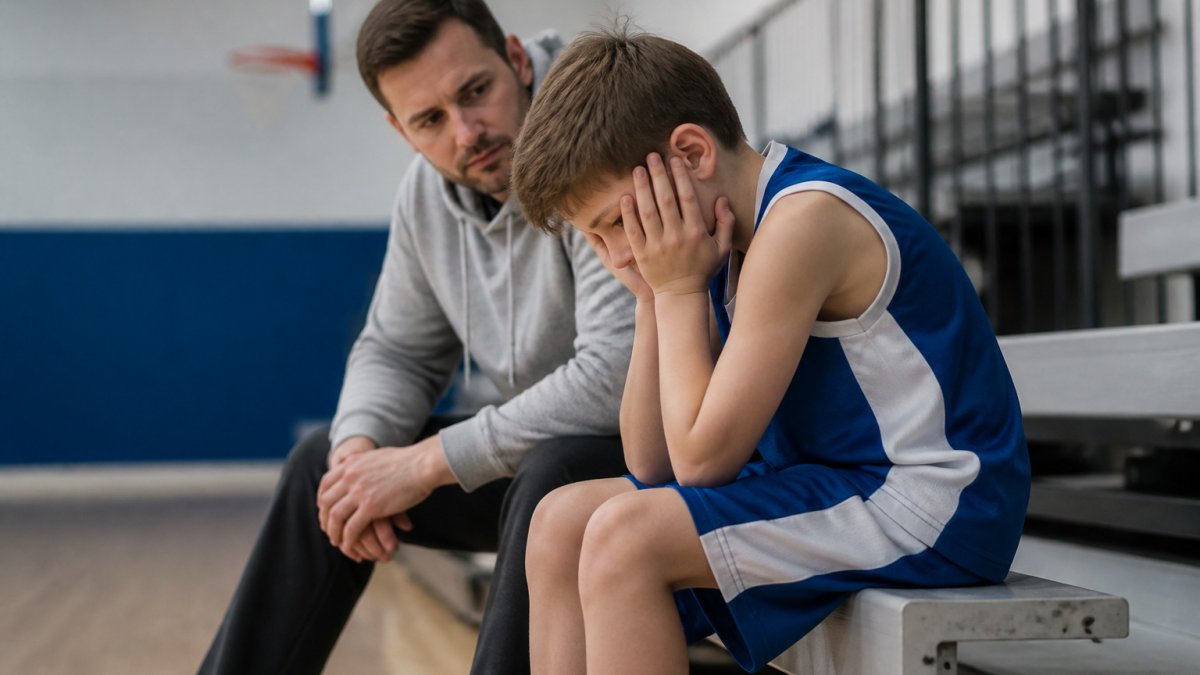
- Sit at their level, side by side, instead of standing over them
- Repeat back what you hear: "It sounds like you felt embarrassed when you missed that free throw"
- Avoid judging their feelings, even when the reaction seems big
Most children feel calmer when they feel heard. Once they feel understood, they are more open to hearing your ideas later.
What to Say to a Child After Losing a Game
Children often need a few simple, honest sentences more than a long speech. Choose words that show you care about them, not just the score.
Use lines like these:
- "That was a hard loss. I can see how much you wanted it."
- "I'm proud of how hard you played, even when it got tough."
- "You don't have to feel okay right now. Feelings take time."
Avoid lines that minimize the loss, such as "It's just a game" or "Don't cry." These can make a child feel their feelings are wrong. Also avoid replaying every mistake on the drive home. A short, warm check-in is usually enough for the first night.
Child Didn't Make the Team: How to Help
Being cut from a team is one of the most painful experiences in youth sports. A child may feel rejected, confused, or worried about friends. Your role is to help them see the outcome as one step in a longer journey, not the final word on their ability.
Start by acknowledging the sting: "I know you were hoping to make the team, and this is really disappointing." Then help them look ahead with a few practical steps:
- Ask the coach for feedback on what to work on next.
- Set one or two skill goals for the next season.
- Look at other options, such as a recreational league or a skill-building program.
- Plan a fun activity this week so the focus is not only on basketball.
Recreational and competitive paths both have value. If your child is not ready for a competitive team, a supportive recreational environment can keep them playing and growing.
Teaching Resilience in Youth Sports
Resilience is the ability to recover from setbacks and try again. It is not something children are born with. They learn it through repeated experiences with safe support from adults.
You can build resilience by praising effort, strategy, and persistence rather than only results. Try saying, "You kept competing in the fourth quarter even when you were tired." Over time, this teaches kids that growth comes from trying, not just winning.
A useful way to think about it: resilience has three parts parents can influence. First, regulation, can the child calm their body after a setback? Second, reframing, can they find a useful story about what happened? Third, re-engagement, are they willing to try again?
Age-Specific Scripts for Ages 4-6, 7-10 and 11-16
Different ages need different language. Younger children need co-regulation and simple words.
Ages 4-6: co-regulation first
At this age, children mostly need you to help their body settle.
- "Losing feels yucky. Let's take a deep breath together."
- "You tried so hard. Let's play again next week."
- "Do you want a hug, or do you want to sit with me for a minute?"
Avoid asking "Why did you miss?" at this age.
Ages 7-10: reflection with guardrails
- "I saw you keep moving on defence even after the mistake. That's a skill."
- "What's one thing you want to get better at before the next game?"
- "What was the hardest part today?"
A common pattern at this age is that children start comparing themselves to teammates.
Ages 11-16: autonomy and respect
Teens often respond better to respect and choice than to direct instructions.
- "Tell me what went well today, even if it was small."
- "Do you want advice, or do you just want me to listen right now?"
- "That sounds like it was a rough one. I'm around if you want to talk later."
Watch out: at this age, well-meant questions can feel like interrogation.
Phrases to Avoid at Every Age
Some common parental responses backfire because they minimize the feeling or shift focus to the score.
- "It's just a game.", This tells the child their feeling is wrong.
- "Don't cry.", This teaches them to hide emotion rather than process it.
- "You should have passed more.", Immediate tactical critique lands as blame.
Replace these with acknowledgment first: "That was a hard one. I can see you cared about it." You can always discuss tactics the next day, once the emotion has settled.
Helping Kids Cope With Sports Losses Over Time
Single disappointments usually fade with rest and support. Repeated losses can build discouragement, so it helps to watch for patterns over weeks, not just days.
Coping works best as a routine. Teach your child simple tools they can use again and again:
- Name the feeling. "You feel frustrated right now."
- Take a reset breath. Three slow breaths can calm the body.
- Pick one thing to control. Effort, attitude, and preparation are good examples.
A Practical Post-Disappointment Timeline
Use this timeline to guide your support after a major loss or cut:
- Day 0 (game day): Offer comfort and a calm car ride. Skip the detailed review.
- Day 1-2: Check in once with a simple question. Let them rest and play.
- Day 3-5: Talk about one thing that went well and one goal for next time.
If disappointment lasts for several weeks, affects sleep or school, or leads your child to say they hate the sport, it may be time for more support. A school counsellor, family doctor, or sports psychologist can help.
Working With Coaches and When to Seek More Support
Coaches play a big role in how a child handles disappointment. If you have concerns, you can share them calmly and respectfully. Ask the coach what they observed and what they recommend for your child's development.
Keep these roles clear:
- Parent: Provides emotional support and encouragement.
- Coach: Guides skill development and team decisions.
- Athlete: Owns their effort and learning over time.
When roles blur, for example, when a parent starts coaching from the sideline or a coach becomes the child's main emotional confidant, children get mixed messages about who is responsible for what.
How to Talk to a Coach Without Escalating
Most coaches welcome a calm, specific question. The key is timing and framing. Avoid approaching a coach immediately after a loss or in front of other parents and players.
Useful opening lines:
- "I wanted to check in on how my child is progressing. What's one area you think they should focus on?"
- "My child has been quiet after games lately. Have you noticed anything from your side?"
- "I'm not asking about playing time, I'd just like to understand what skills you'd like to see improve."
Questions to avoid:
- "Why isn't my child playing more?", This puts the coach on the defensive and rarely produces useful information.
- "Other parents think...", This signals a complaint campaign rather than a conversation.
- "My child says you...", This can make the coach feel accused before they have shared their perspective.
Watch out: if you disagree with a selection or playing-time decision, raise it once, calmly, and then let it go. Repeated lobbying usually harms the child's standing on the team more than it helps.
When Disappointment Needs More Support
Single disappointments usually fade with rest and support. But some patterns suggest your child needs more than a parent's encouragement. Consider reaching out for additional support if you notice:
- Sadness, irritability, or withdrawal that lasts more than two to three weeks
- Sleep changes, trouble falling asleep, or sleeping much more than usual
- Schoolwork or friendships starting to suffer
A first step can be a conversation with the coach to understand whether the behavior is visible at practice too. If the pattern continues, a school counsellor, family doctor, or registered psychologist can help.
If your child talks about self-harm or hopelessness, treat it as urgent and contact a health professional or emergency service right away (Preventing suicide: When and how to help).
Booking Your Child's Next Step at Tier 1 Sports
Every child's path in basketball looks different. Some need a fun, low-pressure place to rebuild confidence. Others are ready to train for rep tryouts.
For current program details, schedules, and pricing, visit the Tier 1 Sports website or contact our team for a quote.
Your support today can shape how your child feels about the game for years. Start with listening, keep the focus on effort and growth, and take the next step when they are ready.
Frequently Asked Questions
What should I say to my child after they lose a game?
Start by acknowledging the feeling rather than the score. Something like "That was a tough one, and it makes sense you're upset" lets your child know their emotions are valid. Avoid reviewing every mistake right away. Ask one open question, such as "What was the best part of today for you?" or "Is there anything you want to talk about?" Let your child decide how much to share. Save specific feedback for a calmer moment, when you can focus on effort, learning and one or two things they did well.
How do I help my child cope with not making a sports team?
Give your child time and space to process before discussing next steps. Acknowledge the disappointment directly, and avoid rushing to fix it or minimizing it with phrases like "it doesn't matter." Separate the outcome from your child's worth and effort. Once they feel heard, ask what kind of support they want: a practice plan, a chat about what tryouts showed them, or simply some company. Keep the focus on what they can work on next season, and make sure the love of the game stays part of the conversation.
How can I teach my child resilience after a sports loss?
Resilience grows from small, repeated experiences of recovering from setbacks. Model it by describing your own disappointments and how you moved forward. Help your child name one thing they will try differently next time, and celebrate progress they can see, such as a better shot or stronger effort. Encourage them to take a short break when they need one, then return to the sport with a fresh goal. Over time, reflection and persistence become habits rather than lessons.
What are signs that sports disappointment is affecting my child's well-being?
Watch for disappointment that lasts well beyond a few days, or that spreads into sleep, appetite, school work or friendships. Withdrawal from family activities, refusing to talk about the sport at all, or expressing persistent hopelessness are worth taking seriously. If these signs continue, talk with your child's pediatrician, school counsellor or a qualified mental health professional in your area. Early support is much easier than waiting for a difficult pattern to settle on its own.