 how-to
How to Choose a Youth Basketball Club
Table of Contents
- Understand Your Child's Starting Point and Age Group
- Recreational vs Rep Basketball: Know the Difference
- Evaluate Youth Basketball Training Programs by Coaching Philosophy
- Assess Facilities, Safety Standards, and Program Structure
- Compare Your Options: Jump Basketball Alternative for Kids
- Make Your Final Decision: Key Questions to Ask Coaches
- Frequently Asked Questions
Last Updated: September 25, 2026
Understand Your Child's Starting Point and Age Group
Match your child's age and experience level to the right program. Basketball development happens in stages, and the best clubs tailor their approach to each age group's physical and cognitive abilities. Most parents don't know what their child should be learning at each stage, and many clubs don't clearly communicate it.
Skill Progression Roadmap by Age
Ages 4-6: Foundation Phase
- Ball familiarity (rolling, bouncing, catching a stationary ball)
- Basic hand-eye coordination and gross motor control
- Introduction to dribbling (stationary, then moving slowly)
- Fun-focused activities; short attention spans require frequent activity changes
- No shooting instruction yet; focus is on comfort with the ball
Ages 7-10: Fundamental Skills Phase
- Controlled dribbling in straight lines and around cones
- Proper shooting form (two-handed or one-handed, depending on age)
- Footwork basics: pivot foot, stance, balance
- Introduction to passing and catching on the move
- Basic defensive stance and lateral movement
- Simple game concepts: offense vs. defense, positions
Ages 11-13: Intermediate Development Phase
- Advanced ball-handling: crossover dribbles, behind-the-back dribbling
- Shooting from distance; free throw consistency
- Footwork and layup technique; understanding angles
- Team concepts: spacing, passing lanes, defensive positioning
- Introduction to game strategy and reading the defense
- Physical conditioning becomes relevant as growth spurts occur
Ages 14-16: Advanced/Competitive Phase
- Game-speed decision-making and court awareness
- Advanced footwork: pick-and-roll, post moves, transition play
- Three-point range shooting; consistency from all areas
- Defensive principles: on-ball defense, help-and-recover, switching
- Strength and conditioning tailored to basketball demands
- Film review and tactical understanding
How to Use This Roadmap
When you speak with a club, ask them to describe their curriculum for your child's age group. Their answer should align with the progression above. For example, if you have a 7-year-old and a club says they focus on "game strategy and defensive positioning," that's a red flag; those belong in the 11-13 phase, not the 7-10 phase. Also ask: How do you assess whether a child is ready to move to the next level? Quality clubs use skill benchmarks, not just age or attendance. Consider your child's basketball experience as well. Some clubs offer beginner-specific sessions; others assume all participants have basic skills. Ask how they differentiate instruction if their group has mixed experience levels.
Recreational vs Rep Basketball: Know the Difference
Understanding the difference between recreational and competitive rep basketball is essential before you choose. These are fundamentally different programs with different goals, costs, and time commitments.
Recreational basketball focuses on skill development, fun, and participation with equal playing time for all children. Sessions mix drills and game time, typically meeting once or twice per week. Rep basketball (also called competitive or select basketball) is for serious players. Rep teams compete in tournaments and leagues with tryouts determining roster placement. Playing time depends on skill level, training is more intense with multiple sessions per week, and teams often travel for competitions.
Choose based on your child's interest level and goals. Some clubs market recreational programs as "competitive" when they're really just recreational with a tournament or two. Ask about actual playing time in games, tryout requirements, and practice intensity. A true rep program will have explicit tryouts and skill-based roster decisions.
Evaluate Youth Basketball Training Programs by Coaching Philosophy
A coach's philosophy shapes everything about the program. The right approach builds skills and confidence; the wrong one can turn a child off the sport.
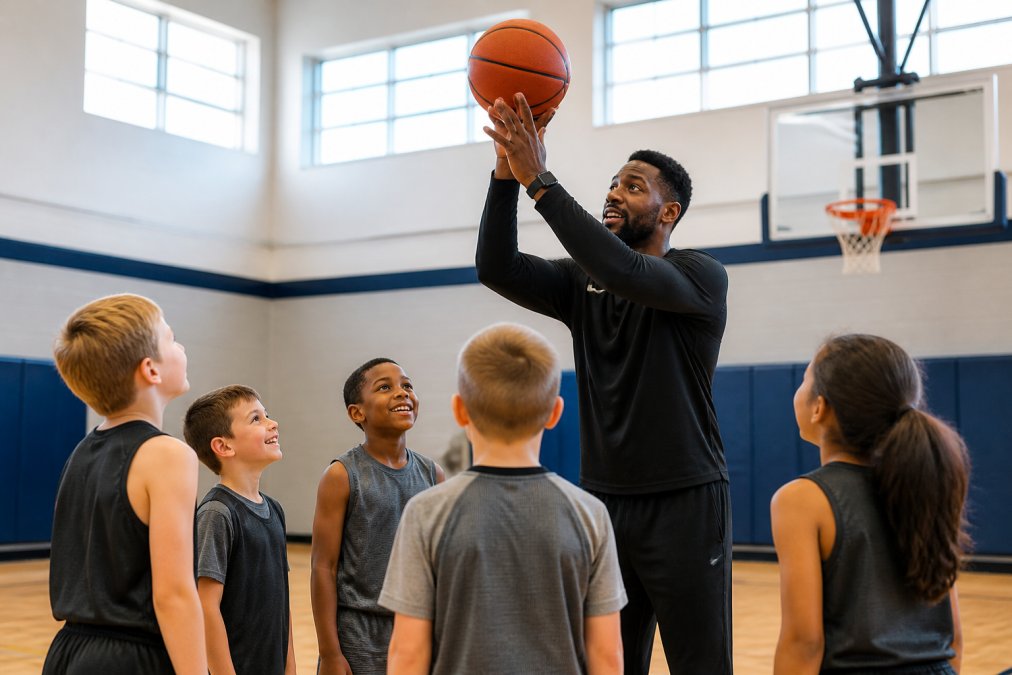
Ask clubs directly: What's your coaching philosophy? The best answers focus on skill development and player growth, not just winning. A coach who emphasizes learning from mistakes creates a safe space for kids to try and fail.
Look for these coaching qualities:
- Skill-first approach: Drills and fundamentals come before game tactics
- Positive feedback: Coaches correct mistakes without discouraging effort
- Individual attention: Coaches recognize that each child learns differently
- Safe sport principles: Clubs follow Canadian Safe Sport guidelines to protect young athletes
- Clear communication: Coaches explain what they're teaching and why
Ask if you can watch a practice. Many clubs allow parents to observe. You'll quickly see whether the coach is engaged, whether kids are having fun, and whether there's actual instruction happening or just free-play time.
Also ask about player development pathways. A well-run club has a clear progression system, not random advancement based on friendship or attendance.
Assess Facilities, Safety Standards, and Program Structure
The facility and program structure matter significantly. A cramped gym with poor lighting affects learning and safety. Evaluate coaching credentials, program structure, and cost transparency, three areas where clubs often lack clarity.
Facility Checklist
Visit any club's facility in person. Check court quality (floor condition, clear lines), adequate space for the number of kids, good lighting, safety features (padding, no hazards), clean bathrooms and water access, and a safe spectator area.
Coaching Credentials and Coach-to-Player Ratios
Ask each club:
-
What certifications do your coaches hold? Look for:
- Coaching certification through Basketball Canada or a provincial basketball association
- First Aid and CPR certification (minimum Standard First Aid; Pediatric First Aid is ideal)
- Vulnerable Sector Check (police background check required for anyone working with children in most provinces)
- Sport Canada's "Safe Sport" training or equivalent abuse-prevention certification
A quality club will have this information readily available. If they're vague or say "most of our coaches are certified," that's a warning sign.
Ask about coach-to-player ratios: Ages 4-6 need 1 coach per 6-8 children; ages 7-10 need 1 per 8-12; ages 11-13 need 1 per 10-15; ages 14-16 need 1 per 12-20. A session with 20 kids and one coach means minimal individual feedback; a session with 8 kids and two coaches means personalized instruction.
Ask how long coaches have worked with your child's age group.
Program Structure and Session Design
Ask how sessions are structured. A well-designed session includes warm-up, skill drills, small-sided games, and cool-down. Sessions that are mostly free-play don't teach systematically. Coaches should explain what they're teaching, demonstrate it, let kids practice, and provide feedback. A quality program has a curriculum that progresses week to week, not one that repeats the same drills.
Cost Transparency and What's Included
Ask for a complete cost breakdown: base program fee, registration fee, uniform cost, tournament fees, travel costs, insurance requirements, and cancellation policy. A transparent club will provide this in writing.
Safety Standards and Emergency Protocols
Ask about the club's safety framework:
- Does the club follow Sport Canada's athlete safety framework?
- Is there an emergency action plan? (Where's the AED? Who calls 911? Who has first aid?)
- How does the club handle injuries during practice or games?
- What's the club's policy on concussions? (Coaches should know basic concussion recognition and not return a child to play on the same day.)
- Does the club have a code of conduct for coaches, parents, and players?
- How does the club handle complaints or concerns about coach behavior?
These questions might feel invasive, but they're essential.
Compare Your Options: Jump Basketball Alternative for Kids
When evaluating different youth basketball club options, you'll likely compare several programs in your area. The goal is finding the one that fits your child's needs, your family's schedule, and your budget.
When comparing programs, look beyond price alone. Consider:
- Program variety: Does the club offer multiple levels so your child can progress?
- Coaching quality: Are coaches certified? Do they have experience with your child's age group?
- Community feel: Does the club emphasize teamwork and support, or just winning?
- Flexibility: Can your child try a program before committing long-term?
- Accessibility: Are facilities easy to reach? Do session times fit your schedule?
Make Your Final Decision: Key Questions to Ask Coaches
Before you commit, schedule a conversation with the coaching staff. The answers to these questions will help you make your final decision.
About skill development:
- How do you structure practice sessions?
- What skills do you focus on at my child's age group?
- How do you measure progress?
About playing time and advancement:
- In recreational programs, does every child get equal playing time?
- In rep programs, how are roster decisions made?
- How can my child move to a higher level?
About coaching approach:
- How do you handle mistakes during practice or games?
- What's your philosophy on winning versus learning?
- How do you keep younger children engaged and motivated?
About safety and communication:
- What safety certifications do coaches have?
- How do you communicate with parents about progress?
- What's your policy if a child is injured?
About cost and commitment:
- What does the program cost, and what's included?
- Are there additional fees for tournaments or travel?
- What's the cancellation policy if my child wants to quit?
Frequently Asked Questions
What age is best to start youth basketball training?
Children as young as 4 can begin introductory basketball programs focused on basic movement, coordination, and fun. Ages 7-10 are ideal for skill development as children develop better motor control and focus. Ages 11-16 are when competitive rep basketball and advanced training become available. The key is matching the program to your child's age and readiness, not forcing progression.
How do I distinguish between recreational and rep basketball programs?
Recreational programs emphasize fun, participation, and foundational skills with minimal competition pressure. All players get game time. Rep basketball is competitive, involves tryouts, and focuses on advanced skill development and tournament play. Rep teams practice more frequently and require higher commitment. Choose recreational if your child is new to basketball or plays for enjoyment; choose rep if they're serious about improving and competing at a higher level.
What should I look for in a youth basketball coaching staff?
Look for coaches with formal training certifications, experience working with your child's age group, and a clear philosophy that balances skill development with player confidence. Ask about their approach to playing time, how they handle mistakes, and whether they emphasize life skills alongside basketball. Request references from other parents or videos of actual practices to see the coaching style in action before committing.
How do I evaluate the safety and facility standards of a youth basketball club?
Check that facilities have proper gym flooring, adequate lighting, and emergency protocols in place. Verify that coaches are trained in first aid and CPR. Ask about the club's Safe Sport policies and background checks for all staff. Visit the facility during a practice session to assess cleanliness, equipment condition, and overall organization. A reputable club will be transparent about safety standards and welcome your questions.