 how-to
How to Prepare for Basketball Tryouts: 7 Steps
Table of Contents
- What Coaches Look for in Basketball Players
- Build Your Physical Conditioning for Tryout Week
- Master Basketball Tryout Drills That Matter
- Develop Your Basketball IQ and Court Awareness
- Manage Tryout Anxiety and Mental Toughness
- Is Rep Basketball Worth It? Understanding Your Path
- Preparation Checklist: The Week Before Tryouts
Last Updated: August 25, 2026
What Coaches Look for in Basketball Players
Coaches evaluate far more than scoring ability. They assess physical tools, basketball IQ, and intangible qualities that predict success at the next level.
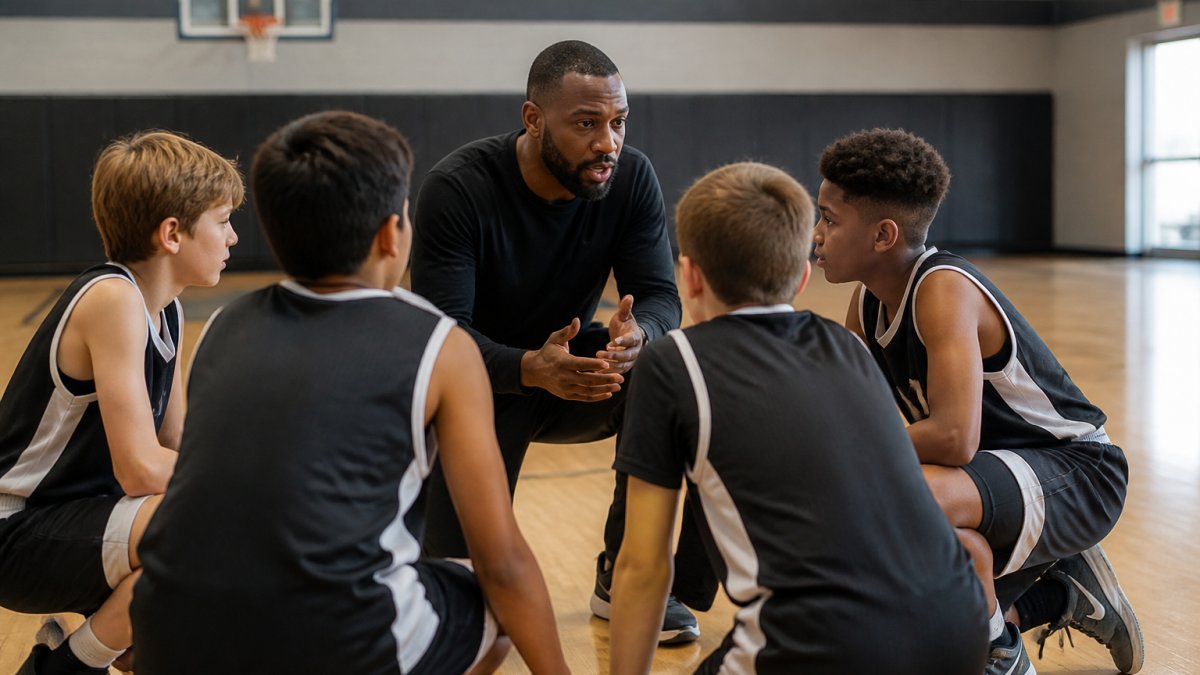
Physical conditioning is the first filter. Coaches want players who move explosively, change direction quickly, and maintain intensity throughout a game. Communication on the court signals coachability, calling out screens, talking on defense, and encouraging teammates show you understand team basketball. Body language speaks volumes before you touch the ball. How you warm up, respond to mistakes, and treat teammates reveal mental toughness and leadership potential.
Basketball IQ separates good players from great ones. This means understanding spacing, recognizing when to attack versus pass, and knowing defensive sets. Game speed, executing under pressure, reveals who has played competitive basketball. Tier 1 Sports evaluates players using this same lens, looking beyond raw talent to identify young athletes who combine skill development with the mental approach needed to thrive in competitive environments.
Build Your Physical Conditioning for Tryout Week
The week before tryouts is not the time to build your aerobic base. Focus instead on maintaining conditioning while staying fresh and avoiding injury.
Sprints and high-intensity interval training should dominate your conditioning work. Perform 6-8 sprints of 40-60 meters with full recovery between efforts to keep your fast-twitch muscle fibers sharp without accumulating fatigue.
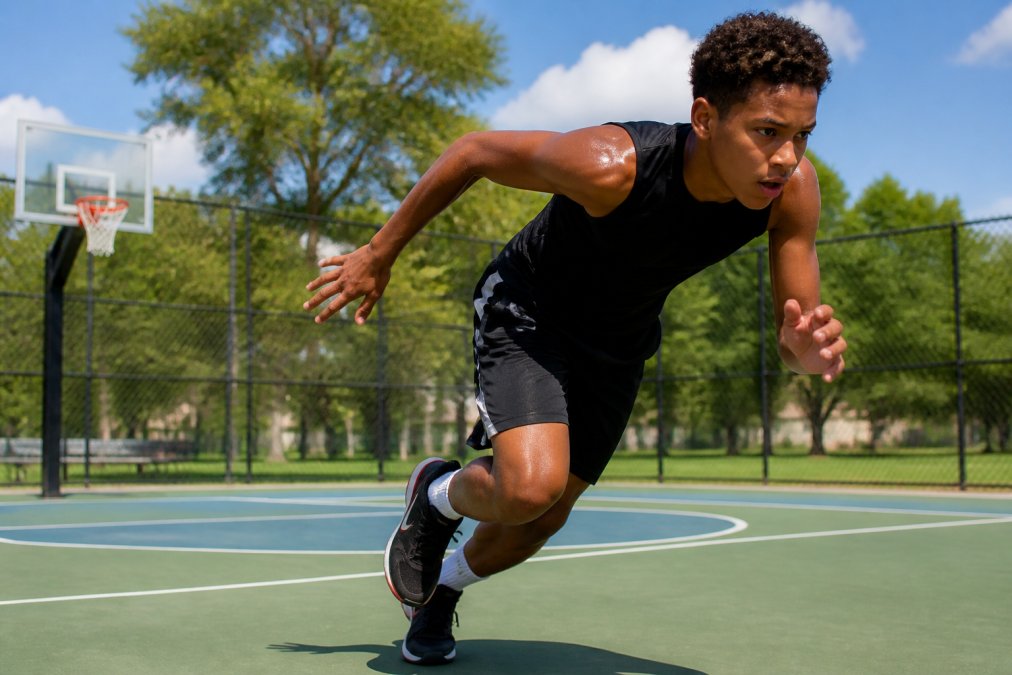
Strength work should be minimal but intentional. Perform 2-3 sets of single-leg exercises like split squats to reinforce stability and footwork. Add core work, planks, side planks, and rotational movements, to build stability for quick lateral movements. Keep total session time under 30 minutes to avoid overtraining.
Recovery becomes critical in tryout week. Sleep should be your priority, aim for 8-9 hours nightly. Your body adapts during sleep, and tryout performance depends on nervous system readiness. Hydration matters equally. Drink consistently throughout the day, not just during workouts.
Nutrition should emphasize carbohydrates and protein without dramatic changes to your regular diet. Eat familiar meals that have worked well before games. Include lean protein at each meal, whole grains for sustained energy, and plenty of vegetables. Time meals 2-3 hours before tryout sessions.
The mental component of conditioning matters as much as the physical. When you feel tired during tryouts, that's when coaches see your true character. Players who maintain focus and execution when gassed demonstrate mental toughness.
Master Basketball Tryout Drills That Matter
Coaches use specific drills to evaluate skill, decision-making, and how you respond to pressure. Knowing what to expect gives you a significant advantage.
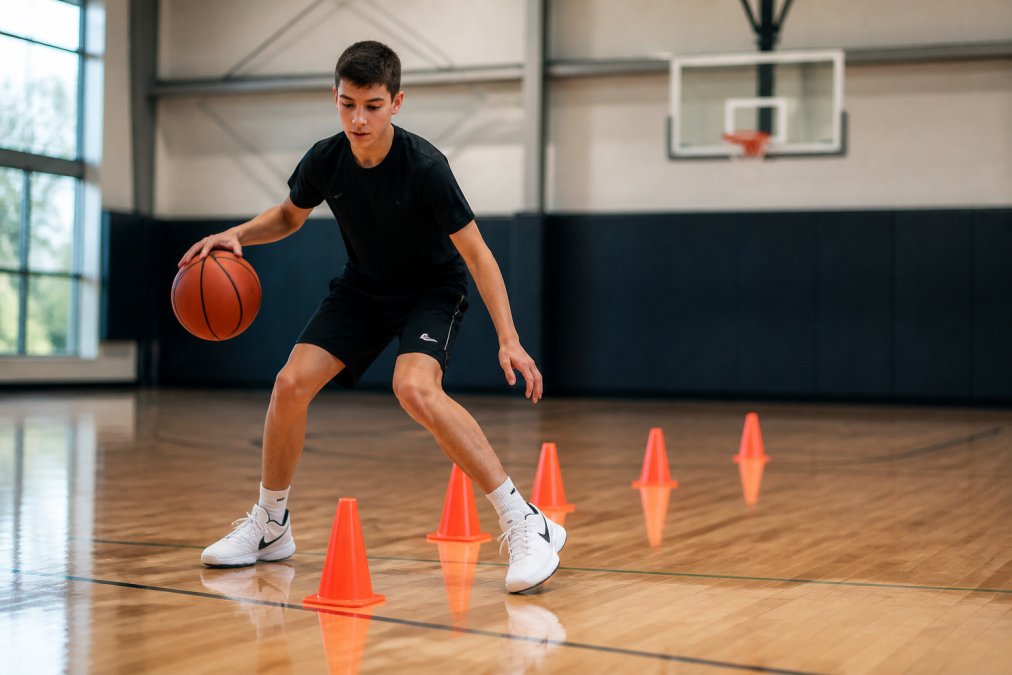
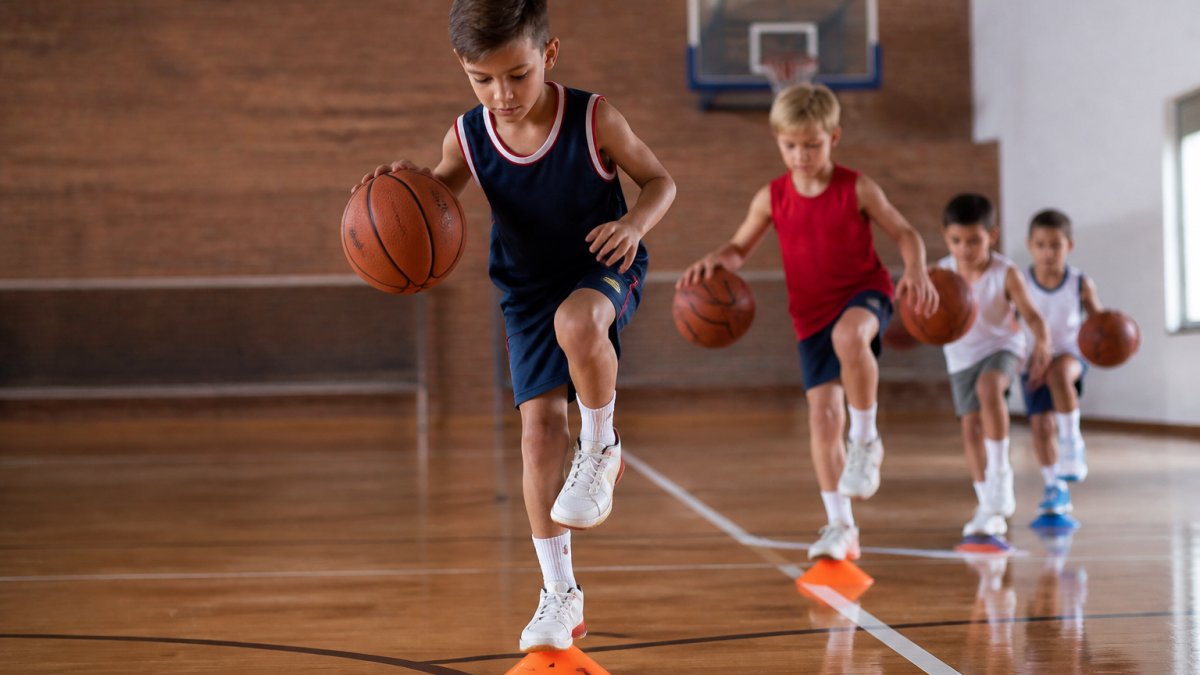
The agility ladder or cone drill tests footwork, lateral quickness, and body control. Coaches want clean footwork with toes pointing forward, knees bent, hips low. Practice moving through cones at game speed with purpose.
Shooting drills reveal consistency and range. Expect to shoot from five spots: corners, wings, and top of the key. Make 5-8 shots from each spot, taking the same number of dribbles each time. This shows you understand spacing and can replicate your shot under pressure.
Ball-handling drills test control and ability to attack space. The evaluation isn't about flashy handles, it's whether you can move the ball while maintaining control and awareness. Keep your head up and use your fingers, not your palm.
One-on-one situations expose defensive intensity and offensive footwork. Coaches watch your foot positioning, lateral movement, and shot contests without fouling. On offense, they evaluate whether you attack the defender's weakness and recognize when beaten to make the right pass.
Transition drills like three-on-two or two-on-one situations reveal court awareness and decision-making at game speed. These test whether you recognize when to push pace, when to slow down, and where open teammates are positioned.
Practice these drills weekly in the months before tryouts. Film yourself to identify technical issues. The goal is to execute these movements automatically so you can focus on reading the defense and making smart decisions.
Develop Your Basketball IQ and Court Awareness
Raw athleticism gets you noticed. Basketball IQ gets you recruited and playing time. This is where many young players underinvest, assuming scoring ability will carry them through tryouts.
Court awareness means knowing where teammates are without looking directly at them. It means understanding spacing, why certain floor positions create offensive advantages and defensive vulnerabilities. Coaches notice which players make simple, high-percentage passes versus which ones force difficult shots.
Offensive cutting separates competitive players from recreational ones. Rather than standing and waiting, intelligent players move into open space at the right moment. At tryouts, execute one strong cut per possession rather than multiple aimless movements.
Defensive positioning reveals your understanding of team defense. When you're off the ball, where should you be? How do you help on drives while recovering to your assignment? Call out screens clearly and position yourself to help without getting beat off the dribble.
Shot selection under pressure reveals decision-making. Take high-percentage shots when available and move the ball when the defense is set. Forcing difficult shots signals poor basketball IQ; taking wide-open threes or attacking mismatches signals understanding.
Study the game actively. Watch professional and college games, focusing on role players and how they move without the ball. This film study translates directly into better decision-making during tryouts.
Manage Tryout Anxiety and Mental Toughness
Tryouts create psychological pressure that separates performers from non-performers. Two players with identical skill levels can produce vastly different results based on how they manage anxiety and maintain composure.
Mental toughness begins with preparation. When you've done the work, conditioning, skill development, film study, you enter tryouts with confidence grounded in reality. This allows you to focus on execution rather than worrying about evaluation.
Deep breathing, specifically extending your exhale longer than your inhale, activates your parasympathetic nervous system and reduces anxiety symptoms (peer-reviewed research). Practice this for two weeks before tryouts so it becomes automatic.
Visualization is another essential tool. Spend 5-10 minutes daily visualizing yourself executing drills successfully, making good decisions, and responding well to pressure. This mental rehearsal primes your brain for success and builds confidence.
Handling mistakes is where mental toughness shows most clearly. Every player makes mistakes at tryouts. Coaches watch how you respond. Do you get frustrated and lose focus, or do you acknowledge the mistake, reset your mindset, and execute the next play at full intensity? Players who recover quickly demonstrate the resilience coaches want.
Focus on controllable factors: your effort, decision-making, communication, and execution. You can't control how other players perform, only what you bring.
Is Rep Basketball Worth It? Understanding Your Path
Before preparing intensively for rep basketball tryouts, understand what rep basketball offers and whether it aligns with your goals.
Rep basketball is competitive basketball organized through regional leagues. Teams typically play 30-40 games per season plus playoffs, with significantly higher skill levels than recreational programs (aau.org). Tryouts are selective, keeping 12-15 players from 50+ who try out. Teams practice 2-3 times weekly, travel to tournaments, and compete against other rep teams.
The benefits are real. You play against better competition, which accelerates skill development. Coaching is typically more specialized and demanding. Your teammates push you daily. The competitive environment mirrors what college programs look for.
However, rep basketball requires significant commitment. Time includes practices, games, travel, and conditioning work outside team sessions. Financial commitment varies by organization but typically costs more than recreational programs. Emotional commitment is high, the competitive environment isn't for every player.
Tier 1 Sports offers both recreational and competitive rep pathways because different players have different goals and readiness levels. Our recreational programs develop fundamental skills and passion for the game in a supportive environment. Our rep basketball programs challenge serious players ready for competitive basketball.
The right time to pursue rep basketball varies by individual. Factors to consider: Do you genuinely enjoy competitive basketball? Have you developed solid fundamentals? Can your family commit to the time and financial investment? Are you mentally prepared for the pressure and potential disappointment?
Rep basketball is worth it for players genuinely committed to the sport and ready for competitive play. Be honest about where you are in your development and what you actually want from basketball.
Preparation Checklist: The Week Before Tryouts
The week before tryouts is when preparation intensity peaks and anxiety often rises. Use this checklist to ensure you've covered all critical elements.
| Preparation Area | Action | Timing |
|---|---|---|
| Physical Conditioning | Complete final sprint work (6-8 x 40-60m sprints); maintain light strength work | Monday-Wednesday |
| Recovery | Prioritize 8-9 hours sleep nightly; hydrate consistently throughout the day | Daily |
| Nutrition | Eat familiar meals with adequate protein and carbs; avoid new foods | Daily |
| Skill Work | Review ball-handling drills, shooting form, footwork; keep sessions under 45 minutes | Monday-Thursday |
| Mental Preparation | Practice deep breathing; visualize successful execution; review game film | Daily |
| Equipment Check | Verify shoes are broken in; ensure socks, shorts, shirt are clean and ready | Friday |
| Logistics | Confirm tryout location, time, and parking; plan arrival 30 minutes early | Friday |
| Sleep Schedule | Begin shifting to earlier bedtime if tryouts are morning; avoid late nights | Monday onward |
| Film Study | Watch film of your position; identify offensive and defensive concepts | Monday-Thursday |
| Communication | Confirm details with coaching staff; ask any logistical questions | By Thursday |
Physical preparation should be complete by midweek. You're maintaining sharpness while allowing recovery, not building fitness.
Mental preparation intensifies as tryout day approaches. Visualization and breathing practice should be daily habits. Avoid overthinking or second-guessing your preparation.
Logistics matter more than most players realize. Arrive early so you're not rushed and anxious. Know exactly where you're going, where you'll park, and when you need to be there.
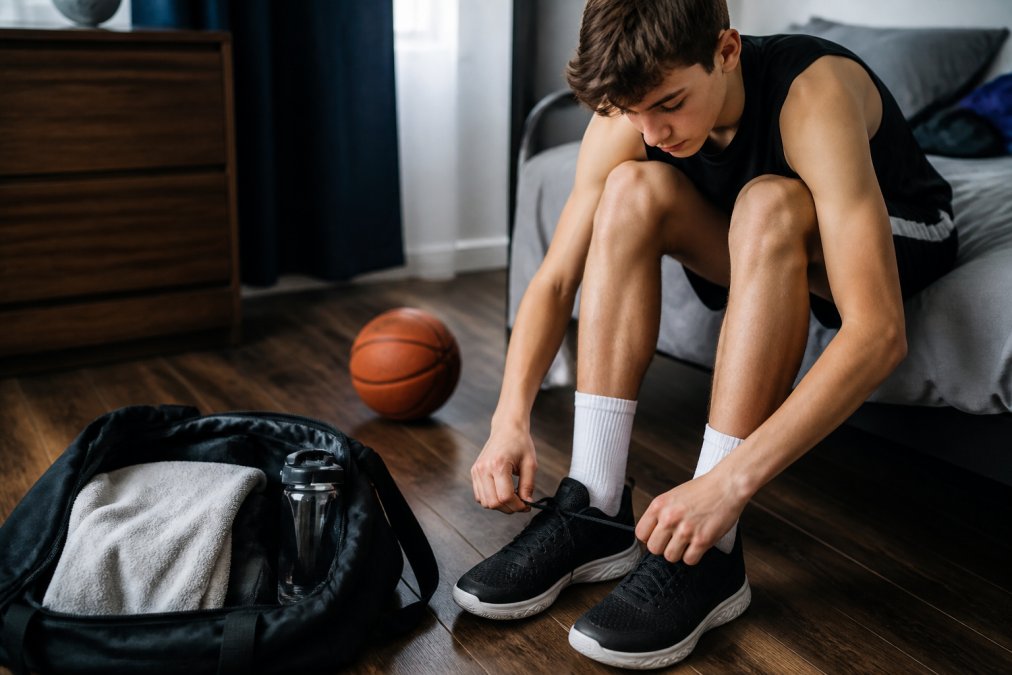
Equipment should be verified and ready. Worn-in shoes are critical; new shoes can cause blisters or feel unstable. Have everything laid out the night before.
Sleep is non-negotiable. If you typically sleep late, shift your schedule earlier in the week so you're naturally awake and alert for morning tryouts.
On tryout day, arrive 30 minutes early. Warm up thoroughly, focusing on footwork and shooting form. Use your breathing techniques if you feel nervous. Remember that coaches evaluate how you respond to pressure, not just your physical abilities. Execute with intensity, make smart decisions, and demonstrate the mental toughness you've prepared for.
Preparing for basketball tryouts combines physical conditioning, skill execution, mental readiness, and logistical planning. The players who perform best have invested time in all four areas.
At Tier 1 Sports, we support young athletes through this entire process. Our coaching staff understands what competitive basketball requires, and we've designed our programs to develop not just skills but also the basketball IQ, mental toughness, and coachability that coaches evaluate at tryouts. Whether you're preparing for your first rep tryout or your fifth, our team helps you build the foundation needed to perform at your best when it matters most. Learn more about competitive youth basketball development
Reach out to Tier 1 Sports to discuss your basketball goals and find the right program pathway for your development. Our rep tryouts are competitive, our coaching is specialized, and our community is supportive. Start your preparation today, REP TRYOUTS await.
Frequently Asked Questions
Should I be nervous for basketball tryouts, and how do I manage it?
Nervousness is normal, coaches expect it. Channel that energy into focus by practicing deep breathing before tryouts, visualizing successful plays the night before, and remembering that coaches evaluate potential, not perfection. Mental toughness comes from preparation; the more you drill and condition beforehand, the more confident you'll feel on tryout day. Stay present during the session rather than worrying about outcomes.
What are the most important basketball skills to demonstrate at tryouts?
Coaches prioritize ball handling, defensive stance, footwork, and shooting form. Beyond technical skills, they watch for basketball IQ (reading the floor, making smart passes), communication, coachability, and hustle. Show defensive intensity, maintain proper spacing on offense, and execute cuts decisively. First impressions matter, arrive early, display strong body language, and engage actively throughout warm-ups and drills.
Is rep basketball worth it for young players?
Rep basketball offers competitive development, specialized coaching, and higher game speed, valuable if your child is serious about skill advancement and enjoys competitive environments. It requires more time and commitment than recreational programs. Assess whether your child wants that intensity level and whether your family can support the schedule. Tier 1 Sports offers both recreational and rep pathways, so you can start recreational and progress when ready.
What should I eat and do to recover during tryout week?
Prioritize balanced meals with lean protein, whole grains, and vegetables to fuel conditioning work. Stay hydrated throughout the day, not just during practice. Get 8-9 hours of sleep nightly to support muscle recovery and mental focus. Avoid heavy meals close to tryouts. Light stretching or foam rolling after sessions aids recovery. Proper nutrition and rest are as important as drills, they directly impact your performance and ability to handle game speed intensity.
This article was written using GrandRanker