 comparison
Jump Basketball Alternative for Kids: 5 Better Options
Table of Contents
- Why Look Beyond Jump Basketball for Youth Training?
- What Sets a Quality Youth Basketball Training Program Apart?
- Recreational vs Rep Basketball: Which Path Fits Your Child?
- Quick Comparison: Program Types for Ages 4-16
- Evaluating Basketball Coaching for Ages 4-16: A Framework
- Cost-Benefit Analysis: House League vs. Private Clubs
- Home-Based Drills and Equipment to Complement Training
- Conclusion: Choosing the Right Basketball Home for Your Family
- Frequently Asked Questions
Last Updated: September 9, 2026
Why Look Beyond Jump Basketball for Youth Training?
Parents searching for a Jump Basketball alternative for kids often discover that the first program they find isn't always the best fit for their child's development stage. The reality is that most introductory programs follow a one-size-fits-all template, which can leave a 5-year-old overwhelmed or a 12-year-old under-challenged.
The right youth basketball training programs should match a child's motor skill development, attention span, and social readiness. A quality program separates players by age and ability, uses equipment sized appropriately, and prioritizes touches on the ball over lengthy instruction. Canadian Sport for Life's physical literacy framework emphasizes that early athletic development depends on fun, varied movement experiences rather than early specialization. That principle should guide your choice of any program, regardless of its name or reputation.
Below, we'll break down what separates effective training from babysitting with a basketball, compare recreational and rep pathways, and give you a practical framework for evaluating any program you're considering.
What Sets a Quality Youth Basketball Training Program Apart?
A quality youth basketball training program is one where every drill, game, and interaction serves a developmental purpose appropriate to the child's age. Basketball fundamentals like dribbling, passing, and shooting should be taught through small-sided games that maximize active play and minimize standing in lines.
The most common mistake parents make is equating discipline with quality. A program can be organized yet developmentally inappropriate. Look for these markers instead:
- High ball touches per child per session
- Short, varied activities that match attention spans
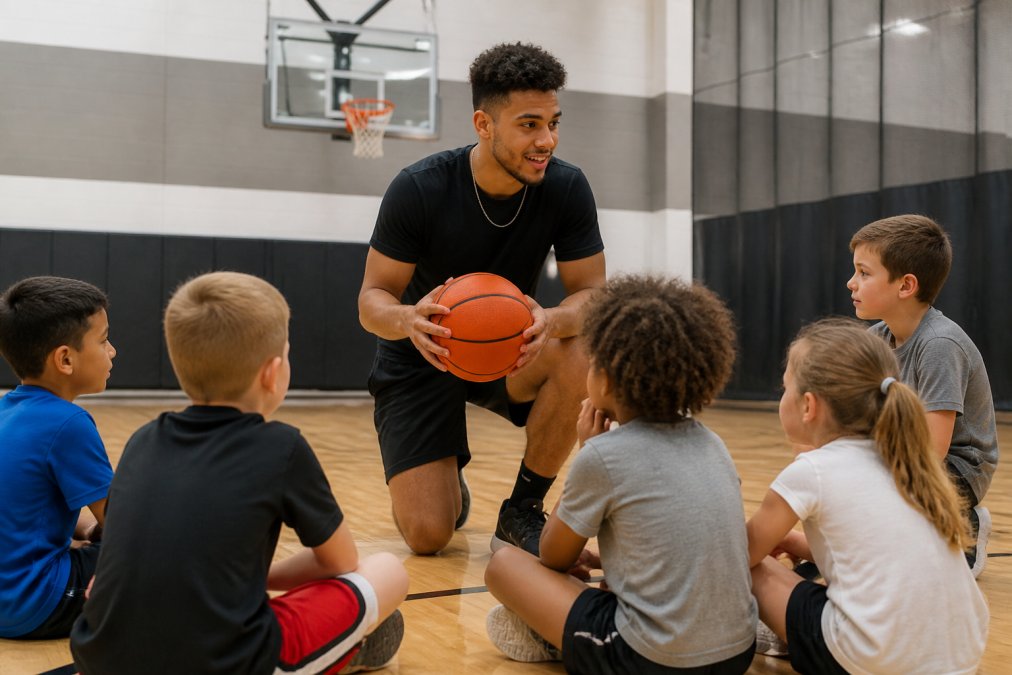
- Coaches who kneel to speak at a child's eye level
- Positive reinforcement over correction-heavy instruction
- Modified games that let every child participate meaningfully
Age-appropriate coaching is the single biggest predictor of whether a young player stays in the sport. When a 6-year-old spends 45 minutes doing repetitive drills with barely any game time, they lose interest quickly. Programs that understand early childhood development keep instruction brief and let the game itself teach the skills.
Recreational vs Rep Basketball: Which Path Fits Your Child?
Recreational vs rep basketball is not a decision about talent, it's a decision about commitment level and temperament. House league and recreational sports prioritize participation, skill development, and fun, with equal court time for all players. Rep basketball introduces tryouts, higher practice demands, travel, and a competitive vs non-competitive environment that not every child is ready for.
For most children under age 10, recreational play builds the physical literacy and confidence needed before competitive pressure becomes productive. The Coaching Association of Canada's NCCP guidelines stress that long-term athlete development requires matching training intensity to developmental stages, not chronological age alone.
Here's a practical way to think about it:
- Ages 4-6: Introductory, non-competitive, heavy on active play and motor skills
- Ages 7-10: Skill development with modified competition, some scorekeeping
- Ages 11-16: Pathway choice between competitive rep tryouts and recreational leagues
A child who isn't ready for rep tryouts but wants more than house league needs a middle-ground option. Many clubs offer development streams that bridge recreational and competitive basketball without the pressure of a full rep commitment.
Quick Comparison: Program Types for Ages 4-16
| Program Type | Best Age Range | Focus | Commitment Level | Best For |
|---|---|---|---|---|
| Introductory Clinics | 4-6 | Motor skills, active play | Low, drop-in | First exposure to the sport |
| House League | 6-12 | Fundamentals, equal play | Weekly games | Recreational fun |
| Development Programs | 7-14 | Skill-building, modified competition | Medium | Middle ground players |
| Rep Basketball | 9-16 | Competitive tryouts, travel | High | Aspiring competitive athletes |
| Private Training | 8-16 | Position-specific skills | Flexible | Focused individual growth |
The gap between house league and rep basketball is where most families get stuck. When evaluating options, ask how much court time each child actually gets during a session, not just how long the session lasts.
Evaluating Basketball Coaching for Ages 4-16: A Framework
Evaluating basketball coaching for ages 4-16 requires looking beyond credentials to observe how coaches actually interact with players. The best framework examines curriculum design, coach behavior, and player engagement in equal measure.
Age-Appropriate Curriculum and Motor Skill Development
The curriculum should follow known developmental milestones. For ages 4-6, that means coordination and agility games, balance work, and learning to catch and throw, not full-court scrimmages. For ages 7-10, the focus shifts to dribbling and shooting fundamentals with both hands, passing mechanics, and understanding basic spacing.
Physical literacy is the foundation here. Children who develop broad movement skills early adapt faster to sport-specific techniques later. A program that only runs basketball drills misses the larger goal of building an athletic base. Ask to see a session outline before you register; any quality program will share how they structure skill development across the term.
Coach Credentials and Player-to-Coach Ratios
Coach credentials matter, but coaching certification alone doesn't guarantee a good experience. What matters more is the player-to-coach ratio and whether coaches can adapt on the fly. For ages 4-6, one coach per six children is the practical maximum for keeping everyone engaged (healthychildren.org). For older groups, ratios can stretch slightly, but every child still needs regular feedback.
Watch a practice before committing. Do coaches notice the quiet kids or only the skilled ones? Do they correct mistakes with encouragement or frustration? A coach who benches a child for making an error is teaching fear, not basketball. The right environment builds confidence and teamwork and sportsmanship alongside technical skills.
Cost-Benefit Analysis: House League vs. Private Clubs
Most program pages hide pricing behind a "contact us" form, leaving parents to guess whether a program delivers more value than another. This section offers a framework for comparing what you actually get.
What Your Fee Actually Covers
Before comparing price tags, break down what each fee includes. A typical house league registration covers gym rental, insurance, a jersey, and volunteer coach screening. It rarely covers paid coaching, skill curriculum development, or equipment beyond game balls. Private clubs bundle those costs into their fee structure, which is why their price point runs higher.
The gap narrows significantly when you calculate cost per hour of actual skill instruction.
The Cost-Per-Hour Calculation That Matters
Here is the math that most comparison content skips. When you compare coached hours rather than total court time, some private options often deliver better value for families whose goal is skill development.
Hidden Costs That Skew the Comparison
Rep basketball and travel programs introduce costs that rarely appear in the headline fee. House league and local development programs avoid most of these, making them the more predictable budget choice.
Equipment costs also differ. House league typically requires only a ball and indoor shoes. Private clubs may require branded practice wear or specific training gear. Ask for a complete list of mandatory extras before registering so the final number does not surprise you.
The Value Question Beyond Dollars
The cheapest program is not the best value if your child stagnates, and the most expensive is not justified if your child is not engaged. A useful benchmark is asking whether the program publishes a written curriculum and tracks player progress. Programs that can show you a term-by-term skill progression are investing in outcomes, not just court time.
For families weighing options, the practical takeaway is this: calculate cost per coached hour, add up all mandatory extras, and compare the curriculum depth. That combination tells you more than any sticker price ever will.
Home-Based Drills and Equipment to Complement Training
Training does not end when practice does. Home-based drills reinforce what children learn in structured sessions and accelerate skill development significantly. But the biggest mistake parents make is buying the wrong equipment and running aimless drills that do not match the child's developmental stage.
Ball Sizing: The Most Overlooked Equipment Decision
Using the wrong ball size teaches bad mechanics that are hard to undo. The standard sizing chart used by most Canadian youth programs is clear:
- Ages 4-6: Size 3 ball (approximately 56 cm circumference)
- Ages 7-8: Size 5 ball (approximately 69 cm circumference)
- Ages 9-11: Size 5 ball remains standard for most skill work
- Ages 12-14: Size 6 ball (approximately 72 cm circumference) for boys; Size 6 is also the women's regulation size
- Ages 15+: Size 7 regulation ball (approximately 75 cm circumference) for boys
A Size 5 ball is the most common recommendation for elementary-aged children because it fits smaller hands and allows proper finger spread on the dribble. A child who learns to shoot with an adult-sized ball develops a pushing motion from the chest rather than a proper shooting arc from above the head.
A 15-Minute Home Drill Progression by Age
A structured home routine beats random driveway play. Here is a progression that mirrors what quality programs run:
Ages 4-6 (10 minutes):
- 3 minutes: Bounce the ball with one hand, then the other, then alternate
- 3 minutes: Roll the ball around the body in a circle, switching directions
- 4 minutes: Toss the ball up, clap once, and catch it at waist height
Ages 7-10 (15 minutes):
- 5 minutes: Stationary dribble with head up, 30 seconds per hand, then crossover for 2 minutes
- 5 minutes: Dribble around cones or shoes placed in a line, using both hands
- 5 minutes: Form shooting at a lowered hoop (a rim height of 2.4 to 2.7 meters is ideal), focusing on elbow alignment and follow-through
Ages 11-14 (20 minutes):
- 5 minutes: Two-ball dribbling, alternating low and high bounces
- 5 minutes: Between-the-legs and behind-the-back dribble combinations
- 10 minutes: Spot-up shooting from 5 spots around the key, tracking makes and misses
Hoop Height and Court Setup at Home
A regulation 3-meter hoop is too tall for most children under 12. Adjustable hoops that lower to 2.4 meters or even 2.1 meters allow younger players to develop proper shooting mechanics without throwing the ball upward with their whole body. If you have a fixed-height hoop, focus home work on dribbling and passing rather than shooting, which will only reinforce bad habits at a too-high rim.
Footwear and Safety Considerations
Youth-specific basketball shoes provide the lateral stability that growing feet need on the court. A common mistake is letting kids play in running shoes, which lack the ankle support for quick direction changes. For driveway play on concrete, ensure the surface is clear of debris and consider a portable hoop with a weighted base that will not tip over during aggressive play.
The goal of home training is not to replace structured coaching but to multiply its effect. A child who touches a properly sized ball for 15 minutes daily between sessions will progress noticeably faster than one who only plays during practice.
Conclusion: Choosing the Right Basketball Home for Your Family
Finding the right program means matching your child's personality, age, and goals to the right environment, not just picking the most convenient option. A 5-year-old needs active play and encouragement. A 9-year-old between recreational and competitive needs a development pathway that challenges without overwhelming. A 13-year-old eyeing rep tryouts needs structured competition and qualified coaching.
Tier 1 Sports offers programs tailored for specific age groups from 4 to 16, with both recreational and competitive rep basketball pathways under one roof. Our focus on skill development and passion for the game ensures every player, whether just starting or aspiring to compete, finds their place. All programs are generously sponsored by Real Estate Broker David Robbio.
Frequently Asked Questions
What is the best age for a kid to start playing basketball?
Most youth programs accept players as young as 4. At this age, the focus is on active play, coordination, and agility rather than formal rules. The ages of 6-8 are often called a 'Golden Window' for motor skill development, making it an ideal time for structured skill-building. A good basketball program will group children by age and stage, ensuring the drills match their developmental milestones.
How do recreational basketball leagues compare to competitive rep programs?
Recreational programs, often called house league, prioritize participation, fun, and learning fundamentals in a low-pressure setting. Rep basketball involves tryouts, higher practice commitments, more travel, and a greater focus on competition. The right choice depends on your child's drive and personality. A child not ready for rep tryouts can still benefit from an intermediate skills-based program.
How many hours should a 10 year old practice basketball?
At age 10, quality matters more than quantity. A structured program offering 1-2 sessions per week of 60-90 minutes each is a solid foundation. Outside of team practices, short 15-20 minute sessions at home focusing on dribbling and shooting can reinforce skills. Avoid over-scheduling; burnout is a real risk at this age. The goal should be consistent, focused practice that builds confidence and a love for the game.
How is a program like Tier 1 Sports different from other local basketball alternatives?
Parents often ask how structured club programs differ from community drop-ins. The key difference is curriculum-based training. A dedicated program offers a progressive player pathway for ages 4-16, with age-appropriate coaching that builds on skills each season. Contact the club to ask about their coaching certifications and class schedules.
The challenge is finding a program that sees your child as an individual, not a roster spot. Visit Tier 1 Sports to learn about current sessions, and get started with Tier 1 Sports to see how age-appropriate coaching and a supportive community can fuel your child's love of the game.