 listicle
Is Your Child Ready for Competitive Basketball?
Table of Contents
- Signs Your Child Is Ready for Competitive Basketball
- How to Prepare for Basketball Tryouts
- What to Expect at Rep Basketball Tryouts
- Recognizing Signs of Burnout in Young Athletes
- Coachability: The Hidden Indicator of Readiness
- The Financial and Logistical Reality of Competitive Play
- Your Role as a Parent in the Transition
- Frequently Asked Questions
Last Updated: September 20, 2026
Signs Your Child Is Ready for Competitive Basketball
Deciding whether your child is ready for competitive basketball isn't just about whether they can shoot straight or dribble without looking down. It's about understanding the full picture: their fundamental skills, emotional maturity, intrinsic motivation, and ability to handle the pressures that come with organized play. At Tier 1 Sports, we work with young athletes who are making this exact transition, and we've learned that readiness involves far more than athletic ability alone.
The truth is, many parents push their children toward competitive play too early, driven by enthusiasm rather than genuine readiness. Others hold their kids back unnecessarily, unsure whether they've developed the right foundation. This guide will help you assess where your child actually stands, and whether competitive basketball is the right next step for them right now.
Fundamental Skills Checklist
Before your child steps onto a competitive court, they need to master the basics. This doesn't mean they need to be a star player, it means they've built the foundation that competitive play requires.
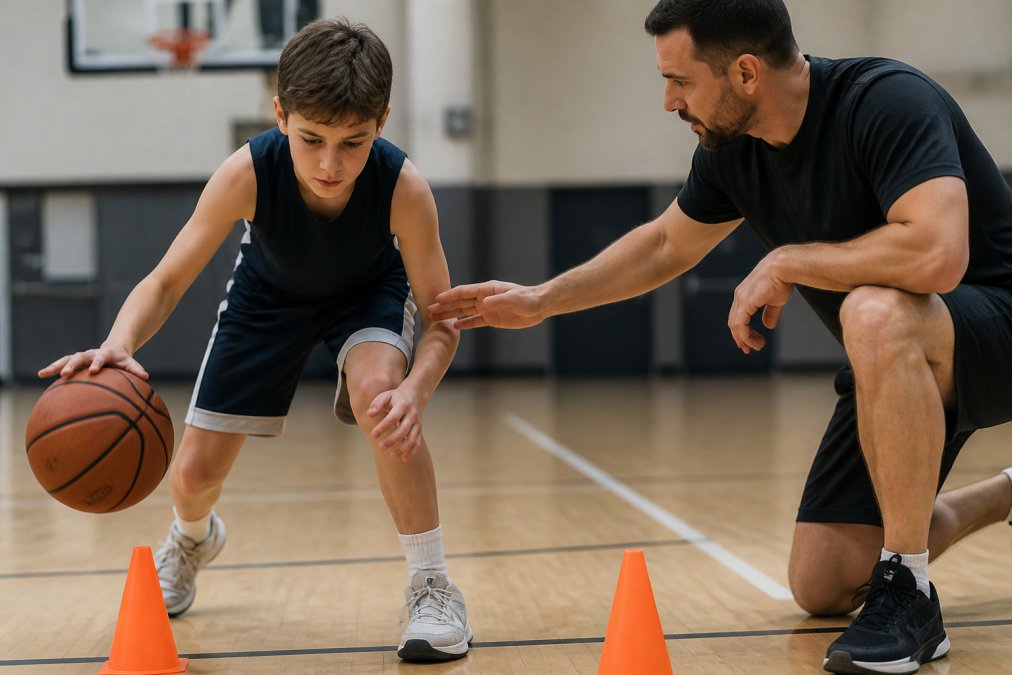
A solid fundamental skills baseline includes consistent ball handling, basic shooting technique, understanding of defensive stance, and ability to execute simple plays. Your child should be able to dribble without watching the ball constantly, make a layup from close range, and understand basic positioning on the court.
Here's what to look for:
- Dribbling control: Can dribble at different speeds without losing the ball frequently
- Shooting form: Attempts shots with reasonable technique (feet shoulder-width apart, follow-through, arc)
- Passing accuracy: Can complete chest passes and bounce passes to teammates
- Defensive positioning: Understands how to face an opponent and move laterally
- Game awareness: Knows where teammates are and can follow basic play instructions
The key word here is "consistent." Your child doesn't need to be perfect at any of these, they need to demonstrate them reliably during practice and games.
Emotional Maturity and Resilience
This is where many parents miss the mark. Competitive basketball demands emotional regulation that goes well beyond recreational play. Your child will face losses, mistakes in front of others, and coaches who give critical feedback. How they respond to these moments matters far more than how well they shoot.
Emotional maturity in this context means your child can accept losing without falling apart, can receive coaching corrections without taking them personally, and can bounce back from a bad game or a poor performance. They understand that one mistake doesn't define them as a player.
Watch for these signs:
- Handles frustration without shutting down: Gets upset about mistakes but stays engaged
- Accepts coaching feedback: Listens to corrections and tries to implement them next time
- Recovers from setbacks: Bounces back after a loss or poor performance within a reasonable timeframe
- Shows sportsmanship: Respects opponents and officials, even when frustrated
- Communicates needs: Can tell you when something is bothering them rather than bottling it up
If your child tends to quit activities when they're not immediately good at them, or if they struggle to handle any form of criticism, competitive basketball may create more stress than growth right now.
How to Prepare for Basketball Tryouts
If you've decided your child is ready, the preparation phase matters. Tryouts can be intimidating, and proper preparation builds confidence and increases the likelihood of success.
Start by ensuring your child understands what to expect. Many young athletes show up to tryouts anxious because they don't know what will happen. Walk them through the typical structure: warm-up drills, skill assessments, scrimmage play, and evaluation. Knowing the format removes one layer of uncertainty.
Building Game IQ and Court Awareness
Game IQ, the ability to read what's happening on the court and make smart decisions, separates good players from great ones. This doesn't develop overnight, but you can accelerate it during the preparation phase.
Encourage your child to watch basketball at multiple levels. This could mean watching professional games, college games, or local rep teams. The goal isn't entertainment, it's understanding how the game flows. Ask them questions: Why did that player make that pass instead of shooting? Why is that defender playing so far away from their opponent?
During practice, help your child focus on positioning and spacing. Many young players watch the ball constantly. Competitive play requires awareness of where teammates are, where defenders are positioned, and what the play is trying to accomplish. Drills that emphasize these elements, like three-on-three games where communication is required, build this awareness naturally.
Mental Preparation and Handling Pressure
Mental preparation before tryouts involves visualization and self-talk. Your child should visualize themselves executing the fundamentals they've practiced: successful dribble drives, completed passes, made shots. This isn't wishful thinking, it's mental rehearsal that primes the nervous system for performance.
Teach your child a simple self-talk framework. When they make a mistake, instead of "I'm terrible," they should think "That's fixable, next time I'll..." This shifts their mindset from fixed (I'm either good or bad) to growth-oriented (I can improve).
On tryout day, arrive early so your child has time to acclimate to the gym and calm their nervous system. A rushed arrival increases anxiety. Remind them that the coaches are looking for effort and coachability, not perfection.
What to Expect at Rep Basketball Tryouts
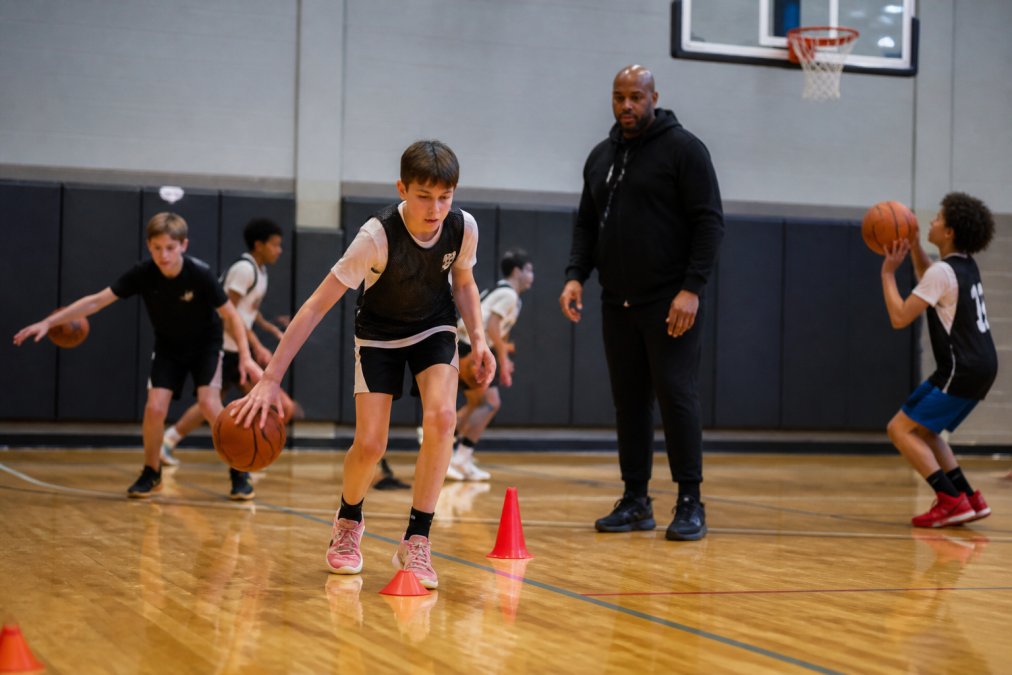
Rep basketball tryouts follow a fairly consistent structure, though specifics vary by organization. Understanding what happens helps your child prepare mentally and physically.
Most tryouts begin with a warm-up period where players go through basic stretching and movement drills.
Recognizing Signs of Burnout in Young Athletes
One of the hardest parts of competitive sports is knowing when your child has had enough. Burnout in young athletes isn't just fatigue, it's a combination of physical exhaustion, emotional exhaustion, and loss of enjoyment (pubmed.ncbi.nlm.nih.gov).
Watch for these warning signs:
- Loss of enthusiasm: Your child used to love basketball, but now they're reluctant to go to practice
- Physical complaints without clear cause: Persistent soreness, fatigue, or vague aches that don't correspond to specific injuries
- Declining performance despite effort: Your child is working hard but getting worse, not better
- Emotional withdrawal: They're quieter than usual, seem less engaged with teammates, or express frustration about the sport
- Sleep disruption: They're having trouble sleeping or sleeping much more than usual
- Mood changes: Increased irritability, anxiety, or sadness, especially around basketball
Coachability: The Hidden Indicator of Readiness
Coachability might be the single most important factor in competitive basketball success, and it's often overlooked by parents focused on skills.
Signs of strong coachability include:
- Asks clarifying questions: When a coach gives feedback, your child asks "How should I adjust?" rather than making excuses
- Implements feedback immediately: They try the correction in the next drill or game, not eventually
- Accepts criticism from peers: They listen to teammates and adjust based on input
- Reflects on performance: After practice or games, they can identify what went well and what needs work
- Shows effort even when frustrated: They keep trying hard even when they're not getting results immediately
The Financial and Logistical Reality of Competitive Play
This is the conversation many parents avoid, but it's essential. Competitive basketball involves real costs and real commitments beyond just the sport itself.
Your Role as a Parent in the Transition
The transition to competitive basketball changes your role as a parent. You're no longer just a cheerleader, you're a support system for a young athlete navigating pressure, failure, and growth.
| Readiness Factor | What to Look For | Red Flag |
|---|---|---|
| Fundamental Skills | Consistent dribbling, basic shooting form, understanding of positioning | Frequently loses ball, cannot make layups, doesn't understand basic plays |
| Emotional Maturity | Accepts losses, receives coaching feedback, bounces back from mistakes | Quits when frustrated, takes criticism personally, dwelling on poor performances |
| Intrinsic Motivation | Wants to play, practices independently, asks to improve | Only plays because parent wants them to, avoids practice, shows no interest in improvement |
| Coachability | Implements feedback, asks clarifying questions, stays engaged | Defensive about corrections, ignores coaching input, blames others |
| Time Commitment | Family aligned on schedule demands, can sustain practice and travel | Only one parent supportive, schedule conflicts, resentment building |
Frequently Asked Questions
What is the best age to start competitive basketball?
Most children are developmentally ready for competitive basketball between ages 9 and 11. Before this, recreational programs build fundamental skills and intrinsic motivation. Younger children (ages 6-8) benefit from skill-development programs that emphasize fun and basic dribbling, passing, and shooting. The transition to competitive play depends more on emotional maturity, coachability, and genuine interest than on age alone. Physical maturity and coordination also matter, children develop at different rates.
How can I tell if my child has real talent for competitive basketball?
Look for a combination of factors: mastery of fundamental skills like dribbling and shooting, strong game IQ and court awareness, the ability to execute plays under pressure, and genuine enthusiasm for the sport. Coachability is equally important, does your child respond well to feedback and work to improve? Athletic potential includes coordination, speed, and vertical reach, but motivation and work ethic often matter more than raw talent. Watch how your child performs in game situations, not just drills.
What's the difference between recreational and competitive basketball programs?
Recreational basketball focuses on skill-building, fun, and participation for all players. Competitive rep basketball emphasizes elite training, tryout-based team selection, and higher-intensity play. Rep teams typically practice more frequently, have stricter attendance requirements, and compete in regional or provincial tournaments. Recreational leagues offer more flexible schedules and guaranteed playing time. Competitive play demands greater commitment, time management, and emotional resilience. Your child should show genuine interest in competition and be prepared for the increased demands before transitioning.
How do I know if my child is burned out or just tired?
Burnout involves persistent loss of enthusiasm for the sport, reluctance to attend practices, irritability, or declining performance despite effort. Tired players recover after rest; burned-out players lose motivation entirely. Watch for complaints of overtraining, frequent injuries, anxiety about games, or declining grades due to excessive practice schedules. Burnout often signals that your child needs a break or a shift to a less intense program. Open conversations about what they enjoy and don't enjoy about basketball help identify burnout early. Balance competitive play with downtime and other activities.