 comparison
Jump Basketball vs Local Clubs: A Parent's Guide
Table of Contents
- Jump Basketball vs Local Clubs: Overview and Key Differences
- Skill Development and Training Philosophy
- Benefits of Rep Basketball vs House League
- Rep Basketball Cost Ontario: Budget Comparison
- How to Choose a Youth Basketball Club
- Community-Based Basketball: Finding the Right Fit
- Conclusion: Matching Your Child's Goals to the Right Program
Last Updated: August 24, 2026
Jump Basketball vs Local Clubs: Overview and Key Differences
When parents search for basketball programs, they face a fundamental choice: enroll in a specialized training academy like Jump Basketball, or join a community-based house league through local recreation programs. Jump Basketball focuses on intensive skill development and competitive advancement, while local clubs prioritize accessibility, affordability, and inclusive participation. Neither is universally "better", the right choice depends on your child's age, ability, commitment level, and what you want basketball to mean in their life.
Program Structure and Age Divisions
Jump Basketball organizes players into competitive tiers based on skill level rather than age alone. Rep teams require tryouts and emphasize tournament play, advanced training camps, and year-round development with sessions typically running 90+ minutes.
Local clubs organize youth basketball by age bracket. The Town of Halton Hills recreation programs serve ages 7-9 (Junior), 10-13 (Senior), and older youth through drop-in sessions running 1-2 hours per week with fundamentals and controlled game play.
Halton Hills Girls Basketball Club, a not-for-profit, structures programs for girls aged 6-12 with flexibility to accommodate different skill levels within the same age group. The structural difference affects training philosophy, time commitment, and how "success" is measured, competitive programs measure success by tournament results, while recreational programs measure it by participation, skill growth, and enjoyment.
Coaching Philosophy and Player Development
Jump Basketball and competitive academies hire coaches with advanced certifications, often former collegiate or professional players, emphasizing elite development where court time is earned through performance.
Local recreation programs employ NCCP-certified coaches using an inclusive model where every player gets meaningful court time and mistakes are treated as learning opportunities (coach.ca).
Tier 1 Sports bridges these approaches. Our programs are structured by age and skill level with coaches trained in both competitive development and inclusive teaching. For younger players (ages 4-6 in Ball For Fun), we prioritize fun and fundamental movement. For recreational players (ages 7-10 in Learn To Ball), we teach basketball skills in a supportive environment. For competitive athletes (ages 11-16 in REP Team), we provide advanced training and tournament opportunities within a community-focused culture.
Skill Development and Training Philosophy
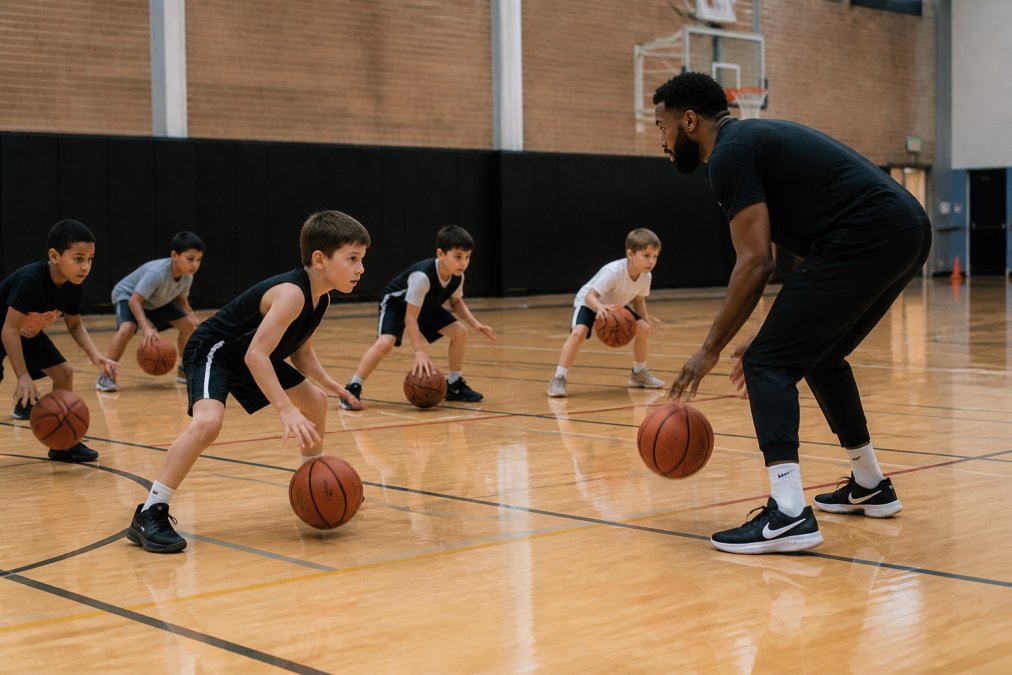
Jump Basketball and competitive programs assume players want rapid improvement and are willing to invest time and money, emphasizing game-like scenarios, advanced footwork, and decision-making at speed. Local recreation programs teach fundamentals through structured drills with emphasis on understanding the "why" behind each skill.
Fundamentals vs. Game Experience
In competitive programs, extensive drilling develops elite players by mastering fundamentals under pressure. In recreational programs, drilling reflects a philosophy that everyone should understand the skill before playing.
A 7-year-old just learning basketball probably benefits from structured fundamentals and early game experience, while a 13-year-old wanting to make a competitive rep team needs intensive skill development and high-pressure practice scenarios.
Court Time and Player Confidence
In competitive programs, court time is performance-based, creating clear incentive to improve but potentially damaging confidence for benched players. In local recreation programs, every player typically gets meaningful court time, building confidence and skill together.
Tier 1 Sports structures this carefully. In Learn To Ball (ages 7-10), all players get significant court time. In REP Team (Grades 7-11), court time is earned through performance with clear feedback.
Benefits of Rep Basketball vs House League
Rep basketball offers advanced skill development through intensive coaching, tournament experience, a clear pathway to higher levels, and development of mental toughness. House league offers affordable, accessible entry into organized basketball, balanced focus on skill and fun, inclusive environments where all players get court time, and lower time commitment (typically 1-2 hours per week).
Competitive Play and Elite Development
Rep basketball is designed to develop elite players. If your child shows serious talent and wants to play at a higher level, rep basketball is necessary. The real question is motivation: Does your child want to compete seriously? Are they willing to accept reduced playing time? Do they respond well to pressure? If yes, rep basketball makes sense. If your child plays for fun and social connection, house league is better.
Team Dynamics and Sportsmanship
Because everyone plays and competitive stakes are lower, house league environments often develop stronger team bonds and better sportsmanship. Rep teams can develop excellent sportsmanship too, but competitive environments create different dynamics.
Tier 1 Sports emphasizes team dynamics and sportsmanship across all programs. In our Y.G.B.L. league (ages 11-14), we structure games to be competitive but community-focused.
Rep Basketball Cost Ontario: Budget Comparison
Community-based recreation programs are dramatically more affordable. The Town of Halton Hills offers 10-week youth basketball sessions for approximately $115.40 per program (roughly $11.50 per session) (haltonhills.ca). The Hoops for Youth drop-in program is free, funded by Jumpstart.
Private academies and rep teams cost significantly more, with several hundred dollars per season plus additional costs for camps, tournaments, and travel.
Tier 1 Sports offers programs across the price spectrum. Our Ball For Fun and Learn To Ball programs are designed to be accessible. Our REP Team is more specialized and costs more, with transparent pricing. Contact us directly for current pricing on specific programs.
Time Commitment and Travel Requirements
House league typically requires 1-2 hours per week during the season (8-12 weeks) with local games. Rep basketball often requires 4-6 hours per week plus weekend tournaments that might involve travel.
Tier 1 Sports is based in Halton Hills, so our local programs minimize travel. Our REP Team competes in regional tournaments with transparent scheduling and time commitment upfront.
How to Choose a Youth Basketball Club
The decision should be based on four factors: your child's age, current skill level, motivation, and your family's capacity.
Age matters. For children under 8, recreational programs are almost always better. For ages 8-10, you have flexibility based on your child's interest. For ages 11+, the choice depends on your child's interest and ability.
Current skill level matters. If your child has never played organized basketball, start with house league or Learn To Ball. If they've played for a year or more and want faster improvement, competitive training makes sense.
Motivation is everything. Does your child want to be there? Competitive programs require self-motivation and resilience. If your child isn't intrinsically motivated to improve, competitive training will feel like punishment.
Family capacity matters. Can you commit to 4-6 hours per week? Can you afford the costs? Can you manage tournament travel? If any answer is no, house league is the responsible choice.
Evaluating Coaching Standards and Certifications
The National Coaching Certification Program (NCCP) is the Canadian standard (coach.ca). Higher-level certifications (NCCP Level 3, advanced specialty certifications) indicate deeper expertise. For recreational programs, NCCP Level 1 or 2 certification is typical. For competitive rep programs, expect NCCP Level 2 or higher.
Ask programs directly about coaching staff certifications, experience, and work with players at your child's level. Tier 1 Sports employs coaches trained in both competitive development and inclusive teaching, with transparent coaching qualifications and philosophy.
Player Pathway Progression and Standardized Evaluation
The best programs offer a clear pathway with transparent criteria for advancement. Programs with standardized evaluation criteria are more fair and less frustrating, with clear benchmarks for progression.
Tier 1 Sports structures progression explicitly. Players can start in Ball For Fun (ages 4-6), move to Learn To Ball (ages 7-10), then progress to Y.G.B.L. league (ages 11-14), and eventually try out for REP Team (Grades 7-11). Each level has clear expectations and skill development goals.
Community-Based Basketball: Finding the Right Fit
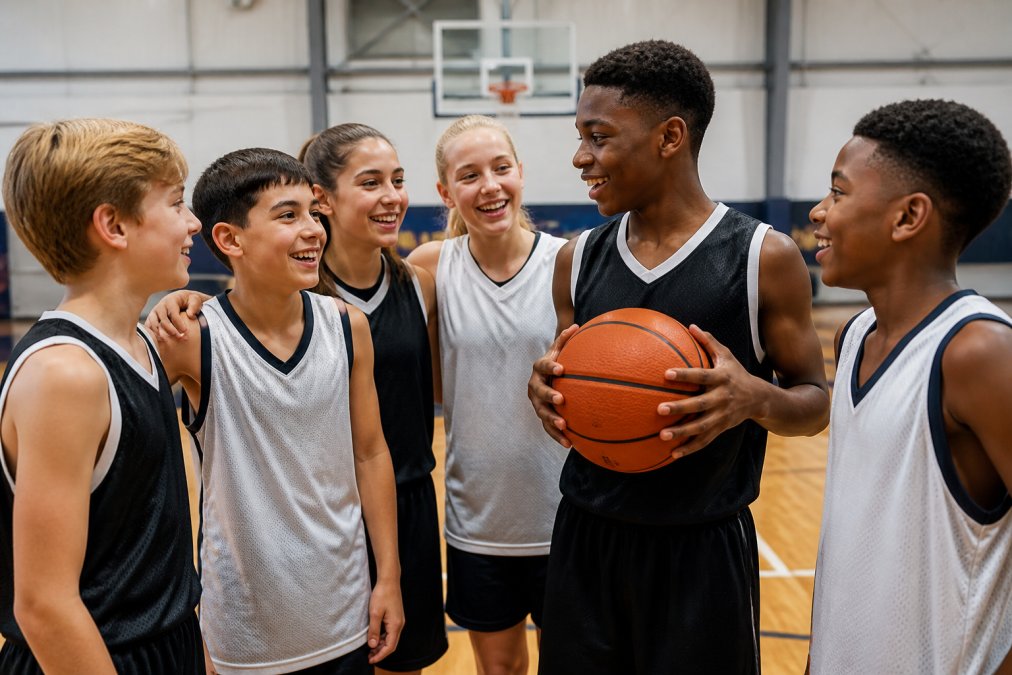
Community-based programs keep kids active, build confidence, and develop a love for the game.
Local Organizations and Recreation Programs
In Halton Hills, several community-based options exist. The Town of Halton Hills Recreation Department offers affordable, well-established youth basketball programs focused on fundamentals and fair play. Halton Hills Girls Basketball Club is a not-for-profit dedicated to girls' basketball, emphasizing a "culture of belonging," mental toughness, and resilience.
Tier 1 Sports bridges community and competitive play. We're rooted in Halton Hills and committed to serving families at all levels, from 4-year-olds in Ball For Fun to competitive rep athletes. When evaluating community programs, ask about coach qualifications, player-to-coach ratio, how playing time is distributed, whether the program emphasizes fun or competitive advancement, and whether there are opportunities to progress to more competitive play.
Recreational vs. Competitive Pathways
Recreational programs prioritize participation and enjoyment where every player plays and mistakes are learning opportunities. Competitive programs prioritize development and performance where playing time is earned.
Many programs exist in the middle: competitive in structure but recreational in philosophy. These middle-ground programs are often the best fit for 9-12-year-olds wanting to improve without elite competition pressure.
Tier 1 Sports' Skills & Drills program (ages 7-12) is intentionally in this middle ground. Players with some basketball experience work on advanced skills in a structured environment with meaningful court time and clear feedback on improvement.
If your child is happy and improving in a recreational program, there's no rush to move to competitive play. Conversely, if your child is frustrated by lack of challenge or playing time, a more competitive program might be the right next step.
Choosing between jump basketball vs local clubs isn't about finding the objectively "best" program, it's about matching your child's current needs and your family's capacity. Recreational house leagues develop confidence, teach fundamentals, and keep kids active. Competitive rep programs accelerate skill development and prepare players for higher levels of play. Both are valuable.
At Tier 1 Sports, we've designed programs to serve families at every point on this spectrum. Whether your child is just discovering basketball or training to compete seriously, we offer expertly tailored coaching, a supportive community environment, and a clear pathway to their goals. Our programs are structured by age and skill level, with coaches trained in both competitive development and inclusive teaching. Visit us to see how we can help your child discover their full potential in basketball, and fuel a lifelong passion for the game.
=== FAQ ANSWERS (audit these too, same rules) ===
[1] Q: What is the main difference between Jump Basketball and local clubs? A: Jump Basketball typically operates as a private, franchise-based program focused on skill development through structured drills and training clinics. Local clubs often include community-based organizations, house leagues, and rep teams that blend skill development with competitive game play. Local clubs may emphasize teamwork and sportsmanship within a community structure, while Jump Basketball centers on individual skill progression. Your choice depends on whether your child prioritizes intensive skill training or a balance of learning and game experience.
[2] Q: How much does rep basketball cost in Ontario compared to recreational programs? A: Rep basketball typically costs more than recreational house league programs due to higher coaching standards, tournament travel, and competitive scheduling. Recreational programs through local organizations often start at lower price points, while rep teams require additional investment for elite development and seasonal tournaments. Costs vary by organization and age division. Contact your local club directly for current pricing, as fees depend on program level, session frequency, and travel requirements specific to your region.
[3] Q: What are the benefits of rep basketball vs house league for my child's development? A: Rep basketball offers elite development through competitive play, advanced coaching, and higher-level game experience, building player confidence and tactical understanding. House league emphasizes fundamentals, inclusivity, and balanced playing time for all athletes. Rep basketball suits players ready for competitive challenge and tournament play, while house league works well for recreational players developing core skills. Consider your child's age, skill level, and whether they seek competitive challenge or recreational enjoyment when choosing between these pathways.
[4] Q: How do I choose the right youth basketball club for my child? A: Evaluate coaching certifications (look for NCCP-certified coaches), age-appropriate program structure, player pathway progression, and whether the club emphasizes skill development or competitive play. Ask about court time allocation, game-to-drill ratios, and whether the club offers standardized evaluation criteria. Request to observe a practice or speak with current parents. Consider your child's skill level, goals, time commitment capacity, and travel requirements. A good fit balances your child's developmental stage with their athletic aspirations and your family's availability.
[5] Q: Is my 5-year-old too young to start basketball training? A: Age 4-6 is ideal for introductory basketball programs that focus on fundamental motor skills, hand-eye coordination, and a love for the game through interactive play. Programs designed for this age group avoid intense drilling and prioritize fun, movement, and basic ball handling. Look for programs labeled 'Ball for Fun,' 'Learn to Play,' or similar introductory offerings. These early experiences build confidence and lay groundwork for skill development as your child grows, without pressure or excessive sitting.
Frequently Asked Questions
What is the main difference between Jump Basketball and local clubs?
Jump Basketball typically operates as a private, franchise-based program focused on skill development through structured drills and training clinics. Local clubs often include community-based organizations, house leagues, and rep teams that blend skill development with competitive game play. Local clubs may emphasize teamwork and sportsmanship within a community structure, while Jump Basketball centers on individual skill progression. Your choice depends on whether your child prioritizes intensive skill training or a balance of learning and game experience.
How much does rep basketball cost in Ontario compared to recreational programs?
Rep basketball typically costs more than recreational house league programs due to higher coaching standards, tournament travel, and competitive scheduling. Recreational programs through local organizations often start at lower price points, while rep teams require additional investment for elite development and seasonal tournaments. Costs vary by organization and age division. Contact your local club directly for current pricing, as fees depend on program level, session frequency, and travel requirements specific to your region.
What are the benefits of rep basketball vs house league for my child's development?
Rep basketball offers elite development through competitive play, advanced coaching, and higher-level game experience, building player confidence and tactical understanding. House league emphasizes fundamentals, inclusivity, and balanced playing time for all athletes. Rep basketball suits players ready for competitive challenge and tournament play, while house league works well for recreational players developing core skills. Consider your child's age, skill level, and whether they seek competitive challenge or recreational enjoyment when choosing between these pathways.
How do I choose the right youth basketball club for my child?
Evaluate coaching certifications (look for NCCP-certified coaches), age-appropriate program structure, player pathway progression, and whether the club emphasizes skill development or competitive play. Ask about court time allocation, game-to-drill ratios, and whether the club offers standardized evaluation criteria. Request to observe a practice or speak with current parents. Consider your child's skill level, goals, time commitment capacity, and travel requirements. A good fit balances your child's developmental stage with their athletic aspirations and your family's availability.
Is my 5-year-old too young to start basketball training?
Age 4-6 is ideal for introductory basketball programs that focus on fundamental motor skills, hand-eye coordination, and a love for the game through interactive play. Programs designed for this age group avoid intense drilling and prioritize fun, movement, and basic ball handling. Look for programs labeled 'Ball for Fun,' 'Learn to Play,' or similar introductory offerings. These early experiences build confidence and lay groundwork for skill development as your child grows, without pressure or excessive sitting.
This article was written using GrandRanker