 comparison
Recreational vs Rep Basketball Training: A Parent's Guide
Table of Contents
- Recreational vs Rep Basketball Training: Key Differences
- Comparison Table: Recreational vs Rep Basketball
- Commitment Levels and Time Requirements
- Benefits of Rep Basketball Training
- House League Basketball Expectations
- Cost of Competitive Basketball Programs
- Which Is Right for Your Child?
- Conclusion
Last Updated: August 16, 2026
Recreational vs Rep Basketball Training: Key Differences
Choosing between recreational and rep basketball training shapes how much time your child spends in the gym and their entire relationship with the sport. At Tier 1 Sports, we work with families making this choice every season. Recreational and rep basketball aren't just different levels of intensity, they're fundamentally different philosophies about player development, what success looks like, and what commitment a family is making.
What Defines Recreational Basketball
Recreational basketball prioritizes fun, foundational skill-building, and equal participation. Coaches emphasize teaching over winning, with mistakes treated as learning opportunities rather than failures. Playing time is distributed fairly, with most recreational leagues ensuring every player gets meaningful minutes during games.
The commitment level is moderate: typically one or two practices per week and weekend games, leaving room for other activities and school commitments. Recreational basketball is ideal for children aged 4-10 exploring the sport or kids who love basketball but don't aspire to competitive play.
What Defines Rep Basketball
Rep basketball, short for "representative" or competitive basketball, is performance-driven. Teams are selected through tryouts with smaller, competitive rosters. Coaches emphasize game strategy, advanced skill development, and competitive preparation. Players work on complex offensive and defensive systems, situational awareness, and mental toughness required for tournament play.
The commitment is substantial: 3-5 practices per week, often with weekend tournaments and potential travel. Rep basketball is designed for players aged 11-16 with solid foundational skills who want to compete at higher levels. Many rep players advance to high school and collegiate basketball.
Comparison Table: Recreational vs Rep Basketball
| Factor | Recreational Basketball | Rep Basketball |
|---|---|---|
| Selection Process | Open registration | Tryout-based |
| Team Size | Larger rosters | Smaller, competitive rosters |
| Practice Frequency | 1-2 times per week | 3-5 times per week |
| Game Focus | Skill development and fun | Competitive performance |
| Playing Time | Equal participation guaranteed | Performance-based |
| Tournament Travel | Local, minimal travel | Regional and beyond |
| Cost Structure | Lower program fees | Higher program fees |
| Best For | Ages 4-10, exploratory players | Ages 11-16, serious competitors |
| Coaching Philosophy | Teaching and encouragement | Development and winning |
| Skill Development Speed | Gradual, foundational | Accelerated, advanced |
Commitment Levels and Time Requirements
Recreational basketball demands roughly 3-4 hours per week combining practices and games, typically two one-hour practices and one weekend game. This schedule fits comfortably around school and other activities with predictable scheduling weeks in advance.
Rep basketball requires 8-12 hours per week during the season: three to five practices (90 minutes to two hours each), weekend games, and often additional skill training. Tournament weekends frequently require travel, with 15-20 weekends per season where family plans revolve around basketball.
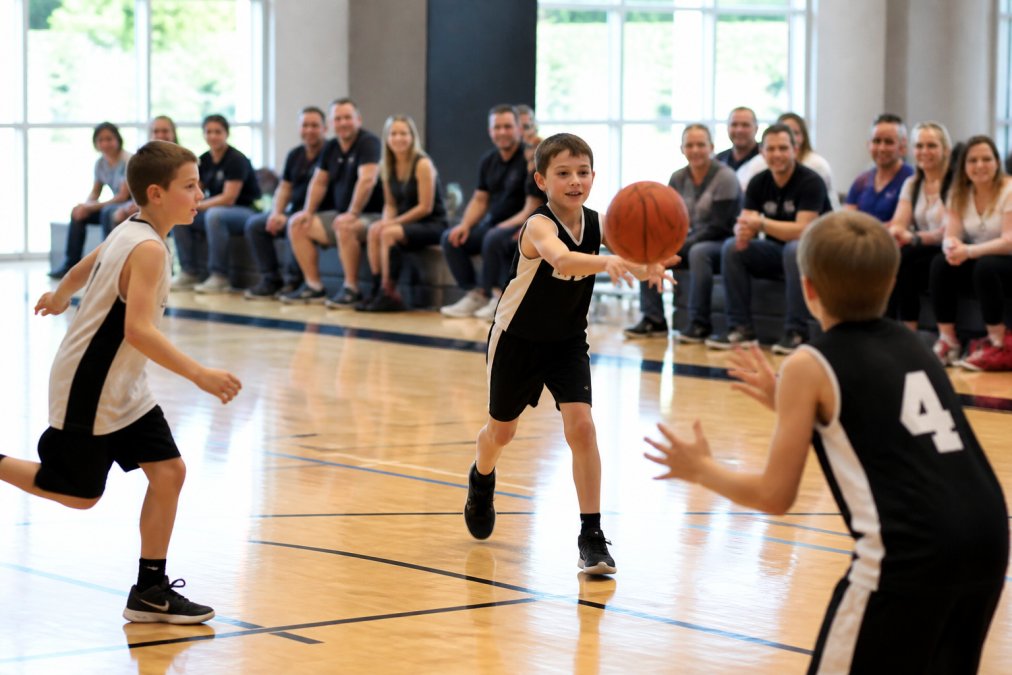
Rep basketball demands mental commitment beyond raw hours. Teams depend on roster continuity, and coaches expect consistent participation. Missing practices can affect playing time, creating pressure on both player and family.
Financial commitment scales directly with time. Recreational programs charge registration fees covering facility costs and basic coaching. Rep programs involve higher fees, travel costs, tournament entries, and often specialized training. Annual costs can differ substantially when factoring in equipment upgrades and travel expenses.
Benefits of Rep Basketball Training
Rep basketball training accelerates skill development through competitive environments, higher practice frequency, and performance-based coaching. Players develop superior ball handling, shooting mechanics, and court awareness within a single season compared to recreational players.
Rep coaches focus on advanced concepts, pick-and-roll execution, defensive rotations, spacing awareness, that recreational programs don't have time to teach. Higher practice frequency allows coaches to drill these concepts repeatedly until they become automatic.
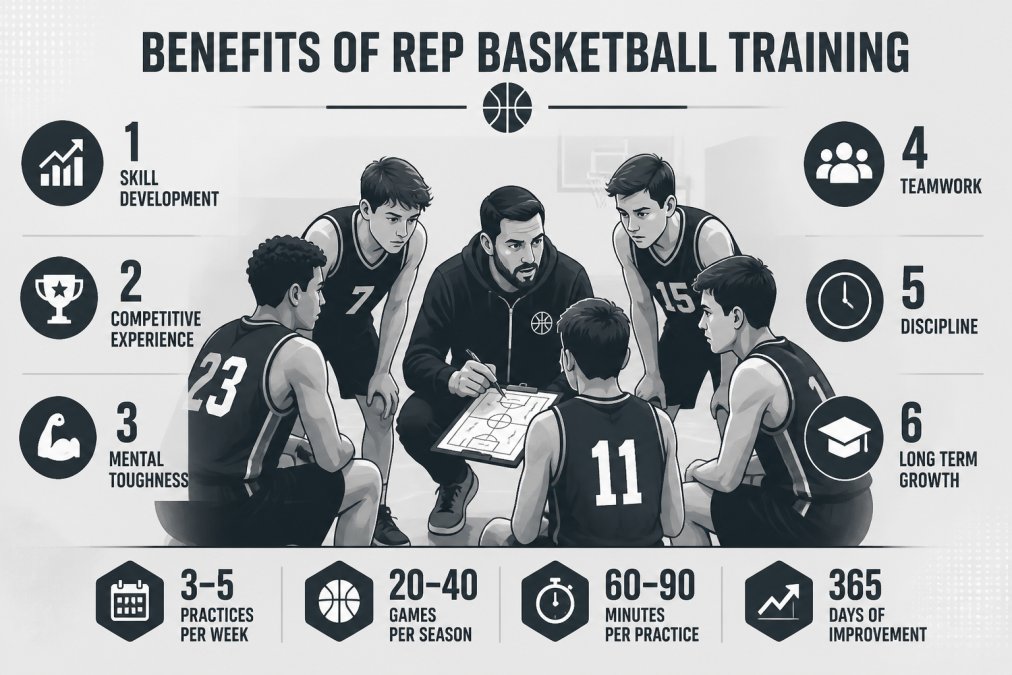
Rep basketball builds game intelligence faster. Players learn to read defenses, anticipate plays, and make split-second decisions under pressure through competitive game situations and film study. Playing against stronger opponents forces players to execute fundamentals when fatigued and under pressure.
Rep basketball provides a clear developmental pathway. For players aspiring to high school basketball, rep experience is often a prerequisite. High school coaches recruit from rep programs because those players have proven they can handle competitive environments.
Rep teams are smaller, more cohesive units where players develop deeper friendships and stronger team bonds through shared commitment and competitive experience.
House League Basketball Expectations
House league basketball, organized by community recreation departments or local clubs, prioritizes accessibility and participation over competitive outcomes. Teams are formed through draft or balanced allocation systems designed to create competitive parity.
Playing time in house league is protected through minimum playing time rules, often requiring every player to play at least half the game. Coaching quality varies widely, some coaches are certified professionals, others are parent volunteers. Ask about coach qualifications before registering.
Skill development in house league is slower and foundational. Coaches focus on basic mechanics, shooting form, dribbling control, and footwork. Advanced concepts aren't part of house league curriculum, which is appropriate for younger players but won't prepare a player for competitive basketball.
The schedule is predictable and family-friendly: one or two seasons per year with practices once or twice weekly and weekend games at local facilities, with minimal travel.
Cost of Competitive Basketball Programs
Recreational programs charge registration fees covering facility rental, basic coaching, and league administration. Costs vary by organization and location, but recreational basketball is the most affordable entry point.
Rep basketball involves substantially higher costs. Beyond base registration fees, families encounter tournament entry fees, travel expenses, and often specialized training programs. During a season with multiple tournaments, travel costs can exceed program fees.
Many rep programs encourage participation in specialized training, shooting camps, ball handling clinics, and strength conditioning. While technically optional, these are often presented as essential for competitive development.
Equipment costs also scale with competition level. Rep players typically need higher-quality shoes, specialized training gear, and additional basketballs for individual practice.
Which Is Right for Your Child?
The choice between recreational and rep basketball depends on your child's skill level, competitive drive, and your family's capacity for commitment.
Choose recreational basketball if:
Your child is under 10 years old and exploring the sport. Recreational programs are designed for foundational skill-building. There's no advantage to pushing young players into competitive environments before mastering basic mechanics.
Your child loves basketball but doesn't aspire to higher-level play. Not every young athlete needs a competitive team. If your child wants to play for fun and maintain balance with other activities, recreational basketball is the perfect fit.
Your family has limited time or resources. Recreational programs fit into normal family schedules without tournament travel or extensive practice commitments.
Your child is new to basketball or still developing basic skills. Recreational coaches focus on fundamentals in an environment where mistakes are normalized.
Choose rep basketball if:
Your child is 11 or older, has solid foundational skills, and genuinely wants to compete. Rep basketball is designed for players ready for higher-level challenges.
Your child thrives in competitive environments. Some kids love rep basketball's intensity; others find it stressful. Know your child before committing.
Your family can commit to the time and financial requirements. Rep basketball demands 8-12 hours per week, tournament travel, and significant investment. This is only sustainable if your family has genuine capacity and willingness to prioritize basketball.
Your child aspires to play at higher levels, high school, competitive club play, or beyond. Rep basketball provides the developmental pathway and competitive experience necessary to pursue these goals.
Tier 1 Sports works with families navigating this decision every season. Both recreational and rep basketball have value. The key is matching the program to your child's current needs, your family's capacity, and your child's genuine interest level.
Choosing between recreational and rep basketball training is ultimately about understanding what your child needs right now and what your family can sustain. Recreational basketball builds foundational skills and keeps kids engaged in a supportive environment. Rep basketball accelerates development and provides competitive experience for players ready for it.
The best programs, whether recreational or competitive, develop skills, build confidence, and keep kids loving the game. At Tier 1 Sports, we offer both pathways because every young athlete deserves a program matching their current level and supporting their growth. Explore our recreational and rep basketball programs to find the right fit for your young athlete.
Frequently Asked Questions
What is the main difference between house league and rep basketball?
House league basketball prioritizes equal participation, skill development, and fun for all players regardless of ability. Rep basketball is competitive, with roster spots earned through tryouts and playing time based on performance. House league focuses on recreational play and community; rep basketball emphasizes competitive environment, advanced skill development, and preparation for higher levels of play.
At what age should a player transition from recreational to rep basketball?
Most players transition between ages 10 and 12, though readiness varies. Your child should show genuine interest in competitive play, demonstrate fundamental mechanics, and have practiced consistently. Consider their willingness to handle constructive criticism and their commitment to more frequent practice schedules. Tryout processes typically begin in fall, so discuss readiness with your child and their coach beforehand.
How does the training intensity differ between recreational and rep programs?
Recreational programs emphasize fundamental mechanics, ball handling, and shooting mechanics through balanced drills and game time. Rep basketball training is more intense, focusing on advanced game IQ, team dynamics, structured offenses and defenses, and performance-based conditioning. Rep players attend more frequent practices, engage in competitive tournaments, and receive coaching that emphasizes athletic growth and tournament preparation rather than equal participation.
What are the time and financial commitments for rep basketball?
Rep basketball requires significant commitment: typically 2-4 practices per week plus weekend games and tournaments during the seasonal commitment period. Financial costs vary based on program level and location; contact Tier 1 Sports or other providers directly for current pricing. Costs generally cover registration fees, coaching, facility rental, and tournament participation. Recreational programs have lower time and financial commitments, making them accessible for families seeking casual involvement.
Does playing rep basketball guarantee a spot on a high school team?
No. Rep basketball provides excellent preparation and increases your child's chances of making a high school team, but high schools hold their own tryouts and evaluate players independently. Rep experience builds fundamental mechanics, game IQ, and competitive experience that strengthen tryout performance. High school coaches value rep basketball background, but selection depends on performance at high school tryouts, current roster needs, and coaching philosophy.
This article was written using GrandRanker