 blog
blog
Sportball vs Halton Basketball: Which Program Fits Your Child?
Table of Contents
- Sportball vs Halton Basketball: Program Age Ranges and Skill Levels
- Youth Basketball Training Programs: What Each Option Covers
- Basketball Coaching for Beginners: Philosophy and Approach
- Benefits of Rep Basketball vs. Recreational Programs
- Multi-Sport vs. Sport-Specific Basketball: Which Serves Your Child?
- Cost-Benefit Analysis and Parental Commitment Expectations
- Registration, Enrollment, and Getting Started
- Frequently Asked Questions
Last Updated: September 1, 2026
Sportball vs Halton Basketball: Program Age Ranges and Skill Levels
When choosing a youth basketball program, the first question is whether it matches your child's age and ability. This determines everything else, whether your child will feel challenged, supported, or left behind.
Sportball vs Halton Basketball programs serve overlapping but distinct age groups. Sportball focuses on preschool and early elementary athletes (ages 4-7), introducing basketball as part of multi-sport foundation with emphasis on fundamental movement patterns and play-based learning. Halton Basketball operates across a wider spectrum, from recreational programs for ages 6 and up through competitive rep teams for older youth.
Tier 1 Sports bridges this gap with tailored pathways from age 4 through 16, with clear progression levels. A 5-year-old never having held a basketball gets placed in an introductory program designed for that motor skill stage. A 9-year-old caught between recreational and competitive finds a middle-ground program that builds serious skills without cutthroat intensity. A 14-year-old with competitive ambitions can try out for rep teams with coaching that prioritizes both development and results.
The key difference: Sportball's age ranges are narrow and front-loaded toward younger children. Halton Basketball offers broader coverage but often requires fitting into existing structure. Tier 1 Sports designs programs around where your child actually is developmentally, not around arbitrary age brackets.
Youth Basketball Training Programs: What Each Option Covers
Fundamental Skill Development and Progression
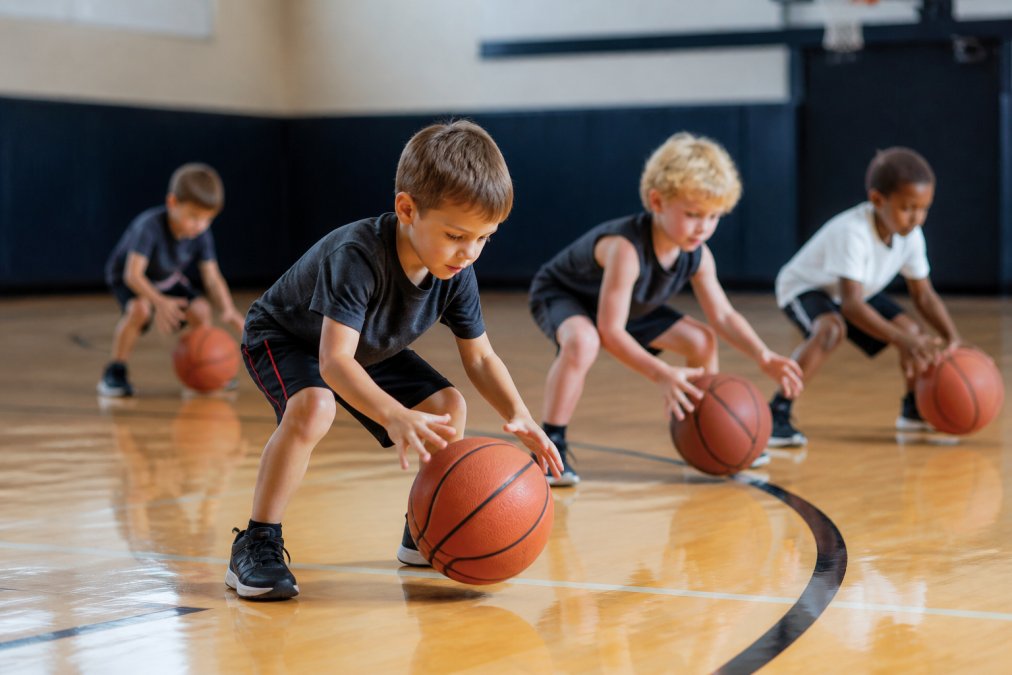
Sportball emphasizes foundational movement literacy. At ages 4-6, children work on coordination, balance, and basic ball-handling through games and play. Because Sportball positions itself as multi-sport training, basketball is one of several activities children rotate through.
Halton Basketball's recreational programs focus on basketball-specific fundamentals: shooting form, layup technique, defensive positioning, and game awareness. Rep programs add intensity and competitive context to that skill work.
Tier 1 Sports isolates the skills that matter most at each age. For 5-7 year-olds, that's ball handling, footwork, and basic court awareness. For 8-10 year-olds, shooting mechanics and team spacing come into focus. For 11-16 year-olds, the work splits: recreational players refine existing skills and learn game strategy, while rep athletes add conditioning, advanced footwork, and competitive decision-making.
This progression is intentional. Each season builds on the previous one with new challenges introduced at the right developmental window. There's a critical window, roughly ages 6-12, when motor skill development accelerates (peer-reviewed research). Miss that window, and some skills become harder to acquire later.
Class Duration, Frequency, and Session Structure
Sportball typically runs 45-minute sessions once per week through structured play and games. This works well for introducing young children to sport but isn't enough volume for serious skill development.
Halton Basketball varies by tier. Recreational programs often run 60 minutes once or twice weekly. Rep programs increase to 2-3 sessions per week, sometimes 90 minutes each.
Tier 1 Sports matches frequency to age and goal. Introductory programs (ages 4-6) run 45 minutes once weekly, appropriate for young attention spans. Intermediate programs (ages 7-10) shift to 60 minutes twice weekly. Competitive rep programs run 90-minute sessions 2-3 times per week with additional conditioning and film review for older athletes.
Session structure also differs. Rather than generic drills, Tier 1 Sports sessions are designed around specific skill progression. One week might focus on footwork and spacing; the next builds on that foundation by adding shooting mechanics into game situations.
Basketball Coaching for Beginners: Philosophy and Approach
The coaching philosophy matters as much as program structure. A coach who sees mistakes as learning opportunities creates a very different environment than one who sees them as failures to correct.
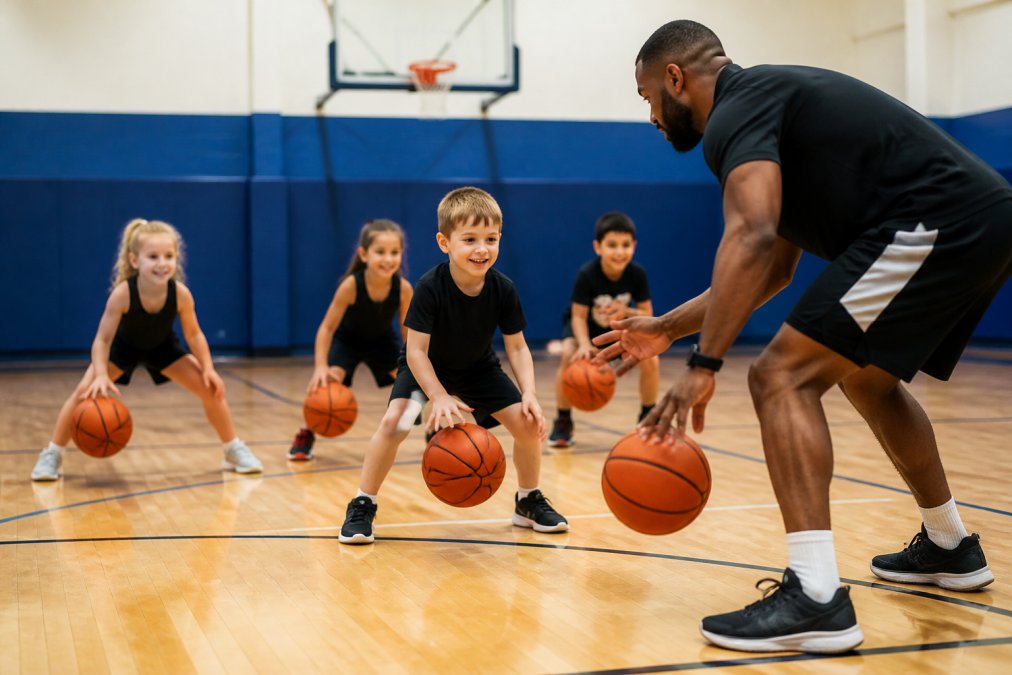
Sportball's coaching approach is play-based and non-competitive. Coaches facilitate games rather than teach formal technique, with minimal correction. This is appropriate for ages 4-6, where the goal is exposure and confidence-building.
Halton Basketball's recreational coaches emphasize skill instruction and fair play. Rep coaches are more results-oriented, expecting higher effort and faster improvement. Some athletes thrive under this pressure; others shut down.
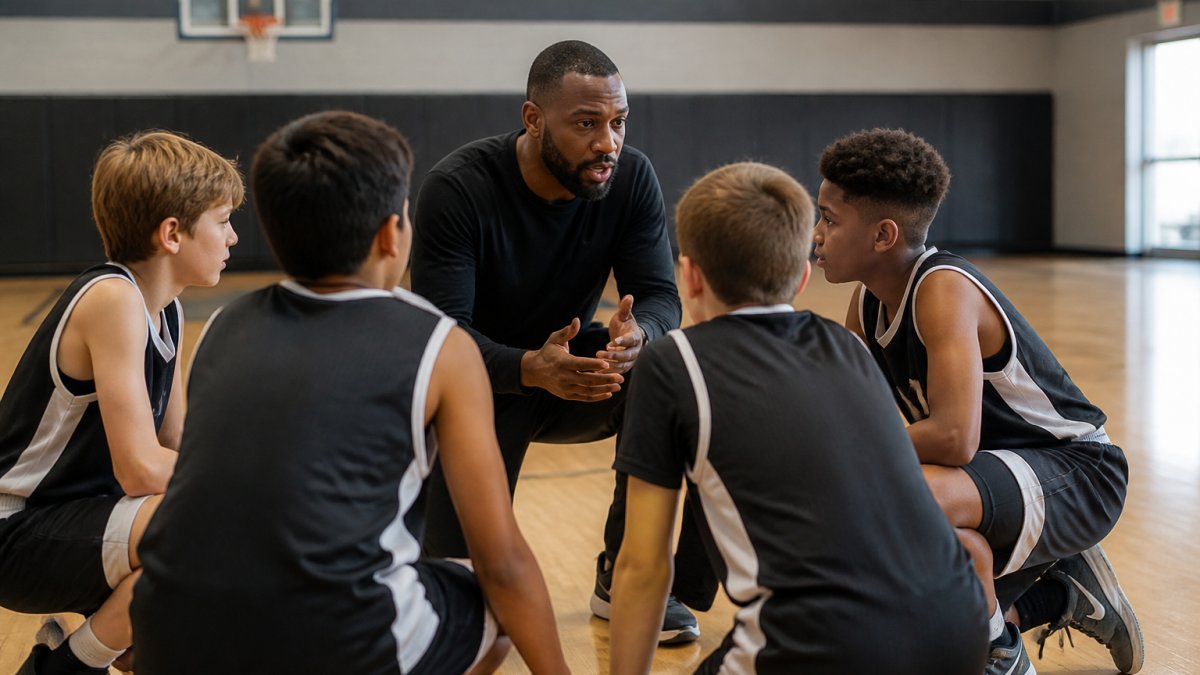
Tier 1 Sports operates on "intentional development coaching." Coaches teach skills explicitly and give specific, actionable feedback while building psychological safety. A 7-year-old who misses a layup gets shown the correct form and encouraged to try again. A 12-year-old who turns the ball over gets film review to understand why and what to do differently.
This matters because children develop confidence alongside skills. A child corrected harshly learns to fear mistakes. A child coached thoughtfully learns that mistakes are information. That difference compounds over years.
Tier 1 Sports emphasizes the "golden window" for motor skill development between ages 6 and 12, when children's nervous systems are optimized for learning complex motor patterns (peer-reviewed research). Coaching during this window focuses on quality repetition and pattern recognition, not just volume.
Benefits of Rep Basketball vs. Recreational Programs
The choice between recreational and rep basketball isn't just about skill level, it's about what your child gets from the experience.
Recreational basketball programs offer accessibility, community, and sustainable enjoyment. Children play multiple positions, get meaningful game time, and focus on fundamentals without pressure of tryouts or cuts. Many children thrive in this environment, developing solid skills, making friends, and staying active.
Rep basketball programs offer intensity, competition, and accelerated development. Players are selected through tryouts, creating relatively balanced skill levels. Training is more demanding and game outcomes matter more. Rep programs produce better players faster and create a pipeline toward higher levels of play.
The tradeoff is real. Rep basketball demands more from families: more practice time, more travel, more financial investment. Some children thrive under competitive pressure; others experience it as anxiety.
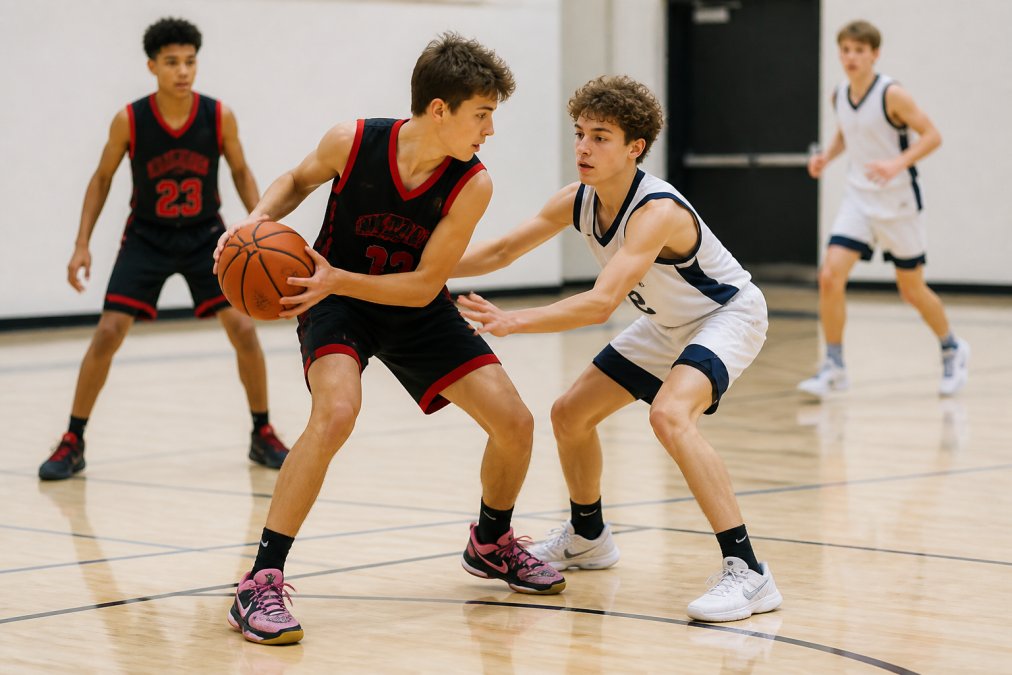
Tier 1 Sports offers both pathways, so your child isn't forced into a binary choice. A 9-year-old who loves basketball but isn't ready for rep tryouts can join an intermediate program that's more serious than basic recreation but less intense than rep. A 12-year-old can try rep, and if it's not the right fit, step back to recreational without shame. This flexibility reduces pressure on families to predict early whether their child will be competitive.
The real benefit is that skill level and interest, not arbitrary age cutoffs, determine placement. A naturally gifted 8-year-old can train with older children. A 10-year-old who loves the game but develops slowly gets the time and support to improve without pressure.
Multi-Sport vs. Sport-Specific Basketball: Which Serves Your Child?
Sportball's model is deliberately multi-sport. Young children rotate through basketball, soccer, hockey, and other activities. Research on youth athletic development supports this: children who play multiple sports often develop better overall coordination and decision-making (peer-reviewed research).
Halton Basketball and Tier 1 Sports are basketball-specific, allowing deeper skill development and more meaningful progression.
For ages 4-7, multi-sport exposure makes sense. Children are still figuring out what they enjoy, and general athleticism matters more than basketball-specific skill. For ages 8 and up, the calculus shifts. A child who loves basketball benefits from focused training. A child still exploring benefits from trying multiple activities.
The key question: does your child already know they love basketball, or are they still exploring? If exploring, multi-sport is appropriate. If they've chosen basketball, focused training produces faster improvement and deeper engagement.
Cost-Benefit Analysis and Parental Commitment Expectations
Sportball's model is accessible and low-commitment. Sessions are inexpensive, once-weekly, and designed for families juggling multiple activities. The tradeoff is limited skill development. Your child gets exposure and enjoyment, but not serious basketball training.
Halton Basketball's pricing and commitment vary by tier. Recreational programs are moderate in cost and time commitment. Rep programs are significantly more expensive and demand more: multiple practices, travel to games, and often additional conditioning outside the program.
Tier 1 Sports's cost structure is transparent and proportional to what you're getting. Introductory programs are affordable with minimal family commitment. Intermediate programs cost more because they deliver more: twice-weekly training, intentional progression, and skilled coaching. Rep programs are the most expensive and demanding, but they produce the most significant development.
There's no free excellence. A program that costs very little, meets once a week, and produces skilled players doesn't exist. Either you're paying in money, or you're paying in time, or you're accepting limited results. Tier 1 Sports's pricing reflects the actual cost of quality coaching, facility rental, and program design.
Before enrolling, ask yourself honestly: how much time can we realistically commit? If the answer is "one practice per week, that's it," then a program requiring two practices plus games isn't the right fit, regardless of quality. Mismatched expectations are the primary reason families leave programs.
Registration, Enrollment, and Getting Started
The registration process tells you a lot about how organized a program is.
Sportball's registration is straightforward: sign up online, pay, and show up. They handle placement by age.
Halton Basketball requires registration through their system, with some programs involving tryouts or skill assessments. The process is more structured but variable depending on which program you're joining.
Tier 1 Sports uses a guided enrollment process. You identify your child's age and current experience level, then get connected with a program that matches that profile. For rep programs, there's a formal tryout designed to assess current skill and potential, not to discourage participation.
Here's what to do:
-
Identify your child's age and experience level. Be honest about skill.
-
Clarify your family's commitment capacity. How many hours per week can you realistically dedicate? What's your budget?
-
Attend an introductory session or watch a practice. This reveals the coaching style, facility, and other children far better than a website.
-
Ask specific questions about progression. How does a child advance to the next level? What's the pathway from age 7 to 16?
-
Talk to other parents. Ask what their experience has been and whether they feel the program is worth the investment.
-
Register early. Popular programs fill up, especially rep teams.
| Step | Timeline | What to Expect |
|---|---|---|
| Identify level | Before registration | Honest assessment of age and experience |
| Attend intro/watch | 1-2 weeks before | See coaching style and facility in action |
| Ask progression questions | During intro visit | Understand the pathway from current level to advanced |
| Register | 2-4 weeks before season | Confirm placement and payment |
| Attend first session | Week 1 of season | Child meets coach and teammates |
Choosing between Sportball vs Halton Basketball programs ultimately comes down to what you want for your child and what your family can sustain. Sportball is ideal if your child is young and you want low-pressure exposure to multiple sports. Halton Basketball works if you want a structured, established program with clear competitive pathways. Tier 1 Sports stands out because it offers both recreational and competitive options within one club, with coaching that prioritizes development at every level and placement that matches your child's actual needs, not just their age. The best program is the one your child will stay with, improve in, and enjoy.
Frequently Asked Questions
What age is best to start basketball training?
Most programs welcome children starting at age 4-5 through introductory youth basketball training programs that focus on basic motor skills, ball familiarity, and fun. By age 7-10, children benefit from more structured skill development including dribbling, layups, and shooting mechanics. Competitive rep basketball typically begins around age 10-11 for those showing serious interest. The key is finding an age-appropriate program that matches your child's physical development and interest level rather than pushing them into advanced training too early.
How do I know if my child should try rep basketball or stick with recreational programs?
Consider your child's interest level, commitment, and athletic goals. Recreational basketball focuses on fun, fundamental skill development, and community involvement without the pressure of tryouts or competition rankings. Rep basketball demands greater commitment, more frequent practice sessions, and competitive play, ideal for children who show genuine passion for the sport and want to develop at an accelerated pace. If your child is between these two levels, look for intermediate programs that offer skill-focused training with some competitive elements but without the full rep commitment.
What makes basketball coaching for beginners different from general youth sports programs?
Basketball-specific coaching emphasizes sport fundamentals like ball handling, shooting form, and court awareness from the start, whereas multi-sport programs teach broader athletic skills and sportsmanship across different activities. Basketball coaching for beginners should include age-appropriate drills, plenty of hands-on practice with a ball, and game-time opportunities so children experience real play, not just repetitive drills. Quality programs balance structured instruction with fun and ensure children develop physical literacy and confidence on the court.
How much more expensive is rep basketball compared to recreational programs?
Rep basketball typically costs more than recreational programs due to higher coach-to-athlete ratios, specialized training facilities, more frequent sessions, and competitive event fees. However, exact pricing depends on the program structure, session frequency, and facility costs. Contact programs directly for current pricing and ask about what's included, some programs bundle coaching, facility use, and competition fees differently. Many clubs offer trial sessions or introductory rates, so you can test the commitment level before making a full investment.
This article was written using GrandRanker