 blog
blog
Youth Basketball Summer Camps in Halton Hills for Ages 4-6
Table of Contents
- Why Ages 4-6 Are the Prime Window for Basketball Introduction
- What to Look for in Youth Basketball Summer Camps in Halton Hills
- Beginner Basketball Drills for 5 Year Olds: What Actually Works
- How to Choose a Basketball Camp for Young Children: A Step-by-Step Framework
- Benefits of Multi-Sport Summer Camps for Preschoolers
- Registration, Pricing, and What to Pack for Camp
- Conclusion: Finding the Right Fit for Your Child
- Frequently Asked Questions
Last Updated: September 16, 2026
Why Ages 4-6 Are the Prime Window for Basketball Introduction
The early childhood years are when fundamental movement skills take root, and basketball offers one of the most complete ways to build them. Research from ParticipACTION's report on physical literacy in Canadian children consistently shows that children who develop coordination and balance before age seven are far more likely to stay active through their teens. This guide from Tier 1 Sports breaks down what parents in Halton Hills need to know before registering a child for youth basketball summer camps Halton Hills for ages 4-6.
At this stage, the goal is not a jump shot. It is physical literacy: running, stopping, changing direction, tracking a bouncing ball, and cooperating with other children. Basketball summer camps built for this age group focus on those foundations through games and active play rather than repetitive drilling.
The window matters because motor skill development is not linear. Children who miss early exposure to throwing, catching, and balancing often need more time to catch up later. A well-run camp turns that window into an advantage.
What Parents Should Actually See by Age
Here is a rough picture of what a well-designed program is building toward:
- Ages 4-5: Hopping on one foot, catching a large soft ball with two hands, running and stopping under control, and following two-step instructions. A camp drill that looks like chaos to a parent is often a four-year-old learning to track a moving object.
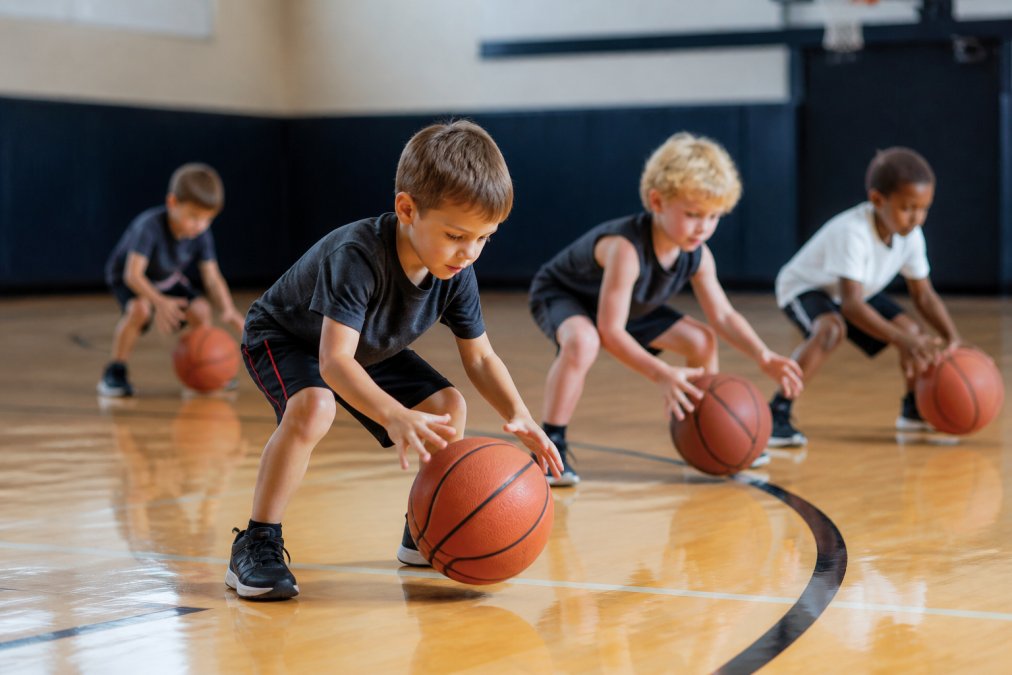
- Ages 5-6: Dribbling a ball while walking, bouncing and catching a smaller ball, changing direction on command, and taking turns in a small group game. This is where simple basketball-specific skills start to stick.
A good camp does not force these milestones on a schedule. It creates repeated chances for them to emerge through play, and it tells you at pickup what your child did that day.
The Social and Emotional Layer
For many children in this age range, a summer camp is their first structured group setting without a parent present. That makes the social benefits as important as the physical ones. A well-run camp builds:
- Turn-taking, waiting for a turn in a passing game, which is harder than it sounds at four.
- Resilience, missing a shot and trying again without a meltdown.
- Following an adult other than a parent, a skill that pays off in kindergarten and grade one.
- Making a friend, often the thing parents remember most from the week.
What to Look for in Youth Basketball Summer Camps in Halton Hills
A quality camp for young children prioritizes supervision, age-appropriate activities, and a structured environment over competition. When comparing options, look past the marketing language and examine three things: who is coaching, where the program runs, and how the day is structured. For ages 4-6 specifically, the deciding factor is usually supervision density, how many adults are within arm's reach of your child at any given moment.
Coach-to-Child Ratios and Supervision Standards
Ask directly about four things before you register:
- The stated ratio, and whether it holds during transitions (arrival, snack, washroom breaks), which is when supervision gaps usually appear.
- First aid certification, at least one staff member on site with current first aid and CPR training is a reasonable baseline to expect.
- Vulnerable sector screening, organizations serving children are expected to follow guidance from the Canadian Centre for Child Protection on supervision and screening practices. Ask whether every coach and volunteer who will be alone with children has a current vulnerable sector check, and how often it is renewed.
- Sign-in and sign-out procedure, a written pickup list and a staff member who checks identification is standard practice for this age group, not an optional extra.
A useful test: ask what happens if a child needs the washroom mid-session. A program with a clear, written procedure has thought about supervision. A program that answers vaguely has not.
Indoor vs. Outdoor Facilities: Which Works Better for Young Kids?
| Factor | Indoor Facility | Outdoor Facility |
|---|---|---|
| Weather reliability | Consistent | Cancellations likely |
| Surface for balance | Even, safe | Uneven, variable |
| Distraction level | Low | High |
| Heat and sun exposure | Controlled | Requires shade and hydration planning |
| Best for | Full-week programs | Short drop-in sessions |
Beginner Basketball Drills for 5 Year Olds: What Actually Works
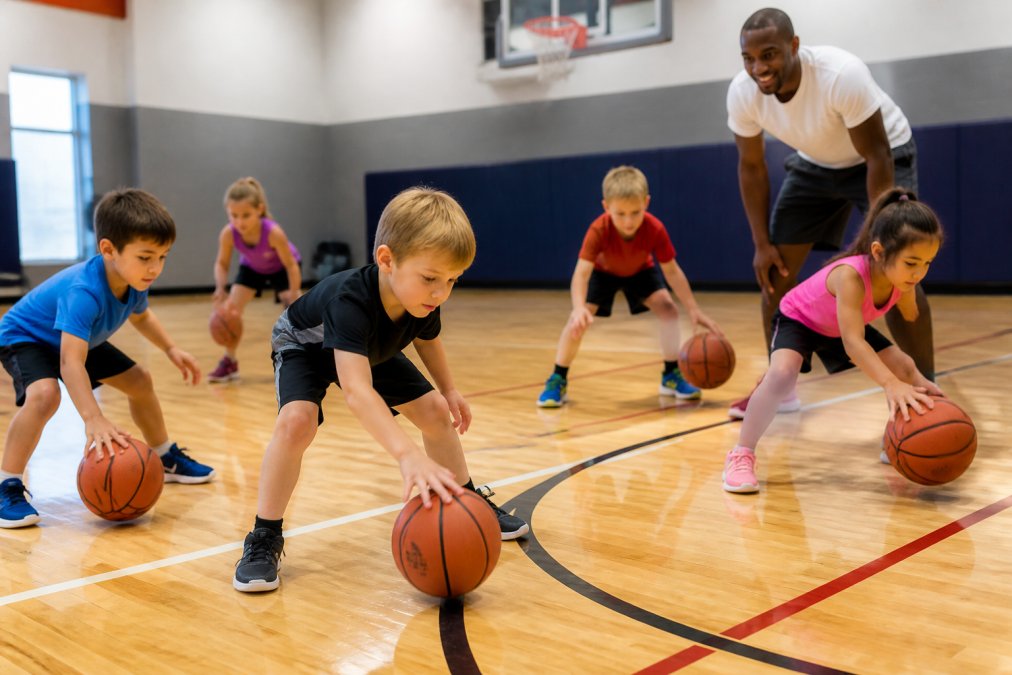
The drills that work for five-year-olds are games in disguise. A five-year-old will not tolerate a line drill for more than a few minutes, but they will happily chase a bouncing ball for an hour. Effective beginner basketball drills for 5 year olds include:
- Red light, green light dribbling - children dribble and freeze on command, building ball control and listening skills.
- Bean bag balance - standing on one foot while passing a soft ball, developing coordination.
- Target toss - throwing a light ball at a floor marker to build aim and tracking.
- Follow the leader - a coach leads movement patterns that mimic dribbling footwork.
- Mini scrimmage - a small-sided game with a lowered hoop and no scorekeeping.
How to Choose a Basketball Camp for Young Children: A Step-by-Step Framework
Choosing well comes down to asking the right questions before you pay a deposit. Use this framework to compare programs on the factors that actually affect your child's experience.
Questions to Ask Before You Register
- What is the coach-to-child ratio, and are coaches screened?
- Is the facility indoor or outdoor, and what happens on rainy days?
- How much of the day is structured activity versus free play?
- What is the refund or cancellation policy?
- Can I observe a session or see video of a typical practice?
- Is the program recreational, or does it push early competition?
Benefits of Multi-Sport Summer Camps for Preschoolers
The benefits of multi-sport summer camps for preschoolers extend well beyond basketball. Exposure to several activities in one program builds a broader movement base, reduces early burnout, and helps children discover what they genuinely enjoy. A multi-sport approach develops motor skills, teamwork, and social interaction in ways that a single-sport focus at this age often cannot.
Registration, Pricing, and What to Pack for Camp
Registration for most summer programs opens in early spring, and popular weeks fill quickly. A booking portal or program calendar usually lists available sessions, age groups, and full-week versus half-day options. Register early if you want a specific week.
Pricing depends on the program length, session frequency, and facility, so check directly with the provider for current fees. Tier 1 Sports lists program details and registration on its site.
What to pack for a half-day or full-week camp:
- Filled water bottle labeled with your child's name
- Comfortable athletic clothing and non-marking indoor shoes
- A nut-free snack and lunch for full-week sessions
- A spare set of clothes for younger children
- Sunscreen if any outdoor time is scheduled
Conclusion: Finding the Right Fit for Your Child
The right camp for a four-to-six-year-old is the one that builds confidence before it builds skill. When you weigh coach-to-child ratios, facility type, and how much of the day is genuine active play, the choice becomes clearer. Tier 1 Sports runs age-specific basketball programs from 4 to 16 in Halton Hills, with introductory sessions designed for beginners and a pathway through to competitive rep basketball.
Frequently Asked Questions
What is the best age to start basketball training for kids?
Most children are ready for introductory basketball around age 4 to 6, when they develop the motor skills and coordination to dribble, pass, and follow simple instructions. Programs like those at Tier 1 Sports are designed specifically for this age group, focusing on fun, fundamental movement, and basic basketball skills. Starting early helps build physical literacy and a positive association with sports, setting the stage for lifelong activity.
Are there basketball camps for 4-year-olds in Halton Hills?
Yes, several local organizations offer summer camps for children as young as 4. Look for programs that group kids by age and emphasize age-appropriate activities. Tier 1 Sports provides introductory sessions for ages 4-6 that blend basketball fundamentals with active play and social interaction. Check the program calendar for availability and registration details, as spots fill quickly during summer months.
What should my child bring to a youth basketball summer camp?
Pack comfortable athletic clothing, non-marking indoor shoes, a water bottle, and a nut-free snack. Many camps provide basketballs, but it's wise to confirm. Sunscreen and a hat are essential for outdoor sessions. Label everything with your child's name. A small backpack helps them keep track of their items. Some camps also recommend bringing a light jacket for indoor facilities with air conditioning.
How does Tier 1 Sports compare to other local basketball programs?
Tier 1 Sports focuses on age-specific skill development and a supportive environment that balances learning with fun. Tier 1 emphasizes physical literacy, teamwork, and individual growth for ages 4-6. The club also offers a pathway from introductory sessions to recreational and rep basketball, so children can progress at their own pace. Visit the website to see practice videos and parent testimonials.