 blog
blog
Essential Basketball Gear for Rep Team Players in 2026
Table of Contents
- The Rep Team Gear Checklist: What You Actually Need
- Basketball Shoes for Competitive Players: Fit, Support, and Durability
- Apparel That Moves: Jerseys, Shorts, and Compression Gear
- Protective Equipment and Supports: Knee, Ankle, and Mouth Guards
- Basketball Bag Essentials: Packing for Practice and Games
- Basketball Accessories for Young Players: Hydration, Recovery, and Sideline Must-Haves
- Budgeting and Prioritizing Your Gear Investment
- Gear Care, Replacement, and Injury Prevention
- Frequently Asked Questions
Last Updated: October 14, 2026
The Rep Team Gear Checklist: What You Actually Need
Rep basketball asks more of young athletes than house league ever did. The practices are longer, the games come faster, and the wrong gear shows up in every box score.
Here's the short version before we get into the details:
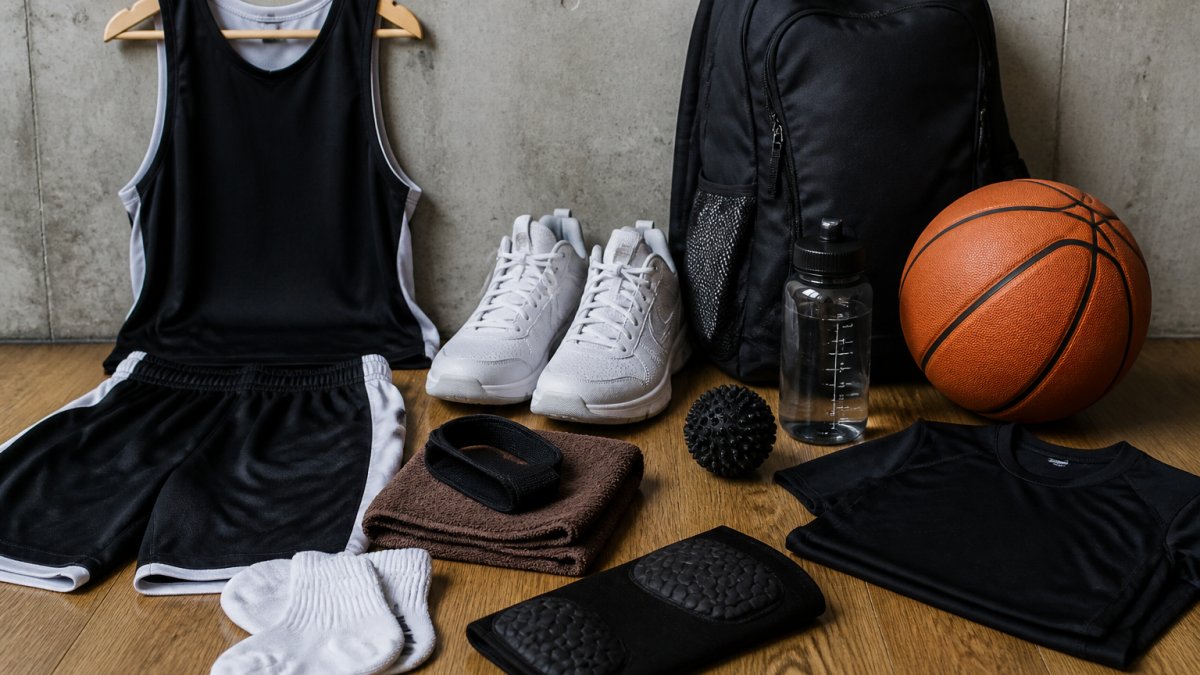
- Must-have: basketball shoes, two jerseys, two pairs of shorts, compression shorts, a mouth guard, a gym bag, and a water bottle
- Strongly recommended: knee or ankle support, shooting sleeves, and a second pair of shoes for training
- Nice-to-have: recovery tools, extra socks, and sideline extras
Most families overbuy at the start and then replace half of it by mid-season.
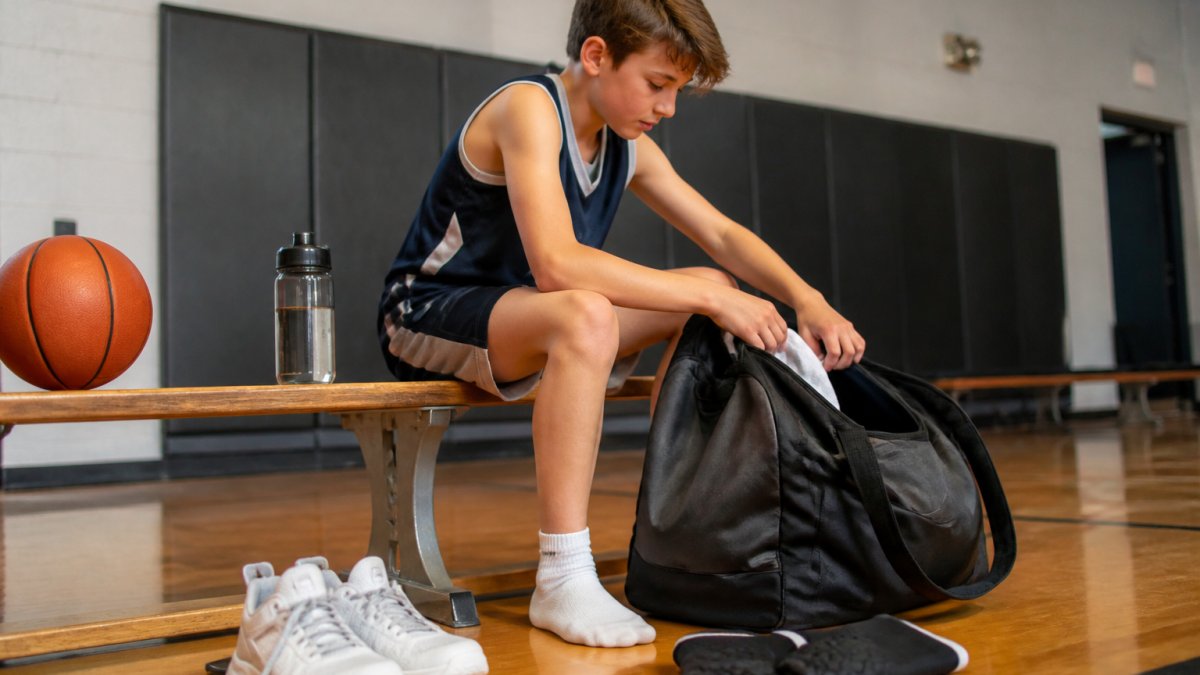
Training vs Game Day: What Changes
Training gear takes the beating. Game day gear needs to look sharp and feel light.
For practice, players need a worn-in pair of shoes, older shorts, and any support gear they're testing. For games, they need the team uniform, clean shoes, and the exact supports they've already broken in. Never debut new shoes on game day. Blisters in the first quarter are avoidable.
League, Coach, and Uniform Requirements
Every rep league sets its own rules on uniforms, numbers, and safety gear. Some leagues require mouth guards. Others ban certain jewelry or headwear. Before you buy anything, check with your coach or league organizer.
Buy the team kit first, then fill the gaps. Coaches usually hand out a uniform list at tryouts. Follow it exactly.
Basketball Shoes for Competitive Players: Fit, Support, and Durability
Basketball shoes for competitive players are the single most important purchase on this list. Everything else is replaceable. Bad shoes cause injuries that end seasons.
Fit matters more than brand. A player's foot should have a thumb's width of space at the toe, a snug midfoot, and no heel slip.
Look for these features:
- Cushioning in the heel and forefoot for landing impact
- Lateral support for cutting and stopping
- Traction pattern that grips a clean indoor court
- Breathable upper to manage sweat during long practices
Replace shoes every season for growing players. A worn-out sole loses grip fast.
Apparel That Moves: Jerseys, Shorts, and Compression Gear
Breathable apparel keeps players cool and lets them move freely.
Jerseys and shorts should be lightweight and moisture-wicking. Cotton holds sweat and gets heavy.
Compression gear sits under the uniform. Compression shorts protect the thighs and reduce chafing. Compression tights work well in cold gyms.
What most guides miss is that compression gear should fit snug, not tight. If it leaves deep marks, it's too small.
Protective Equipment and Supports: Knee, Ankle, and Mouth Guards
Protective equipment prevents small problems from becoming season-ending ones. Rep basketball involves more contact, more jumping, and more landing on hard floors.
The essentials:
- Mouth guard: required in many leagues and cheap insurance for the teeth
- Knee brace or sleeve: helps players with prior injuries or instability
- Ankle brace: common for players returning from a sprain
- Elbow brace: less common, useful for players who take hard falls
Basketball Bag Essentials: Packing for Practice and Games
A basketball bag essentials list should cover everything a player needs for a full week of practices and games. The right bag keeps gear organized and dry. But rep players don't pack the same bag twice. What goes in on a Tuesday practice night is not what goes in on a Saturday morning before a league game, and it is definitely not what goes in for a tournament weekend with back-to-back games and a road trip.
Most gear guides hand you one generic list and call it done. That's the gap. Here's how to split it.
Training Night Pack
Practice is where gear takes the beating, so pack for durability and volume, not for looks.
- Worn-in basketball shoes (the pair you don't mind scuffing)
- Older practice shorts and a practice jersey or reversible pinnie
- Compression shorts
- Any support gear you're currently breaking in or testing
Game Day Pack
Game day gear needs to look sharp, feel light, and be exactly what the player has already broken in. No experiments.
- Team uniform: jersey and shorts, clean and wrinkle-free
- Clean, broken-in basketball shoes (never debut new shoes on game day)
- Compression shorts and tights under the uniform
- The exact braces or sleeves the player has already worn for two or three practices
Tournament Weekend and Travel Add-Ons
This is where rep teams separate from house league. A tournament weekend means multiple games, hotel nights, and gear that has to dry overnight.
- A third jersey and third pair of shorts if the schedule has back-to-back games
- A second pair of shoes (one for warm-up, one for game) if the player has them
- Extra socks, one pair per game plus one spare
- Laundry bag or mesh wash bag for sweaty gear
- Electrolyte packets or tablets for hot gyms and long days
Choosing the Bag Itself
Pick a bag with a separate shoe compartment. Wet shoes in the main compartment ruin everything else. A 40-litre duffel is the practical size for most rep players aged 10 to 16; younger players can get away with 30 litres, and older players carrying a second pair of shoes and a warm-up often want 50 litres or more. Look for a ventilated shoe pocket, at least one external water-bottle sleeve, and a strap or handle that survives being thrown in a car trunk twice a week.
Basketball Accessories for Young Players: Hydration, Recovery, and Sideline Must-Haves
Basketball accessories for young players should support hydration, recovery, and comfort on the bench. They aren't optional extras.
Hydration is the big one. A 1-litre bottle is the minimum for a full practice. Players should sip every 15 to 20 minutes, not chug at the end.
Recovery tools help between games:
- Foam roller for tight legs
- Resistance band for light stretching
- Ice packs for sore joints
Sideline extras include a spare hair tie, a small first-aid kit, and a light jacket for cold gyms.
Budgeting and Prioritizing Your Gear Investment
You do not need everything on day one. Prioritize what protects the player and skip what can wait. Here's a tiered framework built for rep families who are already paying league fees, travel costs, and tournament entry.
Tier 1: Non-Negotiable Essentials
These are the items a rep player cannot safely step on the court without. Buy these first, buy them new, and don't compromise on fit.
- Basketball shoes: expect roughly $90 to $180 CAD for a solid youth or junior performance shoe, and $150 to $280 CAD for adult sizes. Never buy used shoes. A worn-out sole loses grip and a broken-down midsole stops absorbing landing impact.
- Mouth guard: roughly $15 to $40 CAD for a boil-and-bite guard. Custom guards from a dentist cost far more and are rarely necessary at the rep level.
- Compression shorts: roughly $25 to $60 CAD per pair. Two pairs is the practical minimum so one is always clean.
- Gym bag with a shoe compartment: roughly $40 to $120 CAD. This is a one-time purchase that lasts multiple seasons.
- Water bottle (1 litre or larger): roughly $15 to $40 CAD.
Tier 2: Strongly Recommended
These items meaningfully improve comfort, recovery, or injury prevention, but a player can start a season without them and add them as the budget allows.
- Knee or ankle support: roughly $25 to $90 CAD per brace, and only if the player actually needs it. Buying a brace for a healthy joint is not a safety upgrade.
- Shooting sleeve: roughly $15 to $40 CAD. Comfort and sweat control, not performance.
- Second pair of shoes for training: roughly $60 to $150 CAD if you buy a lower-tier trainer. This extends the life of the game-day pair.
- Extra socks (three to five pairs): roughly $10 to $20 CAD per pair for moisture-wicking athletic socks.
- Foam roller or massage ball: roughly $20 to $50 CAD.
Tier 3: Nice-to-Have
These are upgrades, not essentials. Buy them once Tier 1 and Tier 2 are covered and the season is underway.
- Resistance bands for stretching
- Ice packs or a reusable cold wrap
- A third jersey for tournament weekends
- Sideline extras like a spare hair tie, small first-aid kit, and a light warm-up jacket
Where to Save and Where Not To
- Save on: practice shorts, practice jerseys, gym bags, and towels. Secondhand is fine for these. A practice short does not need to be new.
- Do not save on: shoes, mouth guards, or anything that touches injury prevention. A cheap shoe that fits badly costs more in missed games than a good shoe costs upfront.
- Timing matters: end-of-season sales and last-year's colorways are the two most reliable ways to cut shoe costs without cutting quality. A previous-season model of a good shoe is almost always a better buy than a current-season model of a cheap one.
Gear Care, Replacement, and Injury Prevention
Gear care extends the life of everything you buy and lowers injury risk.
Replace shoes every season for growing players, or sooner if the sole is smooth.
The real difference between a player who stays healthy and one who doesn't often comes down to small habits.
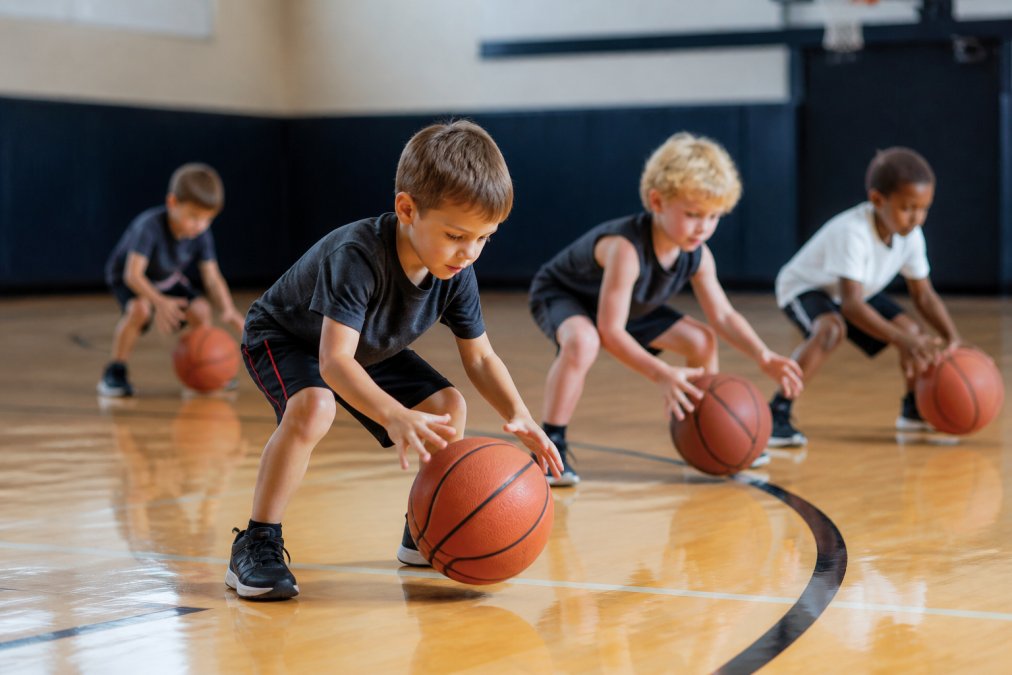
Our age-specific programs for players aged 4 to 16 focus on skill development and a real passion for the game.
Frequently Asked Questions
What should be in a basketball player's game-day bag?
A game-day bag should include your uniform, basketball shoes, a water bottle, a towel, and any required protective gear like knee pads or mouth guards. Pack a spare set of socks and a light snack for recovery. For rep team players, also bring your team warm-up top and a small kit with tape or bandages. Label everything with your name to avoid mix-ups in the change room.
How many basketball uniforms should a rep player have?
Most rep teams issue two uniforms: one light and one dark. You typically need at least two sets to handle back-to-back games or tournaments. Some leagues require a third alternate jersey for special events. Check with your coach or league guidelines, as requirements vary. Having an extra practice jersey is also useful for training sessions when scrimmaging.
Should basketball players wear ankle braces?
Ankle braces can help prevent injuries, especially for players with a history of sprains. However, they are not mandatory for everyone. Some players prefer high-top shoes for added support. Talk to your coach or a physiotherapist to decide what works best for your child's needs. If used, braces should fit snugly without restricting movement.
What are some good basketball accessories for young players?
Young players benefit from a few key accessories: a properly sized basketball, a water bottle, and a gym bag to keep items organized. Knee pads and elbow sleeves can protect during falls. A mouth guard is important for contact play. For training, resistance bands and a jump rope help with skill development. Always prioritize fit and comfort over brand names.
Rep basketball rewards players who prepare. The gear list above covers the essentials, but the right program matters just as much. Tier 1 Sports offers tailored programs for every age group, from introductory sessions to competitive rep basketball, all built around skill development and a supportive community. Our coaches help players realize their full potential on and off the court. Get started with Tier 1 Sports and give your player the foundation to compete with confidence. REP TRYOUTS!