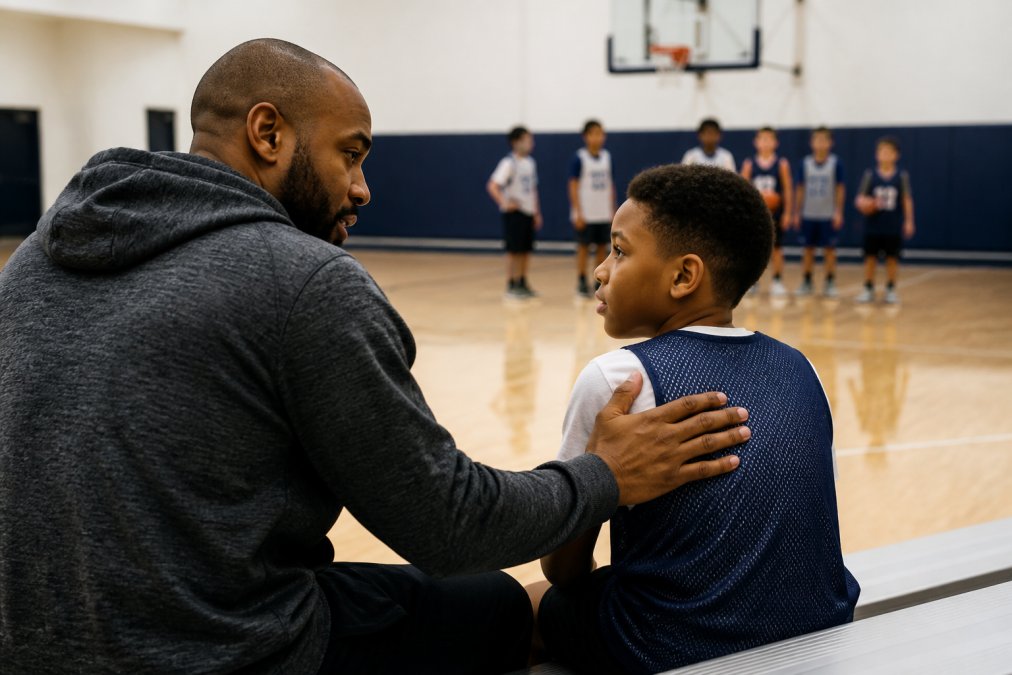
 how-to
Support Your Child During Basketball Tryouts
Table of Contents
- Preparing Your Child for Basketball Tryouts
- Basketball Tryout Preparation Tips That Work
- Managing Pre-Tryout Anxiety and Performance Pressure
- Your Role as a Parent During the Tryout Event
- Post-Tryout Conversation Scripts for Parents
- How to Help Your Child Deal With Sports Rejection
- Setting Realistic Expectations and Building Growth Mindset
- Frequently Asked Questions
Last Updated: September 22, 2026
Preparing Your Child for Basketball Tryouts
Basketball tryout success requires physical conditioning and mental preparation.
Physical readiness and conditioning
Your child needs strength, speed, and endurance built over weeks, not days.
Start with basic conditioning work at least 4-6 weeks before tryouts. Running, jumping, and agility drills build the foundation. Your child should be able to run without stopping for 20-30 minutes by tryout day.
Strength work doesn't mean heavy weights for young athletes. Focus on bodyweight exercises instead:
- Push-ups and planks for upper body
- Squats and lunges for legs
- Burpees for full-body conditioning
- Jump rope for footwork and coordination
Consistent training in the weeks before tryouts translates to game readiness; sporadic last-minute effort does not.
Flexibility matters too. Tight muscles limit movement and increase injury risk. Have your child stretch for 10-15 minutes daily, focusing on hips, hamstrings, and shoulders.
Mental preparation and confidence building
Mental preparation separates players who perform well from those who freeze under pressure.
Have your child visualize success for 5 minutes daily, picturing themselves making good decisions and executing skills builds neural pathways that help during tryouts.
Teach your child to focus on effort, not outcome. Coaches notice hustle, communication, and willingness to improve, all within your child's control.
Build confidence through small wins. When your child improves a specific skill, confidence grows from competence.
Frame tryouts as a chance to show skills and learn from coaches. Avoid language like "You have to make this team," which creates pressure instead of excitement.
Basketball Tryout Preparation Tips That Work
Preparation separates players who walk into tryouts ready from those who hope things work out. Here's what actually moves the needle.
Drill practice at home
Ball handling drills teach muscle memory. Have your child dribble in different directions, changing speeds and staying low for 20 minutes of intentional work.
Shooting practice matters only with proper form. Five quality shots teach the right way; a hundred bad shots teach bad habits.
Defensive stance and footwork often get overlooked. Have your child practice staying low, moving laterally, and staying in front of an opponent, no ball required.
Game-speed drills prepare your child for tryout pace. Mix in drills requiring quick movement, fast decisions, and execution under pressure.
Game awareness and decision-making
Coaches evaluate game understanding, not just individual skills. Game awareness means knowing where teammates are and making smart passes.
Watch basketball games together and ask questions like "Why did that player pass instead of shoot?" to build basketball IQ.
Play pickup games or scrimmages. Real game situations teach decision-making at game speed in ways drills cannot.
Encourage your child to communicate on the court, calling out screens, talking on defense, and encouraging teammates. Coaches notice; silent players get overlooked.
Nutrition and hydration for peak performance
Proper nutrition in the days before tryouts affects energy and focus.
Two days before tryouts, have your child eat balanced meals with carbohydrates, protein, and healthy fats for muscle fuel, repair, and brain function.
The morning of tryouts, a light breakfast like oatmeal with berries or toast with peanut butter provides energy without sitting heavy. Avoid sugary cereals and pastries.
Hydration starts days before tryouts. Have your child drink water consistently throughout the week; drinking a huge amount right before tryouts often backfires.
Bring water to the tryout venue. Your child should drink small sips during breaks and after playing.
Managing Pre-Tryout Anxiety and Performance Pressure
Nervousness is normal. The goal isn't to eliminate anxiety but to channel it productively.
Recognizing performance anxiety in young athletes
Watch for these signs of pre-tryout anxiety:
- Sleep problems the night before
- Stomach complaints or loss of appetite
- Excessive talking or unusual quietness
- Difficulty concentrating on anything else
- Asking repeated questions about the tryout
- Physical tension or restlessness
Some nervousness sharpens focus and increases adrenaline. Excessive anxiety interferes with sleep and clouds decision-making.
Techniques to reduce nervousness the night before
The night before tryouts, keep things calm and normal. Your child picks up on your energy.
Have your child do something relaxing like reading or drawing. Avoid screens for an hour before bed, as blue light disrupts sleep.
A short breathing exercise works well: breathe in for four counts, hold for four, breathe out for four, repeated five times to activate the nervous system's calming response.
Remind your child of past successes. Recall builds confidence.
Keep the pre-tryout conversation brief and positive. Say something like, "I'm excited to watch you play tomorrow. Go have fun." Then move on.
Your Role as a Parent During the Tryout Event
What you do (and don't do) during the tryout shapes your child's experience. Your role is support, not coaching.
What to do while your child is on the court
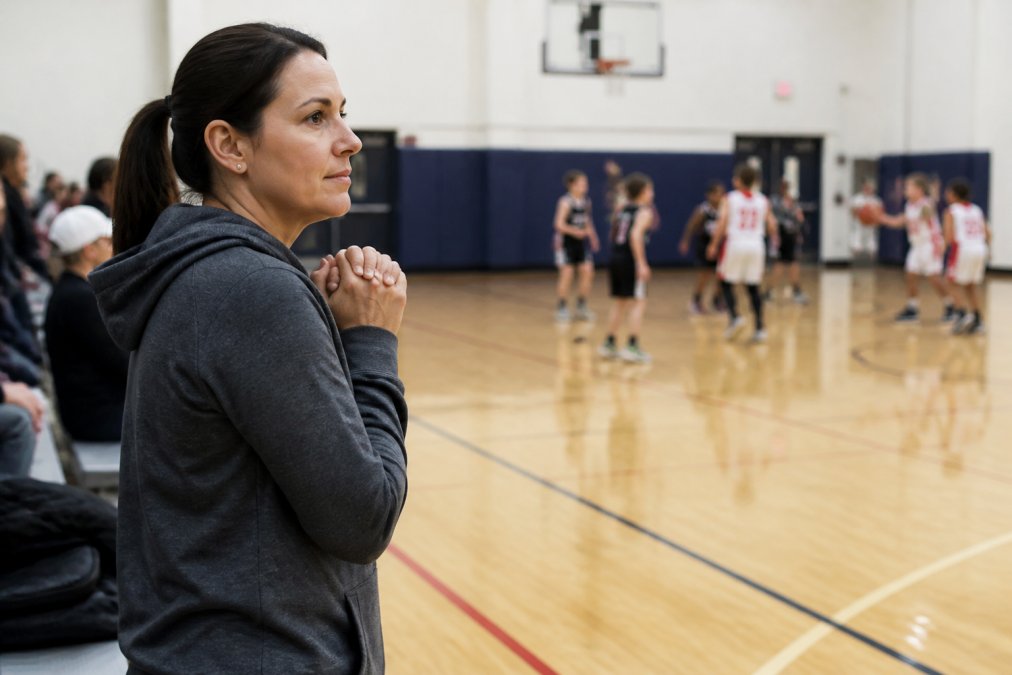
Stand where your child can see you, but stay quiet. Don't shout instructions or criticism. Your job is to be a calm, positive presence.
Clap for good effort plays, not just baskets. Acknowledge when your child dives for a loose ball or plays tough defense.
Avoid coaching from the sideline. Comments distract your child and undermine the coach's authority.
If your child looks discouraged, a simple nod or thumbs up reminds them you're there and believe in them.
Communicating with coaches appropriately
Wait for the official outcome before approaching coaches.
If your child doesn't make the team and you want feedback, request a brief conversation at an appropriate time. Ask open questions like "What areas should my child work on?"
Never argue about roster decisions. Accept the coach's decision and move forward.
If your child makes the team, a simple thank-you to the coach is appropriate. Let your child enjoy the moment without pressure.
Post-Tryout Conversation Scripts for Parents
What you say after tryouts shapes how your child processes the experience. These scripts help guide those conversations.
What to say when your child makes the team
Lead with celebration. "That's awesome! You made it!" feels different from "Thank goodness you made it."
Ask your child how they felt during the tryout. Let them talk first and listen before you speak.
Acknowledge their effort: "You worked hard for this. All those practice sessions paid off." This reinforces that effort matters.
Avoid setting new expectations immediately. Let your child enjoy this moment.
How to frame effort and improvement
Use language that focuses on growth. Instead of "You're so talented," say "You worked hard and it showed."
Point to specific improvements. "Remember when you struggled with that crossover dribble? You kept practicing and it's so much better now."
Remind your child that everyone on the team is good. Making the team means they earned a spot and can learn from teammates and coaches.
How to Help Your Child Deal With Sports Rejection
Not every child makes every team. Handling rejection well teaches resilience that matters far beyond basketball.
Validating emotions without dismissing disappointment
If your child doesn't make the team, they'll likely feel disappointed, frustrated, or sad. These feelings are legitimate.
Avoid saying "It's no big deal" or "There's always next year." Your child needs to feel heard first. Say, "I can see you're disappointed. That makes sense. You worked hard for this."
Give your child space to feel the emotion. Don't rush to fix it immediately.
Once they've processed the emotion, ask "What do you want to do now?" Some children want to try again next season; others want to explore different sports. Both are valid.
Moving forward: next steps and alternative pathways
Help your child see this as information, not failure. The coach's decision reflects team needs, not your child's worth.
Discuss what your child learned. "What did you notice about the players who made the team?" This shifts focus from rejection to growth.
Explore options.
Setting Realistic Expectations and Building Growth Mindset
Expectations shape how your child approaches tryouts and handles the outcome. Realistic expectations prevent unnecessary disappointment.
| Tryout Stage | Your Role | What to Avoid |
|---|---|---|
| Before tryouts | Help prepare physically and mentally | Pressure or unrealistic expectations |
| During tryouts | Provide calm, positive presence | Coaching from sideline or criticism |
| After tryouts | Listen and validate emotions | Minimizing disappointment or rushing to fix |
| Moving forward | Support next steps your child chooses | Forcing continued pursuit if interest fades |
Frequently Asked Questions
What if my child is nervous about tryouts?
Should I give my child feedback during the tryout?
What if my child doesn't make the team?
Frequently Asked Questions
What should I say to my child after a basketball tryout?
Focus on effort and attitude rather than outcome. Say things like 'I saw you working hard out there' or 'You showed great hustle.' Avoid immediate comments about performance or whether they made the team. Ask open-ended questions: 'How did you feel during the game?' or 'What did you learn?' This approach reduces pressure and helps your child reflect on their growth, which builds resilience and a growth mindset in youth sports.
How do I help my child handle the disappointment of not making a team?
Validate their feelings first: 'I know you're disappointed, and that's okay.' Avoid minimizing ('It's not a big deal') or rushing to fix it. Ask what they learned and what they want to improve. Explore other basketball pathways, recreational programs, skill development training, or trying again next season. Many elite athletes faced rejection early on; reframe it as feedback, not failure. Help them see rejection resilience as a skill that makes them stronger athletes and people.
What basketball tryout preparation tips actually make a difference?
Focus on fundamentals: ball handling, shooting form, footwork, and conditioning. Practice game-like drills at home, not just isolated skill work. Build game awareness by watching basketball and discussing strategy. Ensure your child eats well and stays hydrated leading up to tryouts. Mental preparation matters equally, visualization and positive self-talk reduce anxiety. Most importantly, emphasize effort and skill assessment over winning. Coaches evaluate athletic development and coachability; a child who works hard and listens stands out.