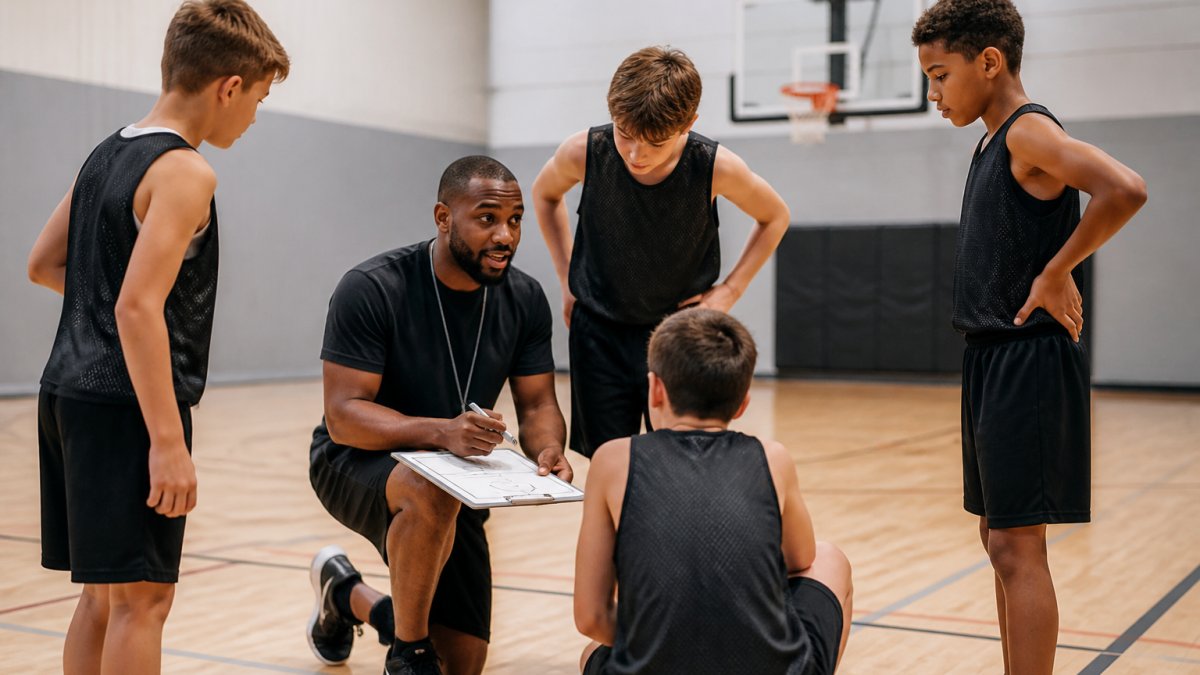
 ultimate-guide
What to Expect at Rep Basketball Practice
Table of Contents
- What Is Rep Basketball and How It Differs From Recreational Play
- A Day-in-the-Life: What Happens During a Rep Basketball Practice Session
- Basketball Skill Development Training at the Rep Level
- Rep Basketball Tryout Tips: How to Stand Out
- Understanding Rep Basketball Time Commitment
- The Physical and Mental Demands of Competitive Play
- Managing Burnout and Recovery in Rep Basketball
- Frequently Asked Questions
Last Updated: October 1, 2026
What Is Rep Basketball and How It Differs From Recreational Play
Rep basketball is competitive, team-based play where players are selected through tryouts and commit to regular practice schedules and tournament competition. The term "rep" refers to representation, these teams compete at higher levels in organized leagues. Unlike recreational basketball, which emphasizes fun and basic skill exposure, rep basketball demands serious commitment: structured practice, competitive selection, and higher game intensity.
Rep teams use tryouts to evaluate skill level, basketball IQ, and coachability, then build a cohesive roster working toward competitive goals, unlike recreational programs that accept all interested players.
Tier 1 Sports' rep basketball program for ages 11-16 bridges skill development and competitive play, prioritizing player growth and individual potential through structured coaching and game-speed intensity.
A Day-in-the-Life: What Happens During a Rep Basketball Practice Session
A typical rep basketball practice runs 60-90 minutes with deliberate structure: developing individual skills, reinforcing team concepts, and preparing players for game-speed intensity.
Warm-Up and Dynamic Stretching
The first 10-15 minutes include light jogging and dynamic warm-up (high knees, lateral shuffles, arm circles) to elevate heart rate. Dynamic stretching improves performance and reduces injury risk compared to static stretching.
Coaches observe movement quality, energy, and focus during warm-up, discipline starts here.
Skill-Focused Drills and Ball Handling Work
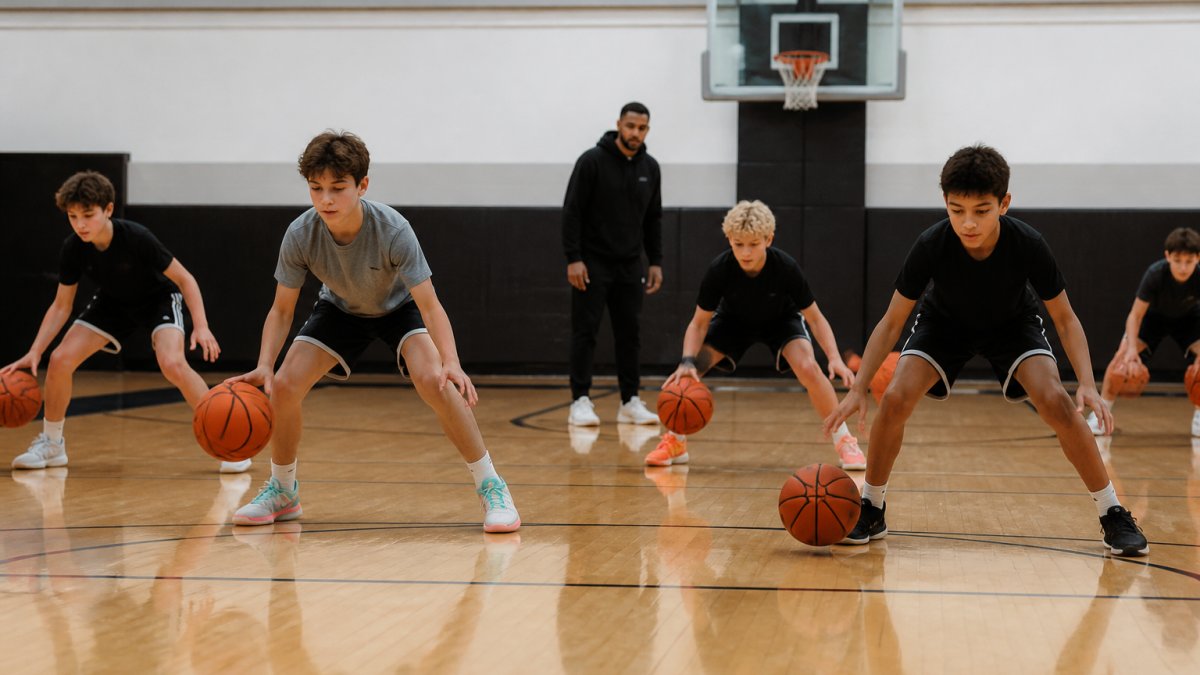
Coaches isolate specific skills through ball handling drills: dribbling mechanics, crossover moves, and control under pressure, the foundation every competitive player needs.
Rep practice includes cone dribbling, one-on-one defensive pressure, layup progressions, and shooting form work. Coaches correct technique immediately with individualized feedback, every mistake becomes a teaching moment, separating rep basketball from recreational play.
Offensive Sets and Defensive Rotations
Coaches teach offensive sets and defensive rotations, requiring players to read defenses, anticipate, and make quick decisions. This chess-like thinking separates rep basketball from recreational play.
Game-Speed Scrimmages and Competition
The final 15-20 minutes feature game-speed scrimmages where players apply practiced skills against live opponents. Scrimmages reveal who executes under pressure and makes smart decisions when fatigued.
Basketball Skill Development Training at the Rep Level
Rep basketball demands rapid skill improvement through focused, progressive drills. Ball handling, shooting form, and footwork become consistent under pressure. Every repetition builds measurable improvement in game-speed performance, reinforcing commitment and confidence.
Rep Basketball Tryout Tips: How to Stand Out
Tryouts determine rep basketball entry. Standing out requires preparation, mental toughness, and understanding what coaches evaluate in the first 90 seconds and throughout.
What Coaches Watch in the First 90 Seconds
In the first 90 seconds, coaches observe: posture and movement quality (confident vs. hesitant), ball familiarity (control and weak-hand dribbling), and effort level during warm-ups (explosive vs. lazy). Players who move with purpose and attack every movement stand out immediately.
Specific Evaluation Criteria Throughout Tryouts
Coaches evaluate ball handling under pressure: weak-hand dribbling, control against aggressive defense, and decision-making when pressured. Hundreds of prior repetitions show immediately; this isn't coachable in a single tryout.
Coaches watch for basketball IQ: passing to open teammates, moving without the ball, reading pick-and-rolls, and defensive recovery. High-IQ players make simple, correct plays repeatedly and make teammates better.
Coaches evaluate defensive stance, footwork, focus, and communication. Defense often differentiates at tryouts; players who compete hard defensively signal coachability and team-first mentality.
Coaches assess conditioning through transition drills and extended scrimmages. Players who maintain intensity, sprint repeatedly, and make good decisions when fatigued stand out. Pre-tryout conditioning provides a massive advantage.
Coachability is often the most important factor. Coaches want players who adjust immediately to feedback, ask clarifying questions, apply corrections in the next repetition, and stay positive after mistakes. A player with slightly lower skill but exceptional coachability often makes the roster over a more talented player with a poor attitude.
Concrete Preparation Steps Before Tryouts
Four weeks prior: Run 2-3 times weekly, mixing steady-state runs with interval training.
Three weeks prior: Spend 20-30 minutes daily on dribbling drills, emphasizing weak-hand work.
Two weeks prior: Take 100-150 shots daily from consistent spots, focusing on form.
One week prior: Play competitive basketball to expose yourself to game speed and decision-making pressure.
Day before: Rest, sleep 8+ hours, hydrate, eat balanced meals.
Day of: Arrive 15 minutes early, warm up thoroughly, wear clean practice gear, bring two water bottles.
Mental Toughness During Tryouts
How players respond to mistakes matters more than the mistake itself. Stay mentally present when sitting out, compete hard against better defenders, and maintain intensity when tired, this demonstrates the mental toughness rep basketball requires.
What NOT to Do at Tryouts
Don't force shots or try to beat everyone one-on-one (poor IQ). Don't complain about calls or blame others (red flag for coachability). Don't arrive unprepared or late (signals lack of seriousness).
Standing out at tryouts isn't about being the most talented player in the gym. It's about arriving prepared, competing with intensity, making smart decisions, responding to feedback, and demonstrating the mental toughness that rep basketball demands.
Understanding Rep Basketball Time Commitment
Rep basketball demands serious commitment from players and families, extending beyond practice to include travel, equipment, recovery, and coach communication.
Practice and Competition Schedule
A typical schedule includes 2-4 practices weekly (60-90 minutes), monthly tournaments (September-March), off-season conditioning, and game-day preparation. This competes with school, other sports, and family time. Parents should discuss commitment honestly before tryouts; players who resent the time commitment may burn out within a season. Managing this rigorous schedule also requires streamlining the logistics of youth sports gear to ensure athletes remain prepared for every session without adding unnecessary stress to the family routine.
Travel Logistics and Costs
Most rep teams compete in 8-12 tournaments per season. Families should budget for travel, accommodation, and meals. Some teams organize group travel or carpools to reduce costs.
Equipment and Gear Requirements
Essential gear includes basketball shoes, practice/game jerseys, compression shorts, socks, water bottle, and gym bag. Recovery gear includes foam roller, ice pack, resistance bands, and massage ball. Optional items include training shoes, shooting sleeve, and mouth guard. Confirm what teams provide before assuming costs.
Recovery and Load Management
The intensity and frequency of rep basketball create real injury and burnout risk. Young athletes need structured recovery to stay healthy and maintain passion for the game.
Players need 8-10 hours sleep nightly, 1-2 complete rest days weekly, and balanced nutrition with adequate protein and hydration. Active recovery includes easy shooting or non-basketball activities. Daily stretching and foam rolling maintain mobility and reduce soreness. Coaches should periodize training, varying intensity and volume to prevent overtraining.
Parent-Coach Communication Protocols
Playing time conversations are sensitive. Wait 24-48 hours after games, request formal meetings, and ask specific questions about skill development. Listen more than you talk; coaches see competitive situations parents don't. Focus on development, not outcomes.
For coaching concerns, observe practice first, then schedule private conversations. Be specific and respectful. For injuries, inform the coach immediately with specifics and follow medical advice. Communicate positively: thank coaches, share growth observations, and ask how you can support development.
What NOT to do:
- Don't text or email the coach during games or immediately after.
- Don't discuss playing time or coaching decisions on team chat groups or social media.
- Don't undermine the coach's authority with your child ("I disagree with the coach, but...").
- Don't expect the coach to give your child special treatment.
- Don't attend every practice uninvited; most coaches prefer parents to drop off and pick up.
Balancing Rep Basketball With School and Other Commitments
Rep basketball is demanding, but it shouldn't consume a player's entire life. Players who feel they have no life outside basketball often burn out.
Maintain friendships outside the team. Teammates become close, but having friends outside basketball provides perspective and prevents isolation.
Pursue other interests. Whether it's music, art, academics, or other sports, having pursuits beyond basketball keeps life balanced and prevents over-identification with a single activity.
Prioritize school. Basketball is important, but education comes first. Players who fall behind academically due to basketball commitments face long-term consequences. Coaches should support, not undermine, academic priorities.
Have family time. Regular family dinners, weekend activities, and vacations matter. Rep basketball shouldn't eliminate family connection.
The Physical and Mental Demands of Competitive Play
Rep basketball pushes players physically and mentally in ways recreational play doesn't. Understanding these demands helps families decide if their child is ready.
Managing Burnout and Recovery in Rep Basketball
The intensity and time commitment of rep basketball create real burnout risk. Young athletes can lose passion for the game if they're overtrained, overscheduled, or pushed too hard without adequate recovery.
Frequently Asked Questions
How does rep basketball practice differ from recreational sessions?
Rep basketball practice emphasizes competitive intensity, structured skill development, and team strategy. Sessions include game-speed drills, offensive sets, defensive rotations, and scrimmages where coaches evaluate decision-making and basketball IQ. Recreational practices focus on fun and basic skill introduction with less pressure and lower game intensity. Rep players also face higher conditioning demands and are expected to develop individual skills outside of team sessions.
What rep basketball tryout tips will help my child stand out?
Focus on fundamentals: ball handling, accurate shooting, and defensive positioning. Show basketball IQ by understanding spacing and making smart passes. Demonstrate mental toughness by responding positively to coaching feedback and staying engaged during drills. Arrive early, ask questions, and work hard during every rep, coaches notice effort and coachability. Practice layups and footwork before tryouts, and condition yourself so fatigue doesn't affect your performance in the final minutes.
What is the typical time commitment for a rep basketball player?
Rep basketball typically requires a significant time commitment during the season, including team practices, tournaments, and games. Many programs also expect players to train individually to develop ball handling, shooting, and coordination exercises. Travel to tournaments may add weekend commitments. Parents should budget for equipment, tournament fees, and travel costs as part of the overall commitment.
Do coaches expect players to practice skills outside of team sessions?
Yes. Coaches expect rep players to work on individual skills independently, shooting, dribbling, footwork, and agility drills. This outside training is essential for player development and competitive advancement. Players who invest in off-court development progress faster, earn more playing time, and demonstrate the discipline coaches value in competitive environments.