 Ultimate guide
How Early Basketball Training Shapes Athletic Development
Last Updated: November 13, 2026
Quick Summary
Early basketball training builds physical literacy, balance, coordination, and ball handling that make later skills easier to learn. The impact is cumulative, so age-appropriate basketball training should follow developmental readiness rather than ambition, with fundamentals before flashy skills.
- Ages 4 to 6 focus on physical literacy through short, playful games rather than drills.
- Ages 7 to 10 are the golden window for structured dribbling, passing, and shooting repetition.
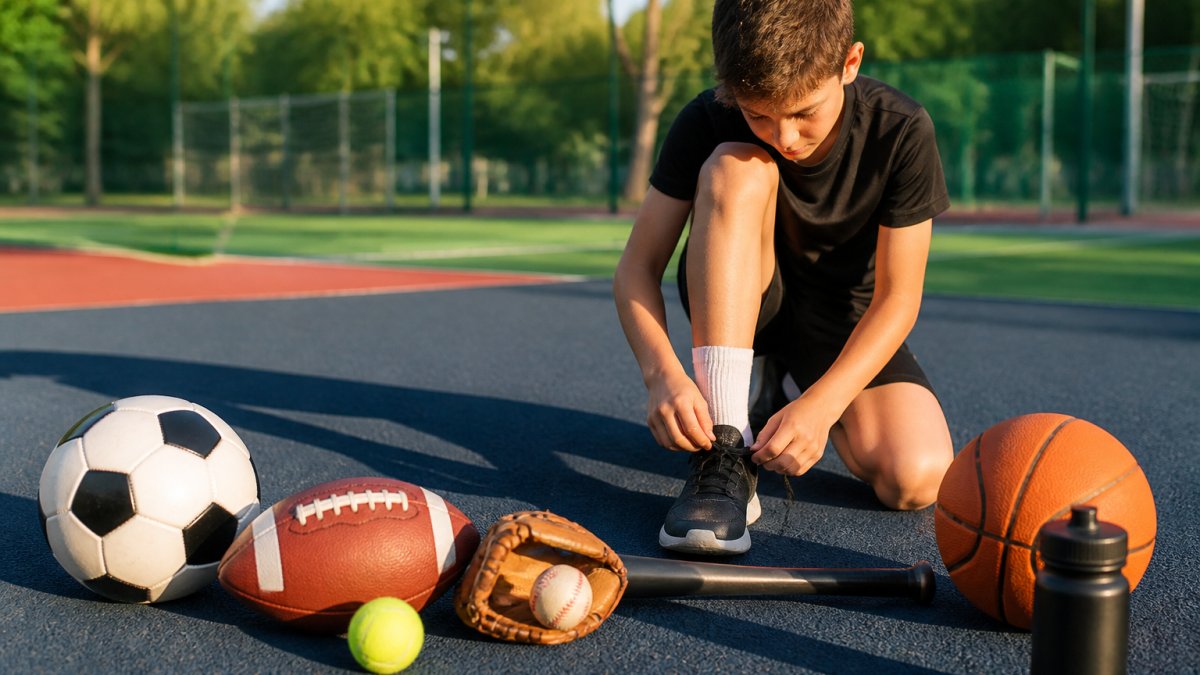
- Encourage multi-sport participation until roughly age twelve before allowing specialization.
- Keep weekly training hours roughly aligned with the child's age in years.
- Schedule at least one full rest day per week and monitor persistent soreness.
Table of Contents
- Why Early Basketball Training Matters for Athletic Development
- Youth Basketball Training by Age: What Each Stage Needs
- Early Sports Specialization in Basketball: What the Evidence Says
- Basketball Training for Kids: Building Fundamentals Before Flash
- Youth Basketball Injury Prevention and Workload Management
- Monitoring Growth, Recovery, and Long-Term Development
- Finding the Right Program for Your Child's Next Step
- Frequently Asked Questions
Why Early Basketball Training Matters for Athletic Development
Early basketball training builds the physical literacy that underpins every sport a child will ever play. Kids who develop movement fundamentals young tend to arrive at age ten able to skip, hop, and change direction cleanly. The impact of early basketball training on athletic development is cumulative: balance, coordination, and ball handling learned at five make the skills taught at twelve far easier to absorb.
The research picture here is less about producing prodigies and more about foundations. Canadian Paediatric Society guidance on physical activity for children emphasizes that general movement competence, not sport-specific specialization, should anchor early childhood activity. That distinction shapes everything below.
ParticipACTION's report card on physical activity for children and youth has repeatedly highlighted how few young children meet basic movement benchmarks. Basketball, done age-appropriately, is an efficient way to close that gap.
For a closer look at the right starting age, our guide on what age a child should start basketball walks through the signs of readiness.
Youth Basketball Training by Age: What Each Stage Needs
Youth basketball training by age should follow developmental readiness, not ambition. A five-year-old and a fifteen-year-old need entirely different training volumes, intensities, and coaching styles. The most useful way to apply that principle is to translate it into concrete weekly schedules, session shapes, and progression criteria, the part most guides leave out.
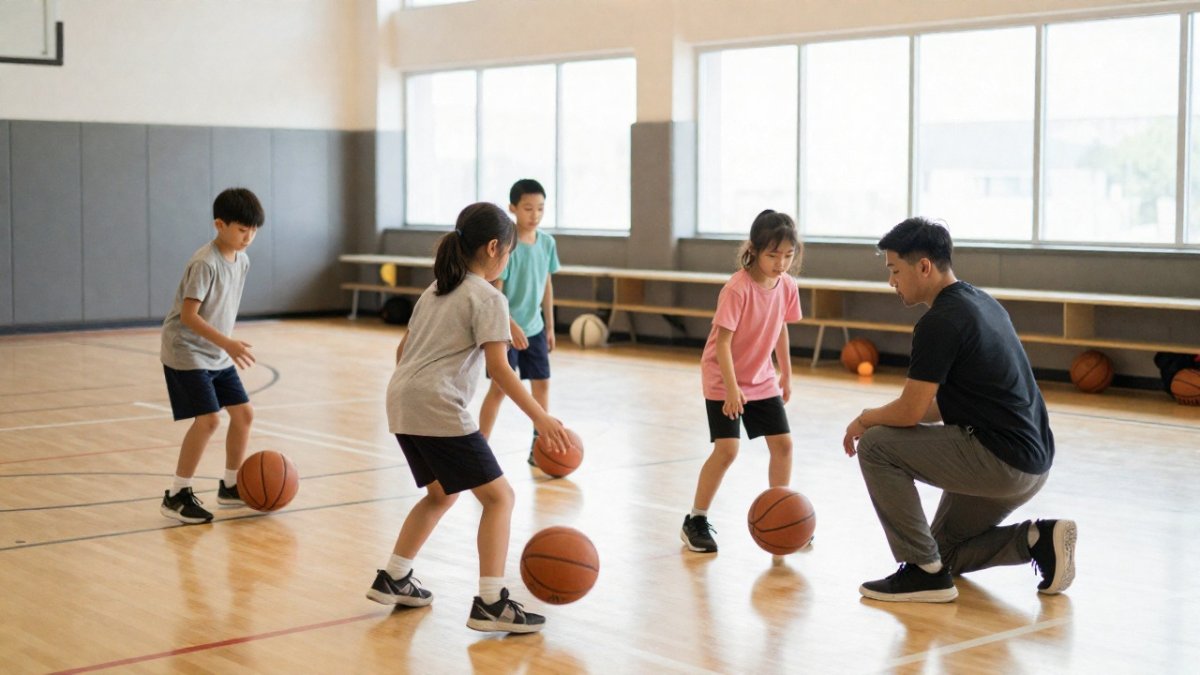
Ages 4 to 6: Movement Foundations and Fun
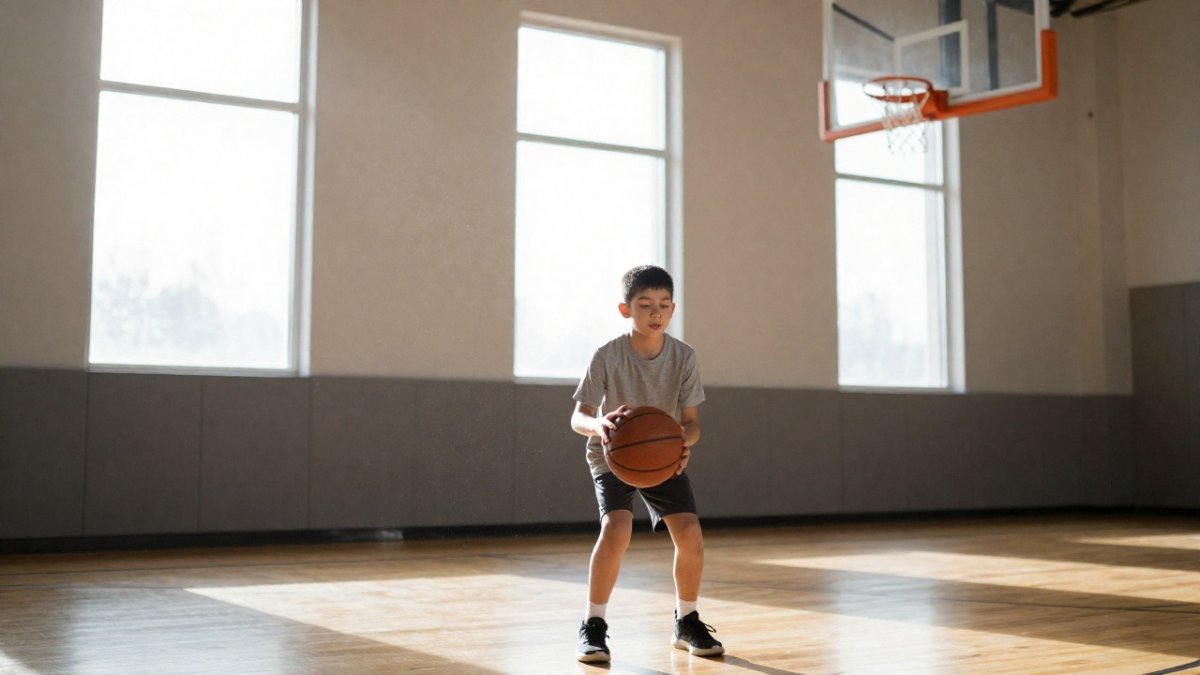
At this stage, the goal is physical literacy: running, jumping, hopping, balancing, and handling a ball without fear. Sessions should be short, playful, and built around games rather than drills. Coordination and balance come first; shooting form can wait.
Progression criteria for this band: the child can run and stop under control, hop on each foot, catch a small ball with two hands, and dribble a small ball while walking without looking down constantly. If those are not yet in place, repeat the same games rather than adding new skills.
Our Ball For Fun program for ages 4-7 is built exactly for this: small basketballs, simple games, and coaches who kneel to the child's level.
Ages 7 to 10: The Golden Window for Skill Acquisition
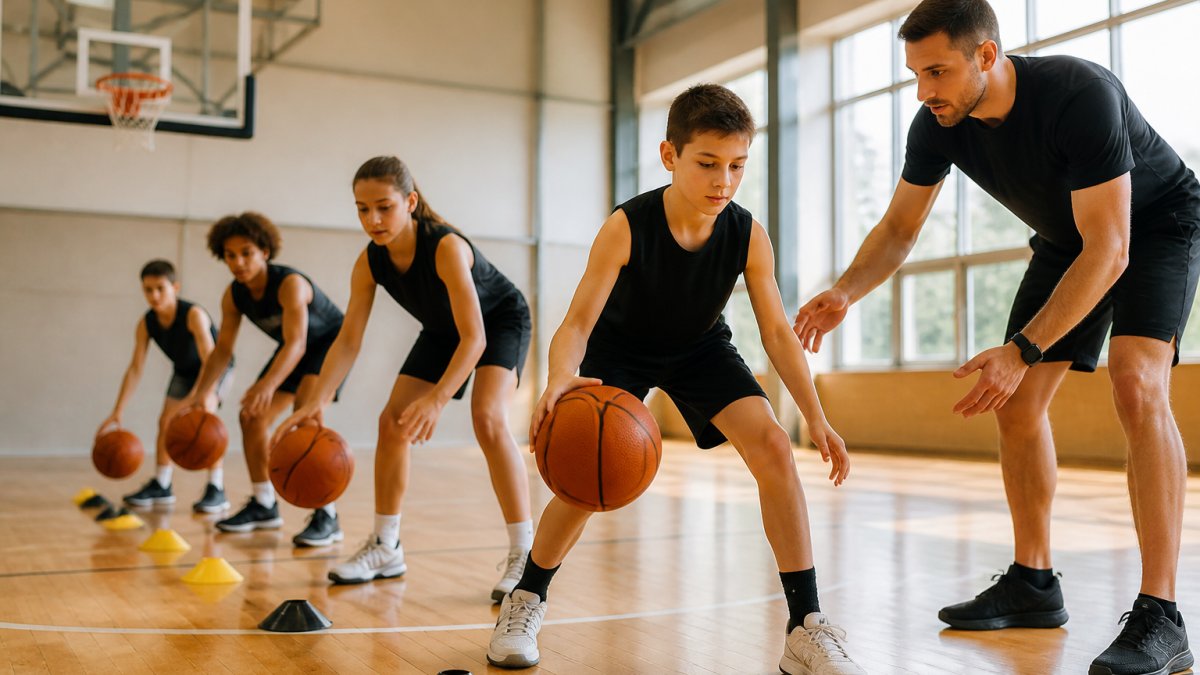
This is the developmental window where motor skills stick. Children in this band respond exceptionally well to structured dribbling, passing, and shooting repetition. Ball handling drills, two-foot jump stops, and simple defensive footwork belong here.
Progression criteria: the child can dribble with both hands while moving, make a two-foot jump stop, complete a chest and bounce pass to a moving partner, hold a defensive stance and slide without crossing feet, and shoot with a repeatable close-range form. Move to the next layer only when these are consistent, not when they have been attempted once.
If you want the full explanation of why this window matters, read our breakdown of the youth basketball golden window.
Ages 11 to 16: Strength, Speed, and Competitive Readiness
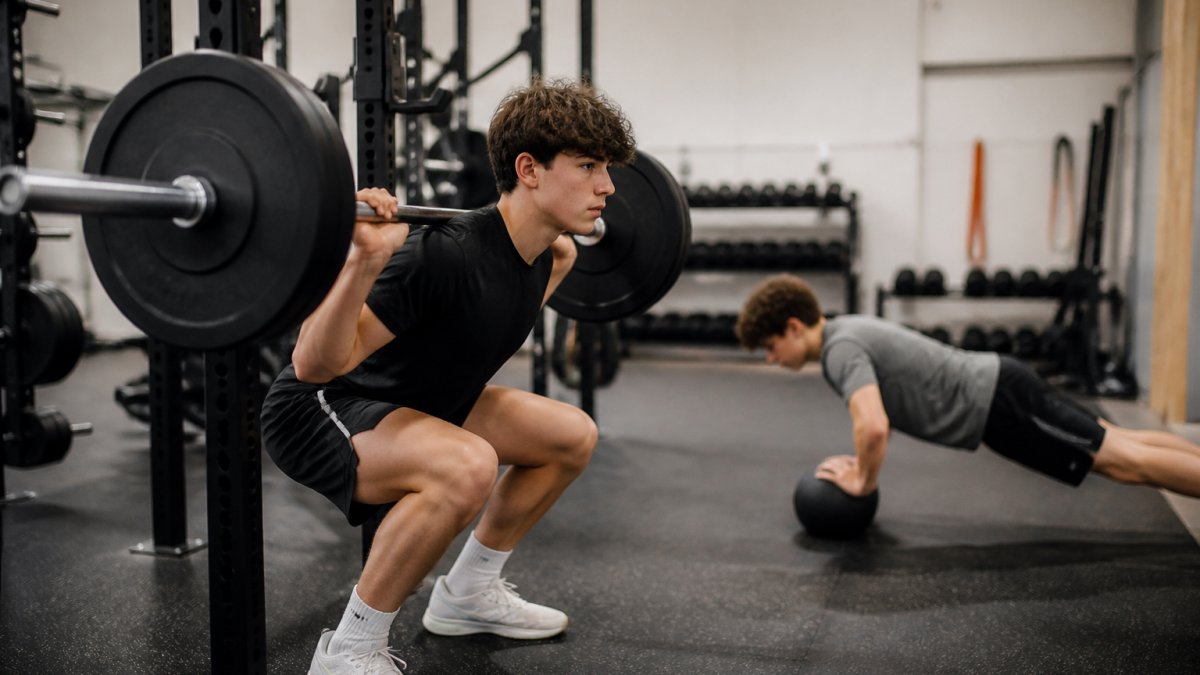
Older athletes can begin structured strength and conditioning, speed and agility work, and progressive loading. Growth and maturation vary enormously here, so coaches should judge readiness by movement quality and training age, not birth year. Competitive rep basketball becomes appropriate for players who have built the foundation.
Progression criteria: the athlete can perform a bodyweight squat and hinge with clean form, land from a jump with knee control, change direction under control, and complete a full practice without lingering soreness. Strength loads should rise only when movement quality holds. During rapid growth periods, reduce volume and prioritize coordination and mobility over maximal loading.
Across all three bands, the same rule applies: the schedule should fit the child's total week, not just the basketball week. A child in two sports plus school physical education is already accumulating load, and the basketball schedule should account for that rather than stack on top of it.
Each developmental band has its own focus and progression criteria.
| Age band | Focus | Progression criteria |
|---|---|---|
| Ages 4 to 6 | Physical literacy through short, playful games | Run and stop under control, hop on each foot, catch, dribble while walking |
| Ages 7 to 10 | Structured dribbling, passing, shooting repetition | Dribble both hands while moving, two-foot jump stop, chest and bounce pass |
| Ages 11 to 16 | Strength and conditioning, speed and agility, progressive loading | Bodyweight squat and hinge, land with knee control, change direction under control |
Early Sports Specialization in Basketball: What the Evidence Says
Early sports specialization in basketball is not required for elite performance, and the evidence increasingly argues against it. Youth athletes who play multiple sports through childhood tend to develop broader movement skills and lower overuse injury risk than those who specialize before puberty.
A common approach among development coaches is to encourage multi-sport participation until roughly age twelve, then allow specialization to narrow naturally as the child's interest and aptitude clarify. Basketball training for kids fits this model well because the sport itself develops agility, coordination, and aerobic base that transfer to almost anything.
What most guides miss is the psychological side. Children who diversify tend to stay in sport longer, which matters more for long-term athletic development than any single-season advantage.
Basketball Training for Kids: Building Fundamentals Before Flash
Basketball training for kids should prioritize fundamentals over highlight-reel skills. Dribbling with both hands, passing accuracy, shooting mechanics, and defensive stance are the building blocks. Crossovers and step-backs can wait until the base is solid.
- Dribbling: stationary ball handling, then movement, then pressure
- Passing: chest pass, bounce pass, overhead pass with proper footwork
- Shooting: close-range form first, distance later
- Defense: stance, slide, and anticipation
The temptation to chase flash is real. Resist it. A player with clean fundamentals at twelve will outperform a player with flashy handles and no defensive stance every time.
Youth Basketball Injury Prevention and Workload Management
Youth basketball injury prevention starts with workload management. Overuse injuries in young athletes often trace to spikes in training volume, insufficient recovery, and repetitive loading without variation.
A practical weekly monitoring routine has four parts:
- Load ledger. Record total basketball minutes each week, including club practice, school team, private lessons, and games. A common guideline among youth coaches is to keep weekly training hours roughly aligned with the child's age in years, and to avoid week-to-week increases above roughly 10 percent. The ledger makes spikes visible before they become injuries.
- Rest and sleep check. Note at least one full rest day per week and track sleep duration. Most practitioners find that sleep is the first thing to slip when schedules stack, and it is also the strongest single recovery signal a parent can observe.
- Soreness and pain log. Record any soreness that lasts more than a day, especially in knees, ankles, and shoulders. Persistent pain is a load problem until proven otherwise, not a toughness problem.
- Growth tracking. Note height changes and any sudden clumsiness or loss of coordination. A child who suddenly looks slower or clumsier may be in a growth spurt, not losing skill. During rapid growth periods, reduce volume and prioritize movement quality over maximal loading.
Read the four together each week. A week with rising minutes, falling sleep, new soreness, and a growth spurt is a week to cut volume, not add a private lesson. A week with stable minutes, good sleep, and no soreness is a week where progression is reasonable.
Practical safeguards that follow from the ledger:
- Keep weekly training hours roughly aligned with the child's age in years
- Schedule at least one full rest day per week
- Monitor for persistent soreness, especially in knees and ankles
- Build strength and mobility work into every program
Our guide to common basketball injuries in youth athletes covers prevention in more detail.
Safe Kids Canada guidance on youth sports safety reinforces that recovery and supervision are foundational to keeping young athletes healthy.
Monitoring Growth, Recovery, and Long-Term Development
Growth and maturation change everything about how a young athlete responds to training. Two children of the same age can differ by years in biological maturity, which affects strength, speed, and injury risk.
Coaches and parents should track three things: training load, sleep and recovery, and movement quality. A child who suddenly looks slower or clumsier may be in a growth spurt, not losing skill. Adjust volume down during rapid growth periods and prioritize movement quality over maximal loading.
Safe Kids Canada guidance on youth sports safety reinforces that recovery and supervision are foundational to keeping young athletes healthy.
Finding the Right Program for Your Child's Next Step
Finding the right program comes down to matching your child's stage to the coaching philosophy. Ask three questions: Does the program group by developmental readiness? Does it balance game time with skill work? Does the coaching staff prioritize long-term participation over short-term wins?
Our guide on choosing the right basketball club covers the full checklist. At Tier 1 Sports, we run programs for every stage from introductory sessions to competitive rep basketball, with coaching built around skill development and a genuine love for the game. All programs are generously sponsored by Real Estate Broker David Robbio.
The gap between a child who loves sport for life and one who quits at twelve usually comes down to whether the early years were built on fun and fundamentals. Tier 1 Sports designs every age group around that principle, from introductory sessions for beginners through competitive rep pathways, with coaching that develops skills and fuels a lifelong passion for the game. Get started with Tier 1 Sports and give your child a pathway built for long-term athletic growth.
Frequently Asked Questions
How does early basketball training affect athletic development?
Early basketball training builds fundamental movement skills like coordination, balance, and agility that carry into other sports. Research on long-term athlete development shows that children who start structured basketball training at ages 4 to 6 develop better physical literacy and motor skills than those who start later. The key is age-appropriate training that focuses on fun and movement rather than competition, which supports both skill acquisition and a lasting enjoyment of physical activity.
What age should a child start basketball training?
Most children can begin introductory basketball training around age 4 or 5, when they have enough coordination to run, jump, and handle a small ball. Programs for this age should emphasize movement games, balance, and basic ball handling rather than structured drills. Between ages 7 and 10, children enter a key window for skill acquisition, making this an ideal time for more focused basketball training for kids. Starting early with age-appropriate programs supports long-term athletic development without pushing too hard.
Can early specialization in basketball increase injury or burnout risk?
Yes, early sports specialization in basketball, where a child plays only one sport year-round before puberty, is linked to higher rates of overuse injury and burnout. Youth basketball injury prevention guidelines recommend multi-sport participation and adequate rest periods. Children who play multiple sports develop broader movement skills and reduce repetitive stress on growing joints. Diversified participation through early adolescence supports better long-term athletic development and keeps kids engaged in physical activity.
How much basketball training is appropriate for young athletes?
Training volume should match a child's developmental stage. Younger children generally benefit from shorter, movement-focused sessions, while older athletes can handle more training, including strength and conditioning, with at least one full rest day each week. Monitoring workload and recovery helps prevent overuse injury and supports steady progress in youth basketball training by age.