 how-to
What to Look For in a Youth Basketball Coach
Table of Contents
- Start With a Clear Youth Basketball Coaching Philosophy
- Signs of a Good Youth Sports Coach
- What Age-Appropriate Coaching Looks Like for Ages 4 to 16
- Red Flags and Warning Signs to Watch For
- Safety, Background Checks, and Certification Requirements
- Evaluating the Best Basketball Coaching for Kids
- Questions to Ask Before You Commit
- Frequently Asked Questions
Last Updated: September 14, 2026
Start With a Clear Youth Basketball Coaching Philosophy
A youth basketball coach's philosophy determines how practices run, how mistakes are handled, and whether your child leaves the gym wanting to come back. At Tier 1 Sports, the coaches who keep players engaged for years all coach development first, scoreboards second. Fostering such a positive environment often builds lasting bonds between mentors and athletes, making thoughtful gifts for coaches a meaningful way to acknowledge the impact of their guidance.
Winning feels urgent; development is what lasts. A coach who understands the difference builds players who improve year over year instead of peaking at twelve.
How to Spot a Development-First Approach
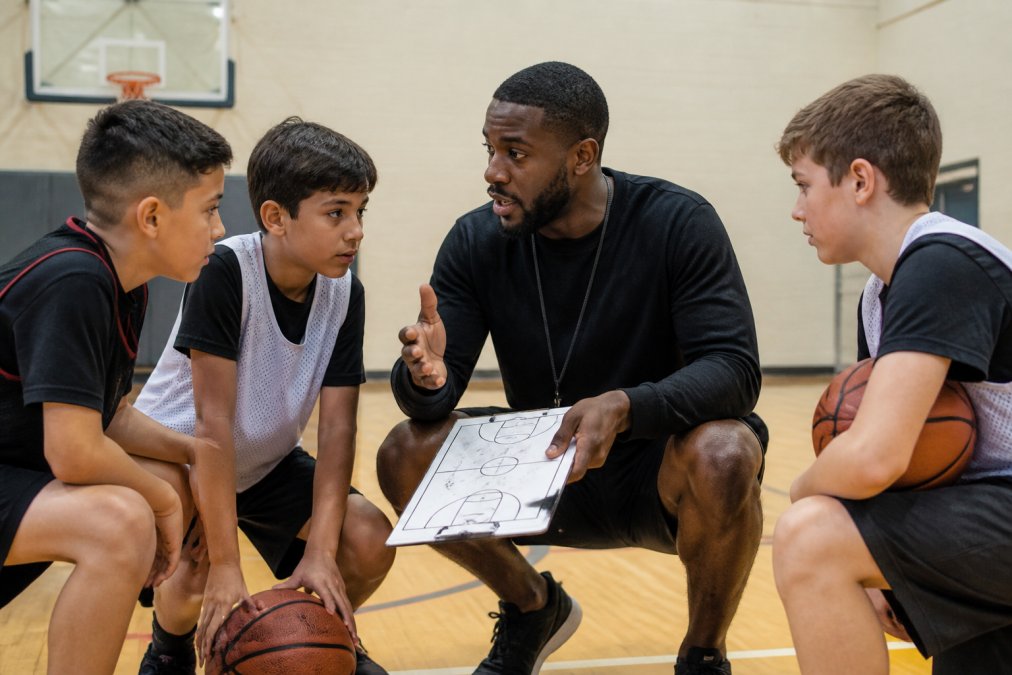
A development-first coach talks about specific players getting better: a guard who finally learned to use her left hand, a forward who stopped rushing his shot. A win-first coach recites the record.
Watch for these signals during a practice or tryout:
- Every player gets meaningful reps, not just the strongest five
- Drills connect to game situations rather than running on autopilot
- Coaches correct mistakes without shaming the player who made them
- Playing time reflects effort and improvement, not just raw talent
The Coaching Association of Canada's philosophy guidance frames this well: sport should build physical literacy and confidence before it chases results.
Signs of a Good Youth Sports Coach
The clearest sign of a good youth sports coach is that players want to return next season. Retention separates coaches who build athletes from those who burn them out.
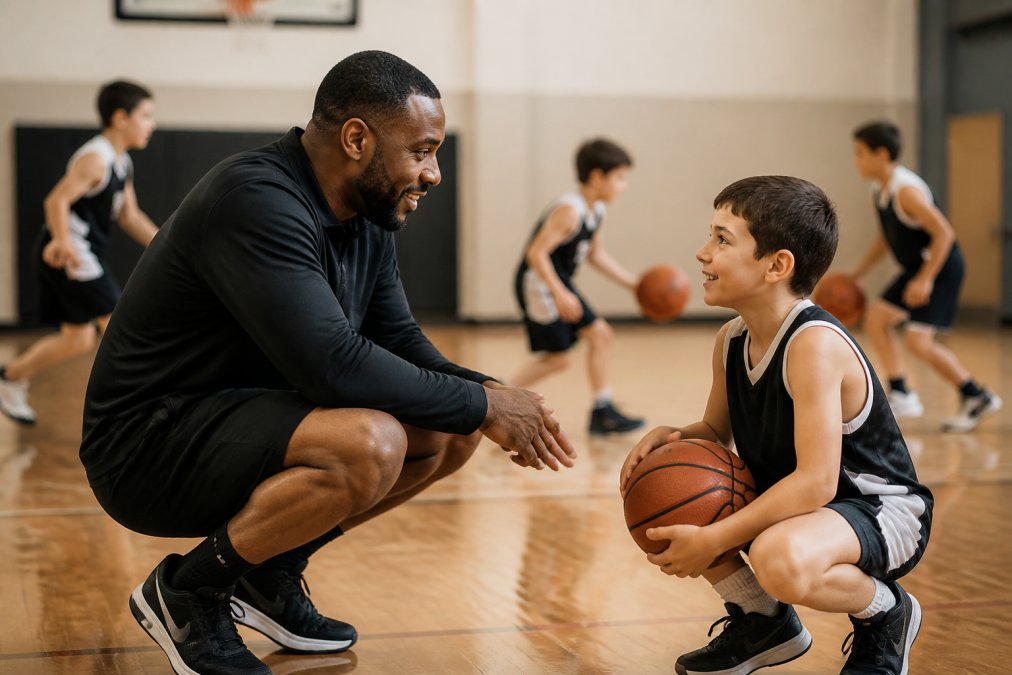
Look past the whistle. Good coaches share recognizable habits:
- They communicate at the player's level. Instructions are short, concrete, and age-appropriate. A five-year-old hears "bend your knees," not a lecture on biomechanics.
- They reinforce effort, not just outcomes. Positive reinforcement after a missed shot keeps kids trying. Criticism without encouragement shuts them down fast.
- They stay patient under pressure. A coach who yells at a nine-year-old for a bad pass teaches that mistakes are dangerous.
- They model sportsmanship. How a coach treats referees, opponents, and bench players is exactly how the kids will treat each other.
- They plan practices. Sessions with clear structure and skill progression show a coach who takes the job seriously.
These traits matter more than playing experience. A former college player with no patience is a worse fit for your seven-year-old than a modest player who genuinely teaches.
What Age-Appropriate Coaching Looks Like for Ages 4 to 16
Age-appropriate coaching means matching expectations to a child's stage of development, not their birthday alone. A program running the same drills for a five-year-old and a fifteen-year-old is babysitting with a scoreboard.
The coach who is perfect for your seven-year-old can be exactly wrong for your fourteen-year-old. Here's how the job changes across the age range.
| Age Group | Primary Focus | Practice Style | What Success Looks Like | Coach's Real Job |
|---|---|---|---|---|
| 4-6 | Fun and coordination | Games, short activities | Child wants to come back | Keep them moving and smiling |
| 7-10 | Fundamental skills | Skill stations, small-sided games | Dribbling, passing improve | Teach technique patiently |
| 11-13 | Skill refinement | Structured drills, game concepts | Confidence with the ball | Build decision-making |
| 14-16 | Positional play, strategy | Team systems, conditioning | Competing at a rep level | Prepare for higher competition |
Ages 4 to 6: The Job Is Retention, Not Technique
At this stage, a coach's only real KPI is whether kids come back next week. Attention spans run short, so a good coach uses games, tag variants, relay races, dribbling to music, rather than lines and lectures. Constant motion, laughter, and very short instructions is the right fit.
Don't expect shooting form correction. Expect a coach who gets down on the floor, uses a child's name constantly, and turns a missed shot into a high-five.
Ages 7 to 10: The Skill-Building Years
This is where real technical habits form. A coach should teach footwork, hand positioning, and basic passing mechanics, not a scaled-down adult offense. Small-sided games (3-on-3, 4-on-4) force every player to touch the ball and make decisions.
Ask a coach at this level how they teach a layup. A development-first answer breaks it into steps: footwork first, then the finish, then adding a dribble. A win-first answer is "we just run layup lines." The difference shows up two years later.
Ages 11 to 13: Decision-Making Under Pressure
By this stage, most players have the physical tools. What separates them is reading a defense, passing under pressure, and recovering from mistakes. A good coach introduces concepts, pick-and-roll reads, help defense, spacing, then drills them live.
Playing time decisions also get harder here. A coach who only plays the strongest eight isn't developing the bottom of the roster, and by fourteen those players are gone. Look for a coach who can explain how every player gets meaningful minutes.
Ages 14 to 16: Preparing for Higher Competition
At this level, the coach's job shifts toward positional specialization, conditioning basics, and preparing players for rep, provincial, or post-secondary pathways. Practices get longer and more structured, and the coach should explain the team's system.
If your child has college or university ambitions, ask about pathway support. A coach who has never helped a player navigate recruitment may not be right for that goal.
Motor Skill Development and the Golden Window
The "Golden Window" refers to the childhood years when fundamental movement skills are easiest to learn, roughly ages 6 to 12, when the brain and body are highly adaptable.
Skills learned in this window, balance, coordination, basic ball control, become the foundation for everything more advanced. A player who misses it isn't doomed, but catching up takes deliberate work.
A good coach at this stage builds athleticism alongside basketball skills. Running, jumping, and changing direction matter as much as shooting form.
Red Flags and Warning Signs to Watch For
Red flags in youth coaching usually show up in how a coach handles losing, mistakes, and playing time. One or two bad moments aren't disqualifying. Patterns are.
A single sharp comment after a bad loss is different from a season-long pattern of benching kids for errors. Here's how to tell the difference.
The Red Flags, Ranked by Severity
Dealbreakers, pull your child if these persist:
- Physical or verbal abuse. Yelling directed at a child's character ("you're useless"), throwing equipment, or any physical contact beyond appropriate instruction. This is not a style issue. It's a safety issue, and it should be reported to the club and, if warranted, to the appropriate authorities.
- Ignoring an injury. A coach who tells a child to "walk it off" after a twisted ankle or a hit to the head is putting the child at risk. Concussion protocols are not optional.
- Singling out a child for humiliation. Public shaming, sarcasm aimed at one player, or exclusion from team activities as punishment.
Serious concerns, raise them and watch for change:
- Bench punishment for mistakes. If a child sits after one error, the coach is coaching fear, not skill. Occasional bench time for effort or focus is normal; benching for a missed shot is not.
- Yelling as a default. Occasional raised voices happen in competitive moments. Constant yelling at children is a pattern worth addressing.
- Winning above all else. A coach who sacrifices development for a trophy is gambling with your child's long-term growth.
- No communication with parents. Coaches who dodge questions about philosophy or playing time are hiding something.
- Unequal treatment. If the coach's own child or a favorite never leaves the court, ask why.
Watch-list items, note them, but don't overreact:
- A coach who is stern but fair. Some of the best coaches are demanding. The test is whether players still want to be there.
- A coach who is new and still learning. Inexperience is not the same as poor character.
- A coach who loses their temper once and apologizes. Adults make mistakes too. What matters is whether they own it.
How to Tell a Pattern From a Bad Day
A single bad practice isn't a reason to pull your child; a pattern over three or four weeks is. Keep a simple log: date, what happened, how your child felt afterward. Write the same entry three times and you have a pattern.
Watch your child, not just the coach. Kids who suddenly dread practice, stop talking about the team, or fake illness on game day are telling you something.
How to Raise a Concern Without Burning the Relationship
Most coaches respond better to a direct, private conversation than an email chain or a parking-lot confrontation:
- Ask for a private conversation. Not before a game, not in front of other parents. A short call or a scheduled chat after practice.
- Lead with the behavior, not the label. "I noticed Emma sat for most of the second half after one turnover" is better than "you're not fair to my daughter."
- Ask a question before making a demand. "Can you help me understand how you decide playing time?" opens a conversation. "You need to play her more" closes one.
- State what you need. If the issue is playing time, say so. If it's tone, say so. Coaches can't fix what they don't know about.
- Give it two weeks. If nothing changes, escalate to the program director or club administrator. If it still doesn't change, you have your answer.
When to Pull Your Child
Pulling a child mid-season is disruptive and a last resort, but sometimes it's the right call:
- The coach has crossed into abuse, neglect of injury, or humiliation.
- You've raised the concern through the proper channels and nothing changed.
- Your child's mental health or love of the game is visibly suffering.
- The environment is unsafe and the club is not addressing it.
If you do pull your child, leave cleanly. Don't badmouth the coach or make your child feel like they failed. The goal is to protect your child's relationship with the sport, not win an argument with an adult.
Safety, Background Checks, and Certification Requirements
Safety verification is the step parents skip most often, and it matters most. Before your child steps on a court, confirm the program's screening and certification practices.
In Canada, coaching credentials are typically built on the National Coaching Certification Program, which includes training in safety, ethics, and working with young athletes. Many reputable clubs also require a vulnerable sector check, a police screening designed to protect children. Ask directly:
- Does the club run a vulnerable sector check on every coach and volunteer?
- Are coaches certified through the National Coaching Certification Program?
- Is there a written safety protocol for injuries and emergencies?
- Who supervises the gym, and is there a clear ratio of adults to children?
A club that answers these questions without hesitation takes safety seriously. One that deflects is telling you something.
Evaluating the Best Basketball Coaching for Kids
The best basketball coaching for kids balances skill development with a genuine love of the game, and it looks different for every family. There's no single best program, only the best fit for your child's age, goals, and personality.
This is where a community club with clear pathways helps. Tier 1 Sports runs programs tailored to specific age groups from 4 to 16, so a five-year-old in an intro session and a fourteen-year-old chasing a rep spot each get coaching built for their stage.
When you evaluate any program, weigh four things:
- Coaching philosophy. Development-first or win-first?
- Age-appropriate structure. Are sessions designed for your child's stage?
- Safety and certification. Are screenings and credentials in place?
- Pathway. Can your child progress from recreational to competitive if they want to?
Questions to Ask Before You Commit
Before you sign anything, ask the coach or program director a few pointed questions. Their answers, and how they answer, tell you whether your child will thrive.
- What does success look like for a player at my child's age?
- How do you handle mistakes and playing time?
- What certifications and background checks do your coaches hold?
- How do you communicate with parents during the season?
- Is there a pathway from recreational to competitive play?
- Can I speak with current parents or watch a practice?
The Canadian Centre for Ethics in Sport and similar bodies emphasize that youth sport should be safe, inclusive, and athlete-centered. A coach who welcomes these questions is a coach who's proud of their answers.
Finding the right youth basketball coach comes down to one question: does this person make my child better and more excited to play? That's the bar worth holding.
Tier 1 Sports was built around that idea. Our programs are tailored for specific age groups from 4 to 16, focused on developing skills and a lasting passion for the game, and structured so every player finds a pathway from introductory sessions to competitive rep basketball. The club is community-based, with all programs generously sponsored by Real Estate Broker David Robbio.
Get started with Tier 1 Sports and give your child a coach who develops the player and the person. Rep tryouts are open.
Frequently Asked Questions
What are the 5 C's of coaching in youth sports?
The 5 C's are competence, confidence, connection, character, and caring. A strong youth basketball coach shows competence through proper skill instruction and practice planning, builds confidence with positive reinforcement, connects with each player individually, models sportsmanship and ethics, and genuinely cares about athlete development beyond wins. When evaluating a coach, look for all five rather than just technical knowledge. Ask how they handle mistakes and whether players seem comfortable approaching them.
What are the red flags of a bad youth sports coach?
Watch for coaches who bench players for mistakes, yell at kids publicly, prioritize winning over skill progression, or lack clear safety protocols. Other warning signs include refusing to communicate with parents, having no certification or background check verification, and showing favoritism. A coach who cannot explain their coaching philosophy or who dismisses questions about athlete development is a concern. Trust your observations at practices and games.
How does a coach's approach impact long-term player development?
A development-first coach builds fundamental skills, dribbling mechanics, passing accuracy, and shooting form, before emphasizing game strategy. This approach keeps kids engaged through positive reinforcement and age-appropriate expectations, which matters most during early skill progression. Coaches focused only on winning may produce short-term results but risk burnout. Long-term athlete development depends on consistent, supportive coaching that values effort and improvement over the scoreboard.
How can parents identify a supportive coaching philosophy?
Ask the coach directly about their approach to winning versus learning, how they handle mistakes, and what role parents play. A supportive philosophy emphasizes player engagement, constructive feedback, and an inclusive environment. Observe a practice: do all kids get equal attention? Are drills designed for skill-based training? Does the coach encourage sportsmanship? A coach who welcomes parent questions and explains their methods is usually a good sign for your child's experience.