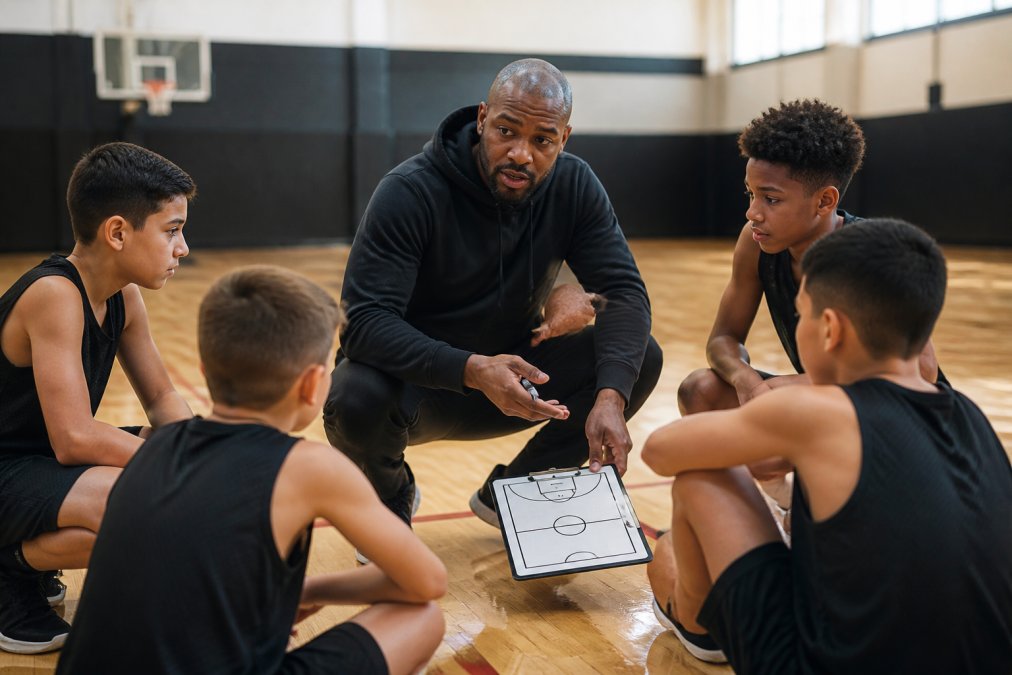
 ultimate-guide
Youth Basketball Coaching Philosophy Explained
Table of Contents
- What Is a Youth Basketball Coaching Philosophy?
- Core Values and Beliefs That Shape Your Coaching Identity
- Positive Coaching Strategies for Youth Sports
- Your Youth Basketball Player Development Plan
- A Youth Basketball Practice Plan Template That Works
- Communicating Your Philosophy to Players and Parents
- Conclusion: Put Your Coaching Philosophy Into Action
- Frequently Asked Questions
Last Updated: September 7, 2026
Every youth basketball coach has one, whether they have written it down or not. A coaching philosophy is the set of core values, beliefs, and priorities that guide every decision you make, from how you structure practice to how you react after a tough loss. Below, we will show you exactly how to build yours, communicate it, and put it into action this season.
What Is a Youth Basketball Coaching Philosophy?
A youth basketball coaching philosophy is your personal framework for why you coach and how you coach. It answers the fundamental questions: What do I want my players to learn? How should I treat them? And what matters more, winning games or developing people?
Most coaches fall into one of two camps. Some focus heavily on outcomes, measuring success by the scoreboard. Others prioritize process, judging success by effort, improvement, and character. The strongest philosophies blend both, but they start from a clear understanding of the coach's own priorities.
This philosophy becomes your anchor. When you face a decision, from playing time disputes to practice design, your philosophy tells you which choice aligns with who you are. Without it, you react to situations emotionally. With it, you respond intentionally.
Core Values and Beliefs That Shape Your Coaching Identity
Your coaching identity is built on a foundation of values you refuse to compromise. Common pillars include integrity, accountability, discipline, and a genuine care for each player as a person. These values are not just words on a wall; they are the standards you model every single day.
A useful exercise is to write down your top three values and then define what each looks like in action. For example, if accountability is a value, it means players own their mistakes without excuses. If sportsmanship is a value, it means you congratulate opponents sincerely, regardless of the score.
Your beliefs about how children learn also shape your approach. Many youth coaches believe that fundamental skills and a love for the game come before tactical complexity. This belief drives a philosophy centered on skill acquisition and positive reinforcement rather than complex schemes that young players cannot execute.
The critical nuance most coaching guides miss is that your philosophy must shift with the age of your players. A philosophy that works for a U8 team will fail with a U14 team, and vice versa. The most effective youth coaches intentionally adapt their values and priorities across three distinct developmental bands.
For players aged 6 to 8, your philosophy should center on fun, movement, and basic body control. At this age, the primary value is joy. Every drill should involve a ball, every player should touch the ball frequently, and the scoreboard should be irrelevant. Your belief system at this level is simple: if a child leaves practice smiling and wanting to come back, you have succeeded.
For players aged 9 to 12, the philosophy shifts to fundamentals and skill repetition (health.gov). This is the golden age of learning, where players can absorb technical instruction rapidly. Your values at this stage should emphasize mastery of core skills: dribbling with both hands, proper shooting form, and defensive stance. Competition becomes relevant, but development still outweighs winning. A common pattern among strong coaches at this level is to guarantee equal playing time in games while using practices to differentiate instruction based on skill level.
For players aged 13 and up, the philosophy evolves again to include accountability, tactical understanding, and competitive integrity. Players at this age can handle more complex concepts like offensive spacing, defensive rotations, and the emotional discipline required to perform under pressure. Your values shift toward holding players to higher standards of preparation, teamwork, and resilience. Playing time may become merit-based, but it must be transparent and tied to the development goals you have communicated.
Your beliefs about how children learn also shape your approach. Many youth coaches believe that fundamental skills and a love for the game come before tactical complexity. This belief drives a philosophy centered on skill acquisition and positive reinforcement rather than complex schemes that young players cannot execute.
Positive Coaching Strategies for Youth Sports
Positive coaching strategies for youth sports are techniques that build confidence and intrinsic motivation through encouragement and constructive feedback. The most effective youth coaches use a high ratio of positive reinforcement to correction, often aiming for several specific praises for every piece of critical feedback (the CDC).
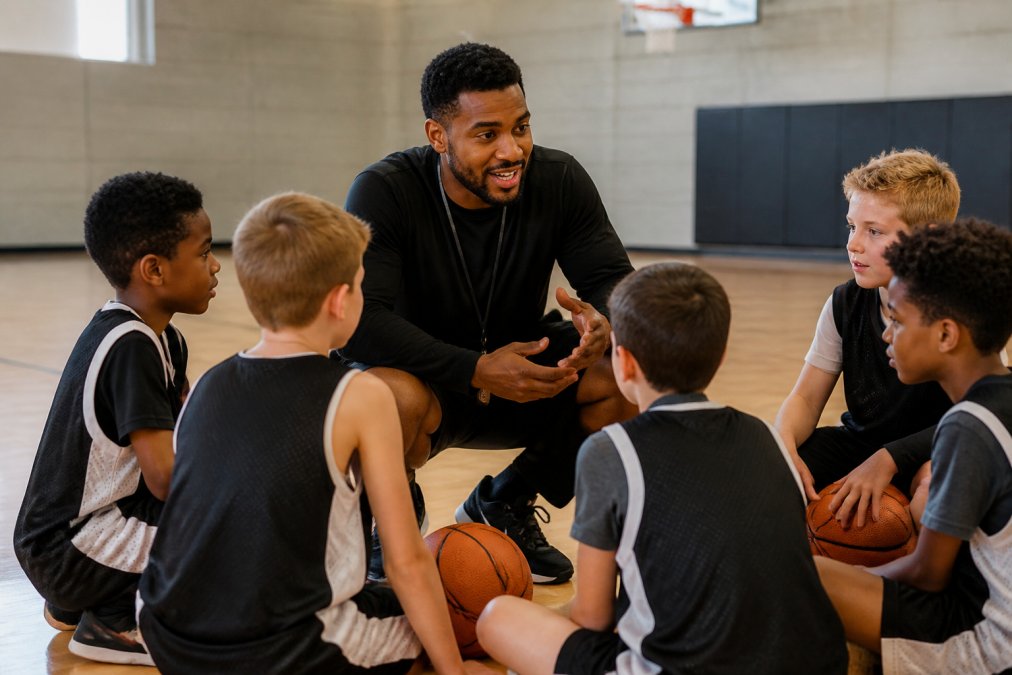
Effective positive coaching is specific, not generic. Instead of "good job," say "great hustle on that rebound" or "I love how you looked for your teammate." This specificity helps players understand exactly what behavior to repeat. It also builds a growth mindset, where players see effort as the path to mastery.
This approach extends to how you handle mistakes. Rather than immediately correcting an error, ask the player what they saw and what they might try next time. This develops self-reflection and problem-solving skills that serve players far beyond basketball.
Your Youth Basketball Player Development Plan
A youth basketball player development plan is a structured roadmap that outlines the skills and habits a player should build over a season or multiple seasons. This plan ensures that practice time translates into measurable progress.
For younger players, the plan should focus almost exclusively on fundamental skills: dribbling with both hands, proper passing mechanics, and basic footwork. For older, more competitive players, the plan expands to include position-specific skills, advanced ball handling, and decision-making drills that build basketball IQ.
An effective development plan also includes off-court components. Teaching players about nutrition, sleep, and the importance of schoolwork reinforces that basketball is part of a larger picture of holistic development. This approach builds student-athletes who are prepared for life, not just for the next game (peer-reviewed research).
A Youth Basketball Practice Plan Template That Works
A youth basketball practice plan template is a pre-formatted schedule that helps coaches organize every minute of practice around their development goals. Using a template prevents wasted time and ensures that fundamental skills are practiced consistently.
A reliable template follows a standard flow. Start with a dynamic warm-up to prepare the body and build energy. Follow with station work to maximize repetitions of core skills like dribbling and shooting. Move into small-sided games that apply those skills in live situations. Finish with a team huddle that reinforces the day's lesson and builds team culture.
| Practice Segment | Duration | Primary Focus |
|---|---|---|
| Dynamic Warm-Up | 10 minutes | Body preparation, coordination |
| Skill Stations | 20 minutes | Fundamental skill repetition |
| Small-Sided Games | 15 minutes | Applying skills under pressure |
| Team Huddle | 5 minutes | Culture, reflection, preview |
This structure is designed for a 50-minute practice. The key is consistency; running the same framework each week helps players know what to expect and allows the coach to focus on teaching rather than logistics.
The biggest mistake in youth practice is spending too much time on full 5-on-5 games. In a full-court game, young players touch the ball infrequently. Cutting the court into smaller games, like 3-on-3, dramatically increases each player's touches and skill acquisition.
Communicating Your Philosophy to Players and Parents
Your philosophy only works if everyone understands it. Communicating your coaching philosophy clearly at the start of the season prevents most conflicts before they begin. Hold a meeting with parents before the first practice to explain your priorities, your approach to playing time, and how you handle discipline.
The pre-season parent meeting is your single most powerful tool for alignment. A common pattern among experienced youth coaches is to structure this meeting around three explicit commitments. First, state your development-first priority: "We will play every player in every game, and our measure of success is effort and improvement, not the scoreboard." Second, define your sideline expectations: parents cheer for all players, never coach from the stands, and direct any concerns to you privately after 24 hours. Third, explain your communication channels: you will send a weekly email summarizing practice focus and game takeaways, and you will be available for a 10-minute check-in by phone or in person by request.
For players, communicate in language they understand. Younger players respond to simple rules like "always try your best" and "be a good teammate." Older players can grasp more nuanced concepts like competitive integrity and accountability. Reinforce these messages consistently, not just on the first day.
The gap most coaching guides miss is the conflict playbook. When a parent complains about playing time, the most effective response is not to defend your decision but to restate your philosophy and invite collaboration. A typical script: "I hear that you want to see your child contribute more. My commitment this season is to develop every player, which means distributing minutes to maximize long-term growth. Here is one specific skill we are working on with your child this month, and here is how you can reinforce it at home." This approach converts a complaint into a partnership.
When a parent violates a sideline expectation, address it privately and immediately after the game, not in the moment. Use a calm, direct statement: "I noticed you were giving instructions from the stands. Our team agreement is that players hear one voice during games. I need your help to honor that." Most parents respond well to being reminded of the agreement they signed or acknowledged at the start of the season.
Transparency about your player development philosophy builds trust and reduces the pressure that often leads to youth sports burnout. When parents understand that your goal is not to win the league but to build players who love the game and improve steadily, they become allies rather than critics. Transparency about your player development philosophy builds trust and reduces the pressure that often leads to youth sports burnout. When parents understand that your goal is not to win the league but to build players who love the game and improve steadily, they become allies rather than critics.
Conclusion: Put Your Coaching Philosophy Into Action
Writing your philosophy is the first step, but living it is the real challenge. Self-reflection after each practice and game helps you see where your actions matched your stated values and where they drifted. Consistency between what you say and what you do is what earns you credibility with players and parents.
At Tier 1 Sports, we believe a clear coaching philosophy is the foundation of every positive youth sports experience. Our programs for athletes aged 4 to 16 are built on tailored skill development and a supportive, community-based environment. Whether your child is just starting their journey or preparing for competitive rep basketball, our approach ensures every player develops fundamental skills while fueling a lifelong passion for the game.
Get started with Tier 1 Sports and discover how our coaching philosophy can help your young athlete realize their full potential.
Frequently Asked Questions
What is a good coaching philosophy example for youth basketball?
A good youth basketball coaching philosophy prioritizes skill development, sportsmanship, and a love for the game over winning. For example, your philosophy might state: "I coach to help every player improve their fundamental skills, build confidence, and learn to work as a team. I measure success by effort, growth, and character, not by the scoreboard." This creates a clear coaching identity that guides your decisions and communication.
How does a coaching philosophy impact player development in youth sports?
A coaching philosophy directly shapes your youth basketball player development plan. If your core value is long-term development over short-term wins, you will distribute playing time fairly, teach fundamental skills in practice, and encourage players to take risks without fear of being benched. This approach builds confidence, accountability, and a growth mindset. Players who feel supported develop a stronger work ethic and a deeper passion for the game.
How do you balance competitive goals with skill development in youth basketball?
You balance them by defining what winning means within your coaching philosophy. For younger age groups, prioritize skill acquisition and fun. As players mature, you can introduce more competitive goals, but always within the context of your development plan. Structure your youth basketball practice plan template to dedicate time to fundamentals and team concepts, while scrimmages teach competitive application. This ensures players develop the skills needed to compete successfully later.
What is the difference between a coaching philosophy and coaching tactics?
Your coaching philosophy is your "why": your core values, beliefs about player development, and the type of culture you want to build. Coaching tactics are the "how": the specific plays, defensive sets, and practice drills you use. Your philosophy should guide your tactics. For example, a philosophy centered on player empowerment might lead you to use a motion offense that allows players to make decisions, rather than a rigid set-play system.