 listicle
Youth Basketball Training for Girls: Programs & Pathways
Table of Contents
- Why Youth Basketball Training Matters for Girls
- Programs for Ages 4-6: Introduction to Basketball
- Youth Basketball Development Stages: Ages 7-10
- Basketball Drills for Girls: Building Core Skills
- Competitive Pathways: Rep Basketball and Tryouts
- Coaching Philosophy: Certified Coaches and Player Development
- Year-Round Training and Game Scenario Practice
- Registration, Enrollment, and Getting Started
Last Updated: August 27, 2026
Why Youth Basketball Training Matters for Girls
Youth basketball training for girls builds far more than athletic ability. Ages 4-10 establish foundational movement patterns, coordination, and spatial awareness that shape long-term progression (peer-reviewed research). Girls who engage in proper coaching during these formative years develop ball handling, shooting mechanics, and game awareness months ahead of peers, while building confidence that effort produces improvement.
The pathway from recreational play to competitive rep basketball requires intentional development. This guide covers the full spectrum of youth basketball training for girls, from introductory programs through skill development stages to competitive rep basketball and pathways beyond.
Programs for Ages 4-6: Introduction to Basketball
At ages 4-6, basketball is about movement, joy, and discovering what you can make a ball do. Quality introductory programs recognize that children have short attention spans, develop motor skills at different rates, and need frequent positive reinforcement.
Introductory sessions focus on basic coordination: rolling the ball, catching, throwing underhand, and shooting at a lowered hoop where success feels achievable. Coaches use games, music, and imaginative scenarios rather than drills. In the first few weeks, emphasis is on comfort with the ball and basic hand-eye coordination. By week four or five, children begin understanding directional movement and simple rules. By week eight, they're attempting to shoot, dribble short distances, and follow basic game concepts like "pass to a teammate."
If your child can follow basic instructions and enjoy moving around, they're ready. There's no prerequisite skill.
Youth Basketball Development Stages: Ages 7-10
Ages 7-10 represent a critical window for skill development. Children's nervous systems are highly responsive to motor learning (peer-reviewed research). Coordination improves rapidly. Attention spans lengthen. Children begin understanding game concepts, why you pass to a teammate, what defense means, how to read the court.
Skill Development Programs at This Stage
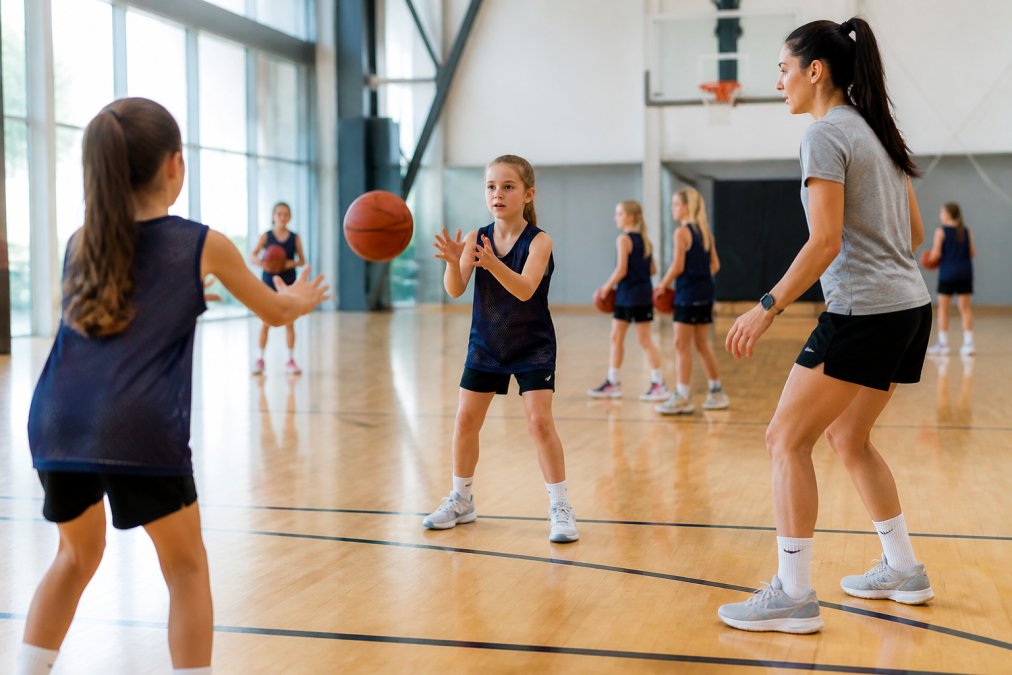
Youth basketball development at ages 7-10 should emphasize fundamental training over competition. This is when ball handling, shooting mechanics, footwork, and basic defensive positioning take shape. Systematic curriculum focuses on ball control: dribbling without looking down, accurate passing, catching and moving in one fluid motion. Mid-program shifts to shooting mechanics, proper stance, release point, follow-through, and footwork patterns. Later sessions integrate these skills into simple game scenarios.
Children benefit from repetition with variety. A coach might perform 20 dribbling drills, each with slightly different rules or challenges, preventing boredom while reinforcing the same fundamental skill.
The Role of Fundamental Training
Fundamental training is the foundation everything else builds on. Without solid ball handling, a player can't execute offensive plays. Without understanding defensive positioning, a player can't contribute defensively. Without proper shooting mechanics, hours spent shooting develop bad habits rather than improvement.
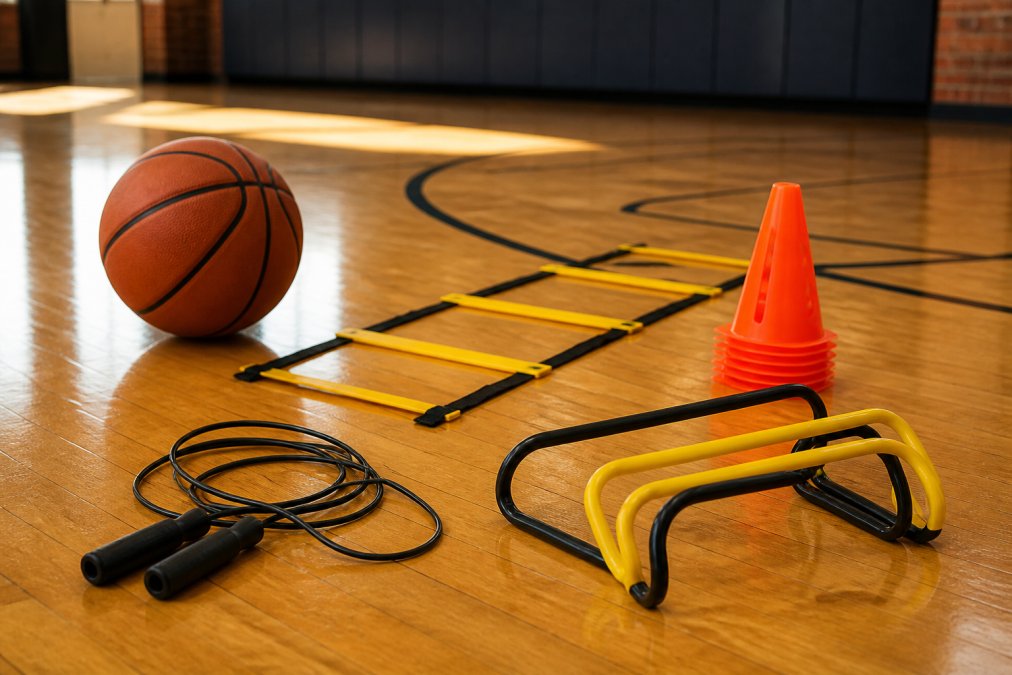
Certified coaches use progression-based drills. A basic ball handling drill, dribble in a straight line, progresses to dribbling while moving faster, then while changing direction, then while being defended, then while making decisions to pass or shoot based on what the defender does. Agility training also begins at this stage through ladder drills, cone drills, and movement patterns that teach efficient footwork.
Coaches who treat mistakes as learning opportunities produce better long-term skill development and higher enjoyment than those who demand perfection. Players who feel safe making mistakes are more willing to try difficult techniques, which is how real improvement happens.
Basketball Drills for Girls: Building Core Skills
Basketball drills for girls should be age-appropriate, progressive, and directly applicable to game situations. A drill disconnected from actual basketball teaches technique in isolation, which doesn't transfer to real play.
Ball Handling and Footwork Drills
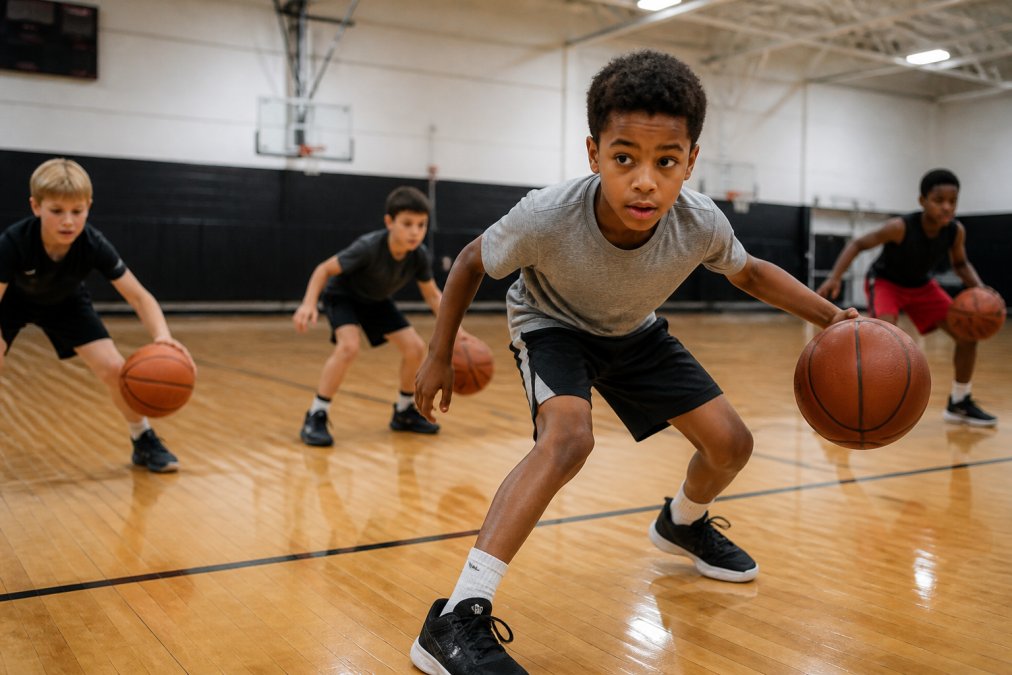
Ball handling is foundational. A player who controls the ball under pressure can execute any offensive play. Basic ball handling drills start simple: dribble stationary while keeping eyes up. Progress to dribbling in straight lines, then curves, then figure-eights around cones. The key is keeping the ball low and controlled, using fingers rather than palm, and maintaining court awareness.
One effective footwork sequence: set up three cones in a line, a few meters apart. Player dribbles from cone 1 to cone 2, makes a sharp cut left, dribbles to cone 3, cuts right, and returns. This combines dribbling, footwork, and change of direction in 30 seconds. Repeat 10 times and a player has practiced ball control, footwork, and agility simultaneously.
Shooting Mechanics and Agility Training
Shooting mechanics matter because poor form creates inconsistency. A player with proper shooting mechanics, feet shoulder-width apart, knees bent, ball held at eye level, smooth release, follow-through, develops muscle memory that translates to consistency.
Shooting drills should progress from close range to distance. A 7-year-old starts shooting from a shorter distance. An 8-year-old progresses to a slightly longer distance. By age 10, players shoot from an appropriate distance for their age and skill level. Agility training integrates movement with shooting. A player might sprint to a cone, stop quickly, receive a pass, and shoot, simulating game conditions where shooting happens after movement.
Competitive Pathways: Rep Basketball and Tryouts
For families considering competitive basketball, understanding the pathway from recreational play to rep teams is essential. Rep basketball means the player is part of a select team competing against other select teams in league or tournament format.
Age-Group Classifications and Competitive Teams
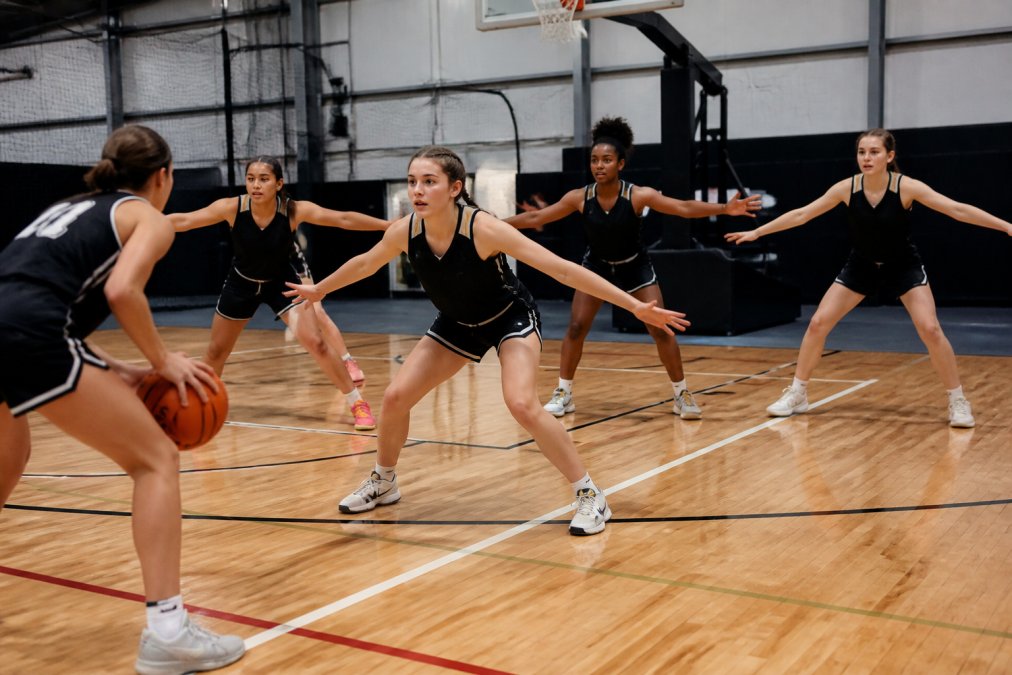
Competitive teams are typically organized by age groups: U10 (under 10), U12, U14, U16, and U18. Within age groups, teams are often classified by competitive level: Division 1 for most competitive, Division 2 for intermediate, Division 3 for developmental. The decision to pursue rep basketball should be based on your daughter's interest level and readiness, not parental ambition. A player who wants to play rep basketball will work harder and develop faster than one being pushed into it.
What to Expect at Open ID and Rep Tryouts
Open ID events and rep tryouts are where coaches evaluate players for competitive teams. Coaches typically run players through skill drills (shooting, ball handling, footwork), small-sided games, and full-court play to assess ability.
Coaches evaluate: technical skill (can the player shoot, dribble, pass?), basketball IQ (does she understand positioning and make good decisions?), athleticism (speed, vertical jump, agility), and coachability (does she listen, adjust, try hard?). Physical size matters at higher competitive levels, but at younger ages, skill and effort often matter more.
Quality coaches make the environment supportive, explain what they're evaluating, and focus on effort rather than just results. If your daughter doesn't make a rep team on the first try, it doesn't mean she can't play competitive basketball. It means she's not ready for that particular team's competitive level yet. The appropriate response is continued skill development, then trying again next year.
Coaching Philosophy: Certified Coaches and Player Development
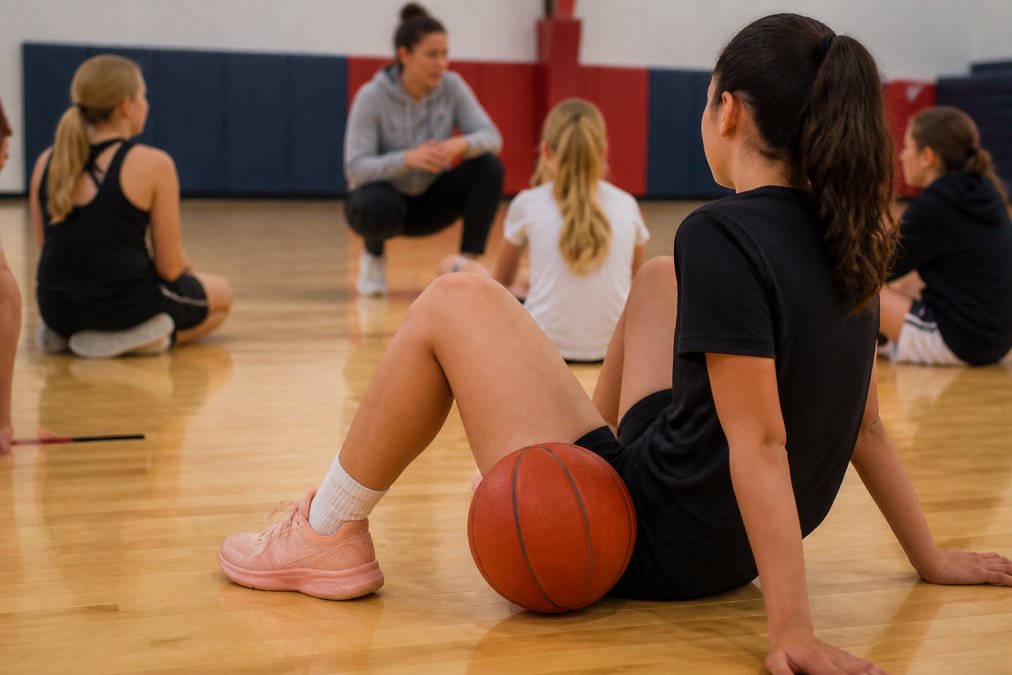
The coach matters more than the facility, team name, or program reputation. A great coach develops players. Quality coaches understand athlete development and know that a 7-year-old's brain processes information differently than a 14-year-old's. They adjust their coaching style accordingly and find the sweet spot between challenge and frustration.
Certified coaches have completed formal training in coaching methodology, athlete development, and safety. In Canada, the National Coaching Certification Program (NCCP) provides coaching certifications across multiple levels (coach.ca). The best coaching philosophy balances winning with development. A coach who ignores winning teaches players that effort doesn't matter. A coach who prioritizes winning above all else teaches players that mistakes are unacceptable. The middle ground, "we play to win, and we develop skills to get better", produces players who are both competitive and resilient.
Year-Round Training and Game Scenario Practice
Serious skill development requires year-round commitment. A player who trains intensively for three months, then takes six months off, loses significant progress. A typical year might include: fall recreational or rep league play, winter competitive focus, spring skill development camps, summer league or tournament play.
Game scenario practice is essential. A player might excel in drills but struggle in actual games because game situations are chaotic, unpredictable, and pressured. A simple game scenario drill: 3-on-3 full court where players must execute specific plays, pick and roll, offensive movement, and defensive positioning while competing. Another effective approach: modified games with specific rules, such as 3-on-3 where players can only score on jump shots, forcing players to work on shooting while developing game sense.
Registration, Enrollment, and Getting Started
Starting your daughter in youth basketball training involves identifying what type of program matches her current level and interests. Is she brand new to basketball? An introductory program for ages 4-6 or 7-10 is appropriate. Does she have some skills and wants to develop further? A skill-development program is the right fit. Does she want competitive play? Look for rep team tryouts or competitive league opportunities.
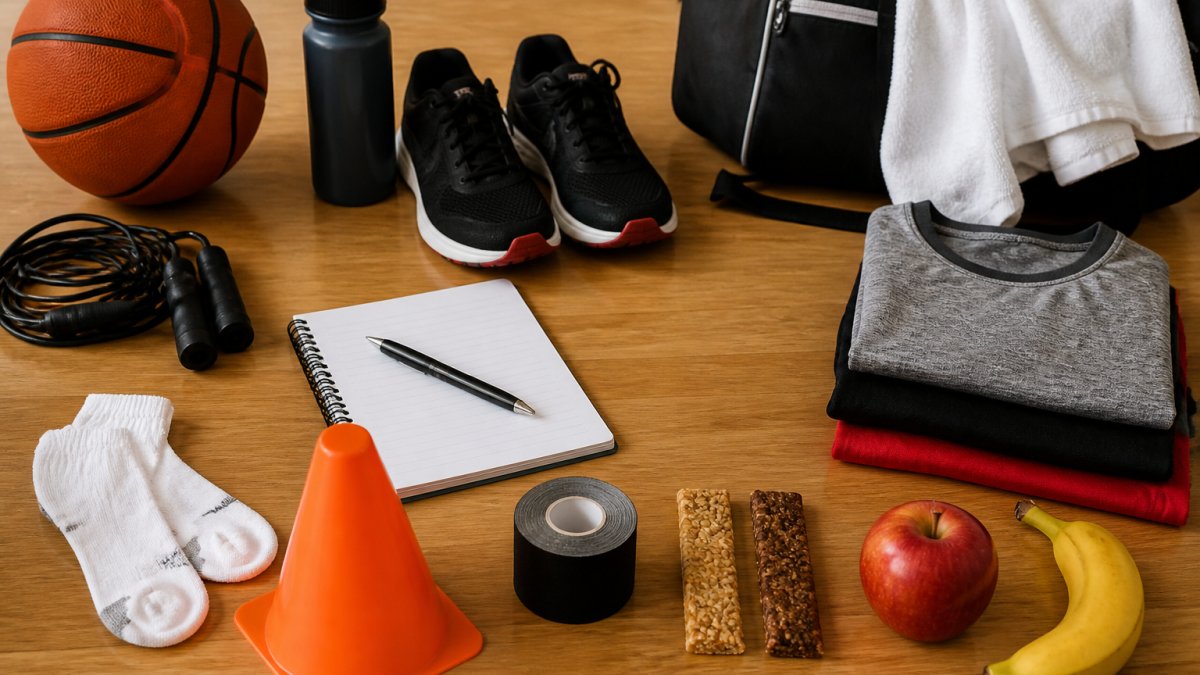
Contact the program directly for current session dates, pricing, and enrollment details. What to bring: appropriate athletic shoes, comfortable clothing that allows movement, and a water bottle. Most programs provide basketballs, but some ask families to bring their own. Expect your daughter to feel nervous on the first day. That's completely normal. Quality programs have welcoming environments where new players feel comfortable quickly.
| Age Group | Program Type | Focus | Typical Duration |
|---|---|---|---|
| 4-6 years | Introductory | Movement, coordination, fun | 6-8 weeks |
| 7-10 years | Skill Development | Fundamentals, ball handling, shooting | 8-12 weeks |
| 11-14 years | Competitive Rep | Advanced skills, game strategy, competition | Season-based (12-16 weeks) |
| 14-16 years | Advanced Competitive | High-performance training, college preparation | Year-round |
Frequently Asked Questions
What age should a girl start youth basketball training?
Girls can begin introductory basketball programs as early as age 4-6, focusing on basic coordination and fun. Structured skill development programs typically start at ages 7-10, when physical literacy and motor skills develop more rapidly. This period is often called the 'golden window' for learning fundamental movement patterns. By ages 11-16, athletes can pursue competitive rep basketball if interested. Starting early builds confidence and establishes a foundation for athletic growth.
How do basketball drills for girls differ by age group?
Younger players (ages 7-10) focus on fundamental drills: basic dribbling, footwork, and shooting mechanics with shorter distances and lighter basketballs. Drills emphasize fun and repetition. As girls progress to ages 11-16, drills become more complex, introducing game scenarios, defensive fundamentals, and conditioning. Certified coaches adjust intensity and complexity to match each age group's cognitive and physical development, ensuring players stay engaged and challenged appropriately.
What makes youth basketball development stages important?
Youth basketball development stages ensure age-appropriate training that matches physical and cognitive ability. Early stages (4-6) build physical literacy and love for the game. Middle stages (7-10) develop fundamental skills like ball handling and shooting mechanics. Competitive stages (11-16) introduce complex strategies and game play. Following these stages prevents injury, maintains motivation, and creates clear pathways from recreational to competitive rep basketball. Proper progression builds confident, skilled athletes.
How can I help my daughter improve her basketball skills at home?
Practice simple basketball drills for girls in your driveway or local park: dribbling with both hands, footwork exercises, and shooting at adjustable hoops. Use training tools like dribble goggles to improve court awareness. Set realistic goals for short practice sessions (15-20 minutes). Encourage game play with friends. Most importantly, create a supportive environment where mistakes are learning opportunities. Combine home practice with structured coaching to accelerate skill development and build confidence.
This article was written using GrandRanker