 how-to
How to Improve Basketball Shooting Form for Kids
Table of Contents
- Why Shooting Form Matters for Young Players
- Essential Basketball Shooting Form Fundamentals
- The BEEF Method Basketball Shooting
- Basketball Shooting Drills for Kids
- Common Basketball Shooting Mistakes for Kids
- Building a Basketball Shooting Practice Routine for Kids
- Parent and Coach Feedback for Form Improvement
- Frequently Asked Questions
Last Updated: October 8, 2026
Why Shooting Form Matters for Young Players
Learning how to improve basketball shooting form for kids by getting the fundamentals right early sets them up for success. When young players develop proper basketball shooting form for kids, they build muscle memory that lasts. Good form means more consistent shots, fewer injuries, and genuine confidence on the court.
Proper stance, hand placement, and follow-through create a foundation that carries through every level of play.
The best time to teach correct form is now. Young players learn movement patterns faster than older athletes, so a child who practices good mechanics at age 7 will improve more easily at 12 than one who spent five years shooting with poor technique.
Essential Basketball Shooting Form Fundamentals
Solid shooting form comes down to a few core elements working together. When each piece is in place, the shot becomes repeatable.
Shooting Stance and Balance
Your feet are the foundation. A strong stance keeps your body stable from release to follow-through.
Stand with your feet shoulder-width apart. Your shooting-side foot should be about 15 centimeters ahead of the other. Keep your weight balanced between both feet, with your heels just barely touching the ground. This gives you stability without feeling locked in place.
Young players often stand too wide (losing mobility) or too narrow (tipping forward). Shoulder-width is the sweet spot for most kids.
Foot Placement and Body Alignment
Your feet point toward the basket. Your shoulders face the hoop. Your hips align with your feet. This creates a straight line from your toes to your shooting arm.
When young players shoot off the dribble, their feet often point in the direction they were moving, not toward the basket. That's a common mistake. Teach them to square their body to the hoop before they shoot.
Here's what to look for:
- Feet point at the basket
- Shoulders face the hoop
- Hips stay level
- Head stays centered over your feet
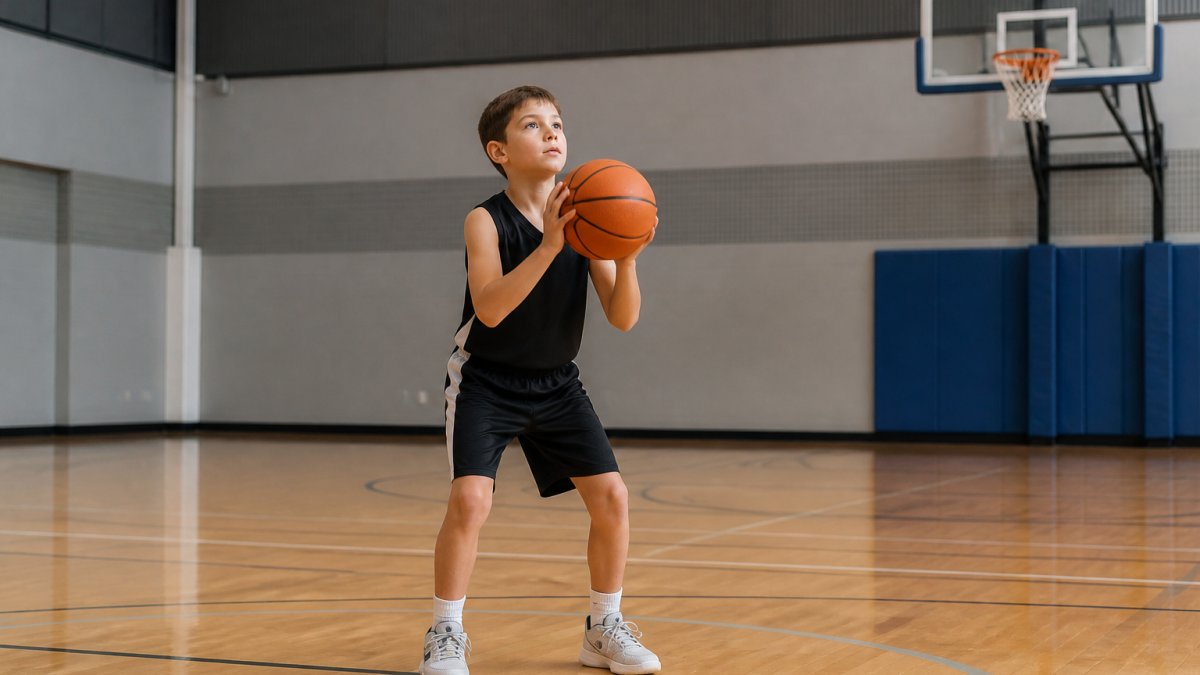
Hand Placement and Shooting-Hand Position
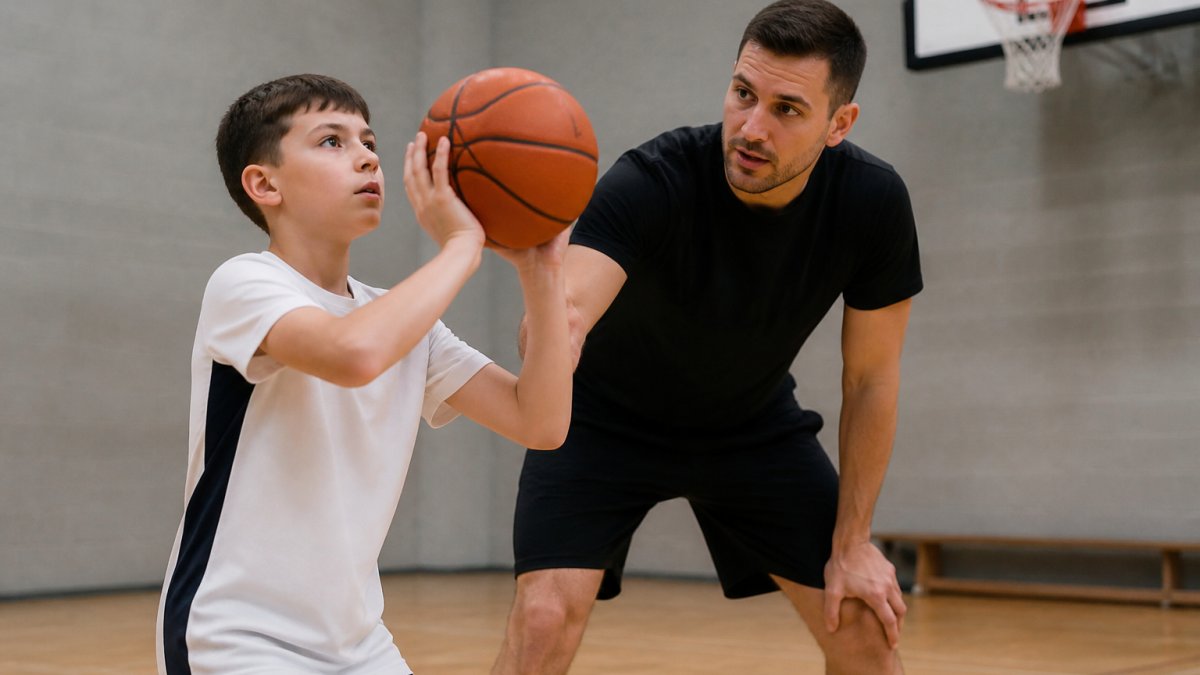
Your shooting hand cradles the ball. Your guide hand steadies it. The ball sits on your fingertips, not your palm.
The shooting hand goes underneath the ball with fingers spread wide and thumb pointing down. Your index, middle, and ring fingers do the work, while your pinky and thumb balance.
Your guide hand sits on the side of the ball. It doesn't push. It just keeps the ball steady while your shooting hand does the work.
Many young players grip the ball too tightly with their palm. That kills accuracy. Teach them to use their fingertips. The ball should feel like it's floating on their hand, not gripped in their fist.
Guide-Hand Role and Wrist Snap
Your guide hand releases first, while your shooting hand stays with the ball all the way through.
As you extend upward, your guide hand drops away and your shooting hand pushes the ball toward the basket. Your wrist snaps downward at the end, like flicking water off your fingertips. That snap creates backspin, helping the ball drop softly into the basket.
The wrist snap is small but important: a smooth, controlled motion at the very end of your shot, not a violent flick.
Follow-Through and Release
Your shooting arm extends fully. Your elbow stays under the ball. Your wrist finishes with a downward snap.
After release, your arm should stay up in a "gooseneck" position, hand hanging down like the neck of a goose. Hold it until the ball goes through the net to teach your body to stay committed.
Young players often drop their arm too early or move before the ball lands, both of which hurt accuracy. Holding your follow-through keeps you still and lets the shot complete.
The BEEF Method Basketball Shooting
BEEF is a simple way to remember the four keys to good shooting form. It stands for Balance, Eyes, Elbow, and Follow-through.
Balance means a solid stance with your weight centered: feet shoulder-width apart, ready to move.
Eyes stay on the target. Pick a spot on the back of the rim or center of the basket and keep your eyes there from the start of your shot until the ball goes through.
Elbow stays under the ball, pointing down and slightly forward rather than flaring out to the side. This keeps your shot straight.
Follow-through is the gooseneck finish: hand stays up, wrist snaps down, and you hold the position.
The BEEF method basketball shooting approach works because it's easy to remember and teach. Kids can picture it, parents can watch for it, and coaches can correct it on the fly.
Basketball Shooting Drills for Kids
Drills build muscle memory. When kids repeat the same motion hundreds of times, their body learns it automatically and shooting becomes consistent.
Cone Drills and Close-Range Practice
Start close to the basket. A child shooting from 5 feet learns good form faster than one launching from 15 feet. Once form is solid, distance comes naturally.
Set up cones in a semicircle 1.2-1.8 meters from the basket and have your child shoot from each spot. The goal isn't making every shot, it's using the same form every time.
Here's a simple progression:
- Week 1-2: Shoot from 1.2-1.8 meters using proper form
- Week 3-4: Move back to 2.4-3 meters
- Week 5-6: Shoot from the free-throw line area (4.5 meters)
- Week 7+: Add shots from different distances Consistent repetition of these shooting mechanics naturally reinforces the coordination required for developing fine motor skills, which serves as a foundational element for success in both athletics and daily tasks. developing fine motor skills
Close-range shots build confidence. A young player who makes 8 out of 10 shots from 1.5 meters feels successful. That success carries over to longer distances.
Free-Throw Line Repetition Drills
Free throws are the most important shooting drill. There's no defender, no pressure, just you and the basket. That's why free throws reveal form problems.
Have your child shoot 10 free throws every practice. Don't count makes and misses at first. Focus on form. Does the shot look the same every time? Is the follow-through consistent?
Once form is locked in, start tracking makes.
Off-the-Dribble Shooting Progressions
Shooting off the dribble is harder than shooting off a catch. Your feet are moving. Your body is moving. Your shot has to be consistent anyway.
Start with a simple progression:
- Dribble to a spot and stop, then shoot (no footwork challenge)
- Dribble to a spot, take one step, then shoot (adds footwork)
- Dribble to a spot, take two steps, then shoot (game-like footwork)
- Dribble at game speed and shoot (full difficulty)
Young players often rush their shot when they come off the dribble. Teach them to pause for a half-second after they stop dribbling. That pause lets them reset their form and shoot with confidence.
Common Basketball Shooting Mistakes for Kids
Knowing what to avoid is just as important as knowing what to do. Here are the mistakes we see most often.
Shooting with the elbow out. The elbow flares to the side instead of staying under the ball. This throws the shot off line.
Dipping the ball before shooting. Some kids drop the ball down to their waist, then bring it up to shoot. That wastes energy and breaks rhythm.
Jumping forward. Young players often jump toward the basket instead of straight up. That throws off the shot and wastes leg power. Fix: Practice shooting while standing still first.
Releasing too early or too late. The ball leaves your hand at the wrong point in the jump. Early release means a flat shot.
Not using leg power. Beginners often shoot with just their arms. The legs should drive the shot. Fix: Emphasize the knee bend and upward extension.
Building a Basketball Shooting Practice Routine for Kids
A good routine is consistent, age-appropriate, and focused on form over volume.
Age-Appropriate Equipment and Hoop Height
The hoop height matters. A child shooting at a 10-foot hoop when they're 5 years old will develop bad form trying to reach it. The ball will go up instead of forward. The shot will be all arms.
For young players, use adjustable hoops set to an appropriate height.
The ball size matters too. A child with small hands shouldn't use a full-size basketball. A smaller ball lets them grip it properly and shoot with correct form.
| Age Group |
|---|
| --- |
| Recommended Ball Size |
| 4-6 years |
| 7-9 years |
| 10+ years |
Practice Dosage, Rest, and Injury Prevention
More practice isn't always better. A child who shoots 200 shots a day with poor form will develop bad habits. A child who shoots 50 quality shots will improve faster.
A reasonable practice schedule includes consistent sessions tailored to age and skill level. youth sports injury statistics
Include rest days. Young bodies need recovery time. Shooting the same motion over and over can stress the shoulder and elbow.
Watch for signs of overuse: shoulder pain, elbow pain, or wrist soreness. These are red flags. If a child complains of pain, reduce volume and focus on rest.
Measuring Progress Beyond Makes
Don't obsess over makes and misses. A young player's shooting percentage will fluctuate based on fatigue, confidence, and how many difficult shots they're taking.
Instead, track form:
- Does the shot look the same every time?
- Is the follow-through consistent?
- Are the feet in the right position?
- Does the release point stay the same?
Use a simple checklist. After each shooting session, rate the form on three things: stance, release, and follow-through. Rate each 1-5. Track the ratings week to week. You'll see improvement in form before you see improvement in shooting percentage.
Parent and Coach Feedback for Form Improvement
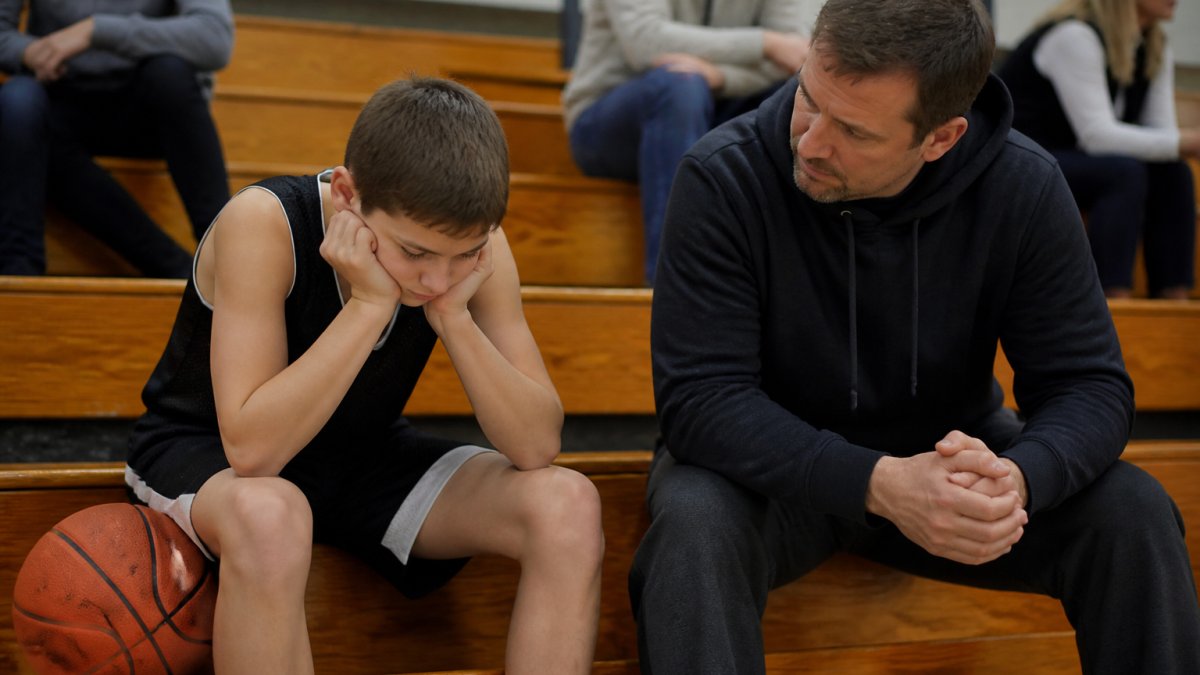
Parents and coaches see things the shooter can't. Your feedback shapes how the young player develops.
Watch for one thing at a time. Don't bombard a child with five corrections.
Use positive language. Instead of "Your elbow is out," try "Bring your elbow in, like you're hugging a basketball." Kids respond better to positive cues.
Video is powerful. Record a few shots on your phone. Play it back together. Let the child see what they're doing.
Be patient. Form changes take time. A child won't fix their shooting technique in one week.
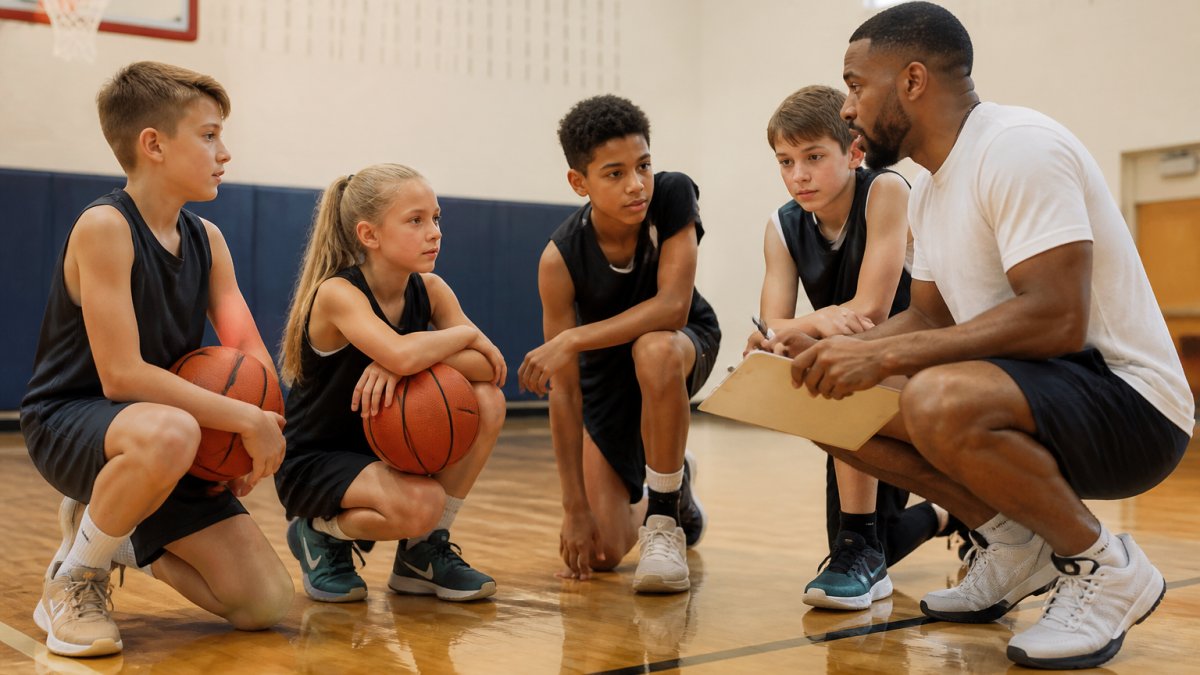
Tier 1 Sports coaches work with young players on these principles every day. The best shooters aren't born, they're built through deliberate practice and good coaching.
Shooting form is one of the most valuable skills a young athlete can develop. Kids who master the fundamentals early gain confidence that carries into every sport they play.
Frequently Asked Questions
What is the BEEF method for shooting a basketball?
BEEF is a framework for basketball shooting form: Balance (stable stance), Eyes (focus on the target), Elbow (aligned under the ball), and Follow-through (complete extension). This method helps young players build consistent shooting technique by breaking down the motion into four key checkpoints. Each element reinforces proper body mechanics, making BEEF an effective teaching tool for kids learning to shoot.
What are the most common basketball shooting mistakes for kids?
Young players often rush their release, skip the follow-through, or position their elbows too wide. Other frequent errors include poor foot placement, inconsistent knee bend, and aiming with the guide hand instead of keeping it steady. Kids may also shoot from the hip rather than at shoulder height, or fail to square their shoulders to the basket. Addressing these mistakes early builds better long-term shooting habits.
How often should kids practice basketball shooting?
Consistency matters more than duration. Rest days prevent fatigue and injury, and quality repetition beats high volume.
What basketball shooting drills are best for beginners?
Start with close-range shots near the basket to build confidence and form awareness. Cone drills teach footwork and balance, while stationary free-throw line practice develops consistent mechanics. Off-the-dribble progressions add movement once form is solid. Beginner drills emphasize proper technique over making shots; focus on repetition and form feedback rather than scoring outcomes.