 How-to
How Can a Guard Master the Pick and Roll?
Quick Summary
To master the pick and roll as a guard, read the defense before contact, then use the screen to attack. Name the defensive coverage early, such as drop, switch, hedge, or under, and run the counter that coverage gives up. Commit once you decide.
- Read the on-ball defender's chest angle, trail position, and hand placement before the screen arrives.
- Check the screener's defender's depth: deep drop means pull up, level means the roll is open.
- Against drop coverage, pull up for a midrange jumper or pass to the rolling big.
- Against blitz, pick up the dribble only after you have a pass, then hit the roller short and early.
- Track weekly drill benchmarks, such as 8 of 10 correct reads in stationary screen drills.
Table of Contents
- Pick and Roll Fundamentals Every Guard Needs to Know
- Setting Up the Screen: Reading Your Defender and the Screener's Defender
- Pick and Roll Reads for Guards: A Step-by-Step Decision Tree
- Pick and Roll Against Drop Coverage: Counters and Reads
- Pick and Roll Passing Reads: Finding the Rolling Big and the Skip
- Pick and Roll Drills for Guards With Measurable Benchmarks
- Booking Your Next Practice Block With Tier 1 Sports
- Frequently Asked Questions
Pick and Roll Fundamentals Every Guard Needs to Know
Last Updated: October 30, 2026
The pick and roll is the most common action in basketball.
The goal is simple: help young guards understand why the play works before asking them to run it at game speed.
Key terms to know:
- Ball handler: The player with the ball, usually a guard.
- Screener: The teammate who sets the screen, usually a big.
- Roll: The screener's move toward the basket after the screen.
- Pop: The screener's move to the perimeter instead of rolling.
A common mistake is treating the play as one fixed move. It is really a set of choices. The screen creates a moment of advantage, and the guard decides what to do with it.
Setting Up the Screen: Reading Your Defender and the Screener's Defender
The screen itself is the easy part. The guard's real job starts two dribbles before contact, when you read the two defenders who decide what coverage you will face.
Read the on-ball defender first. Before the screen arrives, check three cues:
- Chest angle: If the defender's chest is square to you and his feet are high, he is prepared to fight over the top. If his chest is turned toward the screen and he is leaning, he is likely to go under or chase.
- Trail position: A defender who is trailing your hip is vulnerable to a change of pace off the screen. A defender who is chest-to-chest is inviting you to use the screen and turn the corner.
- Hand placement: A hand on your hip or a forearm on your back usually means the defender plans to feel the screen and slip over it. A defender with both hands out is often preparing to switch or hedge.
Read the screener's defender next. The big's depth and stance tell you the coverage before contact:
- Deep drop (feet near the free-throw line or lower): drop coverage. The big is protecting the rim and conceding the pull-up.
- Level or above the screen (feet near the three-point line): hedge or blitz. The big is coming to you, which means the roll is open behind him.
- Shoulder-to-shoulder with your defender: switch. The big is preparing to take you, which means your screener has a mismatch inside.
- Turned and backing up: under coverage. The big is walling off the paint and daring you to shoot.
Set the screen up, don't just receive it. The screener should arrive at a legal, stationary angle, feet shoulder-width, no late movement, and the guard should manipulate the defender into the screen rather than dribble straight at it.
Screen angle and location matter more than screen force. A side screen set at roughly a 45-degree angle to the baseline gives you a clean path to the elbow and keeps the big's roll lane open. A screen set too flat or too close to your defender lets him slip through the gap. A screen set too high pushes you toward half court and shrinks the roll lane. The best guards adjust the angle based on where the big's defender is standing, not on a fixed spot on the floor.
Communication between guard and screener. The best pick-and-roll pairs use short, repeatable cues: a hand signal for the side, a verbal call for the angle, and a re-screen signal when the first screen is rejected. If the defense switches, the guard and screener should already know who re-screens and who slips. That coordination is what separates a play that works once from a play you can run all game.
Pick and Roll Reads for Guards: A Step-by-Step Decision Tree
Step 1, Identify the coverage before contact. Use the pre-screen cues from the previous section: the on-ball defender's chest angle and trail position, and the screener's defender's depth and stance.
Step 2, Use the screen to create the advantage. Lean into the screen, keep your dominant-hand side tight to the screener, and change pace rather than direction.
Step 3, Apply the coverage-specific counter. Each coverage is designed to take something away and give something up. Your job is to take what it gives:
- Drop coverage (big sags to the free-throw line or lower): the pull-up jumper at the elbow is the counter. If the big stays deep and the on-ball defender chases, the roll is open behind the big. If the big steps up late, the pocket pass to the roller is there. Do not force a drive into a waiting big, that is the turnover drop coverage is designed to create.
- Switch (big takes you, your defender takes the screener): attack the big's feet. A big switched onto a guard is usually slower laterally, so a hard dribble at his top foot and a change of pace gets you into the paint. If the big sags to protect the rim, pull up. If he crowds, blow by. Your screener now has a guard on him, a quick seal and post entry is the second option.
- Hedge (big jumps out to level or above the screen, then recovers): the pocket pass to the roller is the first read, because the big's recovery leaves the roll lane open for a beat. If the hedge is hard and the roller is covered, a short pull-up or a skip to the weak-side corner punishes the rotation.
- Blitz (both defenders trap you): do not dribble into the trap. Pick up your dribble only after you have a pass, and hit the roller short and early. The blitz leaves the back side open, so the skip pass to the weak-side corner is the second read once the roller draws the low defender.
- Under coverage (on-ball defender goes under, big stays home): the pull-up three or the re-screen are the counters. If your shot is respected, the defender will not go under twice, that is when the re-screen creates a downhill lane. If the shot is not falling, attack the big's outside foot and use a floater.
Step 4, Commit and finish with control. The worst outcome is a half-decision: a drive that stops, a pass that floats, a shot that hesitates.
Adapt the read to game context. The right counter also depends on the clock, the score, foul situation, and personnel. Down two with 10 seconds left, the pull-up against drop coverage may be the right shot; up two with 30 seconds left, the reset is. If the screener is a non-shooter, the pop is not a real threat, so the defense will go under more often, that is when the re-screen and the downhill attack matter most. Scouting tendencies matter too: a big who has been beaten on the roll twice will start to hedge harder, which opens the pocket pass again. Track what the defense adjusts to and counter the adjustment.
Pick and Roll Against Drop Coverage: Counters and Reads
Drop coverage means the big defender stays near the basket. The on-ball defender goes over the screen. This gives the guard space at the three-point line.
Good counters include:
- Pulling up for a midrange jump shot when the big sags.
- Using a quick catch-and-shoot three after the defender drops.
- Passing to the rolling big if the defender stays too deep.
Watch out: forcing a drive into a waiting big leads to turnovers. When the lane closes, pass or reset.
Pick and Roll Passing Reads: Finding the Rolling Big and the Skip
Passing is the second half of the play. The rolling big should be your first passing target when the defense collapses. Look for the big cutting toward the rim with open space.
When the defense rotates, look for the skip pass to the weak-side corner. A quick, accurate skip can turn one screen into an open three. This is also how the pick and pop works: the screener steps out for a jump shot instead of rolling.
Watch for these reads:
- The big is open: pass to the roll.
- The defense rotates to the big: pass to the open shooter.
- The weak-side player is open: skip pass.
Pick and Roll Drills for Guards With Measurable Benchmarks
Progress is easier to see when each drill has a target. Track these benchmarks each week:
| Drill | Goal | Benchmark |
|---|---|---|
| Stationary screen reads | Read the defender before moving | 8 of 10 correct reads |
| Live screen, half speed | Use the screen and pass to the roll | 6 of 10 clean passes |
| Full-speed pick and roll | Attack or pass in game flow | 5 successful reads in 10 reps |
| Drop coverage shooting | Pull up or shoot the open three | 4 of 10 makes |
Start slow, and only increase speed when the reads are consistent.
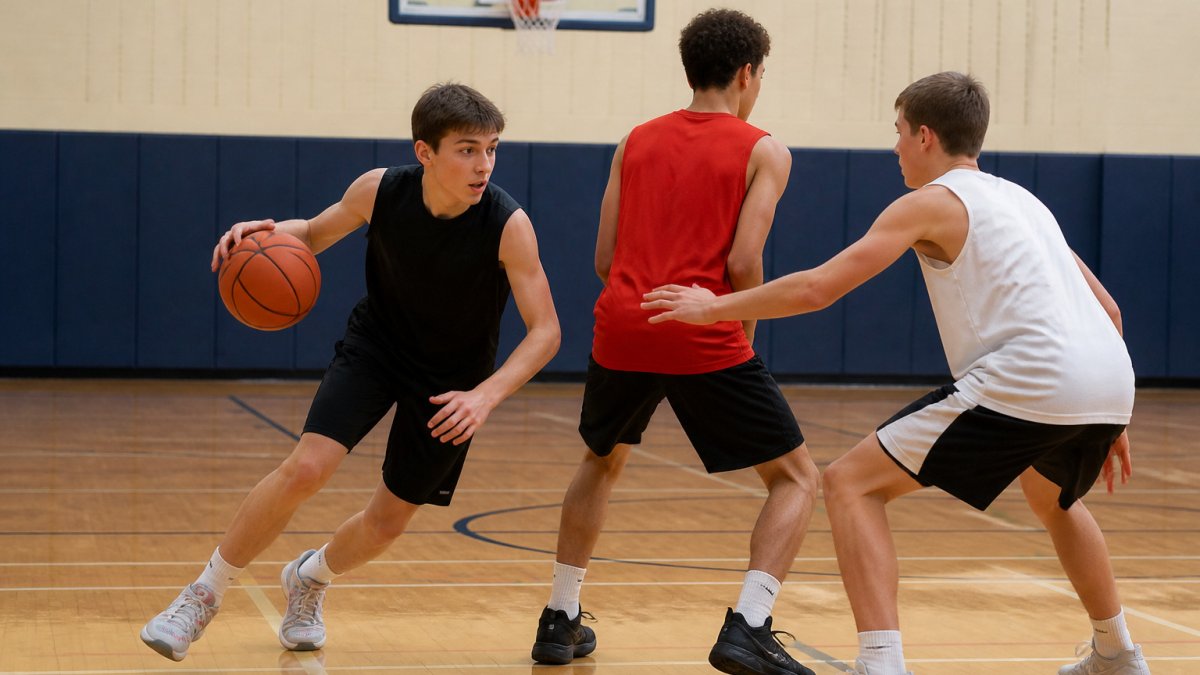
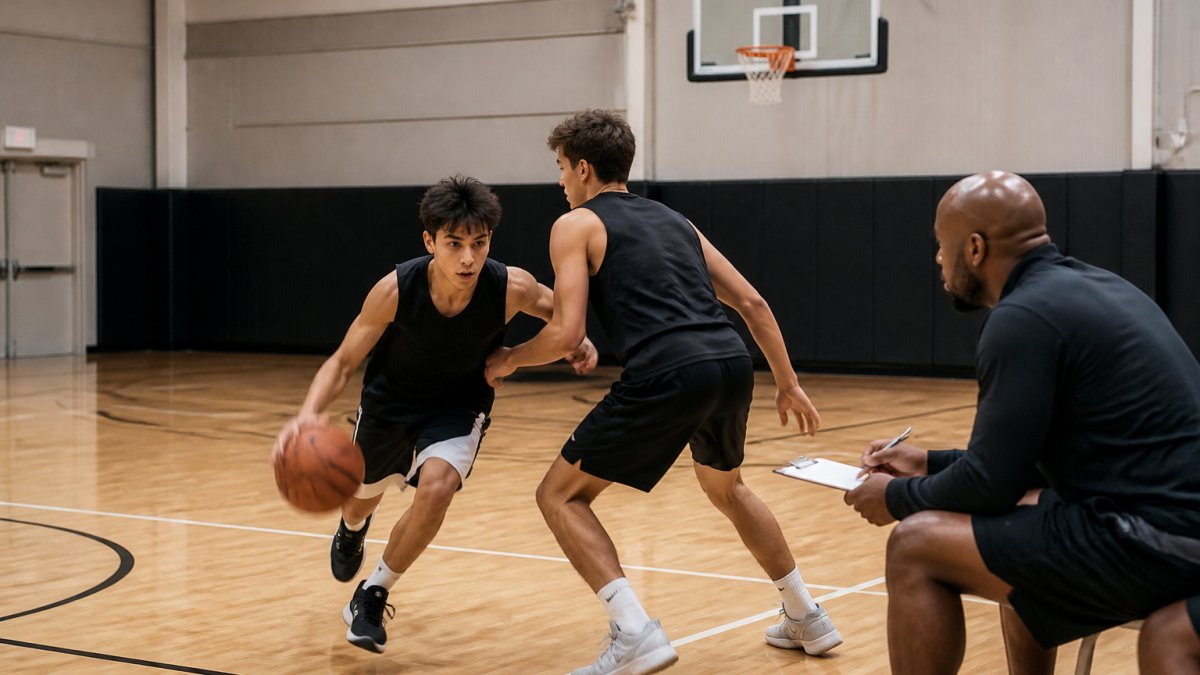
!Young point guard in a gym dribbling past a teammate who sets a screen, while a coach watches from the sideline with a clipboard
Booking Your Next Practice Block With Tier 1 Sports
Learning the pick and roll takes repetition with feedback. Tier 1 Sports offers basketball programs for young players across a range of ages and levels, from introductory sessions to competitive rep basketball.
Pricing depends on the program and dates, so contact Tier 1 Sports for current rates and availability. For more drills to build your game, read our guide to the 5 best basketball training exercises for skill development and see what rep basketball practice looks like before committing.
Frequently Asked Questions
What does pick and roll mean in basketball?
A pick and roll happens when an offensive player sets a screen on a defender guarding the ball handler, then rolls toward the basket after the screen. The ball handler uses the screen to create space by driving, pulling up or passing. For a guard, the play depends on reading how the on-ball defender and the screener's defender respond, then choosing the scoring option that the defense leaves open. Practice the basic read in slow motion before adding speed.
When should a guard go over or under a screen?
Going over the screen means the on-ball defender steps up and across the screener, which works when the guard is a strong shooter and the defense is giving up space. Going under means the defender drops back beneath the screen, which is useful when the guard is a weaker shooter and wants to protect the paint. Guards should decide based on the shooting threat, the screen angle and how the screener's defender reacts.
How do you attack a drop defence against the pick and roll?
Against drop coverage, the big defender stays near the paint, which leaves space for a pull-up jumper or a floater. A guard should attack the gap between the big and the on-ball defender, using the screen to turn the corner. If the big stays home, the guard can shoot from mid-range or pass to the rolling screener. Reading the big's position before the screen is set makes these choices faster.
How can a guard improve pick and roll decision-making?
Start with a simple three-option read: shoot if the defender goes under, drive if the defender goes over, and pass to the roll if the defense collapses. Practise these reads in controlled drills first, then add live defenders and game speed. Tracking your own decisions after each practice helps build consistency.