 How-to
Youth Basketball Dribbling Drills for Speed: A Coach's Guide
Last Updated: November 13, 2026
Quick Summary
Youth basketball dribbling drills for speed teach young players to move the ball at pace while keeping control. Start with stationary pound dribbles and cone touches for ages 6 to 8, then add speed dribble lines, gates and crossovers for ages 9 to 13. Keep eyes up, bounce the ball at waist height, and practice the weak hand too.
- Start beginners with stationary pound dribbles for 30 seconds, using fingertips.
- Ages 9 to 13 can progress to speed dribble lines and gates drills.
- Bounce the ball at about waist height so the hand reaches it quickly.
- Watch for players staring at the ball, a sign they are not ready for more speed.
- Spend a few minutes per session on the weak hand to build balance.
Table of Contents
Speed with the ball decides a lot of youth games. A player who can push the ball up the floor quickly, change direction without losing control, and keep their head up gets more shots and more chances to pass. Speed dribbling is a skill that transfers directly to real play.
Speed dribbling is the ability to move the ball at pace while keeping it under control. Coaches looking for a deeper walkthrough can read a step-by-step guide to faster crossovers for youth players. Young players who master it can attack a defender, escape pressure, and finish at the rim. Players who only dribble slowly tend to get stuck on the perimeter.
Players who handle the ball comfortably early on often develop better court awareness and decision-making.
The good news is that speed dribbling can be taught step by step. Young players do not need to be fast runners to start. They need repetition, clear cues, and drills matched to their age. The sections below walk through those drills, the technique behind them, and how to measure progress over time.
Basketball Speed Dribbling Drills by Age and Skill Level
Drills work best when they match a child's stage of development. A drill that challenges a 13-year-old may overwhelm a 6-year-old. Start with simple movements, then add speed, pressure, and direction changes as control improves.
Beginner Drills for Ages 6 to 8
Young beginners need to build comfort with the ball before they move fast. Keep these drills short and fun, with plenty of rest.
- Stationary pound dribbles: Dribble in place with the fingertips, not the palm, for 30 seconds
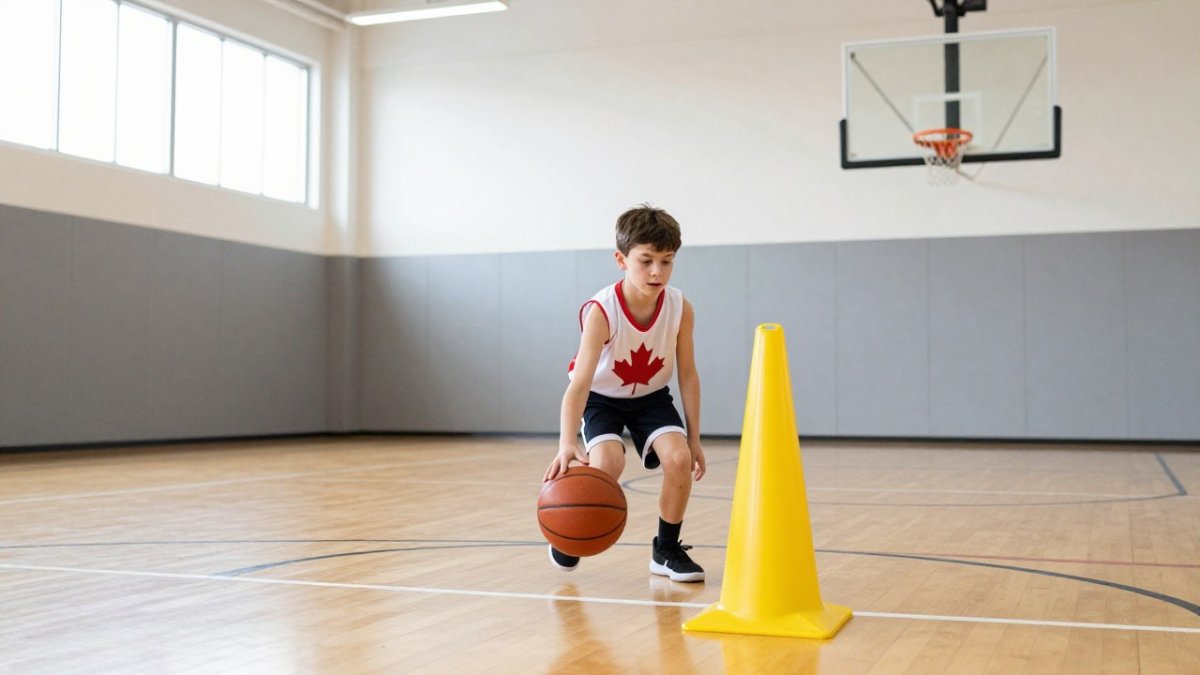
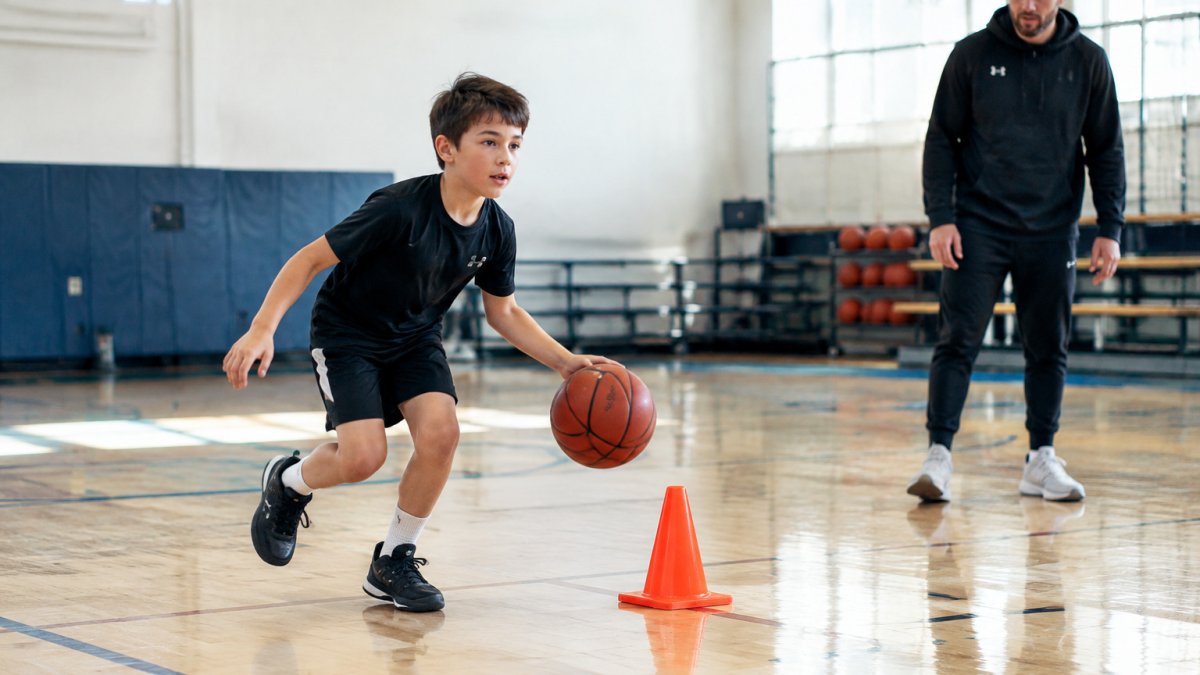
- Cone touch: Place four cones in a square and dribble to touch each one
- Figure-eight dribble: Weave the ball between the legs around two cones
- Follow the coach: Mirror simple dribble patterns called out by the coach
Start every session with about five minutes of these drills. Add movement only when the child keeps eyes forward and the ball stays under control.
Developing Drills for Ages 9 to 13
Players in this age group can handle more speed and pressure. Now the focus shifts to moving with the ball.
- Speed dribble lines: Dribble full-speed down the court and back, switching hands at the baseline
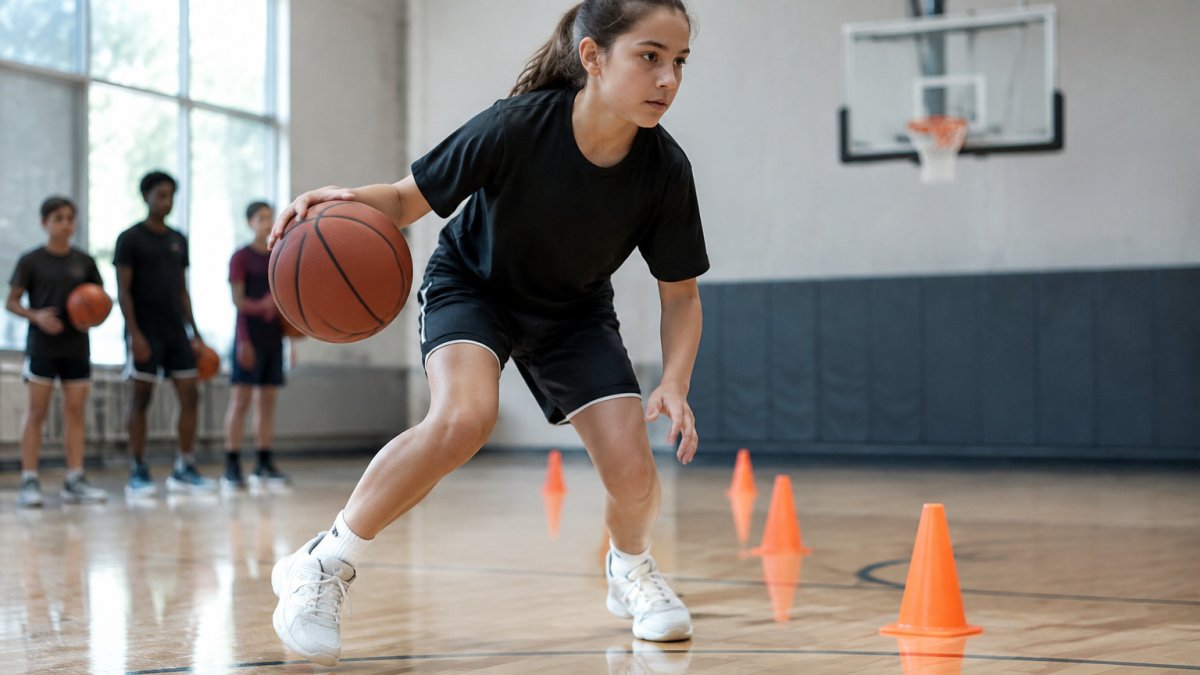
- Gates drill: Dribble through a line of cones spaced a little wider than shoulder width, changing hands at each gate
- Power crossover at cones: Perform crossovers at each cone while moving forward
- Defender shuffle: A partner shadows the dribbler, who must keep the ball away from the partner's hands
These drills build speed, control, and the habit of looking up. Coaches should watch for players who stare at the ball, since that is the most common sign they are not ready for more speed.
Speed Dribble Technique: Form, Cues and Common Mistakes
Good form makes speed dribbling safer and more effective. The player should stay low, with knees bent and back straight. The ball should bounce at about waist height so the hand can reach it quickly.
Key coaching cues include:
- "Eyes up." Keep the head up so the player can see the court.
- "Soft hands." Let the fingers give slightly on each bounce to control the ball.
- "Push, don't slap." Push the ball down toward the floor rather than slapping it.
- "Stay low." Bend the knees to keep balance when changing speed.
A common mistake is bouncing the ball too high. High bounces slow the player down and make it easier for a defender to steal the ball. Another frequent error is looking down at the ball during a sprint. Coaches can help by holding up fingers at random and asking the player to call the number.
Weak-Hand Dribbling Drills to Build Balance
Most young players favor one hand. Parents and coaches wanting more detail can read a full guide to improving non-dominant hand dribbling for youth players. Weak-hand work builds balance, confidence, and the ability to protect the ball from either side. Many coaches recommend spending at least a few minutes per session on the non-dominant hand.
- Weak-hand cone touch: Use only the weak hand to touch each cone in a square
- Weak-hand stationary pounds: Dribble in place for 30 seconds, switching hands only on whistle
- Weak-hand lines: Dribble down and back using only the weak hand
Progress slowly. Players who struggle should stay at the stationary stage until they can keep the ball steady.
A Dribbling Workout for Beginners: Sample Practice Plan
A sample 30-minute session for beginners could look like this:
- Warm-up, 5 minutes: Light jogging and stationary pound dribbles
- Cone touch, 5 minutes: Four-cone square with dominant and weak hands
- Figure-eight, 5 minutes: Weaving around two cones
- Speed dribble lines, 8 minutes: Two sets of down and back with rest between
- Weak-hand work, 5 minutes: Weak-hand stationary and lines
- Cool-down and game, 2 minutes: Quick dribble tag to finish
Rest is important. Young players should get a short break after every few minutes of hard work. Keep the tone positive and celebrate small wins.
Measuring Progress and Setting Speed Benchmarks
Measuring progress keeps kids and parents motivated. Simple timed tests work well for this.
- Speed dribble sprint: Time a player dribbling full-speed from one baseline to the other. Repeat every few weeks and track improvement.
- Cone touch count: Count how many cones a player can touch in 30 seconds while keeping control.
- Weak-hand comparison: Compare dominant and weak-hand times to see the gap close over time.
Coaches can record results and look for steady gains rather than fixed targets, since every child develops at a different pace.
Book Your Child's Next Session at Tier 1 Sports
Ready to see these drills in action? Tier 1 Sports runs Skills and Drills sessions designed to build basketball fundamentals, boost enthusiasm, and prepare players for league play in a fun setting. Our book a skills and drills session program suits ages 7 to 12, and families can explore the Ball For Fun program for children aged 4 to 7 who are just starting out.
Speed dribbling is a skill that grows with practice and patience. At Tier 1 Sports, we help young players build it one drill at a time, in a supportive environment that puts development first.
Frequently Asked Questions
How can young basketball players dribble faster without losing control?
Speed comes from control first. Have players start at a walk with a low, relaxed stance and push the ball slightly ahead of their stride. Increase tempo only when the ball stays at waist height and the head stays up. Short sprints across a half-court with a focus on keeping the dribble in front of the body build speed while preserving control. Coaches should stop the drill and reset whenever the ball gets pushed too far out or the player looks down.
How long should youth players practice dribbling each day?
For most children aged 6 to 13, 10 to 15 minutes of focused dribbling inside a longer practice is enough. Short, frequent sessions work better than one long block, because young players lose form when fatigued. Repetitions with a clear goal, such as weak-hand work or cone touches, matter more than total time. Build the habit gradually and keep sessions fun so kids keep coming back.
What is the difference between a speed dribble and a control dribble?
A control dribble keeps the ball low and close for protection and change of pace, usually with the player's body between the defender and the ball. A speed dribble uses longer, faster pushes to move the ball up the court quickly, typically in transition. Players should learn both, and coaches should teach them to switch between the two based on how much space and pressure they face.
How can players improve their weak-hand dribbling?
Start with stationary pound dribbles using only the weak hand, then progress to dribbling while walking and jogging. Use the same cone drills as the dominant hand, but keep reps shorter so form stays clean. Doing weak-hand work at the start of practice, when focus is highest, helps it stick. Consistent short sessions over several weeks produce far better results than occasional long ones.