 How-to
How to Teach Basketball Shooting Form by Age
Last Updated: October 29, 2026
Quick Summary
Basketball shooting form by age means matching mechanics to a child's physical development instead of forcing adult technique onto a growing body. Ages 4-6 use a two-hand push, ages 7-10 transition to a one-hand shot with the off-hand as a guide, and ages 14-16 focus on leg power and game-speed repetition.
- Check ball size before form: ages 4-6 use the smallest youth ball and ages 14-16 use a full regulation ball.
- For ages 4-6, the goal is getting the ball up with a smooth two-hand push, and you should celebrate every attempt.
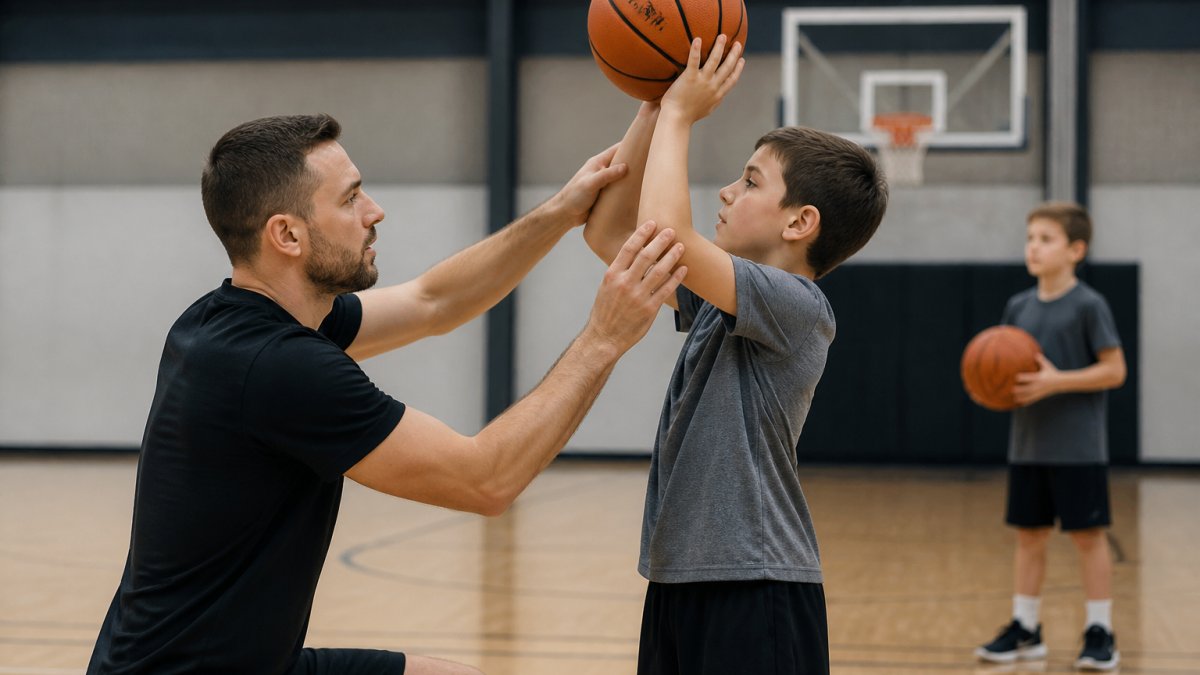
- The one-hand shot for ages 7-10 tucks the elbow under the ball with a smooth follow-through.
- Ages 11-13 should focus on repeatable mechanics under light pressure, because fifty focused shots beat two hundred sloppy ones.
- Avoid pushing young players to shoot from long range before they have the strength to do it correctly.
Table of Contents
- Why Shooting Form Should Change as Kids Grow
- Basketball Size by Age: The Right Ball for the Right Form
- How to Teach Kids to Shoot a Basketball: Ages 4-6
- Shooting Form for Ages 7-10: The One-Hand Transition
- Basketball Shooting Drills for Kids Ages 11-13: Building Consistency
- Shooting Form for Ages 14-16: Power, Range, and Rep-Level Habits
- Common Shooting Mistakes Parents and Coaches Should Avoid
- Finding the Right Program for Your Child's Shooting Development
- Frequently Asked Questions
Why Shooting Form Should Change as Kids Grow
A seven-year-old and a fifteen-year-old cannot shoot a basketball the same way. That sounds obvious, but plenty of well-meaning parents and coaches teach one form and expect it to hold for a decade. It won't.
Basketball shooting form by age is the practice of matching mechanics to a child's physical development, not forcing adult technique onto a growing body.
The reason is simple. Young kids lack the hand size, arm strength and coordination to shoot one-handed from distance. Their growth plates are still open. Their motor skills are still forming.
Teaching the wrong form too early creates habits that take years to undo. The right form at the right age builds confidence fast.
If you want a deeper general guide before the age-specific advice, our breakdown of how to improve basketball shooting form for kids covers the fundamentals. And if you're curious how motor skill development shapes training, this piece on age-appropriate basketball training for motor skill growth explains the why behind each stage.
Basketball Size by Age: The Right Ball for the Right Form
Ball size matters more than most parents realize. A ball that's too big forces bad mechanics. A ball that's too small builds sloppy control.
Youth basketball generally follows a size progression tied to age. Younger players use smaller, lighter balls so they can grip and release properly. As kids grow, they move up to heavier balls that match competitive play.
Here's how we think about it at Tier 1 Sports:
- Ages 4-6: Smallest youth ball. Light enough to lift and push with two hands.
- Ages 7-10: Slightly larger youth ball. Still light, but big enough to teach one-hand form.
- Ages 11-13: Standard youth size. Closer to regulation weight.
- Ages 14-16: Full regulation ball. Prepares players for rep and high school play.
Get this wrong and everything downstream suffers. A small child trying to shoot a regulation ball will heave it from the hip or launch it two-handed from the chest. Neither builds good form.
Check the ball before you check the form. It's the first thing we adjust when a new player joins.
Here is the age-by-age ball progression we use at Tier 1 Sports.
| Age group | Ball | Note |
|---|---|---|
| Ages 4-6 | Smallest youth ball | Light enough to lift and push with two hands |
| Ages 7-10 | Slightly larger youth ball | Still light, but big enough to teach one-hand form |
| Ages 11-13 | Standard youth size | Closer to regulation weight |
| Ages 14-16 | Full regulation ball | Prepares players for rep and high school play |
How to Teach Kids to Shoot a Basketball: Ages 4-6
The goal for ages 4-6 is simple: get the ball up and toward the hoop with two hands, using a smooth push motion. That's it. Celebrate every attempt.
For a broader look at teaching this age group, our guide on how to teach basketball fundamentals to young children walks through the basics. And when your child is ready for a structured, fun setting, our Ball For Fun program for ages 4-6 is built exactly for this stage.
The Two-Hand Push: Building Comfort and Control
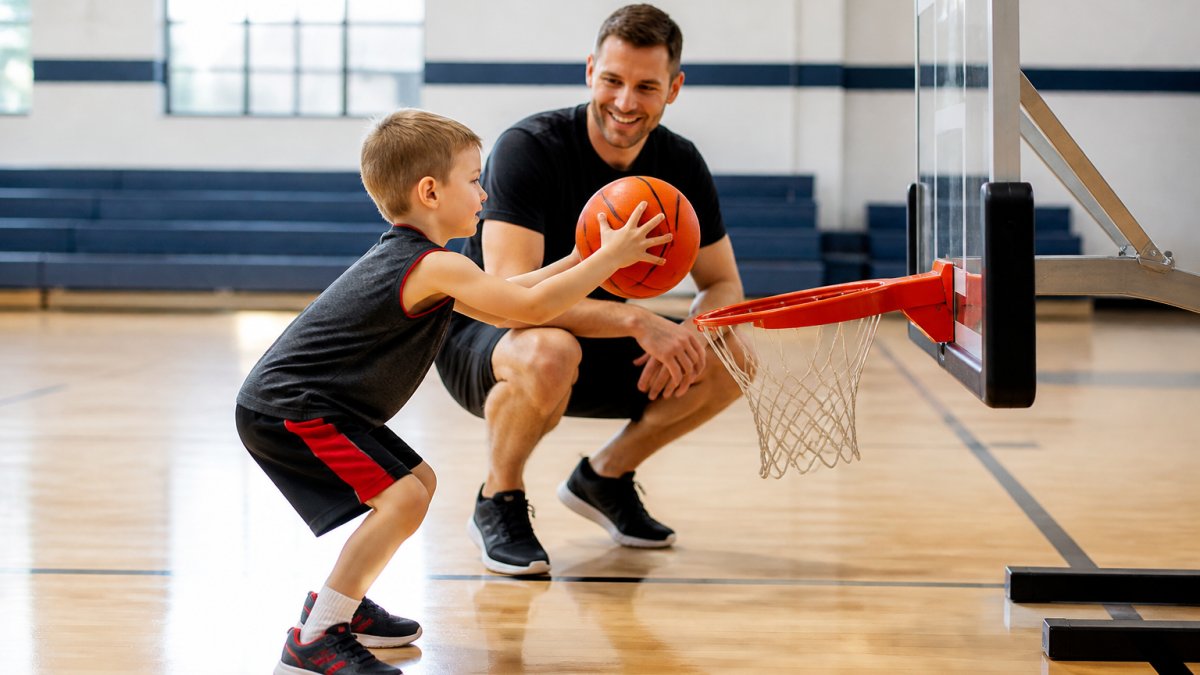
The two-hand push is the foundation. Your child holds the ball with both hands, brings it up near the chest, and pushes it toward the hoop in one smooth motion.
It won't look like a "real" jump shot. That's fine. It builds the coordination and confidence that one-hand shooting needs later.
Shooting Form for Ages 7-10: The One-Hand Transition
The one-hand shot for ages 7-10 uses the dominant hand to push the ball and the off-hand as a guide, with the elbow tucked under the ball and a smooth follow-through. This is the biggest mechanical shift in a young player's development.
Beginner Basketball Shooting Drills for Young Players
Short, frequent practice beats long sessions. Ten focused minutes a few times a week builds real habits.
Basketball Shooting Drills for Kids Ages 11-13: Building Consistency
Basketball shooting drills for kids at this stage should focus on repeatable mechanics under light pressure, building the muscle memory that holds up in games. We emphasize quality reps over volume. Fifty focused shots beat two hundred sloppy ones.
Shooting Form for Ages 14-16: Power, Range, and Rep-Level Habits
At ages 14-16, shooting form focuses on generating power from the legs, releasing at the top of a jump, and repeating the same motion under game speed. This is where form meets athleticism.
Common Shooting Mistakes Parents and Coaches Should Avoid
Watch out: Pushing a young player to shoot from long range before they have the strength to do it correctly leads to heaving and hip shots that take years to correct.
Finding the Right Program for Your Child's Shooting Development
At Tier 1 Sports, our programs include introductory basketball for ages 4-6 and competitive rep basketball for ages 11-16. Our programs are generously sponsored by Real Estate Broker David Robbio.
Frequently Asked Questions
At what age should a child start learning proper shooting form?
Kids can start learning basic shooting form as early as age 4, but the focus should be on fun and comfort rather than technique. At this age, a two-hand push shot is appropriate. Between ages 7 and 10, most kids are ready to transition to a one-hand shot with a guide hand. Waiting until a child has enough strength to reach the rim with proper form, usually around age 7 or 8, prevents bad habits from forming.
What size basketball should my child use at each age?
Basketball size by age matters for shooting form. Ages 4-6 typically use a size 3 or size 4 ball. Ages 7-10 usually use a size 5 ball. Ages 11-13 often move to a size 6, and ages 14+ use a size 7. Using a ball that is too big forces kids to alter their shot and can slow skill development.
How often should kids practice basketball shooting drills?
Short, frequent practice sessions work better than long ones. For ages 4-6, 10-15 minutes of shooting games two or three times a week is plenty. Ages 7-10 can handle 20-30 minutes three times a week. Ages 11-13 benefit from 30-45 minutes four times a week, and teens can practice 45-60 minutes most days. Consistency matters more than duration, especially for young players building muscle memory.
Should young kids use two hands to shoot?
Yes, for ages 4-6 a two-hand push shot is normal and appropriate because most kids that age lack the strength for a one-hand shot. Trying to force a one-hand shot too early leads to poor mechanics and frustration. Around age 7-8, as strength improves, coaches can introduce the one-hand shot with a guide hand. The transition should be gradual and based on the child's readiness, not a fixed age.
Every young player develops at their own pace, and the right form at the right age makes all the difference. If you want coaching that matches mechanics to your child's stage, from first-time shooters to rep hopefuls, Tier 1 Sports has a pathway for them. Our age-specific programs, focus on skill and passion together, and supportive coaching environment help every player realize their potential. Get started with Tier 1 Sports and watch your child build shooting form that lasts.