 Listicle
What Are the Best Basketball Conditioning Drills for Stamina?
Last Updated: October 27, 2026
Quick Summary
The best basketball conditioning drills for stamina copy the game's stop-start rhythm: suicides and sideline sprints, full-court dribble and layup runs, and cone weaves with crossovers. Start with three suicide repetitions for younger players and build to six or eight for older athletes, shrinking rest as fitness improves. Keep work bouts short and rest generous, especially with young players.
- Basketball stamina is not the same as distance running fitness, so train intervals instead of steady runs.
- Rest equals roughly twice the work time at first, then shrink the rest as fitness improves.
- Sideline sprints: sprint sideline to sideline and back, rest 30 seconds, repeat.
- Conditioning with the ball builds stamina and ball control at the same time.
- For ages 7 to 12, keep work bouts short, rest generous, and stop while kids still want more.
Table of Contents
- Why Basketball Stamina Is Built Differently
- The Best Basketball Conditioning Drills for Stamina
- Basketball Sprint Drills That Mirror Game Speed
- Youth Basketball Conditioning Drills for Ages 7 to 12
- Building a Basketball Conditioning Workout Plan
- How to Improve Stamina for Basketball Without Overtraining
- Booking Your Child Into a Tier 1 Sports Program
- Frequently Asked Questions
Why Basketball Stamina Is Built Differently
Basketball stamina is the ability to repeat short, explosive efforts, recover quickly, and still execute skills late in a game. It is not the same as distance running fitness. Basketball stamina is not the same as distance running fitness.
A possession lasts seconds. Then comes a sprint back on defense, a jump stop, a box-out. The heart rate spikes, drops, spikes again. Conditioning has to copy that pattern, which means intervals, shuttles, and change-of-direction work rather than steady running, as NASM's guide to training basketball players explains.
That is the throughline for everything below: the best basketball conditioning drills for stamina train the game's stop-start rhythm, not a runner's rhythm.
The Best Basketball Conditioning Drills for Stamina
These three drills form the core of most conditioning sessions we run. Each one is simple to set up and easy to scale by age or fitness level.
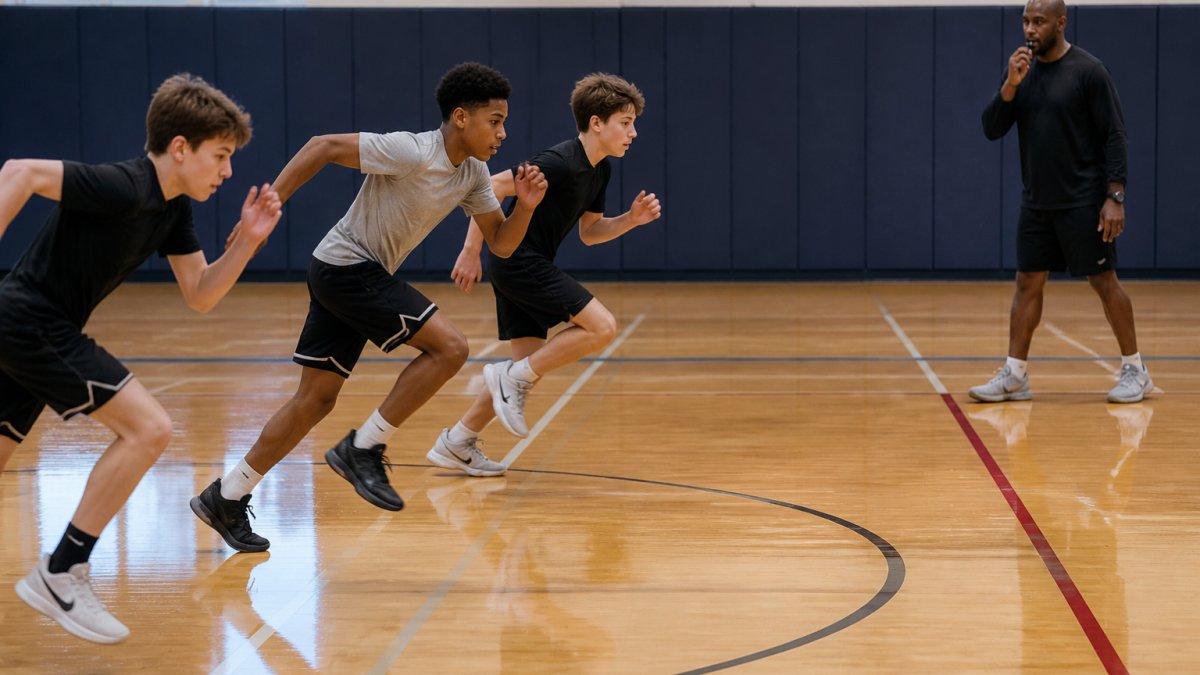
Suicides and Sideline Sprints
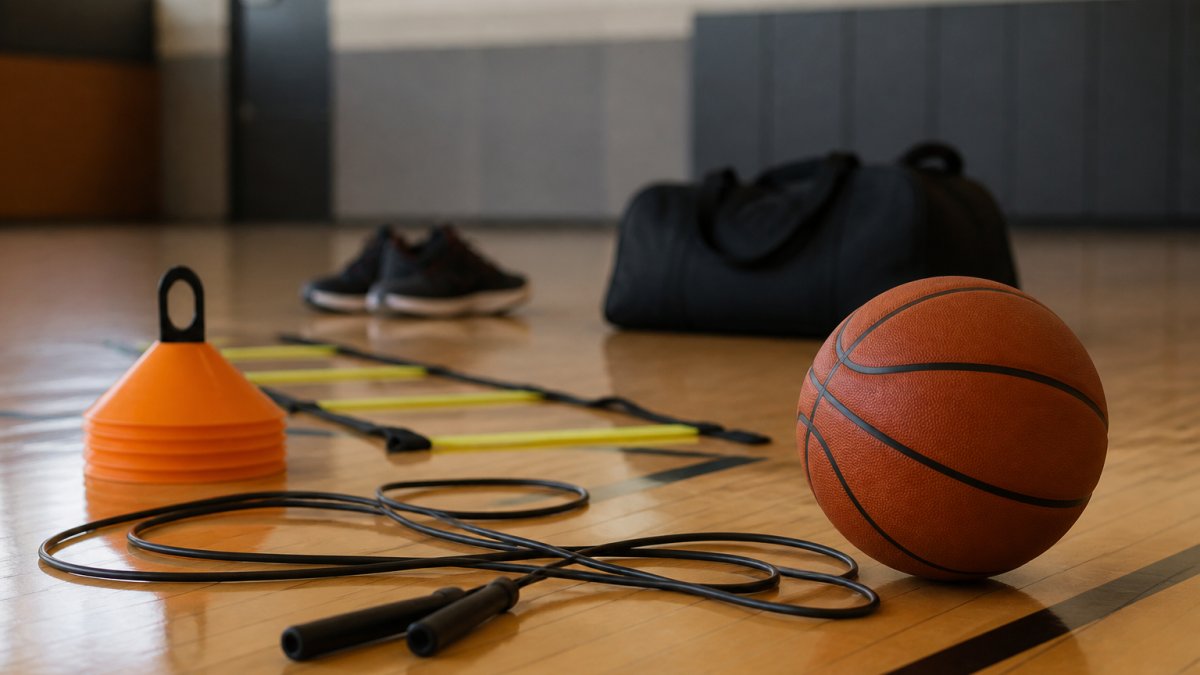
Suicides teach players to accelerate, decelerate, and change direction while tired. Set cones at the free-throw line, half court, and the far free-throw line. Players sprint to each line and back, touching the floor at every turn.
Start with three repetitions for younger players and build to six or eight for older athletes. Rest equals roughly twice the work time at first, then shrink the rest as fitness improves.
Sideline sprints are the simpler cousin: sprint from sideline to sideline and back, rest 30 seconds, repeat. Watch out: players who round off their turns instead of planting and pivoting lose the change-of-direction benefit entirely.
Full-Court Dribble and Layup Runs
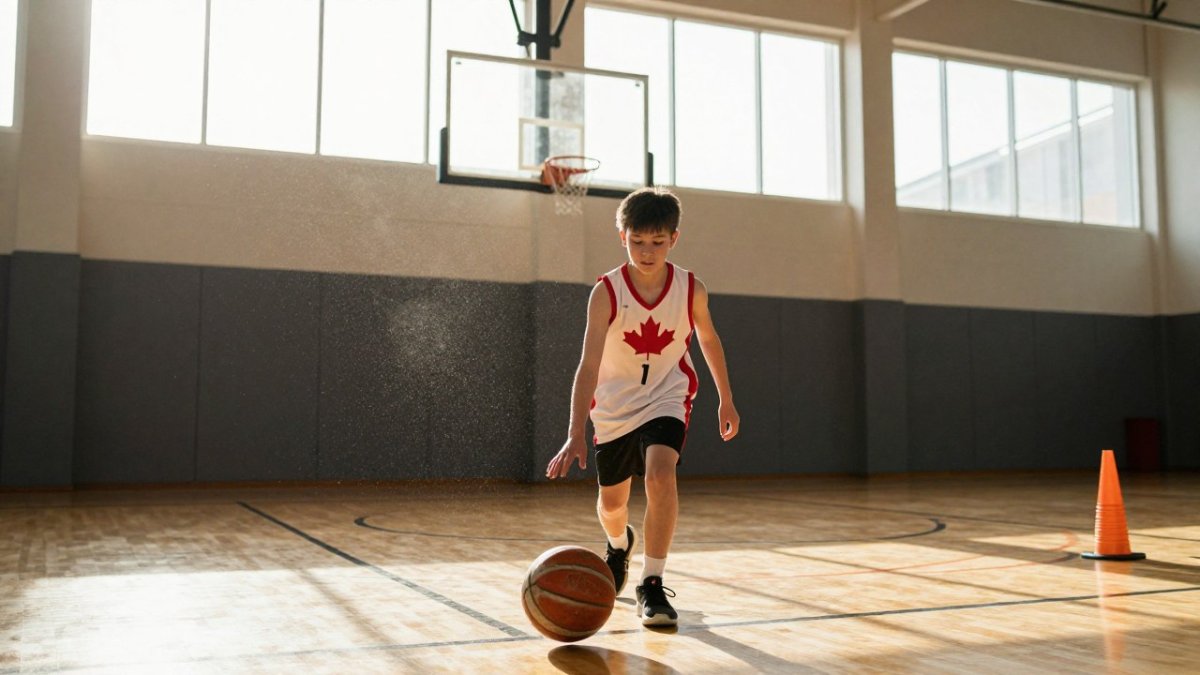
This drill adds the ball, which is the point. Players dribble full court at speed, finish a layup, grab the rebound, and go back the other way. Repeat for a set number of trips or a set time.
Conditioning with the ball in hand builds stamina and ball control at the same time, a combination skill-based conditioning guidance treats as central to individual workouts. If a player's dribble gets sloppy on trip four, that is the fatigue talking, and it is exactly what the drill is training them to fight through.
Cone Weave with Crossovers
Set five or six cones in a line. Players weave through at speed, switching hands at each cone. Go up and back, then rest briefly and repeat.
The crossover weave trains lateral movement and footwork under fatigue. For younger players, widen the cone spacing and slow the required pace. For older athletes, add a defensive slide segment at the end of each length.
Basketball Sprint Drills That Mirror Game Speed
Game speed is not a straight-line sprint. It is a three-step burst, a stop, a redirect. Sprint drills should reflect that.
Try 17s and Sweet 16s, two sideline sprint formats that build speed endurance in short, repeatable blocks. A 17-second sprint with a set rest, repeated, mimics the length of a hard possession better than a 100-metre dash ever will. For more ideas that translate track-style work into court speed, see our track and field drills for basketball speed.
Youth Basketball Conditioning Drills for Ages 7 to 12
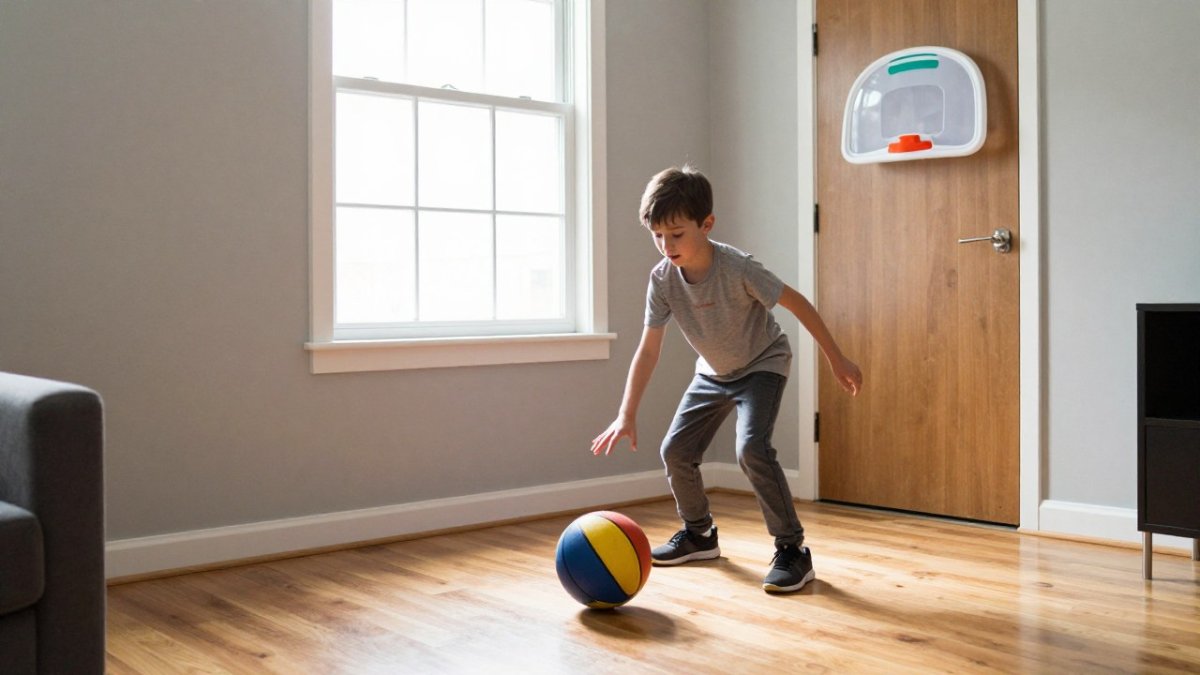
Young players build stamina through play, not punishment. At these ages, conditioning should look like games: relay races with a dribble, tag variants with lateral slides, cone courses timed against a partner.
Keep work bouts short, rest generous, and stop while kids still want more. A common mistake is treating conditioning as a consequence for losing a drill. That teaches players to dread fitness work, and it does not build stamina any faster.
For age-appropriate workouts parents can run at home, our guide to basketball conditioning workouts for youth players walks through the details.
Building a Basketball Conditioning Workout Plan
A basketball conditioning workout plan can be built around intervals rather than long runs.
| Session Focus | Example Drills | Duration | Frequency |
|---|---|---|---|
| Speed endurance | Suicides, sideline sprints | 20-25 min | 2x per week |
| Skill under fatigue | Dribble and layup runs, cone weave | 20-25 min | 1-2x per week |
| Recovery and mobility | Light shooting, stretching | 15-20 min | 1x per week |
How to Improve Stamina for Basketball Without Overtraining
If you are worried your child is being pushed too hard, our article on managing burnout in competitive youth sports covers the warning signs in detail.
Booking Your Child Into a Tier 1 Sports Program
You can also explore all available programs by age and skill level, from introductory sessions for ages 4 to 6 through competitive rep basketball for older athletes.
Every program is built around skill development and a genuine love of the game.
Frequently Asked Questions
What are the best conditioning drills for basketball stamina?
The most effective basketball conditioning drills combine movement with the ball. Suicides and sideline sprints build repeat-sprint ability, full-court dribble and layup runs train skills under fatigue, and cone weaves with crossovers improve change of direction. Pair these with interval work that copies the game's short bursts and brief rests. Aim for short, intense efforts rather than long slow runs, because basketball demands repeated high-effort plays, not steady jogging.
Are sprints or long-distance running better for basketball conditioning drills?
Sprints and intervals are better. A basketball game is a series of short explosive efforts followed by brief recovery, so sprint drills and shuttle formats prepare players for that rhythm. Long-distance running builds general aerobic fitness but does little for the repeated burst-and-recover pattern of a game. Use sprint drills two to three times a week and keep any longer running to a light recovery session.
How often should basketball players do conditioning drills?
Two to three conditioning sessions per week is enough for most youth players, spaced out so there is at least one rest day between hard sessions. Skill practice and games also add load, so count those. Young athletes ages 7 to 12 should keep conditioning short and game-based, while older players can handle more structured interval work. Watch for lingering soreness or tiredness, which signal it is time to ease off.
How can beginners build basketball stamina safely?
Start with short intervals and generous rest. A simple approach is 20 seconds of work followed by 40 seconds of rest, repeated six to eight times, using drills like cone weaves or dribble runs. Add a little each week rather than jumping straight into full suicides. Warm up properly, keep sessions under 30 minutes at first, and build a base with light running or games before adding intense sprint work.
Can basketball drills improve stamina and speed at the same time?
Yes. Drills that include the ball, such as full-court dribble and layup runs or cone weaves with crossovers, train stamina and speed together because players sprint, stop, change direction and handle the ball in one sequence. That is why skill-based conditioning is often more useful than running laps. It also keeps young players engaged, since they are practising basketball rather than just fitness work.
Building real basketball stamina takes weeks of consistent, game-specific work, and it takes a coach who knows when to push and when to rest. Tier 1 Sports offers age-specific programs from 4 to 16, both recreational and competitive rep pathways, and a community-focused approach that keeps kids excited to come back. Get started with Tier 1 Sports and watch your child's stamina, skills, and confidence grow together.