 ultimate-guide
Common Basketball Injuries in Youth Athletes: Prevention Guide
Table of Contents
- Common Basketball Injuries in Youth Athletes
- Basketball Injury Prevention for Kids: A Practical Framework
- Youth Basketball Warm-Up Exercises: Pre-Game and Pre-Practice Routine
- Youth Basketball Overuse Injuries: Recognizing Training Load and Rest
- Return to Play After a Basketball Injury: Safe Progression
- Age-Specific Risk Factors and Development Considerations
- Concussion Recognition and Response in Youth Basketball
- Frequently Asked Questions
Last Updated: October 6, 2026
Common Basketball Injuries in Youth Athletes
Basketball injuries youth athletes experience range from sudden acute injuries to gradual overuse conditions. At Tier 1 Sports, injury prevention is woven into everything we teach. Most basketball injuries in youth athletes are preventable with the right preparation, technique, and training load management.
Ankle Sprains and Ankle Instability
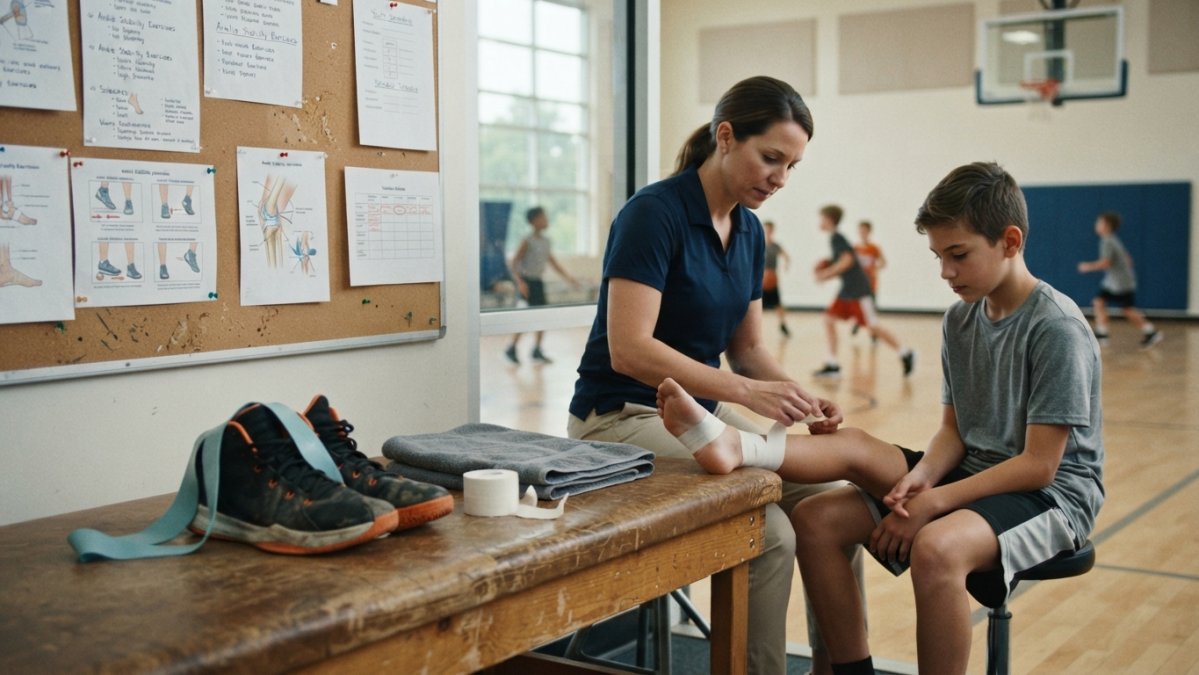
Ankle sprains are the most frequent injury in youth basketball, occurring when a player lands awkwardly, steps on another player's foot, or changes direction too quickly, stretching or tearing the ankle ligaments.
Ankle injuries often recur: once ligaments weaken without proper rehabilitation, ankle instability develops, the ankle feels wobbly or "gives way" during play, increasing the risk of another sprain.
Prevention focuses on ankle strength and proprioception, the body's awareness of where it is in space.
Knee Injuries and ACL Damage
Knee injuries in youth basketball range from minor patellar tendonitis (jumper's knee) to serious ligament tears, particularly ACL (anterior cruciate ligament) injuries, which are critical for stability during jumping, landing, and cutting.
ACL injuries are more common in young female athletes than males, partly due to differences in hip strength, landing mechanics, and hormonal factors.
Knee injuries also include patellofemoral pain syndrome, which causes pain around the kneecap from poor landing mechanics or muscle imbalances.
Overuse Injuries and Repetitive Stress
Overuse injuries develop when young athletes train too much, too intensely, or with inadequate recovery. Common conditions include Achilles tendinitis, Osgood-Schlatter disease, Sever's disease, and jumper's knee.
Osgood-Schlatter and Sever's disease are common in youth athletes because their bones are still growing: during growth spurts, tendons tighten, and repetitive jumping and running stress these attachment points.
The key to preventing overuse injuries is monitoring training volume, the total amount of basketball activity per week, and ensuring adequate rest days and off-season breaks.
Muscle Strains, Contusions, and Finger Injuries
Muscle strains occur when fibers tear from overstretching or overloading, commonly in the hamstring, calf, and hip flexors. Contusions (bruises) happen when direct contact causes bleeding under the skin.
Finger sprains and fractures are also common in basketball due to contact with the ball, other players, or the rim. A jammed finger might seem minor but can sideline a player if not managed properly.
Basketball Injury Prevention for Kids: A Practical Framework
Preventing basketball injuries requires a multi-layered approach: building strength and stability, teaching proper movement patterns, managing training load, and ensuring recovery. Tier 1 Sports emphasizes the "Golden Window", ages 7 to 12, when young athletes develop fundamental movement skills and neuromuscular control.
Neuromuscular Training and Balance Work
Neuromuscular training teaches the body to move efficiently and stabilize joints during dynamic basketball movements through balance work, proprioceptive drills, and exercises that strengthen the muscles supporting the ankle, knee, and hip.
Effective neuromuscular training for youth includes:
- Single-leg balance exercises (progress from eyes open to eyes closed)
- Lateral lunges and lateral band walks to strengthen hip abductors
- Calf raises on one leg to build ankle stability
- Wobble board or balance pad exercises to challenge proprioception
- Agility ladder drills that emphasize controlled foot placement
- Jump-and-stick landings where players jump and hold a stable position for 2-3 seconds
Young athletes should perform these exercises 2-3 times per week, ideally during warm-up or conditioning, starting at age 7 and progressing through age 16.
Strength Training and Conditioning
Basketball demands explosive power, but young athletes also need foundational strength in the muscles supporting the knee, hip, and ankle. Strength training should focus on bodyweight exercises and resistance bands before progressing to weights.
Key strength areas for basketball injury prevention:
- Hip strength (glutes and hip abductors) to control knee movement during landing
- Core stability to maintain posture and transfer power from lower body to upper body
- Ankle and calf strength to support the ankle joint
- Quadriceps and hamstring balance to protect the knee
- Shoulder and rotator cuff strength for throwing and shooting stability
Conditioning also matters: young athletes who tire during games develop poor movement patterns, increasing injury risk. Progressive conditioning builds work capacity and helps athletes maintain technique throughout games and practices.
Proper Landing Mechanics and Cutting Technique
How a young athlete lands from a jump and cuts during direction changes directly impacts injury risk. Poor landing mechanics, landing with a straight leg, knees caving inward, or upper body leaning forward, place excessive stress on the knee and ankle.
Proper landing mechanics involve:
- Landing on the midfoot (not the heel)
- Bending the knees and hips to absorb force
- Keeping the knees aligned over the toes (not collapsing inward)
- Maintaining an upright torso
- Distributing weight evenly across both feet
Cutting technique similarly requires controlled deceleration. Young athletes should practice cutting at angles (45 degrees, 90 degrees) with proper foot placement and knee control, drilled until automatic in games.
Youth Basketball Warm-Up Exercises: Pre-Game and Pre-Practice Routine
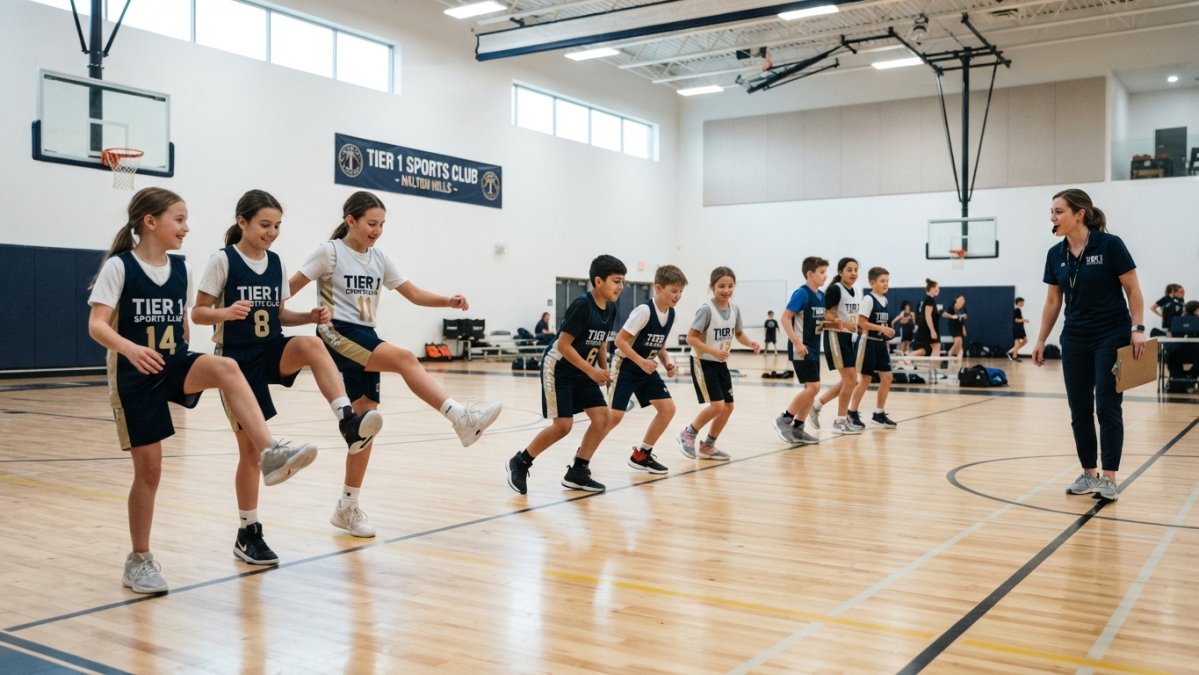
A proper warm-up prepares the body for basketball by increasing heart rate, improving mobility, activating key muscles, and preparing the nervous system for dynamic movement. A 10-15 minute warm-up should be part of every practice and game.
Dynamic Stretching and Movement Preparation
Dynamic stretching moves through a full range of motion rather than holding static stretches, increasing blood flow, improving mobility, and preparing muscles for activity. Static stretching (holding 20-30 seconds) is better saved for after practice or games.
Dynamic warm-up sequence (5-7 minutes):
- Light jogging around the court (1-2 minutes)
- Leg swings (forward/back and side to side, 10 per leg)
- Walking lunges with a torso twist (10 per leg)
- Lateral shuffles across the court (2-3 passes each direction)
- High knees running (1 length of court)
- Butt kicks running (1 length of court)
- Inchworms (walk hands to a plank, then walk feet back, 10 reps)
Sport-Specific Activation Drills
After general movement preparation, young athletes should perform basketball-specific drills that activate the muscles used in the sport.
Sport-specific activation (5-8 minutes):
- Footwork drills: defensive slide stance, crossover steps, and jump stops
- Shooting form without a ball: practice shooting mechanics 10 times
- Jumping drills: vertical jumps, broad jumps, or single-leg hops (5-10 reps each)
- Balance and proprioception: single-leg stands or balance drills (30 seconds each side)
- Agility ladder: quick feet through ladder patterns (2-3 passes)
- Cone drills: cutting and direction change at game-like angles
These drills activate the nervous system and prepare muscles for basketball's specific demands. Young athletes who warm up properly experience fewer injuries and perform better.
Youth Basketball Overuse Injuries: Recognizing Training Load and Rest
Basketball injuries youth athletes sustain as overuse injuries develop when training volume exceeds recovery capacity. Because growth and recovery ability vary, one training schedule doesn't fit all athletes. Recognizing overuse signs and managing training load is crucial for keeping young athletes healthy. Integrating chiropractic recovery options into a comprehensive wellness plan helps address the structural imbalances that often precede chronic pain in developing players.
Common Overuse Conditions in Young Athletes
Overuse injuries in youth basketball include:
- Jumper's knee (patellar tendonitis): Pain below the kneecap, worse with jumping and running. Common in players who jump frequently without adequate rest.
- Achilles tendinitis: Pain in the back of the heel or lower calf. Develops from repetitive jumping and running.
- Osgood-Schlatter disease: Painful bump below the kneecap in growing athletes. Caused by tight quadriceps and repetitive jumping stress on the growth plate.
- Sever's disease: Heel pain in young teens (ages 10-14) during growth spurts. Caused by tight calf muscles and repetitive running/jumping.
- Stress fractures: Tiny cracks in bone from repetitive impact. Less common in basketball than in running sports but possible with high training volume.
These conditions share a common cause: training volume exceeds recovery capacity. The solution involves reducing volume, improving technique, and ensuring adequate rest.
Monitoring Training Volume and Recovery
Young athletes should not play year-round basketball, overuse injuries spike without off-season breaks. A healthy approach includes:
- Limit basketball to 8-10 months per year. Young athletes need 2-3 months away from organized basketball to allow tissues to recover and to develop other athletic skills.
- Monitor weekly volume. Young athletes should not exceed 15-20 hours of organized basketball per week (including practices and games). Individual capacity varies by age, maturity, and training history.
- Include rest days. Young athletes need at least 1-2 complete rest days per week where they do no organized sports.
- Watch for warning signs: pain that worsens during play, swelling that doesn't improve with ice, or persistent soreness after rest days all signal overuse.
- Rotate positions and roles. If possible, young athletes should play multiple positions and take breaks during practice to reduce repetitive stress on specific tissues.
Return to Play After a Basketball Injury: Safe Progression
Returning to basketball too quickly increases the risk of reinjury and chronic problems. A structured return-to-play process ensures young athletes are physically and mentally ready.
Injury-Specific Return-to-Play Criteria
Return-to-play decisions depend on injury type, severity, and individual factors. A general framework includes:
- Pain-free range of motion: The injured joint or muscle should move through a full range of motion without pain.
- Strength recovery: The injured area should have strength comparable to the uninjured side (typically 85-90% strength).
- Functional tests: The athlete should be able to perform sport-specific movements (running, jumping, cutting) without pain or instability.
- Psychological readiness: The athlete should feel confident returning to play and not fear reinjury.
Return-to-play progression typically follows this timeline:
- Days 1-3: Rest, ice, compression, elevation (RICE protocol)
- Days 4-7: Gentle range-of-motion exercises and light stretching
- Week 2: Progressive strengthening exercises and balance work
Ankle sprains might follow this timeline over 2-3 weeks, while ACL injuries require 4-6 months or longer.
Preventing Reinjury and Building Confidence
Young athletes who return too quickly often reinjure themselves, extending recovery and creating psychological barriers. Building confidence requires:
- Graduated return to sport-specific drills before full-speed play
- Continued strengthening and balance work even after return to play
- Communication with coaches about limitations and concerns
- Gradual increase in game time rather than immediate full participation
A young athlete returning from an ankle sprain, for example, might start with 10 minutes of game time, then progress to 15, 20, and 30 minutes over several games. This approach allows tissues to adapt and confidence to build naturally.
Age-Specific Risk Factors and Development Considerations
Injury risk and prevention strategies change as young athletes grow.
Young athletes aged 7-10 benefit most from fundamental movement skill development and light strength work.
Athletes aged 15-16 have nearly mature bodies but may still be growing.
Female athletes face higher ACL injury risk than male athletes, partly due to differences in hip strength, landing mechanics, and hormonal factors.
Concussion Recognition and Response in Youth Basketball
While less common than ankle and knee injuries, concussions do occur in basketball from falls, collisions, or contact with the ball.
Return to play after a concussion requires gradual progression: complete rest, light aerobic activity, sport-specific drills, non-contact practice, then full contact and competition.
Keeping young basketball players healthy requires a commitment to prevention, proper technique, and smart training practices.
Frequently Asked Questions
What are the most common basketball injuries in youth athletes?
The most frequent injuries include ankle sprains, knee injuries (especially ACL tears), muscle strains, and finger sprains. Overuse injuries like jumper's knee and Achilles tendinitis are also common in young athletes who increase training intensity too quickly. Acute injuries typically occur during jumping, landing, or sudden direction changes, while overuse injuries develop gradually from repetitive stress.
How can basketball injury prevention for kids reduce injury risk?
Structured prevention programs can reduce injury risk through neuromuscular training, strength work, and proper warm-up routines. These programs teach young athletes correct landing mechanics, improve ankle stability, and build hip and core strength. Regular balance training and controlled progression of training load also help prevent both acute injuries and overuse conditions.
What should a youth basketball warm-up exercises routine include?
An effective warm-up includes 5-10 minutes of light cardio, dynamic stretching (leg swings, walking lunges, arm circles), and sport-specific activation drills like lateral shuffles and jumping mechanics practice. This prepares muscles and joints for activity, increases heart rate, and activates the neuromuscular system. A proper warm-up reduces injury risk and improves performance on the court.
Why are youth basketball overuse injuries increasing, and how can parents monitor training load?
Overuse injuries occur when young athletes increase training volume or intensity too quickly without adequate rest. Parents should track practice and game frequency, watch for warning signs like persistent pain or fatigue, and ensure athletes have at least one rest day per week. Gradual progression, proper technique, and cross-training with other sports help prevent conditions like Osgood-Schlatter disease and Sever's disease.
When is it safe for a young athlete to return to play after a basketball injury?
Return to play after a basketball injury should follow a progressive, sport-specific protocol rather than a fixed timeline. Athletes must regain full range of motion, pass strength tests, and demonstrate pain-free movement before advancing. Medical clearance is essential, and a gradual return starting with light activity and building toward full-intensity play reduces reinjury risk and builds confidence.
How do age and development affect basketball injury risk in young athletes?
Younger children (under 8) have developing coordination and balance, making them prone to falls and acute injuries. Pre-teens (9-12) experience rapid growth, increasing vulnerability to overuse injuries and growth-plate stress. Adolescents (13-16) face higher ACL injury risk, especially females, due to biomechanical changes and increased training intensity. Age-appropriate conditioning and technique coaching are critical at each stage.
What should parents and coaches do if a young athlete shows signs of a concussion?
Remove the athlete from play immediately and seek medical evaluation. Concussion signs include headache, dizziness, confusion, nausea, or sensitivity to light and noise. Never return an athlete to play on the same day. Follow a gradual return-to-play protocol with medical clearance, starting with light activity and progressing only if symptom-free. Rest and cognitive recovery are as important as physical healing.