 How-to
7 Signs of a Healthy Youth Sports Environment
Last Updated: October 26, 2026
Quick Summary
A healthy youth sports environment is one where kids feel safe, supported, and excited to come back, leaving practice happier than they arrived. Look for coaches who correct without shaming, mistakes that are safe to make, room for fun alongside competition, and every teammate feeling they belong.
- Kids in a healthy program talk about practice without being asked and seem energized, not drained.
- Supportive coaches correct calmly or in private, naming the fix rather than the failure.
- Ask at sign-up who to contact with a concern and what the reporting process is.
- A strong program surveys players anonymously and tracks retention and injury trends over a season.
- Red flags include shaming as a teaching tool, unexplained unequal playing time, and no way to raise a concern.
Table of Contents
- Why the Right Youth Sports Environment Changes Everything
- 1. Kids Leave Practice Happier Than They Arrived
- 2. A Supportive Youth Sports Coach Corrects Without Shaming
- 3. Psychological Safety in Youth Sports Means Mistakes Are Safe
- 4. Healthy Competition for Young Athletes Still Leaves Room for Fun
- 5. Teammates Belong, Not Just the Strongest Players
- 6. Your Youth Sports Parent Checklist for Evaluating a Program
- 7. Watch for Warning Signs Before You Commit
- Frequently Asked Questions
Why the Right Youth Sports Environment Changes Everything
A healthy youth sports environment is a setting where kids feel safe, supported, and excited to come back. That sounds simple.
Kids who play in supportive settings stay in the game longer. They build confidence, make friends, and learn to handle setbacks.
The opposite is also true. A harsh or chaotic program can turn a happy kid into a stressed one.
Below, we break down seven signs of a healthy youth sports environment. Each one is something you can watch for. Together, they give you a clear way to judge any program before you commit.
1. Kids Leave Practice Happier Than They Arrived
Watch the parking lot. That is where the truth shows up.
Kids who leave a good practice are loud, tired, and smiling. They chatter about a drill or a shot.
A healthy setting builds physical wellness and mental health at the same time. Kids move, sweat, and burn off stress.
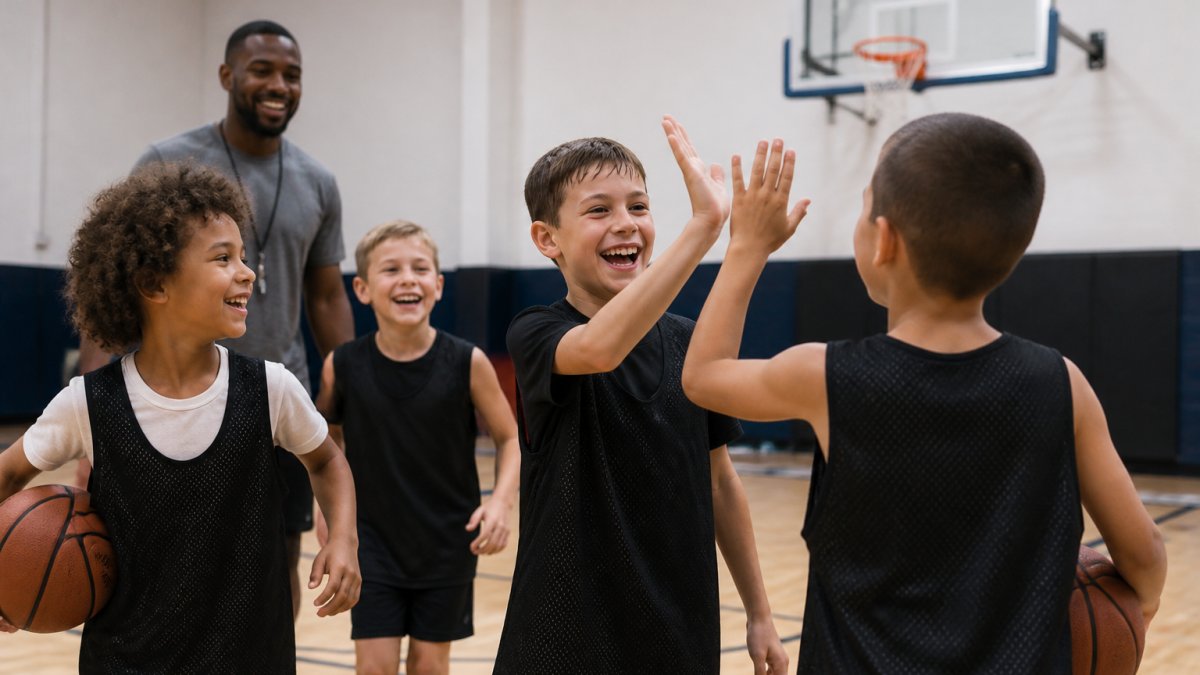
Here is what to look for:
- Your child talks about practice without being asked
- They seem energized, not drained
- They ask to go back
If your child dreads practice week after week, pay attention. That is a signal worth exploring.
2. A Supportive Youth Sports Coach Corrects Without Shaming
A supportive youth sports coach fixes mistakes without making a child feel small.
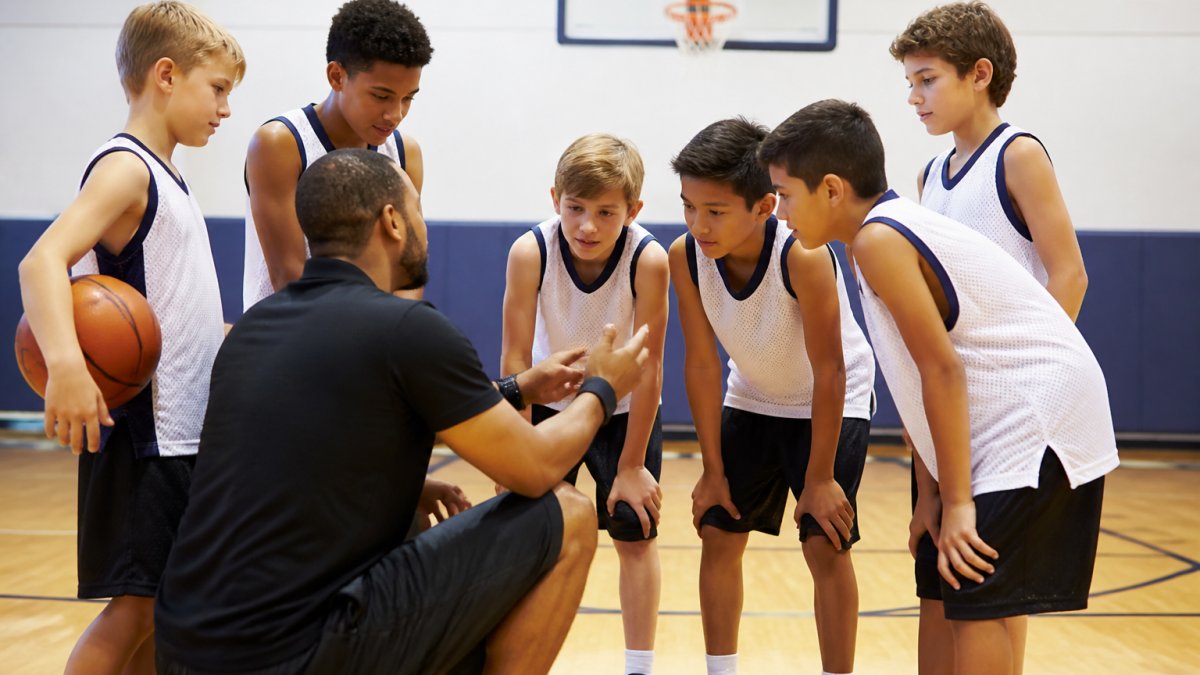
Good coaches correct in private or with a calm voice. They name the fix, not the failure.
Coaches who confuse loud with effective can be a concern. Yelling gets attention.
Parents can spot this fast. Watch how a coach reacts after a missed shot or a bad pass.
If you want a deeper guide, read our advice on what to look for in a youth basketball coach. You can also explore effective communication strategies for youth basketball coaches to see how good correction actually sounds.
3. Psychological Safety in Youth Sports Means Mistakes Are Safe
Psychological safety in youth sports is the belief that a player can take a risk without being punished for it.
When kids feel safe, they try new moves. They ask for help. They take the shot instead of passing it off. That is how skill development actually happens.
But psychological safety is not a vibe. It is a set of observable practices.
What Psychological Safety Looks Like in Practice
A program that gets this right may show these practices:
- Separates the mistake from the player. A coach says "that pass was late" rather than "you are always late." The correction targets the action, not the child.
- Rewards the attempt, not just the outcome. A player who tries a new move and fails gets acknowledged for trying. Over time, that teaches the whole team that risk is safe.
- Models fallibility from the top. Coaches who say "I got that drill wrong, let's reset" give players permission to be imperfect.
Age-Appropriate Indicators
A single set of signs does not fit every developmental stage. Watch for these differences:
- Ages 4 to 7: Safety shows up as willingness to join the group, try a drill, and come back next week. Fear looks like clinging to a parent or refusing to participate.
- Ages 8 to 11: Safety shows up as asking the coach a question in front of peers and volunteering for a new position. Fear looks like hiding at the back of the line or avoiding eye contact after a mistake.
- Ages 12 to 17: Safety shows up as admitting a mistake without being prompted and giving honest feedback on a team survey. Fear looks like playing it safe, avoiding leadership roles, or quitting mid-season.
Safeguarding and Reporting: The Part Most Programs Skip
Psychological safety is not only about tone. It is also about boundaries and process. A healthy program has clear, written procedures for safeguarding and reporting. Ask for them before you commit.
What good looks like:
- Written codes of conduct for coaches, parents, and athletes, reviewed at the start of each season.
- A named contact for concerns, separate from the coach, so a child or parent is not reporting to the person causing the problem.
- A clear reporting path with timelines.
If a program cannot tell you who to call and what happens next, that is a gap. It does not mean the program is unsafe. It means the safety net is informal, and informal nets fail under pressure.
A Quick Safety Check for Parents
Ask yourself a few questions:
- Can your child ask a coach a question without fear?
- Do teammates support each other after an error?
- Is taking risks encouraged, or punished?
A program that gets this right protects mental health and keeps kids in the game. That matters more than any single win.
4. Healthy Competition for Young Athletes Still Leaves Room for Fun
Healthy competition for young athletes pushes kids to improve without crushing the joy. The two can live together.
Competition teaches respect, fair play, and sportsmanship. It shows kids how to win with grace and lose with dignity.
But fun has to stay in the room. When winning becomes the only goal, kids burn out.
Watch for a balance:
- Scores matter, but effort is praised too
- Every player gets real time on the court
- Coaches talk about growth, not just results
A program that protects fun while teaching competition gives young athletes the best of both worlds.
5. Teammates Belong, Not Just the Strongest Players
Belonging is the quiet engine of a great team. Kids who feel part of the group show up differently. They try harder.
A healthy setting makes room for every player, not just the stars. The last kid on the bench still feels like a teammate.
Here is what a strong team culture looks like:
- Players cheer for each other, on and off the court
- No one gets left out of drills or huddles
- New kids get welcomed, not ignored
Belonging also protects kids. When a child feels connected, stress and anxiety have less room to grow.
6. Your Youth Sports Parent Checklist for Evaluating a Program
Use this youth sports parent checklist before you sign up. It turns the signs above into questions you can ask and things you can watch. This checklist adds a way to consider culture over time and an inclusion check.
The Core Checklist
| What to Check | What Good Looks Like |
|---|---|
| Coach behavior | Corrects calmly, never shames |
| Kid mood after practice | Happy, energized, talking about it |
| Playing time | Every child gets real minutes |
| Fun vs. winning | Growth praised, not just scores |
| Team culture | Players support each other |
| Communication | Clear updates for parents |
| Safety and reporting | Staff know how to handle concerns |
| Inclusion | Kids with disabilities, lower incomes, and different backgrounds are actively included |
Walk through it in person. Watch a practice. Talk to other parents. Ask how the program handles a child who is struggling.
Measure Culture Over Time, Not Just on Day One
A single visit tells you what a program looks like on a good day. Culture is what happens across a season. Here is a simple framework you can use to assess it over time:
- Anonymous athlete feedback. Ask whether the program surveys players at midseason and end of season, and whether results are shared with parents in summary form. A healthy program asks kids how they feel and acts on the answers.
- Retention. Ask what percentage of players return the following season. High retention is a strong signal that kids and families want to be there.
- Injury trends. Ask whether the program tracks injuries and adjusts training volume.
You do not need perfect data. You need to know whether the program measures itself at all. A program that never asks is a program that cannot improve.
The Inclusion Check
Equity is easy to claim and harder to practice. Ask these questions to see whether inclusion is real:
- Disability inclusion: Can a child with a physical or cognitive disability participate in a meaningful way, or is there only a token role? Ask what adaptations the program has made in the past year.
- Affordability: Are there fee assistance, equipment lending, or payment plans? A program that only works for families who can pay full freight is not accessible to everyone.
- Cultural belonging: Do coaches know and respect players' backgrounds, languages, and observances? Ask how the program handles scheduling around cultural or religious commitments.
If you are ready to compare real options, you can explore basketball programs for ages 4 to 17 and see how each one fits your child's age and skill level. For a full walkthrough, read our guide on how to choose a youth basketball club.
You can ask a program: How do you measure culture? How do you include every child? Who do I call with a concern? If any answer is vague, keep asking.
7. Watch for Warning Signs Before You Commit
Some warning signs should make you pause. Spotting them early saves your child a hard season.
Watch out: a coach who benches kids for mistakes is teaching them to fear failure. That fear follows kids off the court. Also watch for programs where the loudest parent runs the team, or where safety concerns get brushed aside.
Red flags to note:
- Shaming or yelling as a teaching tool
- Unequal playing time with no clear reason
- No process for raising a concern
Trust what you see. If something feels off, ask questions before you commit.
Frequently Asked Questions
What are the signs of a healthy youth sports environment?
Look for kids who leave practice in a good mood, a coach who corrects mistakes without humiliating anyone, and a team where quieter or less skilled players still get meaningful court time. You can ask about safeguarding steps, whether parents are welcomed, and how the schedule fits around school and rest. Your child's feelings about practice and teammates can help you understand their experience.
How can I tell if my child's coach is actually supportive?
Watch how the coach handles a missed shot or a bad pass. You can listen for language like 'try this next time' instead of 'you always do that.' You can also observe how the coach responds to your child and communicates with parents. Ask your child directly: does the coach make them feel like they can try things without fear?
How much pressure is too much for a young athlete?
If your child dreads practice or hides mistakes from you, consider discussing your concerns with them and the coach. You can also ask whether the schedule leaves room for rest and other commitments.
What should I do if my child stops enjoying their sport?
Start by asking what changed, without leading the answer. Sometimes the issue is a specific coach, a teammate conflict, or simply too many commitments stacked on top of school. Ask whether they want a break, a different program, or a slower schedule. You can ask the coach or program about your child's concerns and observe how they respond.
Every child deserves a program where they feel safe, supported, and excited to play. At Tier 1 Sports, we build that setting on purpose. Our programs are tailored by age from 4 to 16, with both recreational and competitive rep pathways. We focus on skill development and a real passion for the game, all in a supportive community. Get started with Tier 1 Sports and help your young athlete realize their full potential.