 How-to
How to Keep Youth Basketball Players Hydrated
Last Updated: October 31, 2026
Quick Summary
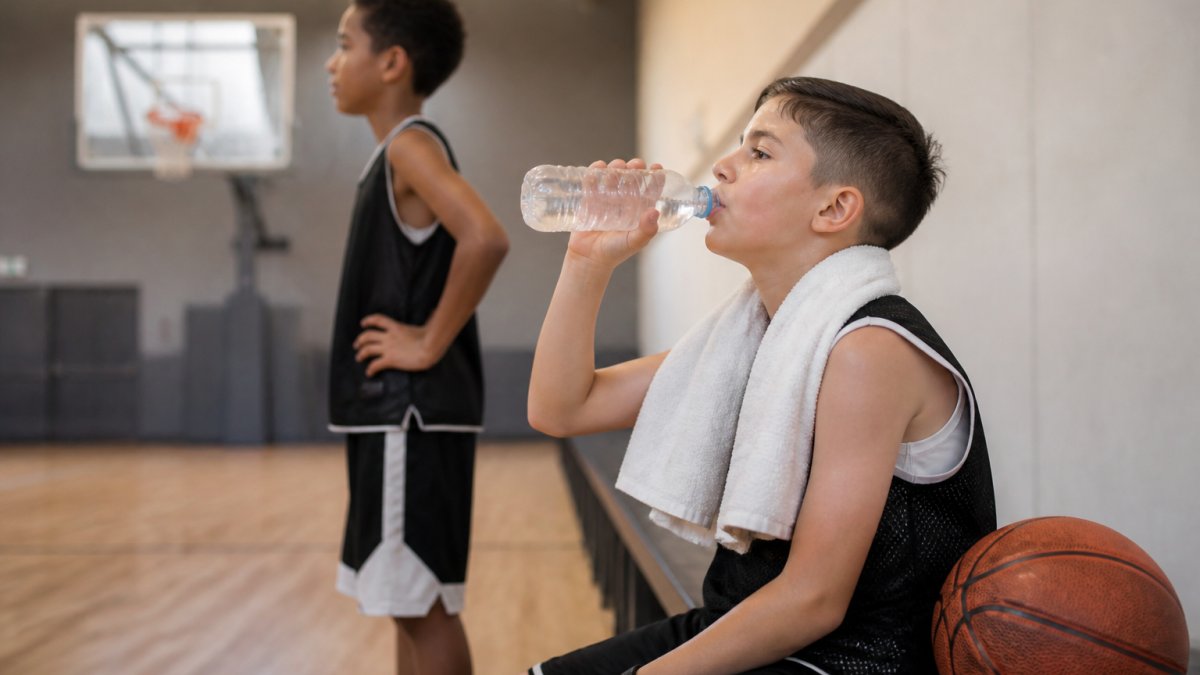
Youth basketball hydration means replacing fluids and electrolytes before, during, and after play so young athletes keep their energy, focus, and coordination. Give small sips every 15-20 minutes during play rather than one big gulp at halftime, and keep drinking until urine runs pale yellow. Kids do not feel thirst the way adults do, so parents and coaches must build the habit for them.
- Drink about 250-350 mL, or half a bottle, 30 minutes before practice.
- At halftime of games, younger players need roughly 150-250 mL, and teens need more.
- Use a sports drink when play lasts longer than an hour or the gym is hot and humid.
- Pack one more bottle than you think you need on tournament days and refill at every chance.
- Stop activity and seek medical help for confusion, vomiting, severe headache, or swelling.
Table of Contents
- Why Youth Basketball Hydration Matters More Than You Think
- How Much Water Should a Youth Basketball Player Drink?
- A Hydration Schedule for Young Athletes Around Practice and Games
- Signs of Dehydration in Young Athletes and What to Do
- Sports Drinks for Youth Athletes: When Water Is Not Enough
- Post-Game Hydration for Basketball Players: Replacing What Was Lost
- Hot Gyms, Summer Camps, and Humidity: Adjusting the Plan
- How Parents and Coaches Can Make Hydration Stick
- Frequently Asked Questions
Why Youth Basketball Hydration Matters More Than You Think
A young player who loses even a small amount of fluid can feel it fast. Basketball is stop-start, high-intensity work in a hot gym, and kids sweat more than most parents expect.
Youth basketball hydration is the practice of replacing fluids and electrolytes before, during, and after play so young athletes keep their energy, focus, and coordination. Neglecting these basic replenishment protocols often leads to subtle physical imbalances, making it essential for coaches and parents to recognize the early signs of electrolyte deficiency before they compromise a player's safety on the court.
Here is the part most guides miss. Kids do not feel thirst the way adults do, and they rely on parents and coaches to build the habit.
If your child is new to the game, our Learn To Ball program introduces kids aged 7-10 to basketball fundamentals in a supportive setting where good habits start early.
How Much Water Should a Youth Basketball Player Drink?
There is no single number that fits every child. Body size, age, sweat rate, and gym temperature all change the answer. Still, general guidance from health guidance on hydration for children gives parents a sensible starting point.
A simple framework works best:
- Before play: a glass of water with meals and another 30-60 minutes before tip-off
- During play: small sips every 15-20 minutes, not one big gulp at halftime
- After play: keep drinking until urine runs pale yellow
Matching Fluid Intake to Age and Body Size
Smaller kids need smaller amounts. A 6-year-old and a 15-year-old should not follow the same plan.
Use this rough guide, then adjust:
- Ages 4-6: small sips, frequent breaks, focus on habit
- Ages 7-10: a few ounces at each break, more in heat
- Ages 11-16: larger volumes, especially for rep-level intensity
Watch your child, not just the clock. A player who is sweating heavily and breathing hard needs more than one who is coasting.
A Hydration Schedule for Young Athletes Around Practice and Games
A hydration schedule for young athletes removes the guesswork. Instead of hoping kids remember to drink, you build it into the day. The schedule below is written for basketball specifically, because the stop-start rhythm of quarters, timeouts, and halftime creates natural drinking windows.
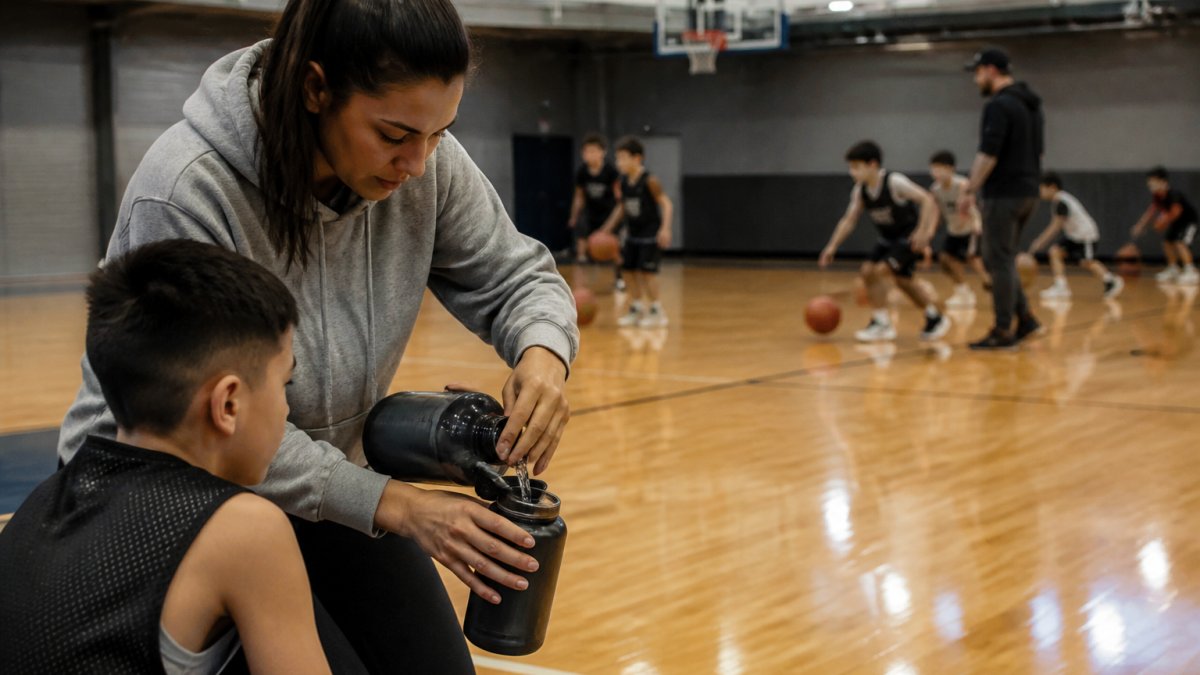
Practice-Day Schedule
- Two hours before: water with a meal, plus a piece of fruit or a snack with some salt
- 30 minutes before: half a bottle (about 250-350 mL for most youth players)
- Warm-up and first quarter: a few sips at every dead ball and substitution
- Timeouts: small sips, not a full bottle
- Halftime: a proper drink break of several ounces, plus a bathroom stop
- After practice: refill and keep sipping for the next hour, paired with a snack
Game-Day Schedule
Games compress the timeline. Use this structure:
- 90 minutes before tip-off: finish a bottle with a meal or snack
- 30 minutes before: half a bottle
- Each quarter break: two to three sips
- Halftime: a measured drink break, roughly 150-250 mL for younger players and more for teens
- Post-game: a full bottle over the next hour, then regular meals
Tournament Days: Keeping Kids Hydrated Through Multiple Games
Tournament days are the real test. Two or three games in one day drain kids far more than a single practice, and the gaps between games are where most families lose ground.
- Between games: treat the break as recovery time, not just rest. Sip steadily, eat a snack with some salt, and avoid sugary drinks that sit heavy in the stomach.
- Back-to-back games: if the next game starts within an hour, keep sips small and frequent rather than drinking a large volume at once.
- Travel between courts: bring a cooler with bottles and a backup, and drink in the car rather than waiting for the next gym.
- End of day: continue rehydrating into the evening, even after the last game.
Adjusting the Schedule to Age and Body Size
Smaller kids need smaller amounts, and the schedule should scale with the player. A 6-year-old and a 15-year-old should not follow the same plan.
- Ages 4-6: small sips, frequent breaks, focus on habit rather than volume
- Ages 7-10: a few ounces at each break, more in heat
- Ages 11-16: larger volumes, especially for rep-level intensity and tournament days
Watch your child, not just the clock. A player who is sweating heavily and breathing hard needs more than one who is coasting. For general fluid guidance, see health guidance on hydration for children.
Here is the practice-day and game-day timing laid out so parents can scan it at a glance.
| When | What to do |
|---|---|
| Two hours before practice | Water with a meal, plus fruit or salty snack |
| 30 minutes before practice | Half a bottle, about 250-350 mL |
| Warm-up and first quarter | A few sips at every dead ball and substitution |
| Timeouts | Small sips, not a full bottle |
| Halftime | Several ounces plus a bathroom stop |
| After practice | Refill and keep sipping for the next hour |
| 90 minutes before tip-off | Finish a bottle with a meal or snack |
| Halftime of games | Roughly 150-250 mL for younger players, more for teens |
Signs of Dehydration in Young Athletes and What to Do
The signs of dehydration in young athletes are easy to spot once you know them. Catching them early prevents a bad afternoon.
Watch for:
- Dark yellow urine
- Headache or dizziness
- Dry mouth and lips
- Feeling tired or sluggish
- Poor focus or clumsy play
- Cramps
If you see these signs, pull the player aside. Have them sit in the shade or a cool spot and sip water slowly. Do not let them chug. If symptoms are severe, get medical help.
A parent worried about warning signs should also think about injury prevention. Our guide to common basketball injuries in youth athletes covers what to watch for and how to reduce risk.
Sports Drinks for Youth Athletes: When Water Is Not Enough
Water is the best choice for most practices and games. Sports drinks for youth athletes have a place, but they are not a default.
Use a sports drink when:
- Play lasts longer than an hour
- The gym is hot and humid
- A player is sweating heavily
- It is a tournament day with multiple games
Skip them for short practices. Many sports drinks carry a lot of sugar, and water does the job fine for a 45-minute session. For guidance on what kids should drink, see dietary guidance for children and youth.
Post-Game Hydration for Basketball Players: Replacing What Was Lost
Post-game hydration for basketball players is where many families drop the ball. Kids finish, grab a snack, and forget to drink. The body keeps needing fluid for hours after the final whistle.
A simple way to personalize it is to weigh your child before and after a hard session and talk with a health professional about how much to replace.
If your player is working on stamina, pair recovery with the right training. Our article on basketball conditioning drills for stamina shows how to build endurance without overtraining.
Hot Gyms, Summer Camps, and Humidity: Adjusting the Plan
Indoor gyms get hot. Summer camps make it worse. Humidity stops sweat from evaporating, so the body cannot cool itself as efficiently and kids overheat faster than the thermometer suggests. That is why a gym at 28°C with poor ventilation can feel harder than a dry day outdoors at the same temperature.
Adjust the plan when conditions are tough:
- Add extra water breaks: build them into every drill block, not just at halftime
- Encourage sips even when kids say they are not thirsty: thirst lags behind need, especially in children
- Use electrolytes on long, hot days: a sports drink can help replace salt lost through heavy sweating during sessions longer than an hour
- Watch for flushed skin, heavy breathing, and sluggish play: these are early warning signs that the player needs a break and fluids
- Cool the player, not just the bottle: shade, a cool towel, and a seated rest break matter as much as the drink itself
Avoiding Overhydration
More water is not always better. Drinking large volumes quickly, especially during or right after intense play, can cause stomach upset and, in rare cases, dilute the body's sodium too much. A safe approach is to drink to thirst, spread intake across the session, and avoid forcing a child to finish a bottle.
A Simple Personalization Method
A practical way to tailor fluid replacement is to weigh your child before and after a hard session. Use this as a guide, not a target to force, and check with a health professional if you have concerns about your child's hydration needs.
Coaches should build water breaks into every drill block, not just at halftime, and should treat hot-gym days as a reason to shorten intense segments and lengthen rest periods.
How Parents and Coaches Can Make Hydration Stick
Habits beat willpower. A child who carries a bottle and drinks on a schedule stays hydrated without thinking about it.
Try these:
- Send a labeled bottle to every practice
- Set a reminder on your phone for tournament days
- Make water the default drink at home
- Praise kids for drinking, not just for scoring
- Model it yourself on the sideline
Parents planning the season ahead can use our 8 ways to prepare for youth basketball season as a full checklist.
If you want a club that builds these habits into every session, contact Tier 1 Sports to learn about our programs and tryouts.
Frequently Asked Questions
How much water should a youth basketball player drink?
There is no single number that fits every child. Body size, age, and gym temperature all change the answer, so watch your child and talk with a health professional if you have concerns.
Do youth basketball players need sports drinks?
For most practices under an hour, water is enough. Sports drinks for youth athletes become useful during long sessions, back-to-back tournament games, or hot, humid gyms where players sweat heavily and lose sodium. Choose drinks with modest sugar and added electrolytes, and treat them as a supplement to water rather than a replacement for it.
What are the signs of dehydration in young athletes?
Watch for dark yellow urine, thirst, headache, tiredness, dizziness, dry mouth, and a drop in energy or focus on the court. Urine that is pale yellow suggests good hydration status. Kids often do not notice thirst during play, so parents and coaches should prompt water breaks rather than wait for a child to ask.
How can parents help kids stay hydrated during a basketball tournament?
Pack a labeled water bottle per player, plan a drink stop at every quarter break, and offer water between games. A simple rule: sip regularly, not in one big gulp at the end.
Keeping young players hydrated through a long season is a challenge every family faces. At Tier 1 Sports, we build good habits into every practice, with programs tailored for ages 4 to 16, a focus on skill development and passion for the game, and both recreational and competitive rep pathways. Get started with Tier 1 Sports and help your player realize their potential on and off the court.