 How-to
How to Assess Youth Basketball Player Readiness
Last Updated: November 7, 2026
Quick Summary
Assess player readiness with a scorecard that rates five areas from 1 to 5: fundamental skills, basketball IQ, athleticism, coachability, and workload and recovery, for a total out of 25. Anchor each score to observable behavior, then retest on the same drills in 6-8 weeks.
- Score each of the five areas 1 to 5, with 1 meaning not yet and 5 meaning clearly ready.
- Anchor every score to an observable behavior so two observers rate the same way.
- Treat 20-25 as ready to try the next level and 15-19 as close, focusing on the two lowest areas.
- Weigh the two lowest areas more heavily than the total, since a low workload score can override strong skill.
- Build your development plan around the two lowest-scoring areas and retest in 6-8 weeks.
Table of Contents
- Building a Player Readiness Scorecard
- Fundamental Skills to Watch in a Readiness Assessment
- Basketball Tryout Evaluation Criteria Coaches Actually Use
- Basketball IQ for Young Players and Decision-Making
- Readiness Beyond Skill: Maturity, Workload, and Recovery
- A Basketball Readiness Checklist for Parents
- Turning Your Assessment into a Youth Basketball Development Plan
- Choosing the Right Tier 1 Sports Program for Your Player
- Frequently Asked Questions
Building a Player Readiness Scorecard
Player readiness is a judgment call, and most parents make it on a gut feeling after one loud gym session. A readiness scorecard works on a simple idea: if you can't write it down and score it, you can't track it. A readiness scorecard turns "he looks ready" into something you can revisit in eight weeks.
Here's how to assess youth basketball player readiness without guesswork. Below, we'll show you exactly what to score, how to score it, and when to retest so the picture stays honest.
What a Scorecard Should Measure
A useful scorecard covers five areas, not one. Skill alone tells you what a player can do today. It says nothing about whether they'll cope with a faster, more physical level next season.
- Fundamental skills: ball handling, passing, shooting, finishing
- Basketball IQ: decisions, court vision, game awareness
- Athleticism: speed, agility, coordination, stamina
- Coachability: listens, adjusts, handles feedback
- Workload and recovery: sleep, training load, energy levels
Score each area 1 to 5. A 1 means "not yet," a 5 means "clearly ready." Total the five scores for a picture out of 25.
Scoring Anchors So Two Observers See the Same Thing
The weakness of most rubrics is vague language. "Good ball handling" means different things to a parent and a coach. Anchor each score to an observable behavior so the number means the same thing every time.
| Score | Anchor (what you actually saw) |
|---|---|
| 1 | Skill breaks down against light pressure; player avoids the action |
| 2 | Skill works in drills but disappears in small-sided games |
| 3 | Skill holds in 3-on-3; occasional breakdown under fatigue |
| 4 | Skill holds in 5-on-5; player seeks the action |
| 5 | Skill holds against stronger, older defenders; player adapts |
Use the same anchors for every area. For coachability, for example, a 1 is "ignores feedback or argues," a 3 is "listens and tries once," and a 5 is "applies feedback within the same session." Write the anchor next to the score so a second observer can compare notes.
How to Score and Retest
Score honestly, and score the same way each time. Pick two or three observable moments per area and rate what you actually saw. A practical session can be built around a dynamic warm-up, individual skill stations, small-sided games and free-play observation, with timing adjusted to the group. Test in that order because fatigue changes what you see; scoring shooting last tells you more than scoring it first.
| Area | What You Watch | Score 1-5 | Retest In |
|---|---|---|---|
| Ball handling | Dribbles with both hands under pressure | 6-8 weeks | |
| Passing and catching | Accurate passes, clean catches at speed | 6-8 weeks | |
| Shooting | Repeatable form, makes under fatigue | 6-8 weeks | |
| Defense | Stays low, moves feet, recovers | 6-8 weeks | |
| Basketball IQ | Finds open player, makes smart choices | 6-8 weeks |
Retest In
Retest on the same drills, not new ones. Comparing unlike things is the most common mistake we see.
Reading the Total
A score out of 25 is a conversation starter, not a verdict.
Watch out: scoring a player right after a growth spurt or a long tournament weekend will read low for reasons that have nothing to do with readiness. Keeping those temporary dips in perspective also means supporting recovery and well-being alongside skill development, a balance reflected in Forged & Foam Co.
Fundamental Skills to Watch in a Readiness Assessment
The fundamentals decide most selection calls. Coaches can teach a system in a week. They can't rebuild a dribble in a season. Watch for these specific markers, not general impressions.
Ball Handling, Passing, and Finishing
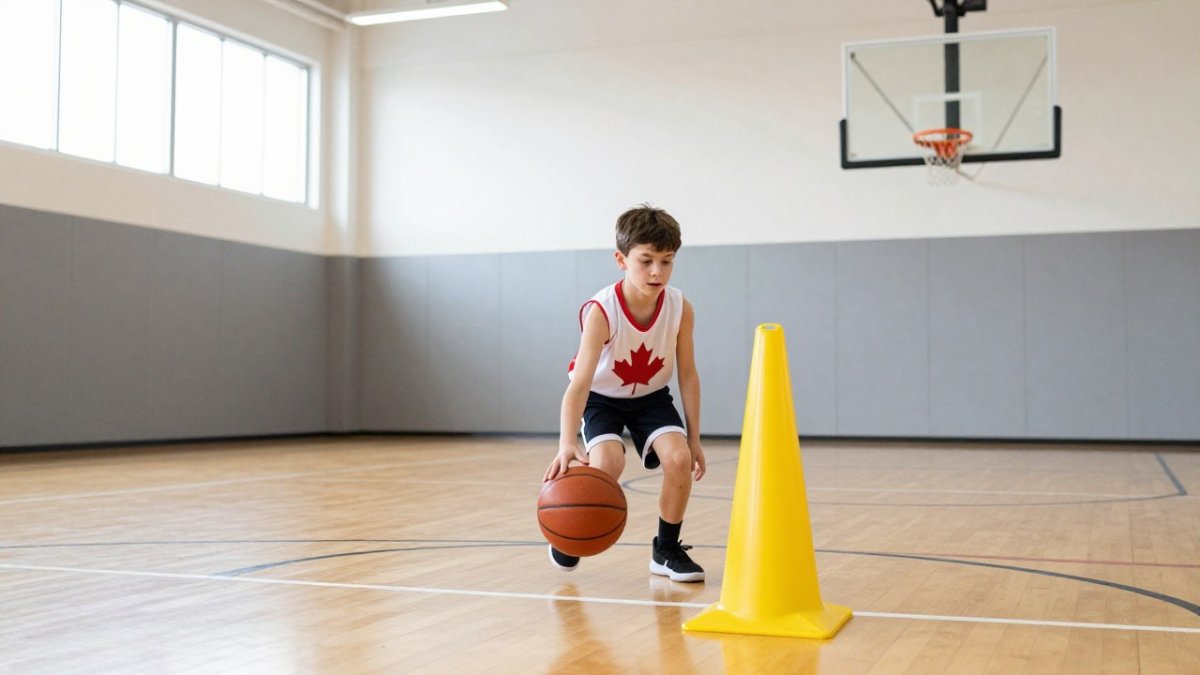
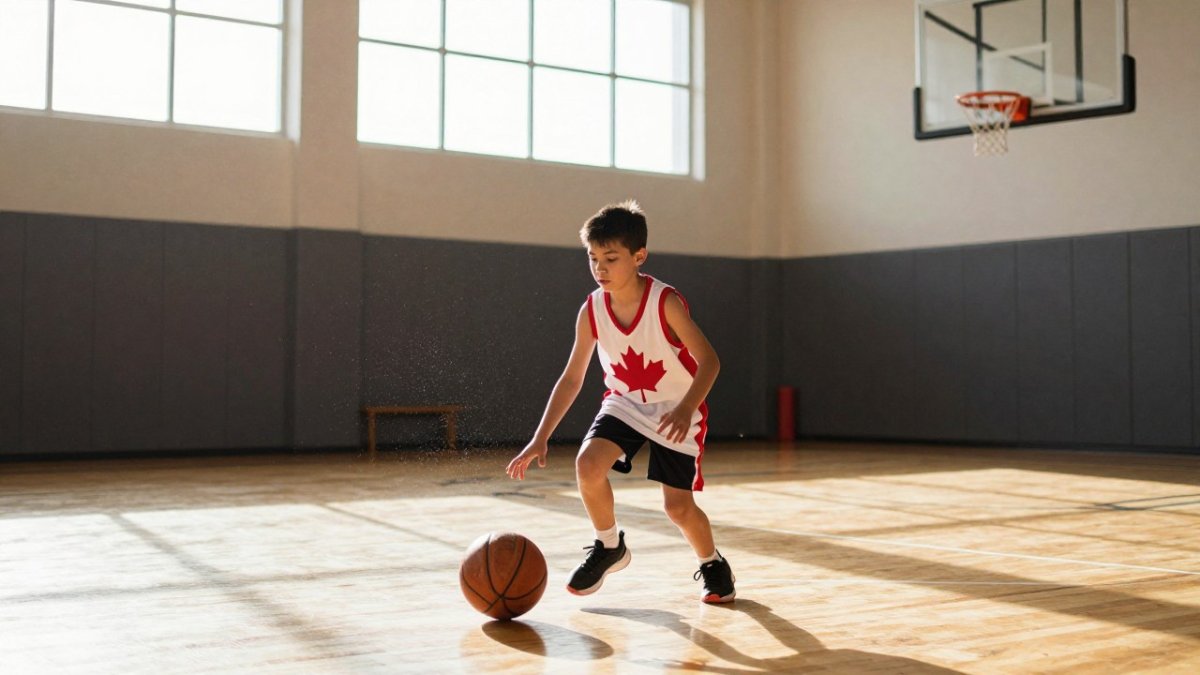
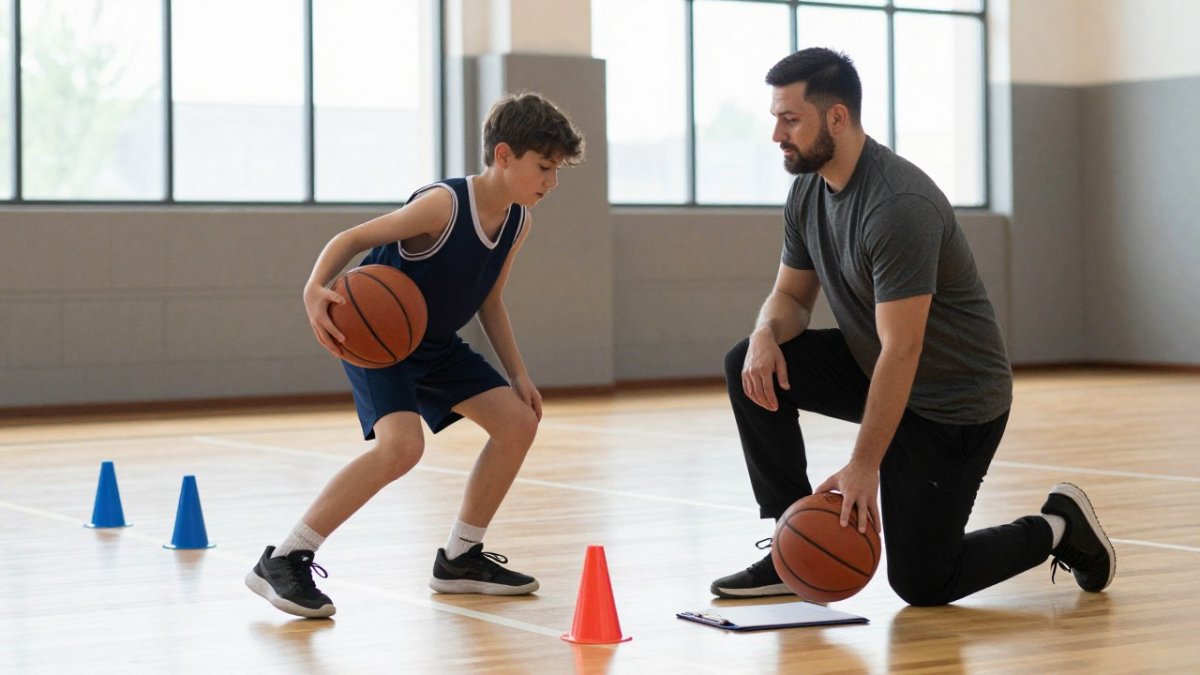
Dribbling under pressure separates players fast. A young player who keeps the ball alive against a defender is showing real control.
- Ball handling: dribbles with either hand, keeps head up
- Dribbling under pressure: protects the ball, changes direction
- Passing: hits a moving target, both hands
- Catching: clean hands, no bobbles at speed
- Finishing around the basket: scores with either hand, absorbs contact
- Shooting technique: repeatable release, balanced base
Shooting accuracy matters less than shooting form at this age. A repeatable shot can be refined. A broken one takes years.
Basketball Tryout Evaluation Criteria Coaches Actually Use
- Skill execution under fatigue
- Defensive positioning and effort
- Court vision and decision-making
- Coachability and response to feedback
- Team play in small-sided games like 3-on-3
If you want to see how criteria play out in a real session, read what a rep tryout actually looks like. For coaches running their own session, here's how to run a productive beginner tryout.
Basketball IQ for Young Players and Decision-Making
Basketball IQ is the skill nobody drills and everybody notices. It shows up in the pass that arrives a half-second early, or the defender who rotates without being told.
Decision-making separates good athletes from good players. A fast player who makes poor choices hurts a team. A slower player who reads the game lifts it.
- Court vision: sees the open player
- Game awareness: knows the score, time, and situation
- Decision-making: picks the simple play over the flashy one
- Team play: moves without the ball
Test this in small-sided games, not drills. 3-on-3 exposes decision-making faster than any cone course.
Readiness Beyond Skill: Maturity, Workload, and Recovery
Skill is the easy part to measure. The harder question is whether a young body and mind can handle a higher level. Biological maturity varies widely at the same age. Two 12-year-olds can be years apart in physical development, and the early bloomer often looks "ready" only because he is bigger, not because he is more skilled or more durable.
Biological Maturity and Relative Age
Growth spurts rearrange coordination. A player who just grew several centimeters may look clumsy for a few months, then regain control. That dip is normal and temporary. Relative age matters too: a player born early in the selection year can be up to 11 months older than a peer born late, which at ages 10-12 is a large physical advantage. Before you judge readiness, ask whether the player is being compared to kids of the same age or the same maturity.
Injury Risk, Pain, and Workload
Readiness is also a safety question. A young athlete who is sore, guarding a joint, or limping is not ready for a higher level, regardless of skill. Watch for these signs:
- Pain: any pain that persists beyond 24-48 hours, or that recurs in the same spot
- Prior injury: a history of injury in the same area, or a return that was rushed
- Training load: stacked practices, multiple teams, or year-round single-sport play with no off-season
- Recovery: energy that does not return between sessions, or sleep that is consistently short
- Mood: dread of practice, withdrawal, or loss of enjoyment
A useful rule of thumb is that training hours per week should not routinely exceed the player's age in years, and that at least one day per week and several weeks per year should be free of organized basketball. Those are guides, not rules; individual tolerance varies.
Watch out: if a player reports pain, a coach or parent should not "push through" it. Persistent pain, swelling, or a limp warrants a conversation with a qualified health professional before the player returns to full load.
Sleep, Recovery, and the Signs of Burnout
Sleep is the cheapest recovery tool available. Most school-age athletes need more sleep than they get, and a player who is short on sleep will read as less skilled, less coachable, and less ready than they actually are. Track sleep for a week before an assessment; it changes the picture.
For a deeper look at protecting young athletes, read our guidance on preventing burnout in youth sports. If a player is tired, sore, or dreading practice, that's information, not a character flaw.
A Basketball Readiness Checklist for Parents
Use this as a quick gut-check before any tryout or program decision. It's a conversation starter, not a verdict.
- Player can dribble with both hands
- Player passes and catches cleanly
- Player shoots with repeatable form
- Player defends with effort and positioning
- Player makes simple, smart decisions
- Player listens and adjusts to feedback
- Player sleeps and recovers well
- Player still enjoys the game
Fewer than five checks? That's not a no. It's a signal to focus development before chasing a higher level. For a fuller picture, check whether your child is ready for competitive play.
Turning Your Assessment into a Youth Basketball Development Plan
An assessment without a plan is just a score. The value comes from what you do next. Build a youth basketball development plan around the two lowest-scoring areas, not everything at once.
- Pick two focus areas from your scorecard
- Set a simple goal for each, like "dribble with left hand under pressure"
- Schedule practice time around those goals
- Retest in 6-8 weeks on the same drills
- Adjust based on what changed
A common mistake is chasing every weakness at once. Focus beats volume. Two focused areas, retested honestly, will move a player further than a scattered plan.
Choosing the Right Tier 1 Sports Program for Your Player
Tier 1 Sports offers programs from introductory sessions for beginners to competitive rep basketball, so a player can grow without jumping levels too early.
Here's how we think about fit:
| Player Profile | Best Fit |
|---|---|
| New to the game, ages 4-6 | Introductory program |
| Building skills, ages 7-10 | Skill development |
| Between rec and rep | Developmental pathway |
| Ready to compete | Rep basketball tryouts |
Best for: families who want a clear pathway from first dribble to competitive play. Skip if: you're looking for a one-off clinic with no progression.
When you're ready to see the options, explore our programs by age and skill level.
Assessing readiness is a skill parents can learn. Score the fundamentals, watch the decisions, and check the workload.
Frequently Asked Questions
How do you assess a young basketball player's readiness?
Assess player readiness across four areas: fundamental skills, basketball IQ, athleticism, and off-court factors like sleep and training load. Use a simple scorecard rating each area from 1 to 5, then repeat the assessment every 8 to 12 weeks. Watch players in small-sided games like 3-on-3, where ball handling under pressure and decision-making show up quickly. Compare results against age- and experience-specific benchmarks rather than against older players.
What should coaches look for during basketball tryouts?
Basketball tryout evaluation criteria should cover more than scoring. Watch ball handling under pressure, passing accuracy, defensive positioning and effort, court vision, and coachability. Note how a player reacts to a mistake or a correction. Use the same criteria for every player and score them during live play, not just drills. This keeps team selection fair and gives families concrete feedback on what to work on next.
How important is basketball IQ when assessing a young player?
Basketball IQ for young players matters as much as raw skill at the rep level. Look for game awareness: spacing, timing of passes, recognizing when to cut, and knowing when to shoot versus pass. Decision-making improves with practice experience in small-sided games. A player with average shooting but strong court vision often develops faster than a strong scorer who forces plays. Score IQ separately so it does not get buried under athleticism.
Should age or physical size affect readiness for rep basketball?
Biological maturity matters more than birth date or current size. Two 12-year-olds can be years apart in physical development, so compare each player to their own past results, not to teammates. A youth basketball development plan should account for growth spurts, injury risk, and recovery needs. Focus on skill progression, coachability, and confidence. Readiness for a higher level comes from consistent development, not from being the biggest kid on the court.